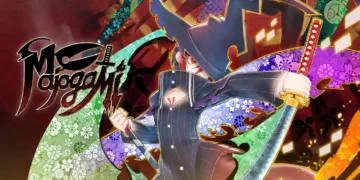
























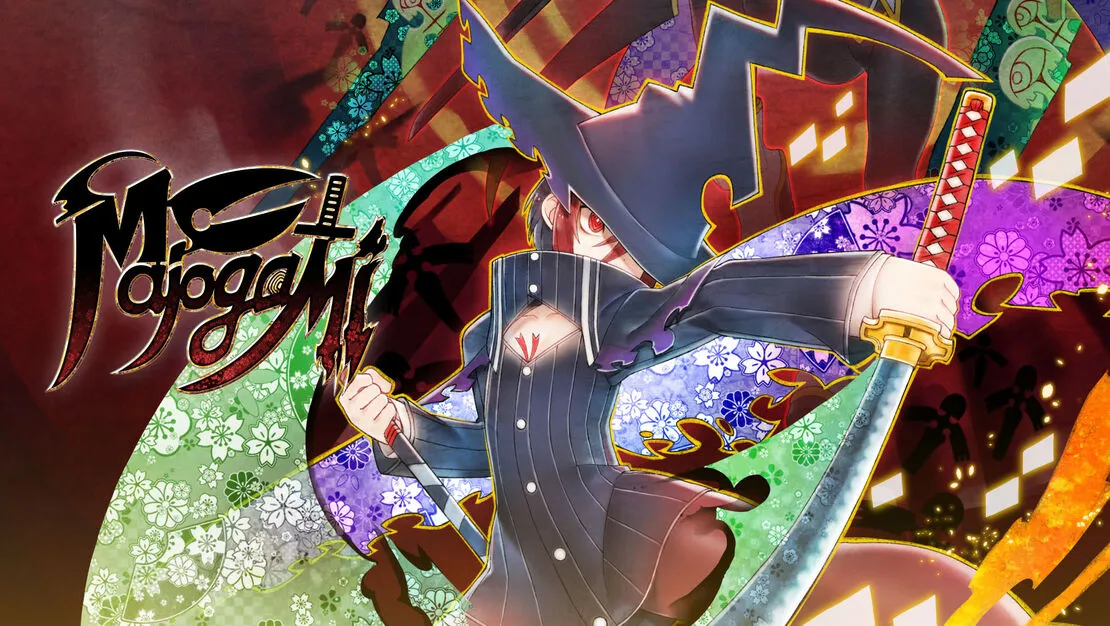

Majogami arrives as a 2D action platformer from Inti Creates, a studio known for tight controls and precise action design. The project marks a clear visual shift for the developer, trading their retro-pixel look for a richer, illustrated presentation. The story follows Shiroha, an amnesiac, sword-wielding witch hunter who awakens in the chaotic, papercraft world of Orchesgra.
Her companion is her paper-mâché father, Shiori. Shiroha’s goal is straightforward: defeat the Craft Witches to recover her memories and find a route home. The setup frames a contest between spectacle and feeling, asking whether the striking presentation supports an emotional center that can carry Shiroha’s search for identity.
Visual Dazzle and a Faltering Script
Majogami’s art direction stands out as the studio’s most eye-catching work to date. Handcrafted paper environments lend the world texture and weight, while illustrated 2D characters move with smooth, confident animation.
Careful use of volume and depth keeps figures grounded and avoids the flatness that often plagues similar styles. Combat sequences escalate the effect through elaborate attack animations, punchy cut-ins, and well-timed camera zooms that spotlight character designs. The result feels cinematic and immediate.
The presentation slips once the narrative takes the stage. The story draws on familiar anime ingredients: an amnesiac lead, an eccentric father figure, and a roster of powerful antagonists. Genre fans may appreciate the familiarity, yet the contrast between high-energy action and a flat delivery creates distance. Scenes play out as static, visual novel-style cutscenes with still portraits.
Dialogue often stretches past what the moment needs, turning simple beats into slow exchanges. Japanese-only audio locks pacing to subtitle reading, which further slows the flow. The premise remains simple while the writing treats it with stern seriousness, making it difficult to invest in Shiroha’s path. The script lands as a weak element beside the game’s high production values.
The Setsuna Engine of Action
Combat revolves around one standout mechanic: the Setsuna sword drive. This instant teleport-slash triggers when an enemy enters range. Because Shiroha’s basic attack carries little forward movement, Setsuna defines the rhythm of play. It handles most damage, links strings of strikes, sustains airtime during flurries, and provides the burst needed to reach far platforms or hidden paths. Chaining slashes feels snappy and satisfying.
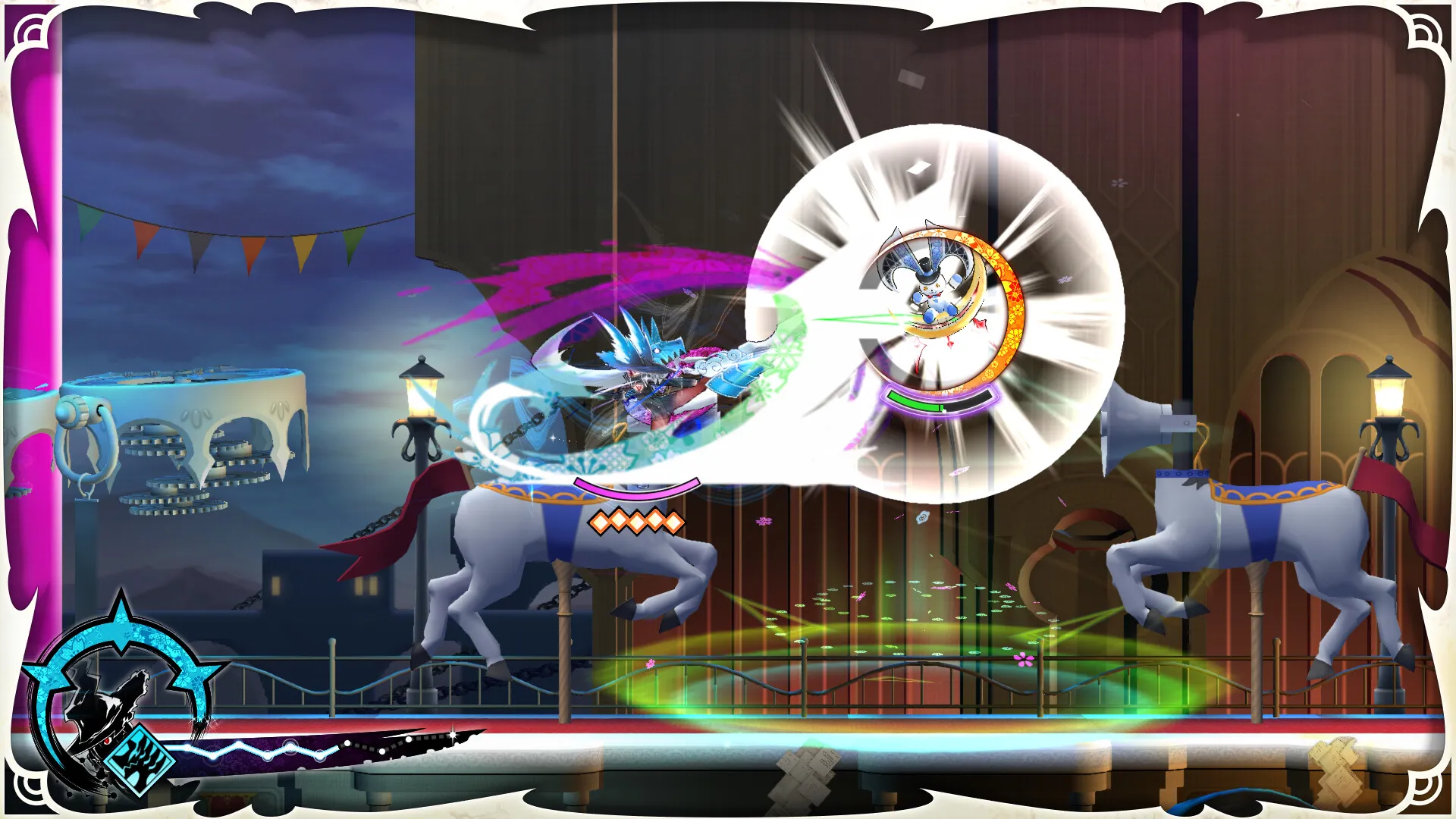
Depth comes from systems layered on top of that core. The game quickly asks for deliberate decisions instead of autopilot inputs. Enemies wrapped in Cursed Mist only take damage from a specified angle, pushing the player to use vertical, horizontal, or diagonal Setsuna stances. A charged Triple Setsuna dispels shields or sends projectiles back at their source.
These demands place timing and direction at the center of each exchange while the charge window introduces risk that can leave Shiroha open. Progress unlocks an Astral or Magical Girl-style transformation that adds moves like a double jump, a grapple, and sweeping screen clears, expanding expressive options mid-fight. The Guardian Force system layers meaningful progression on top, letting players purchase upgrades and accessories with the currency Konoha.
Boss Fights as Theatrical Events
Main stages run short and serve a focused purpose. These spaces are training grounds for Setsuna’s nuances, with strong visuals and confident art direction over basic construction. The emphasis on the core slash loop can turn routine between major encounters, yet the brisk length supports replay goals such as time trials and leaderboard chases.
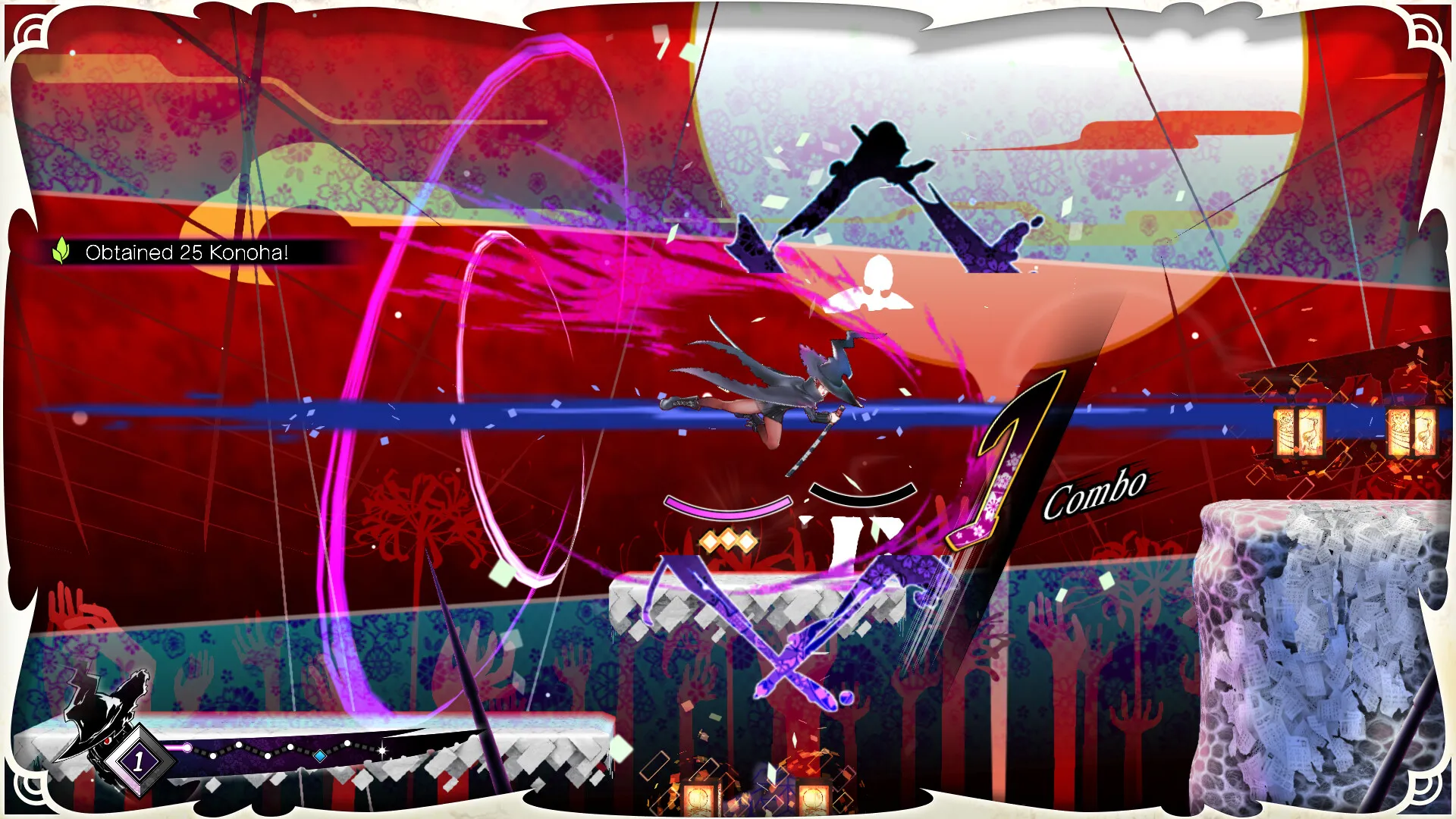
Majogami’s strongest ideas converge in its boss battles against the Craft Witches. These fights feel like the game’s design effort distilled into set pieces with distinct gimmicks and multiple phases. Success depends on reading patterns, reacting quickly, and bending Setsuna to each situation. The encounters lean on visual and design cues that cue counterattacks, creating a theatrical charge that aligns the combat system with the presentation’s flair.
Beyond the campaign, the game includes more than thirty levels with bonus challenge stages. Difficulty settings labeled Easy, Normal, and Hard allow players to tune resistance and damage, with Hard raising both for a stern test. This mix of optional content, scalable challenge, and combat clarity supports replay for score-chasing runs and return visits after the first clear.
The Review
Majogami
Majogami is a triumph of interactive design and visual style. Inti Creates delivered exhilarating 2D action centered around the brilliant Setsuna sword drive. The boss battles are the game’s core strength, demanding mechanical mastery and providing memorable cinematic sequences. While the illustrative art is fantastic, the narrative itself feels generic and its visual novel presentation is slow and dull. Those seeking complex, fast-paced combat will find great reward here, even if the storytelling lacks emotional impact.
PROS
- Outstanding visual aesthetic
- Brilliant, dynamic Setsuna mechanic
- Boss fights are exceptional and varied
- High replay value with difficulty settings
CONS
- Generic and trope-heavy story
- Narrative scenes are verbose and static
- Stage design is generally simplistic
- Japanese audio only