


























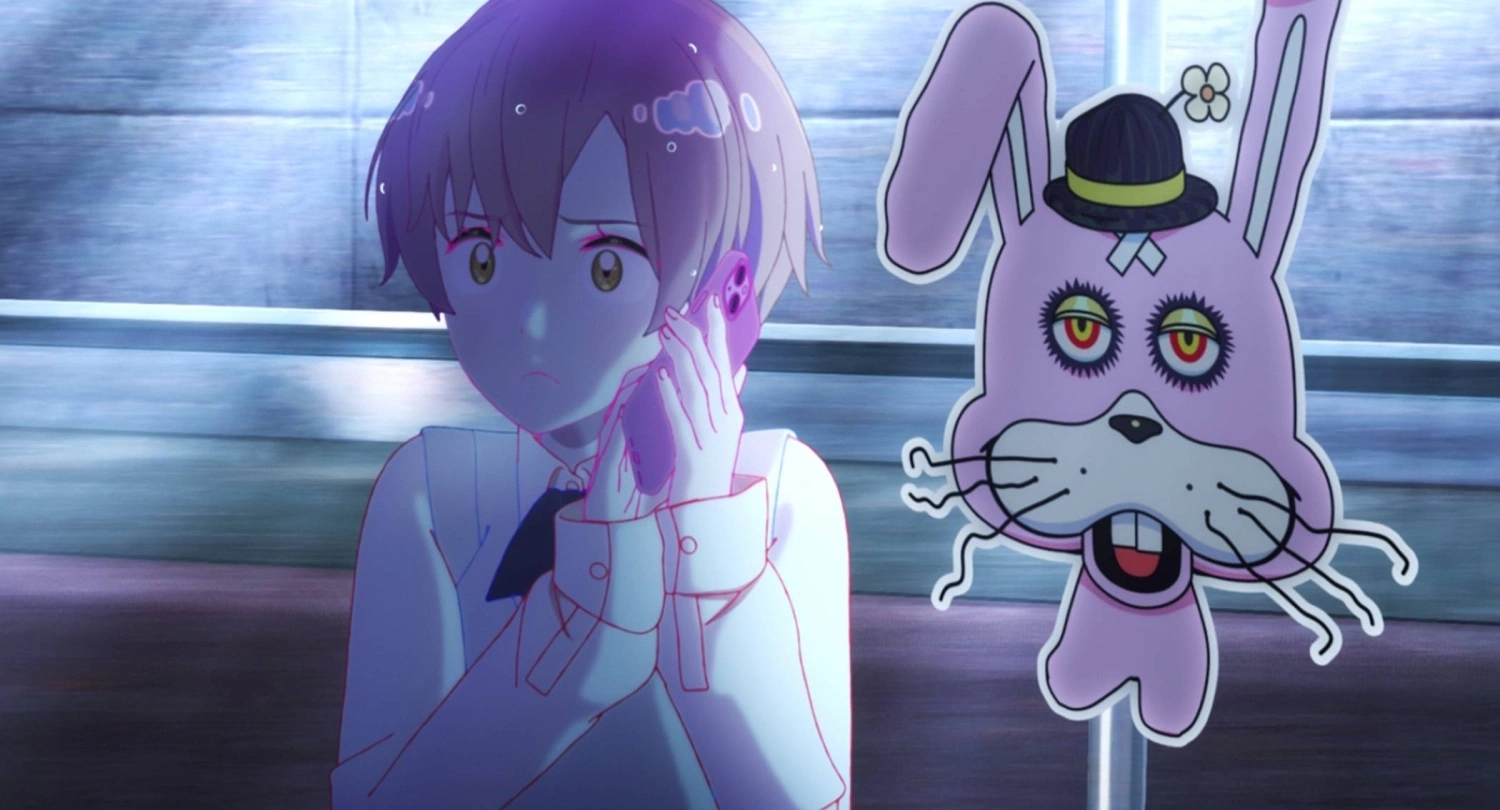

Shoji Kawamori has built much of his reputation on interstellar conflict and the elegance of mechanical design, so this project feels like a sharp turn toward a smaller screen with massive psychological reach. Shiori Maezawa lives under the pressure of digital visibility, measuring herself against the online adoration enjoyed by her friend Kirara. A dance video catches her painful fall, goes viral, and turns embarrassment into a public spectacle.
The humiliation cracks reality with the same blunt force as her broken smartphone screen. Shiori is pulled into a bleak, gray silicone dimension, a cold space that turns emotional panic into physical geography. In the physical world, Shiori@Revolution takes her place. This secondary persona is colorful, hyper-active, and polished into the kind of presence Shiori wants for herself.
The real Shiori has to return before this artificial double erases her permanently. The setup gives the story a clean survival framework. It also turns a familiar fear of online comparison into a body-horror scenario about being replaced by a smoother, louder, easier-to-like version of yourself.
Digital Identity and Social Validation
The film frames identity through external metrics with a hard cynical edge. Inside the phone, the monochromatic wasteland turns the chase for likes into an environment that feels drained of warmth and texture. Shiori meets Komori, a guide whose humanity has already been consumed by this space. His presence gives the digital dimension a warning-label quality, like a failed version of the same survival test Shiori is now forced to play.
Sentient stickers fill the environment, representing people compressed into static visual shorthand. The 100 million likes goal assigned to Shiori@Revolution works like a countdown system. If the double reaches that target, Shiori disappears. The dying phone battery gives the threat a clear mechanical rhythm, linking her fading life force to a fragile piece of hardware. The danger of becoming a sticker makes the loss of voice visible and specific.
This is where the film’s strongest emotional design takes shape. The online persona begins as a tool for connection, then grows hungry enough to threaten the person who created it. Shiori’s fear carries little weight in a world that prefers the manic charge of her digital twin.
The film reads social validation as a system that rewards constant cheer and punishes visible pain. That idea may sound blunt, yet the imagery gives it sting. Happiness becomes performance, suffering becomes background noise, and character can collapse under the pressure to remain pleasing.
Artistic Design and Auditory Performance
The production’s technical craft gives the concept much of its force. Risa Ebata’s character designs are expressive and clear, especially in the sharp split between Shiori and Shiori@Revolution. The physical realm is saturated with neon color, echoing the sensory overload of a social media feed. The phone’s interior is gray, desolate, and claustrophobic, turning the digital space into a prison built from absence.
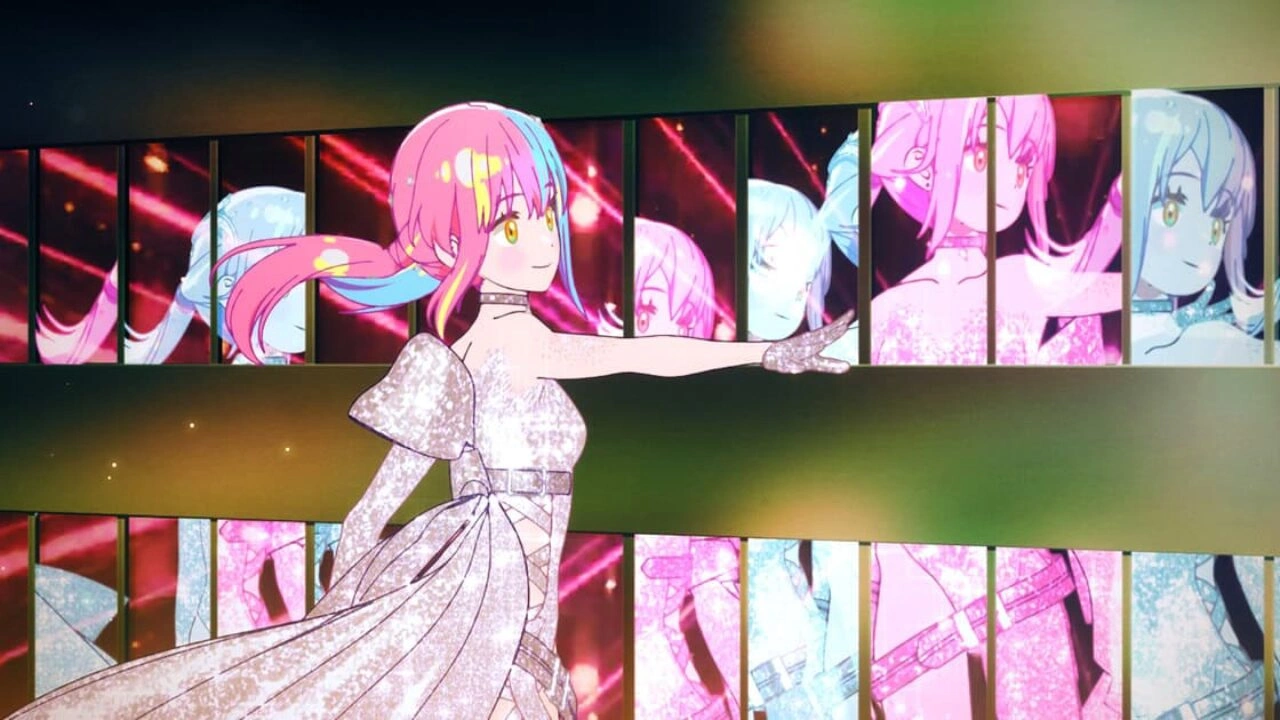
The animation uses CG techniques to mimic hand-drawn art, which gives the mechanical elements a smooth, flexible quality. That matters in a film where design is tied so closely to feeling. The worlds need to read instantly, and they do.
SUZUKA’s vocal performance anchors the idol-inspired music with energy and purpose. The songs carry narrative function. They become tools for communication and survival, which connects the film’s musical identity to its central crisis. The final act brings in giant mecha and large-scale battles, drawing on Kawamori’s history with mechanical design.
The combat is grand, busy, and chaotic, giving Shiori’s private crisis the shape of spectacle. The physical contact between dimensions also helps clarify the layout of the digital maze. A cracked phone screen becomes a portal into a confusing, expansive terrain. The visuals capture the feeling of being trapped inside a system too large to understand from the inside. The music and imagery move together in a register that feels current while still carrying the charge of classic anime for longtime fans.
Structural Balance and Thematic Resolution
Taichi Hashimoto’s screenplay introduces Suguru Kagami as the primary antagonist, a college student aiming to exploit Shiori’s fame for his own benefit. His interest in the seventeen-year-old protagonist gives the narrative a disturbing human threat beside the digital one.
The middle act moves slowly as Shiori learns the rules of the phone dimension. This section can feel sluggish during her wandering through the gray void, yet the pacing also mirrors the aimlessness of the internet maze. Information stretches in every direction and often leads nowhere. The metaphor is clear, and sometimes the film states it with a heavy hand.
The resolution turns toward Shiori’s growth and the authenticity of that growth. The film argues that the digital and physical selves need coexistence, with Shiori learning that her value exists beyond a screen. The final set-piece mixes idol culture with traditional action, creating a loud, crowded finale that tries to reconcile tech cynicism with hope for human connection.
Some viewers may find the message about tech reliance too simple. The ending strains to hold its ideas in balance, especially once the spectacle grows so large. Still, the film gives a direct look at the anxiety facing young people who are asked to perform themselves constantly. Its final act gathers the scattered pieces through visual excess, using color, music, and mechanical chaos to express the messy labor of reclaiming a self from the image that has overtaken it.
Labyrinth arrives in North American theaters today, May 10, 2026, for a highly anticipated limited theatrical run. This original feature film comes from the visionary director Shoji Kawamori and is brought to domestic audiences by GKIDS. The story examines the intersection of identity and digital culture through a striking animation style. Viewers can experience this cinematic event at select cinemas across the United States and Canada during its two-day screening period.
Where to Watch Labyrinth (2025) Online
Full Credits
Title: Labyrinth
Distributor: GKIDS, Gaga
Release date: May 10, 2026
Running time: 116 minutes
Director: Shoji Kawamori
Writers: Taichi Hashimoto
Producers and Executive Producers: Ken Teraizumi, Kazuki Ōshima, Masako Iwamoto, Tatsumi Yoda, Yōka Matsuzaki
Cast: Suzuka, Taizo Harada, Aoi Itō, Jun Saitō, Takuto Teranishi, Show Hayami, Maaya Sakamoto, Tomokazu Sugita
Director of Photography (Cinematographer): Shouko Hayashi
Editors: Hatsumi Hidaka
Composer: yonkey
The Review
Labyrinth
The film serves as a visually striking attempt to address the fractures caused by our digital lives. Shoji Kawamori successfully integrates his mechanical expertise with a modern story about social media anxiety. The story falters during its slower middle sections and carries a message that feels thin at times. While the antagonist’s motivations are murky, the artistic direction and musical energy keep the experience grounded. It offers a respectable entry for fans of experimental anime but lacks the structural polish of the director's classic works.
PROS
- Stunning visual contrast between the physical world and the digital dimension.
- Energetic J-pop soundtrack led by the performance of SUZUKA.
- Creative integration of mecha designs within a phone-based landscape.
- Expressive character designs that highlight the differences between real and curated personas.
CONS
- Sluggish pacing during the middle act within the phone world.
- The social media commentary feels simplistic and cynical.
- Underdeveloped antagonist with unsettling and unclear motivations.
- The plot depends on a questionable mechanic involving phone battery life.