





![Kingdom Hearts Collection [I-III] Review](https://gazettely.com/wp-content/uploads/2026/10/Kingdom-Hearts-Collection-I-III-1-360x180.webp "Kingdom Hearts Collection [I-III] Review: KHII Holds Steady as Newer Entries Fluctuate 37")



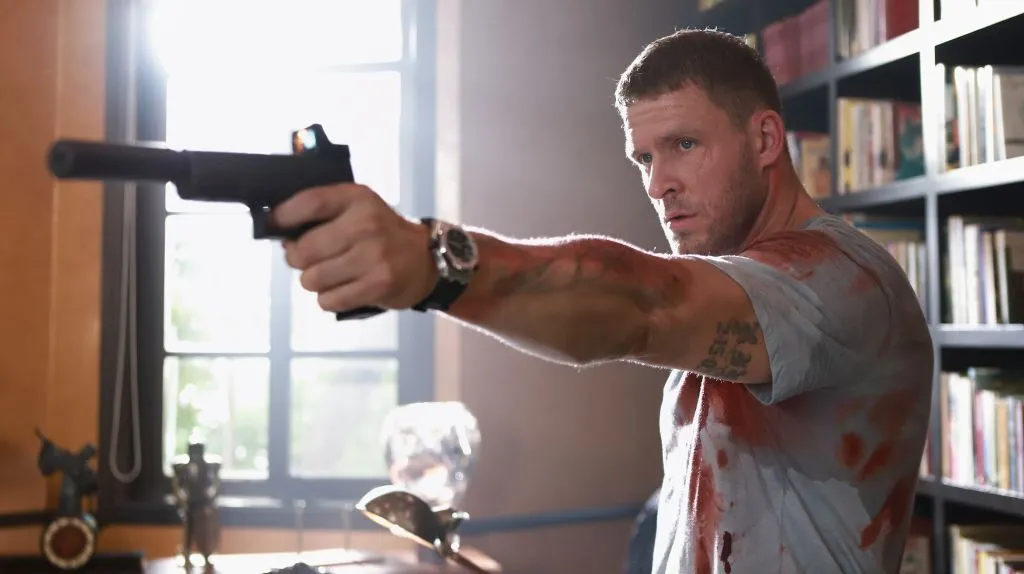

The film Bang opens with a neat case of nominative determinism: the title and the lead character’s surname meet at the same sonic point, that crack of discharge that turns a human body into paperwork. William Bang functions as a high-functioning organ of state-adjacent violence in Thailand, a professional instrument for removal with the emotional range of a locked toolbox. Then a cigar bar relaxation session ends with a volley of seven bullets, and his body stops being an asset. It becomes a medical liability. Flesh fails. Bureaucracy panics. A cardiac exchange follows.
He receives the heart of a young man who died in a car accident while racing toward the arrival of his child. The film calls this literal “cordis-exchange” (an involuntary trade of moral compasses), and it leaves Bang alive while knocking his spirit out of alignment. The idea plays like tabloid mysticism at first, then settles into something queasier: a man built for clean violence waking up with a foreign muscle in his chest and the sensation of being watched from the inside.
Recovery brings two developments that feel linked, even if the film keeps them in a purposeful fog. One is that borrowed rhythm, steady and unfamiliar. The other is a sudden interest in Gwen, the surviving widow. The story steps away from the familiar “hitman with a grudge” track and plants itself in biological haunting.
Bang reads as a predator drafted into accidental stewardship, the legacy of his victim sitting in his ribcage like contraband. He walks around with a new pulse and an unwanted conscience, which is a strange form of surveillance. The question he can’t dodge becomes simple and maddening: where does identity live, the mind or the muscle?
That question drags a wider world behind it. State-adjacent violence has always relied on distance, on the comfort of abstraction, on the language of “tools” and “targets.” A transplanted heart turns abstraction into tactile consequence. The film pushes the old philosophical riddle into the blunt modern arena of bodies as commodities, hospitals as repair shops, and men like Bang as replaceable components. (History has a habit of dressing up brutality in administrative clothing; Bang looks like the clerk who finally notices the blood on the forms.)
A Kinetic Contrast in Criminal Cartography
The film’s central conflict shows up through a jarring split in acting styles, a kind of internal map where two different genres share the same streets. Jack Kesy plays William Bang with restraint so severe it suggests a man trying to vanish into his own skeleton. His life becomes “Assassination Asceticism,” hours spent on flight simulators or working out in silence, training as prayer. He moves through scenes like a brooding, taciturn shadow that has memorized its routes.
Peter Weller, playing Morgan Cutter, arrives with frantic, unhinged energy that grabs the frame by the collar. Cutter runs a criminal enterprise from an antique store, treating employee lives with the same casual disregard he gives a chipped vase. He insists on watching body cam footage of his hits while eating popcorn. The detail is grotesque and darkly funny, a consumer ritual applied to murder, the violence packaged as content.
This “Cinematic Sadism” becomes his signature. Cutter plays like the chaotic sun in a crooked solar system, henchmen circling in cold obedience. Gwen sits in the story as an emotional anchor, and her scenes with Bang land in a register of surreal calm. She accepts his presence with a composure that makes logic feel optional. That calm turns the romance beats into something stranger than romance, like grief negotiating with a ghost that refuses to admit it’s a ghost.
Bang’s previous life shows up through April, a cam girl at the “Fapp House.” Their encounters on a Ferris wheel underline the repetitive, mechanical nature of his past desires, motion without progress. The supporting cast leans into pulp absurdity, including men tagged with names like “Overweight Irish Man” or “Johnny Finger.” These labels feel like a cheap joke and a blunt sociological note at the same time. People turn into descriptors. Workers become functions. Elites keep their full names and their antique-store empires.
That clash, eccentric power versus silent labor, becomes the film’s real cartography. Bang’s personality reacts to a swapped engine, and the movie watches to see what starts misfiring first: the habit of obedience, the appetite for violence, or the idea of self.
The Phony Cide and the Commune of the Undead
The plot runs on a “Phony Cide” gimmick that sounds like a bar story and plays like a survival manual. Bang realizes he can no longer kill. He stays trapped in Cutter’s employment because Cutter treats retirement as a capital offense. So Bang fakes his assignments.
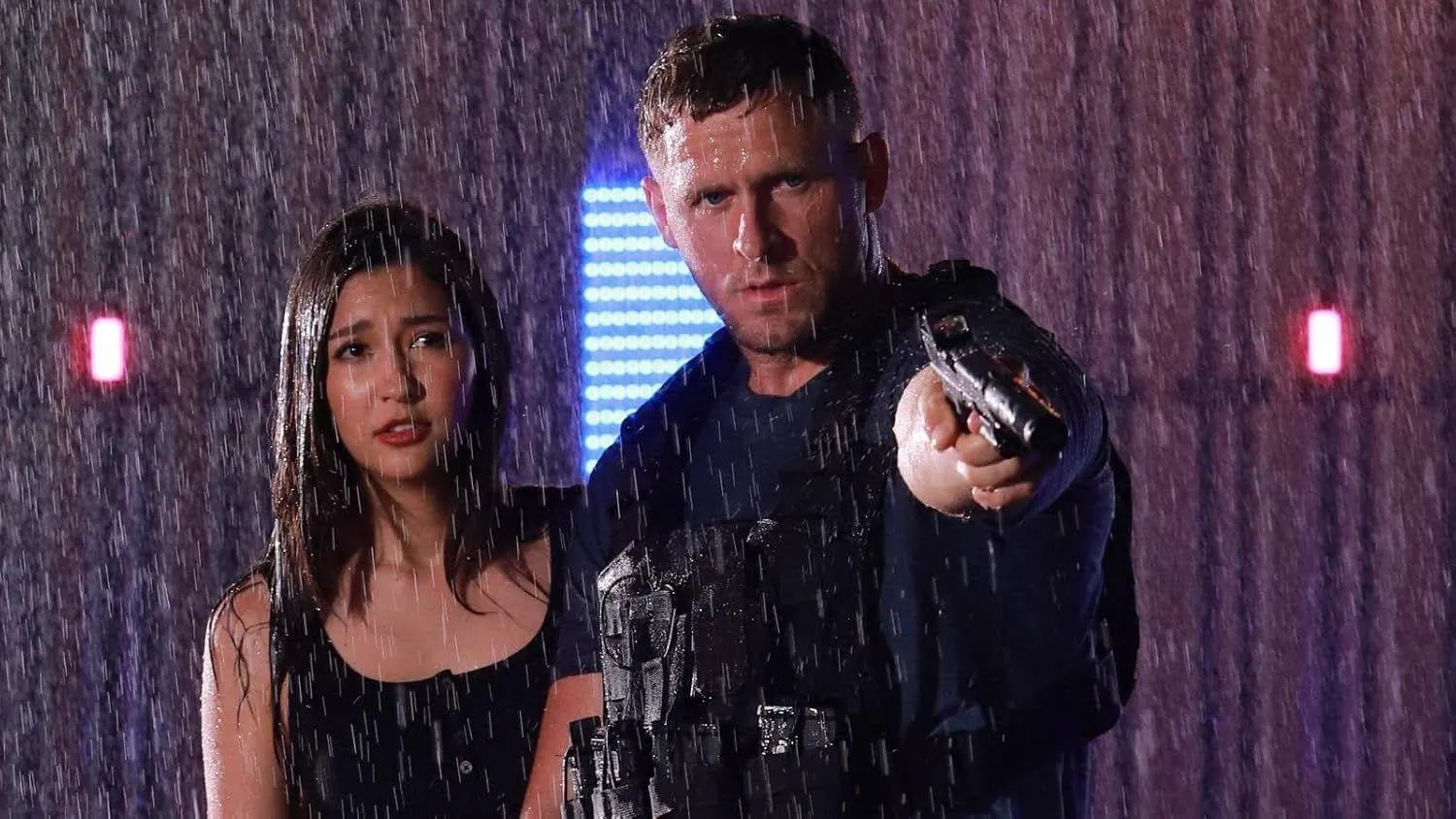
He stages deaths using bags of poultry blood and photographs designed to sell the lie. “Chicken Blood Redemption” becomes the film’s gleefully ridiculous answer to a philosophical crisis, and the ridiculousness matters. It captures the way systems force people into insane workarounds, then punish them for the improvisation.
Bang relocates these “ghosts” to an abandoned housing development two hours away. The place becomes a refuge for people marked for deletion, a commune of the supposedly deceased. The film frames it as a social experiment in a “Necropolis of the Living,” and Bang takes on an absurd new job title: landlord of the undead.
There’s a sly historical echo here, tucked under the pulp. Communities built in the shadow of violence have always existed, from exile quarters to informal settlements formed by people escaping the state, the mob, the machine. This version comes with staged crime-scene photos and supermarket blood packs, which is the modern upgrade. A black-market witness protection program run by a man who used to supply bodies.
The heart surgery itself works as a blunt metaphorical instrument, and the film uses it like a hammer. Bang experiences a sudden “Cardio Rejection” of his former habits. He changes the locks on April. He refuses to join the gang’s celebratory rituals. One ritual involves a decapitated head used as a gruesome piñata, and Bang’s refusal to swing the bat marks a clean break from the pack. The moment lands with a weird purity, a moral line drawn through a clownish nightmare.
Tension rises as Cutter, a man who treats “Kills per Minute” as a business metric, grows suspicious. Numbers become theology. Efficiency becomes character. The conflict shifts into open warfare of loyalty, with Bang preparing an exit strategy that reads as betrayal toward his boss and commitment toward his new, borrowed life. He chooses uncertainty in the future over certainty in the grave. The film lets that choice feel noble for a minute, then lets the doubt creep back in. A predator can change jobs. The body can change parts. The soul, if it exists, stays harder to audit.
Tactile Ballistics and the Neon Nocturne
Wych Kaosayananda delivers a visual experience that prioritizes atmosphere. Neon lights and rain-soaked streets in Thailand create a “Noir Saturation,” a humid glow where violence looks glamorous right up until it looks disgusting. One standout action sequence plays out in a “Venice of Thailand” canal district. The cinematography stays sharp, capturing real explosions and cars flipping without digital shortcuts.
Physical blood packs and practical pyrotechnics give the violence weight, a thick, sticky tactility. “Tactile Ballistics” becomes the film’s guiding aesthetic principle, and it fits a story obsessed with bodies. Kaosayananda turns the humid environment into a presence that presses against the characters, sweat and rain making everything feel slightly feverish.
The film’s structure feels lopsided. The middle slows down for awkward romantic overtures toward Gwen, and the tone wobbles in ways that can read tender one moment and baffling the next (which might be the point, or might be the movie shrugging). Then it snaps into a final twenty-five-minute sprint of violence. The “Combat Crescendo” arrives with high body counts and relentless gunplay, an extended release valve.
Direction slips during some close-range encounters. A fight involving Kane Kosugi suffers from “Amateur Framing.” The camera sits too high, hiding the low kicks and wushu flourishes that define Kosugi’s skill. The frustration is specific: the film clearly has real physical talent on hand, and the lens chooses to look away at the wrong time.
Energy stays consistent through these stumbles, and the climax at the abandoned development leans into variety, including a historical battle axe brandished by Weller. Ancient steel shows up beside modern firearms as “Techno Anachronism,” a choice that matches the film’s eccentric tone and its obsession with old rituals surviving inside new machines. Kaosayananda’s recurring shower scenes add a layer of 90s-style machismo that feels dated and strangely nostalgic in the same breath, like a time capsule sealed with steam.
The ending plays as a visceral finish to a strange rebirth, one that keeps arguing with itself. Bang looks reborn. Bang looks haunted. Bang looks like a man trying to outpace a heartbeat that came with someone else’s unfinished life attached.
The action-thriller Bang premiered in the United States on July 11, 2025, through a limited theatrical release and a simultaneous digital rollout. Directed by Wych Kaosayananda, the film provides a gritty exploration of redemption in the Thai underworld, starring Jack Kesy as an assassin who undergoes a life-altering heart transplant. As of today, December 31, 2025, the movie is widely accessible for streaming on several major video-on-demand platforms, including Amazon Prime Video, Apple TV, and Google Play, available for both rent and digital purchase.
Full Credits
Title: Bang
Distributor: Saban Films
Release date: July 11, 2025
Rating: R
Running time: 88 minutes
Director: Wych Kaosayananda
Writers: Peter M. Lenkov, Ken Solarz
Producers and Executive Producers: Scott Clayton, Tara L. Craig, Jordan Gertner, Gary A. Hirsch, Wych Kaosayananda, Peter M. Lenkov, Adam Zachary Smith
Cast: Jack Kesy, Peter Weller, Tristin Mays, Marie Broenner, Steve Bastoni, Kane Kosugi, Elliott Allison, Paul Mann, Dana Blouin
Director of Photography (Cinematographer): Wych Kaosayananda
Editors: Wych Kaosayananda
Composer: Justin Katz
The Review
Bang
The film succeeds as a visceral exercise in low-budget carnage, anchored by a performance from Peter Weller that defies the limitations of the script. It operates within a space of "Biological Absurdism," trading narrative logic for a series of grounded, practical action set pieces. While the emotional arc feels thin, the commitment to practical effects provides a refreshing change from digital artifice. It is a work that values the rhythm of the reload over the depth of the character.
PROS
- Peter Weller’s eccentric and magnetic turn as the lead villain.
- Practical pyrotechnics and blood effects that offer a tactile experience.
- Creative use of Thai locations, specifically the canal shootout.
- The "Chicken Blood" gimmick adds a layer of dark, pulp humor.
CONS
- Jack Kesy’s performance is excessively stoic and lacks charisma.
- The central romance feels unearned and lacks chemistry.
- Uneven pacing with a sluggish middle section.
- Disappointing camera framing during the brief martial arts segments.