

























Behind The Palm Trees sets its story in a present-day Tangier, with a skyline that hints at social change under the surface. Director Meryem Benm’Barek frames the city as a place where personal ambition keeps running into firm legal limits. The film follows Mehdi, an aspiring architect working laborer tasks for his father’s construction business, and his days split into two separate lanes. Selma, a local woman, stands for stability and a future shaped by tradition.
Marie enters from a different world: she is the daughter of wealthy French clients who hired Mehdi’s family to renovate their kasbah home. Mehdi is drawn to Marie because she represents the social leap and European lifestyle he wants. That pull carries real risk. For Moroccan nationals, sex outside marriage remains illegal, turning a familiar romance setup into a pressure-cooker situation. Mehdi’s determination to climb out of a middle-class life pushes him into escalating deceptions, and those lies start to threaten his place in both circles.
The Architecture of Betrayal and Ego
Driss Ramdi plays Mehdi with a steady sense of moral decay, like watching a character sheet lose its stats one choice at a time. At first, he reads as a frustrated dreamer boxed in by limited professional movement. Once success becomes the goal, his decisions sharpen into something predatory. The shift is gradual and legible: Mehdi becomes defined by how he uses the women around him as leverage, and the film tracks that change without softening it.
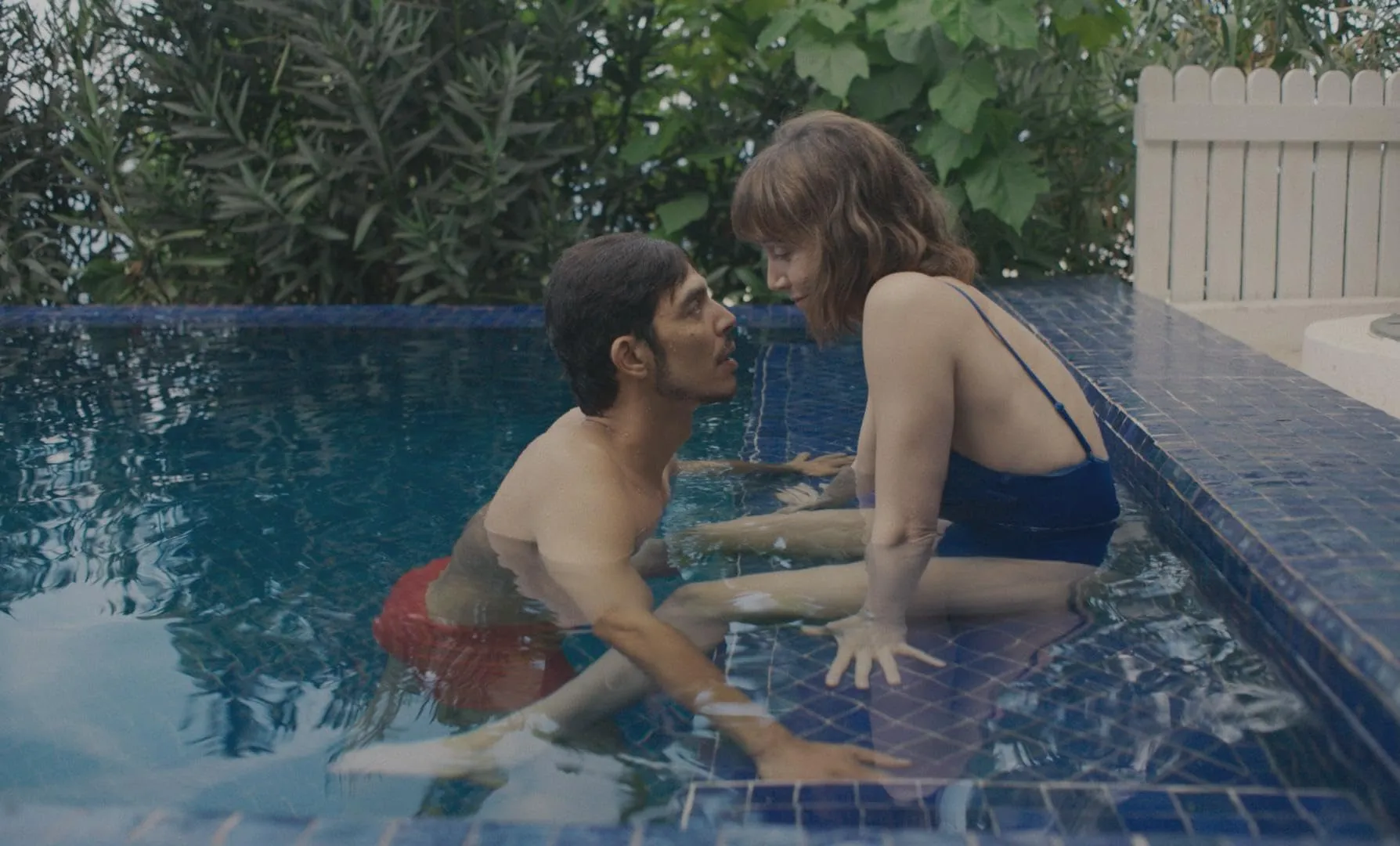
Nadia Kounda gives Selma a quiet grace, even as the script keeps her with limited agency. Selma is shaped by devotion and by the harsh expectations of a patriarchal society, and she ends up positioned mainly as the receiver of Mehdi’s lies. Sara Giraudeau’s Marie is written as someone stuck in arrested development.
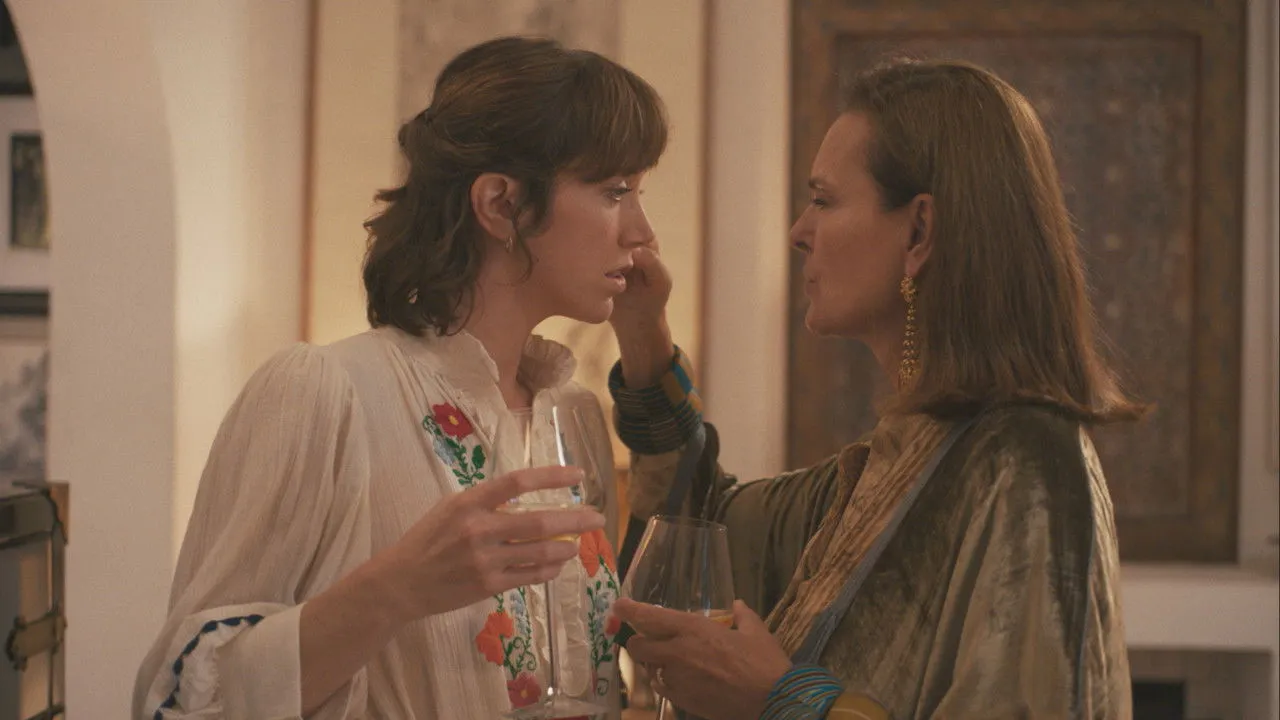
Near forty, she lives off her parents’ money and looks at Mehdi with a curiosity that carries its own predatory edge. The French family’s villa, packed with colonial artifacts, becomes a showroom for the kind of wealth Mehdi wants to touch. Their casual relationship to money creates a toxic magnetism for him, and their presence keeps exposing the power imbalance inside the affair.
Benm’Barek keeps the camera close to Mehdi’s point of view, and that choice has a cost. Selma and Marie often function as narrative instruments, not fully formed people with equal interior space. Selma is written toward suffering; Marie stays an emblem of privilege with key parts left opaque. The film wants you to watch Mehdi build his own trap, and it builds that trap using the women as the load-bearing beams.
Shadows Cast by the Sun
Cinematographer Son Doan gives the film a clear visual logic through color. Selma’s scenes carry warm golds that suggest tenderness and a romanticized image of Moroccan tradition, with frames that feel intimate and grounded. In the French villa, the palette cools into clinical blues and grays. The tonal shift reflects the affair’s transactional chill, and it also matches Mehdi’s mental state as he begins treating relationships like tools in a plan.
The title plays as a visual thesis: a beautiful coastal city, and a darkness that keeps creeping under its shine. Jim Williams’ score supports that slide with care. It starts in a mode of quiet curiosity, then tightens into something closer to a psychological thriller as Mehdi’s lies start stacking on top of each other. The music grows sharper and more uneasy, pressing anxiety into scenes that might otherwise play as routine drama beats.
One of the film’s most contemporary flourishes is a digital montage of selfies and videos charting Mehdi and Selma’s courtship. It works like a compressed “time-skip” mechanic, using social media texture to show duration quickly while keeping the romance anchored in the present. On a craft level, the film stays controlled and capable, even in stretches where the story path signals familiarity.
Postcolonial Tensions and The Weight of Law
Mehdi’s climb becomes the script’s way of examining how French influence still lingers in Morocco. Marie’s advice that Mehdi should visualize success lands as a clean example of how insulated wealth can be, since it ignores the systemic barriers shaping his daily reality. Her family’s money creates a sealed environment where obstacles feel imaginary, and that disconnect fuels the film’s tension as much as the affair does.
The drama spikes when the threat of an illegal pregnancy enters the story, underlining how the legal system can turn private mistakes into life-altering punishment. Benm’Barek uses a flashback structure that begins with Mehdi’s regret, establishing a sense of dread from the start and framing the narrative like a pre-written outcome you are watching catch up to him.
The film still falls into predictable patterns at times, leaning on a virtuous local woman set against a liberal, detached foreign presence. That reliance on archetypes blunts the sharper edge of its social critique, since the people around Mehdi can start to feel like positions in an argument.
The tone stays grim and earnest, treating each turn with heavy moral weight. The film captures social pressure as something physical and crushing, and it keeps showing how the desire for a different life can strip away a person’s self-respect and judgment. In the final act, a few coincidences land with a forced feel, yet the central trajectory remains clear: Mehdi’s hunger for mobility drives the lies, and the lies tighten until there is almost no room left to breathe.
Behind the Palm Trees premiered in late 2025 at the Marrakech International Film Festival, where it was selected for the official competition. The film is a co-production between France, Morocco, Belgium, and the United Kingdom, and it follows the psychological and social fallout of a love triangle in Tangier. While it has toured the international festival circuit throughout late 2025, wider theatrical and streaming availability is expected in early 2026 through its European and MENA region distributors.
Full Credits
Title: Behind the Palm Trees
Distributor: Pyramide Distribution, MAD Distribution
Release date: November 2025 (Marrakech International Film Festival)
Running time: 94 minutes
Director: Meryem Benm’Barek
Writers: Meryem Benm’Barek, Fyzal Boulifa, Emma Benestan, Agnès Feuvre
Producers and Executive Producers: Jean Bréhat, Emma Binet, Souad Lamriki, Olivier Dubois, Tristan Goligher
Cast: Sara Giraudeau, Driss Ramdi, Nadia Kounda, Carole Bouquet, Olivier Rabourdin, Soumaya Akaaboune, Amine Ennaji
Director of Photography (Cinematographer): Son Doan
Editors: Christel Dewynter
Composer: Jim Williams
The Review
Behind The Palm Trees
Behind The Palm Trees offers a striking visual exploration of how class and colonial legacies continue to shape personal desires in Tangier. While the narrative occasionally feels predictable and leaves its female characters underdeveloped, the strong central performance and moody atmosphere create a memorable drama. It serves as a somber reminder of the high cost of social climbing within a rigid legal system.
PROS
- Strong lead performance by Driss Ramdi that tracks a complex moral decline.
- Excellent use of color palettes to distinguish between different social worlds.
- Effective use of contemporary tech elements like digital montages.
- Sharp commentary on postcolonial class dynamics and wealth inequality.
CONS
- Female characters lack agency and internal depth.
- The plot follows a somewhat formulaic path toward an inevitable end.
- Reliance on archetypes and coincidences can hinder the realism.
- Pacing occasionally feels heavy due to the grim tone.