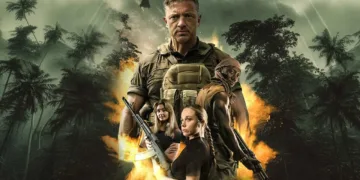




















Patrick Garcia frames reconstruction as a perilous contest with the leftovers of a broken social order. The film makes Michael Foster the story’s primary focus, assigning him a dam-building job in a region still shaking from a long civil war. That backdrop turns peace into something physical: concrete, rebar, logistics, and the daily risk of failure.
Foster and his team of contractors read as the connective tissue between military ruin and civilian steadiness, carrying the assumptions of discipline into a space that punishes certainty. The dam becomes the film’s governing image for repair, with every poured section suggesting how slow and fragile recovery can be.
Garcia shoots the material with a grainy, tactile look that recalls an older era of filmmaking, giving the setting a worn, dangerous texture. The world feels inhabited, and the camera’s roughness matches the characters’ fatigue. From the opening premise, progress registers as provocation for people who profited during chaos, which turns construction into an act of exposure.
Tools meant for building keep giving way to tools meant for fighting. Garcia communicates the history of conflict through terrain and the professionals’ guarded demeanor, trusting the environment and the crew’s wariness to carry the legacy without lengthy history lessons.
A Rapid Descent into Multi-Faceted Conflict
The story runs on high-thriller velocity, compressing a network of rivalries into a narrow window. Threat comes from multiple directions, so danger never settles into a single face or a single motive. Michael deals with sabotage targeting his engineering work, a mole working from inside, and kidnappings that transform a job site into a rescue operation. The pacing keeps pressing forward, pushing the cast through one setpiece after another and limiting any chance to recover. The effect fits a region where peace demands constant maintenance and constant alertness.
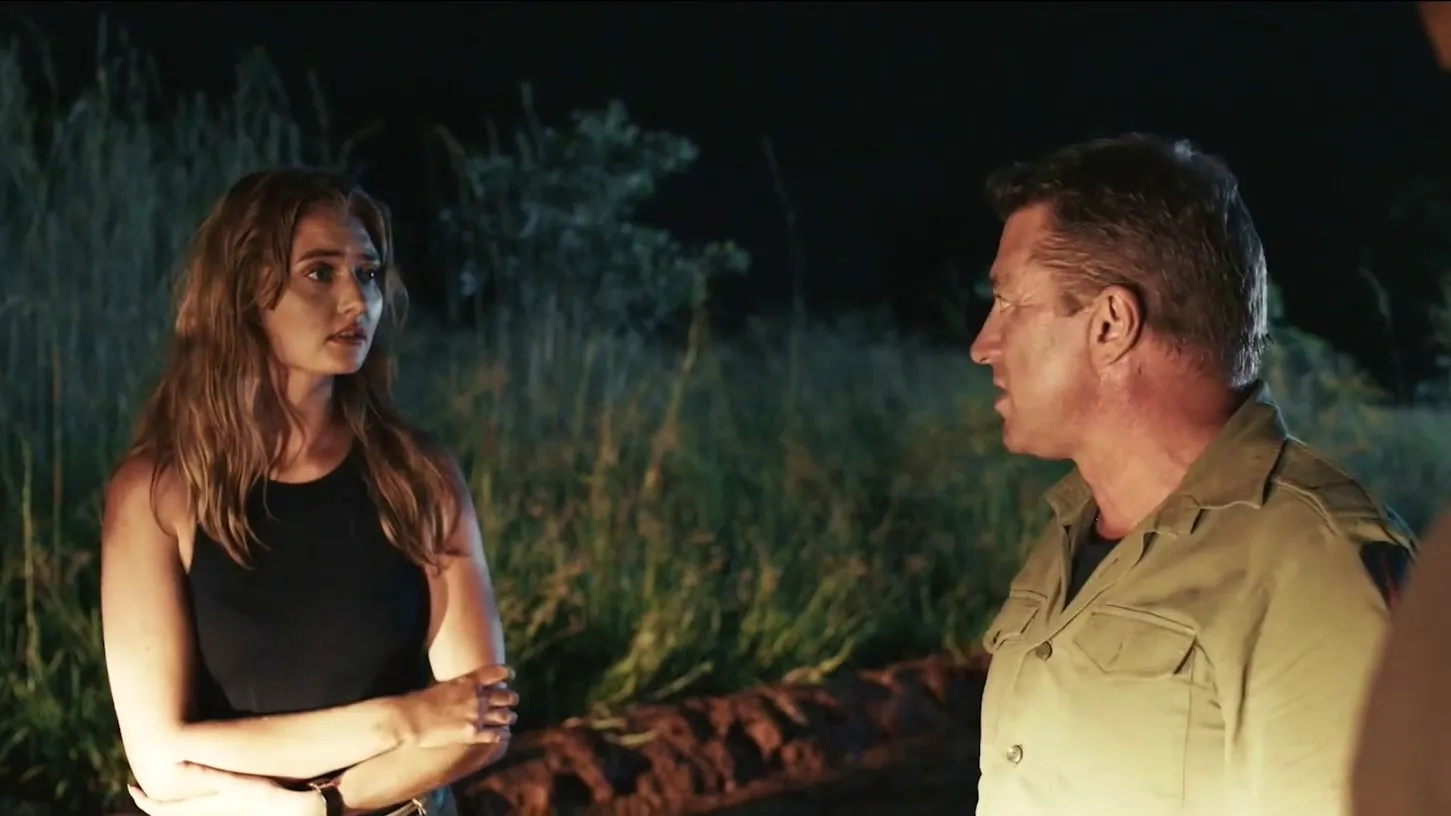
Journalist Amelia Turner arrives as a human counterpoint to Michael’s rigid work mindset, then the surrounding violence pulls her into the film’s most urgent turns. Her storyline includes a sudden disappearance that kicks the plot into a more desperate rhythm.
The script pivots quickly among rebels, professional assassins, and a rogue medical professional, matching the instability of an active combat environment. Each thread resolves through immediate action, so momentum stays intact. Character development lands during pursuits and firefights, with stress functioning as the film’s main engine for revelation.
The Architecture of Heroism and Villainy
Tom Fairfoot gives the film its emotional ballast through Michael Foster, playing him with quiet strength and a commanding presence that relies on minimal dialogue. That restraint invites the audience to read history and burden into the way he moves through each crisis. Alonso Grandio’s Carlos pushes in the opposite direction, performed with volatile, unhinged energy that embodies the disorder of a post-war reality. Carlos seems energized by disruption, and his scenes inject unpredictability into every confrontation.
Joseph Clarke’s Doctor Clark shifts the tone again, adding a streak of psychological horror that feels separate from the rebels’ direct menace. His “creepy doctor” presence creates a different kind of fear, one built on unease instead of open combat. Secondary figures, including Major Thompson and the rebel leadership, get enough space to signal motives shaped by the region’s power vacuum.
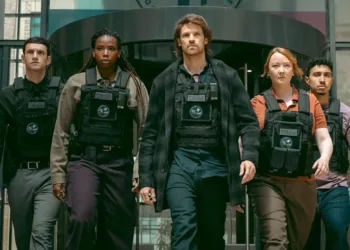
Michael’s surrounding team sells the working dynamic of skilled operators, which helps the tactical beats feel earned. Leia’s role keeps civilian vulnerability in view, reminding the viewer what gets crushed between competing forces. Taken together, the performances create a world where protection and predation frequently occupy the same silhouette.
Visual Grit and the Mechanics of Survival
The craft leans hard on the traditions of 80s action cinema, favoring practical impact and textured atmosphere. The cinematography uses vast landscapes to emphasize isolation, then snaps into tight, kinetic framing once combat begins. The grainy image does double duty: it masks the limits of a smaller budget and strengthens the story’s rough, hazardous tone. The landmine sequence shows this control at peak intensity, with the camera lingering on the pressure of a single step until dread becomes tangible.
Sound design carries the same precision. Each weapon lands with a heavy, distinct sonic identity, and the attention to gunfire and explosions gives the violence physical weight that many bigger productions fail to achieve. The score tracks emotional beats without smothering scenes, leaving tension to do the hard work.
The bar fight and the chase that follows highlight confident staging and choreography, with movement that feels risky and immediate rather than polished for safety. Garcia’s commitment to tangible production choices keeps the action grounded, proving that strong genre instincts and clear mechanical execution can make this world feel expansive and urgently present.
Lost Horizon is a high-octane action feature that premiered in late 2024 with a limited theatrical release following on November 28, 2025. Set against the backdrop of a nation recovering from civil war, the film follows an ex-soldier turned contractor who must navigate a landscape of betrayal and violence to protect a vital infrastructure project. Viewers can currently watch the film on major digital platforms including Amazon Video, Apple TV, and Fandango At Home, where it is available for both rent and purchase.
Full Credits
Title: Lost Horizon
Distributor: Epic Pictures Group
Release date: November 28, 2025
Running time: 93 minutes
Director: Patrick Garcia
Writers: Jakob Breed
Producers and Executive Producers: Janine Möller, Sareta Schutte, Patrick Garcia, Mandla N, Tumi Masemola
Cast: Tom Fairfoot, Aimee Botes, Scott Talbot, Kayla Osburn, Llewellyn Cordier, Joseph Clarke, Alonso Grandio, Farai Chigudu
Director of Photography (Cinematographer): Patrick Garcia
Editors: Collin Mpetha
Composer: Blackbrain
The Review
Lost Horizon
This film succeeds as a focused piece of genre entertainment by prioritizing physical momentum and a rugged, tactile aesthetic. While the narrative occasionally feels crowded with divergent subplots, the commitment to practical action and a grounded protagonist provides a refreshing alternative to high-gloss blockbusters. It functions best as a throwback to a period where atmosphere and kinetic energy defined the cinematic experience. Despite some clunky transitions, the sheer density of the conflict and the strong character work from the antagonists make it a worthwhile journey for those seeking honest, visceral storytelling.
PROS
- Strong, stoic lead performance by Tom Fairfoot.
- Authentic, grainy visual style that mirrors classic action cinema.
- Exceptional sound design that gives combat a heavy, physical weight.
- Rapid pacing that keeps the audience engaged throughout the runtime.
CONS
- Overstuffed plot with a high number of disjointed subplots.
- Female characters are frequently relegated to the role of captives.
- Abrupt narrative transitions that can feel slightly jarring.