
























The latest release from nDreams Elevation signals a cinematic pivot for virtual reality, trading the tunnel vision of pure shooters for the kind of broad, landmark-driven exploration associated with classic adventure franchises. You play as Rosa, a professional stuntwoman whose routine film shoot on the coast gets shattered by a massive earthquake.
That single event drops her into a concealed world miles beneath the surface, where the darkness quickly registers as inhabited. Rosa teams up with Atlas, a sentient stone entity, plus a hovering robotic drone named Oppo, and the trio pushes through the remains of a lost civilization with the goal of stopping a subterranean threat from breaking into the human world above.
That setup gives the entire experience its defining shape: vertical scale with real stakes. The story leans on the physical strain of climbing, framing Rosa as a reluctant hero in a place where gravity serves as the constant enemy. The tone moves between wonder and isolation, stripping away modern comfort so survival and discovery can drive each beat.
The Mechanics of Vertical Momentum
Reach’s parkour is a serious attempt to tackle the nausea that so often follows traditional VR locomotion. The game asks for active movement from the player, and its clearest example is the arm-swung jump. Clearing a gap means physically swinging your arms to sell the momentum of a leap. The body-language matters here, because the motion helps your brain accept the snap of relocation, cutting down the chance of motion sickness. That physical link between your real posture and Rosa’s actions also builds a stronger sense of presence than floating-hand games tend to manage.
The same philosophy carries into how the game represents your body. Look down and you see Rosa’s torso and legs, which gives movement weight and anchors you in space. Mantling onto a ledge, leaning over a dizzying drop, even standing still on a narrow surface all hit with extra intensity because your body feels accounted for. Climbing a ladder shows the same commitment: reaching the top does not translate into an instant hop onto safety. You lean forward and pull yourself up in a way that feels instinctive.
Reach also drops the “yellow paint” guidance that has become a default crutch in modern adventure titles. Routes come from observation. You read rock faces and metal beams, spot a pipe, measure a ledge, and decide how to shimmy across. The environment turns into a tactile playground that rewards attention. Low parapets ask you to duck. Tight rock chimneys ask you to squeeze through. The game even sneaks in a light upper-body workout that feels earned because it comes from real spatial demands. Over time, the movement develops into muscle memory, and chaining jumps with zip-lines can feel like a choreographed stunt that you built through repetition and confidence.
Utility and Conflict Underground
Rosa survives through a toolkit that mixes ancient technology with modern stunt gear. The backbone is a bow that supports four arrow types. Standard arrows cover the baseline needs, and fire, ice, and stun arrows add tactical flexibility when dealing with the living statues that guard the ruins. These arrows also carry traversal utility. Some can be fired into soft surfaces to create temporary climbing anchors, which lets you carve out a route when the wall lacks a natural handhold.
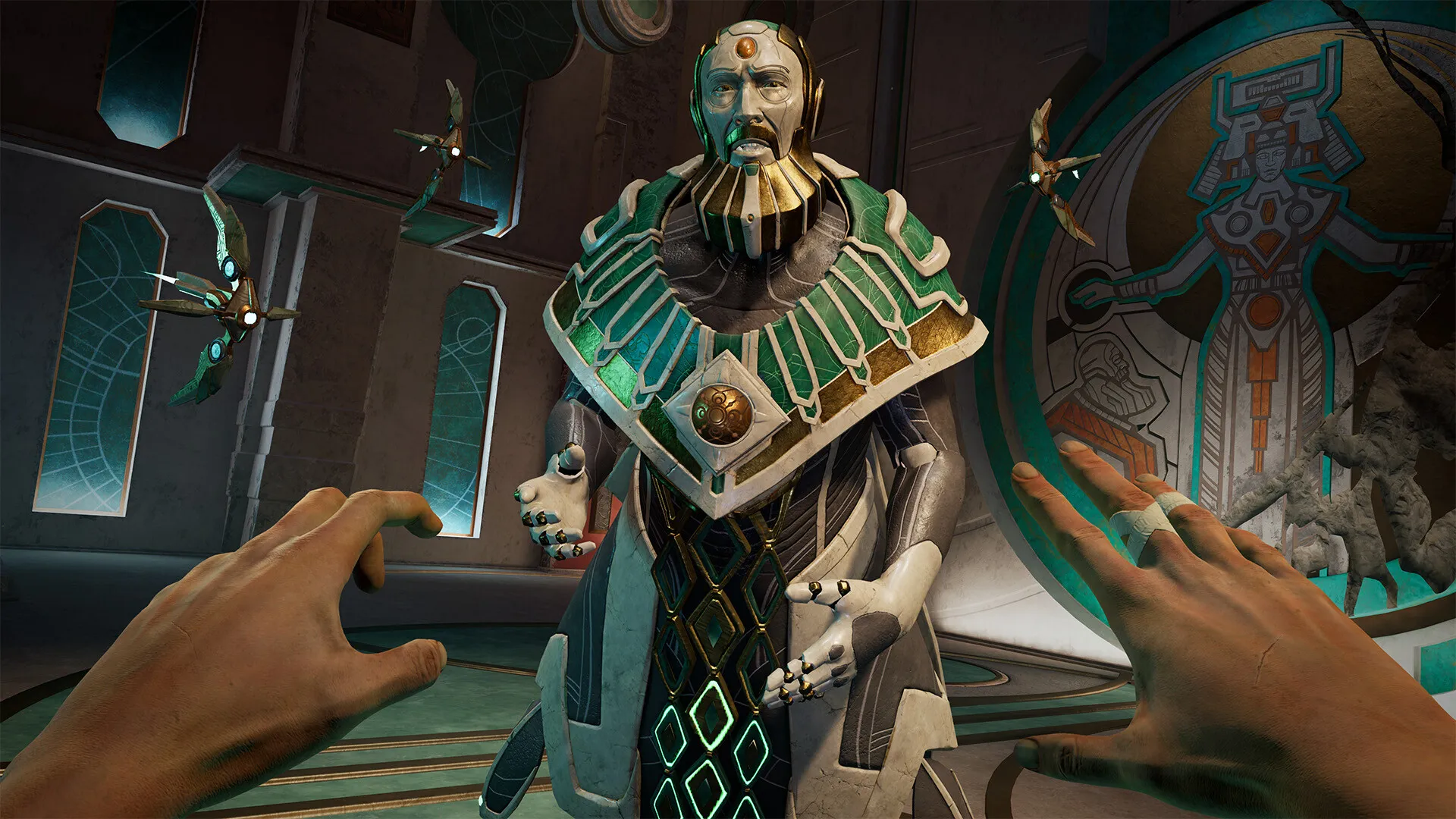
A summoned shield expands that toolbox through a specific hand gesture. Its behavior calls to mind iconic comic book weaponry, since you can fling it and rely on ricochets off stone surfaces to tag enemies tucked behind cover. The shield also matters for traversal. Slot it into certain architectural mounts and it becomes a custom standing platform, turning unreachable heights into reachable ones through planning and placement.
Oppo, the grappling hook drone, rounds out the kit by giving you propulsion across wide chasms and bursts of speed for scaling vertical shafts. Combat sits in a supporting role, and encounters still carry a kinetic edge. The living statues fire energy pulses and grenades, which pushes you into constant motion. The game encourages you to apply your parkour skills under pressure: leap between platforms, keep distance, and pick targets apart with the bow. Controller haptics help sell the physicality, giving the string pull and shield impacts a concrete feel. Movement and combat feed into each other, so even small skirmishes can land with the rhythm of a high-stakes set piece.
Architecture of the Abyss
Reach’s strongest visual statement comes from the gap between its surface introduction and the scale of the world beneath. Early stretches in Rosa’s hometown can look plain, with flatter textures that read as functional scenery. The game’s real identity shows up after the fall underground. The ruins open into cathedral-like structures and vast caverns that stretch into a surprisingly well-lit abyss. Bioluminescent plants cling to the walls. Water trickles down ancient stone. The result feels like an ecosystem shaped by time and neglect. Lighting does heavy lifting here, using flickering torches and glowing insects to cast long shadows that move across the architecture.
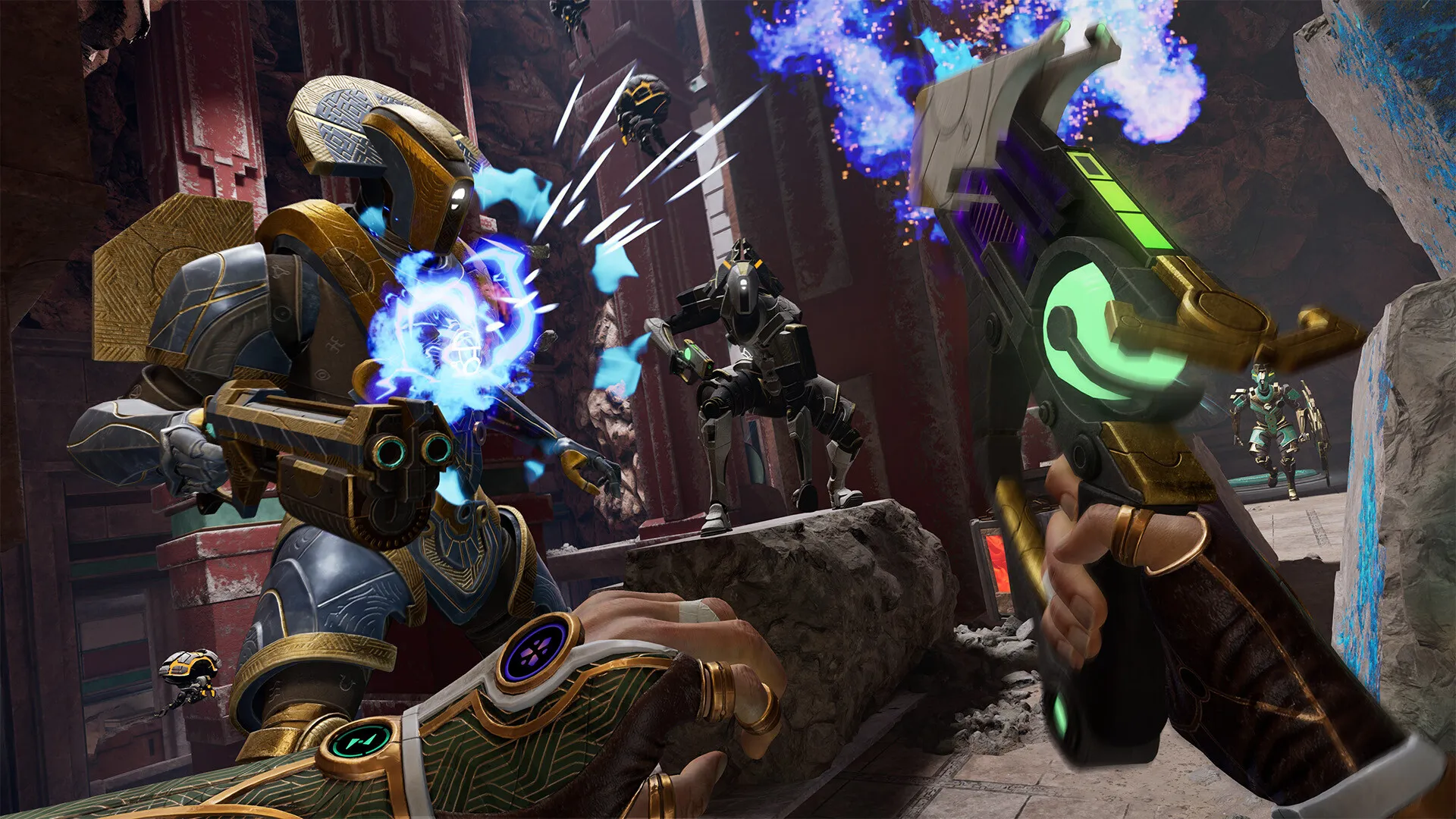
The puzzles match that scale. These challenges are spatial and require full 3D thinking. One moment you scan the environment to locate hidden power sources. Another moment you use the shield to deflect a beam of light across a room, unlocking a heavy stone door through careful alignment. The best part is how grounded these puzzles feel in the space itself, as if the ruins were built around these systems rather than puzzles being dropped into the world as excuses for slowdown.
Height becomes the game’s clearest technical flex. Standing on a narrow beam hundreds of feet above a glowing pit creates real vertigo, and the sensation holds because the traversal systems ask you to commit physically. Exploration also pays off. Push into side routes and you find secret alcoves and hidden passages with collectibles that grant permanent upgrades to Rosa’s stamina or tool capacity. Those rewards make curiosity practical, and they keep the periphery attractive even when the main route feels urgent. The world carries quiet storytelling too, using crumbling statues and forgotten hallways that suggest centuries without human presence.
Technical Performance and Narrative Flow
Reach runs as a polished VR production that leans on high-end hardware. On devices like PSVR 2 and Meta Quest 3, image clarity stays sharp enough for distant detail, which matters when you’re planning a route up a wall or reading the shape of a far-off platform. Frame rate stability holds even during high-speed traversal, including moments where you’re flinging yourself through space.

A few issues still slip through. Hands can clip through a stone ledge at times, and high-resolution textures can arrive a beat late when entering a new room. The most disruptive element is the use of black loading screens between sections. Those breaks puncture presence, and the interruption stands out precisely because the game spends so much effort keeping you embodied. On a powerful console, those transitions can feel like leftovers from the demands of supporting several platforms at once.
The eight-hour campaign hinges on pacing that alternates between fast traversal and slower puzzle rooms. Much of the time, that balance lands. Late in the game, puzzle density can stack too tightly. You can spend ten minutes climbing and scanning through a complex space, step through a door, and hit another challenge with a very similar shape. That repetition can flatten the narrative momentum, since the story hits hardest when the experience keeps moving.
The plot itself stays in straightforward adventure territory, supported by strong voice acting and a steady thread of atmospheric mystery. The trajectory feels familiar, and the traversal carries the quieter stretches by keeping your hands busy and your sense of height alive. Reach plays to its strengths by treating presence as the main event and letting the script serve that physical experience.
The Review
Reach
Reach is a standout achievement in physical presence, succeeding where many adventure games fail by making movement feel entirely tactile. The arm-swinging parkour and full-body simulation create a grounding experience that justifies the hardware. While the narrative doesn't break new ground and the later puzzle density can feel like a detour, the sheer joy of scaling cathedral-like ruins is undeniable. It is a confident, albeit slightly unpolished, leap into the cinematic adventure space that every VR enthusiast should experience for the traversal alone.
PROS
- Innovative and physical parkour system that reduces motion sickness.
- Stunning scale and lighting within the subterranean environments.
- Tactile, dual-purpose tools that reward creative problem-solving.
- Immersive "diegetic" interface built directly into the character's gear.
CONS
- Frequent black loading screens break the sense of immersion.
- Pacing slows down significantly in the second half due to puzzle repetition.
- Predictable story that relies on familiar genre tropes.
- Occasional technical glitches like clipping and texture pop-in.