

























![Kingdom Hearts Collection [I-III] Review](https://gazettely.com/wp-content/uploads/2026/10/Kingdom-Hearts-Collection-I-III-1-360x180.webp "Kingdom Hearts Collection [I-III] Review: KHII Holds Steady as Newer Entries Fluctuate 37")



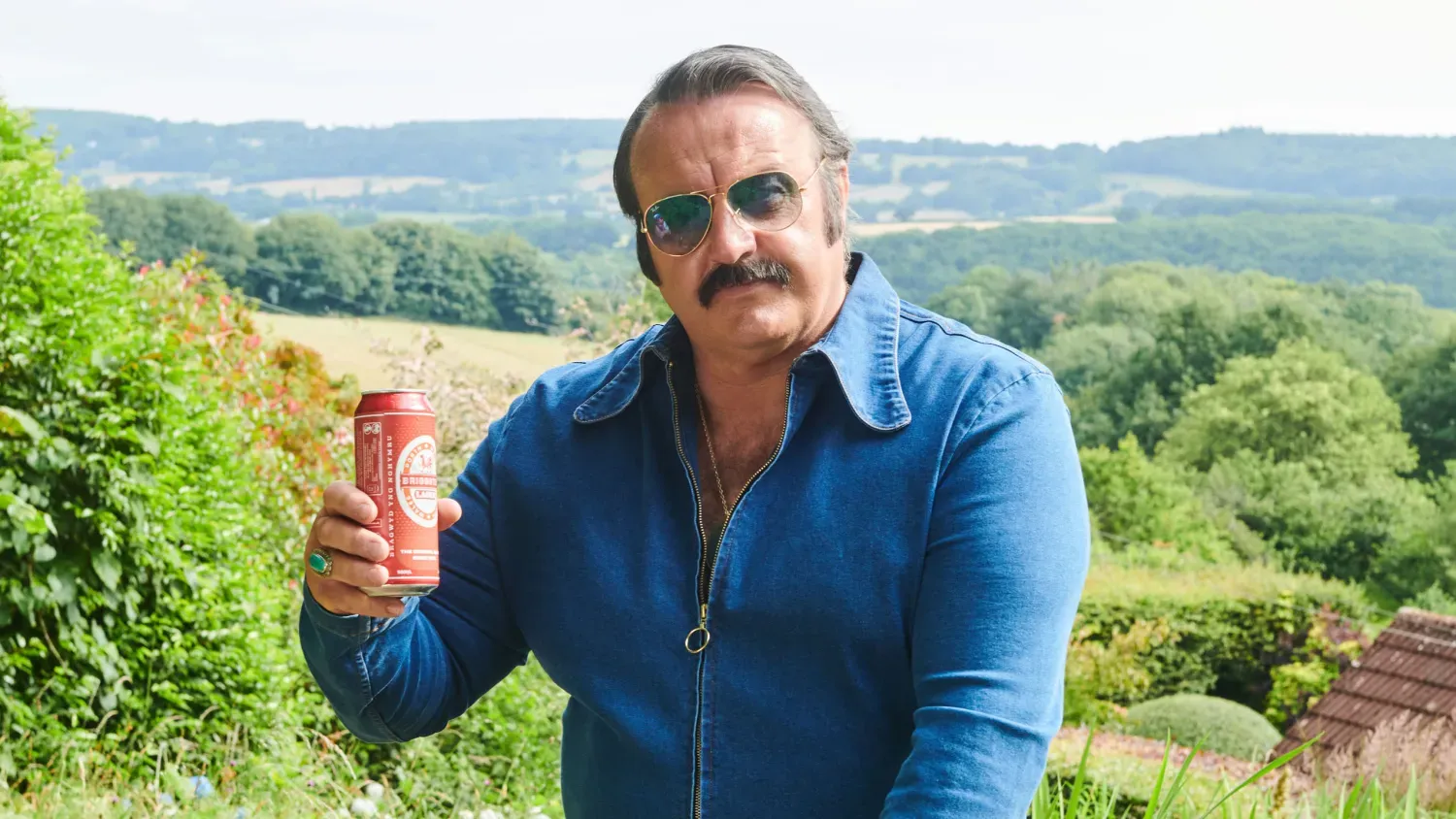

The current TV comedy climate often sidesteps sharp social satire, and Mammoth plants itself directly in that gap with a deliberately retro attitude. It arrives as a consciously old-school sitcom, with Mike Bubbins playing Tony Mammoth, a 1970s physical education teacher whose life is frozen in cryogenic limbo after an avalanche during a 1979 school skiing trip. Nearly half a century later he re-emerges, his middle-aged body and his 1970s value system preserved with eerie precision.
The show builds its humor on that freeze-frame: Mammoth’s unreconstructed manliness and fixed tastes repeatedly collide with the textures of 2020s Britain. The series asks viewers to sit in two time zones at once, laughing at his outdated opinions while sometimes recognizing the source of his confusion when he questions what now passes for normal. Across its tight three-episode run, the show uses that clash of eras as a comic engine and as a way of measuring how far contemporary culture likes to think it has travelled from the late 1970s.
Retro-Futurism and the Comedy of Confidence
The premise may sound silly, yet the writing treats it with a clear sense of purpose, shaping the time-stranded teacher into a highly calibrated comedy tool. Mammoth’s out-of-time advice and behaviour sit sharply against current life. He urges a lifeguard to take Dexedrine to stay awake on duty, orders fighting pupils to use their “Fists only” before a ritual handshake, and nurses a 50-year parking grievance with the intensity of a world leader.
The series directs its sharpest work toward masculinity. Much of the humor comes from Mammoth’s core traits, such as his startling selfishness and unwavering, illogical confidence. He encounters wellness culture, foraging holidays, and automated phone systems with a kind of affronted puzzlement, pricking the self-seriousness of those trends in a way that feels quietly subversive.
That culture clash sits alongside a powerful hit of nostalgia. Bubbins’ affection for the decade pours through period details, from evenings spent with Minder to the sight of his treasured Ford Capri. The saturation in 1970s references gives the show the texture of a dug-up broadcast, reinforced by theme music composed by Mike Post.
Family Foils and The Limits of Contrast
Season 2 places Mammoth firmly inside a new household arrangement with his daughter Mel (Sian Gibson) and grandson Theo (Joel Davison). The pull of the series lies almost entirely in Bubbins’ turn in the title role, built on immaculate deadpan delivery and precise comic timing, with his physicality pressed into service for big laughs, as in a memorable scene featuring Speedos.

Around him, the supporting players function mainly as counterweights to his swagger. Mel arrives on screen as a figure of high-pitched anxiety and hyper-careful parenting, a characterisation that sets up a clear opposition to Mammoth yet sometimes flattens her into a single register and causes certain scenes to lose energy. Theo’s role as a quiet, withdrawn presence who stands as the polar opposite of his grandfather’s alpha energy creates an effective line of contrast, though he remains less distinctive as a character.
A more striking relationship emerges during the cameo from Michael (Al Roberts), a younger man who shares Mammoth’s fixation on the 1970s. Their brief bond reframes the show’s nostalgia as a generational contagion, a moment that hints at the decade’s persistent pull on contemporary culture and offers a short break from the usual clash between past and present.
Social Discourse and The Softened Edges of Satire
Mammoth ties its themes directly to the friction between older and newer sensibilities, often circling debates about “political correctness.” The comedy invites viewers to mock the foolish or worse habits of the past while still recognising the rough comfort that era can hold. At times, though, the series feels hesitant.
The satire occasionally seems to ease off, as if hemmed in by what the script labels the “cold grip of modern sensibilities.” Mammoth’s confusion about his boss’s sexuality in Season 1, answered with “well-meaning” chat about Billie Jean King, signals a reluctance to push the idea into stranger or riskier territory. By the close of this second series, the central joke still entertains, yet it has begun to thin.
The question of what comes next for the character, with change set against stasis, highlights the show’s main tension. Its comic charge depends on Mammoth’s refusal to move with the times. The series keeps circling the same image of an unreconstructed man who will not adjust, and that static stance mirrors an unresolved pause in the wider conversation about cultural progress that the show keeps glancing toward without fully developing.
Mammoth is a British sitcom that centers on Tony Mammoth, a 1970s PE teacher who, after being perfectly preserved in an avalanche, is brought back to life nearly fifty years later. The comedy derives from his attempts to live life as a man from the 1970s while navigating the complexities and shifting cultural norms of the modern world. The second series, consisting of three episodes and a Christmas special, premiered on December 1, 2025, on BBC Two and was made available as a box set on BBC iPlayer.
Full Credits
Title: Mammoth Season 2
Distributor: BBC Two, BBC iPlayer
Release date: December 1, 2025
Rating: TV-PG
Running time: Approximately 29 minutes per episode
Director: Akaash Meeda
Writers: Mike Bubbins, Paul Doolan, Luke Mason
Producers and Executive Producers: Luke Mason (Producer), Mike Bubbins (Creator)
Cast: Mike Bubbins, Sian Gibson, Joel Davison, Joseph Marcell, Mali Ann Rees, John Weldon, Al Roberts, Dylan Malyn
- Composer: Mike Post (Theme Music)
The Review
Mammoth Season 2
Mammoth Season 2 remains a genuinely fun, comfort-comedy experience, successfully leveraging Mike Bubbins' dedicated performance and the potent nostalgia of its 1970s premise. It offers sharp observations on contemporary social etiquette through the lens of a genuinely anachronistic character. However, the series occasionally soft-pedals its satire, hinting at an edginess it ultimately avoids. While the central joke is wearing somewhat thin, it is a brief, focused return that honors its core concept.
PROS
- Mike Bubbins' central performance is exceptional, perfectly executing the deadpan, self-assured character.
- Effective cultural satire that cleverly uses the time-displacement concept to critique modern sensibilities.
- Strong nostalgic appeal, creating a comforting, focused atmosphere for fans of 1970s aesthetics and culture.
- Succinct, three-episode format avoids dragging out the central premise.
CONS
- The central comedic premise shows signs of diminishing novelty in its second season.
- Supporting characters often feel underdeveloped, serving primarily as one-note foils for Mammoth.
- The satire feels inhibited at times, preventing the show from fully committing to the truly unreconstructed nature of its protagonist.







