

























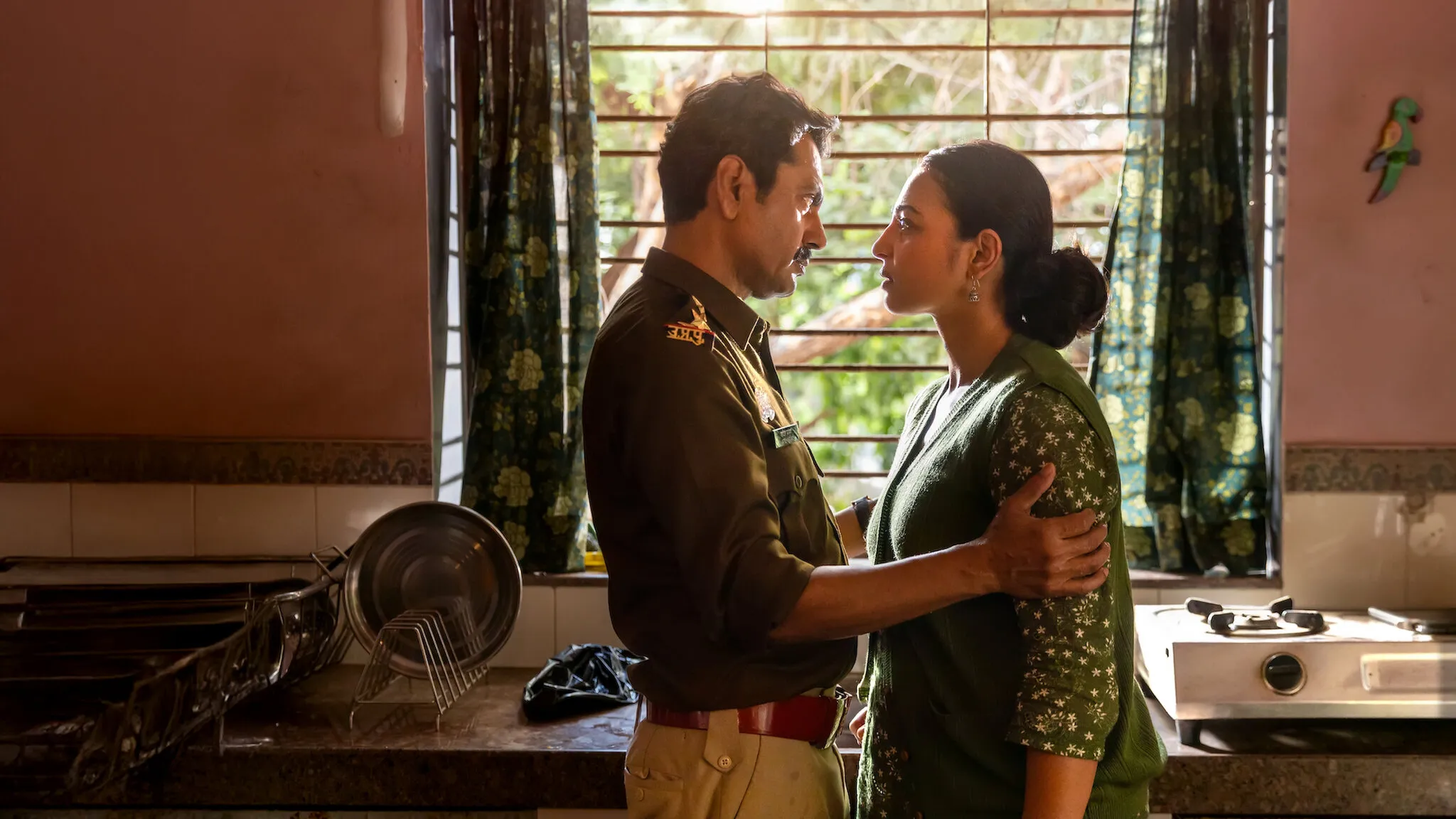

Honey Trehan returns to crime’s bleak terrain with “Raat Akeli Hai: The Bansal Murders,” a direct continuation of his 2020 procedural. The film follows the influential Bansal family after their public image collapses when multiple murders unfold inside their estate over a single night. Inspector Jatil Yadav, played by Nawazuddin Siddiqui, leads the case and runs headlong into family secrecy and institutional pressure.
The story plays as a sequel, yet the mystery is shaped so newcomers can step in without needing prior knowledge. Action takes a back seat to something colder: the slow exposure of decay inside a wealthy household. As Yadav questions the survivors and circles the estate’s closed doors, he meets a world where money often decides how far the law can reach.
The home becomes a tight, airless arena for an investigation that shifts from a straightforward homicide into an examination of power, silence, and the protection of status. The film keeps its attention on the tension between truth and reputation, letting each new detail scrape against the family’s need to stay intact.
The Weight of Performance and Moral Center
Siddiqui serves as the film’s moral anchor through Jatil Yadav. His work carries a tired watchfulness and a stubborn refusal to look away. He conveys the strain of a man pushing against a corrupt system, leaning on small physical choices that register as real fatigue rather than theatrical anguish.
The performance speaks to the global neo-noir tradition of the “common man” detective, then pins that tradition to the specific social anxieties of small-town India. Yadav feels shaped by his surroundings, and Siddiqui plays him like someone who knows the rules are tilted yet keeps taking the next step anyway.
Chitrangada Singh gives Meera Bansal an uncertainty that stays alive in every exchange. She moves between vulnerability and calculation, keeping her intentions guarded even as the camera stays close. That control becomes part of the suspense, since the film treats perception as another kind of evidence.
The supporting cast thickens the investigation’s texture. Revathi’s Dr. Panicker brings calm authority, placing steady competence beside the local police officers’ fumbling energy. Deepti Naval turns Guru Maa into an unnerving presence, a reminder that spiritual influence can sit comfortably beside family dysfunction.
Smaller roles sharpen the domestic atmosphere. Ila Arun grounds household moments with grit and plain force. Radhika Apte appears briefly with clear purpose, and the moment reads as symbolic within the narrative. Her presence works in service of the film’s themes, giving meaning that reaches past the mechanics of the plot.
Shadows and the Aesthetic of Decay
Trehan commits to a slow-burn procedural that values tension and mood over explosive set pieces. The choice lines up with current international noir, where place and texture carry narrative weight alongside dialogue. The cinematography stays muted, leaning into dense shadow and low light that echo the secrecy inside the Bansal home.
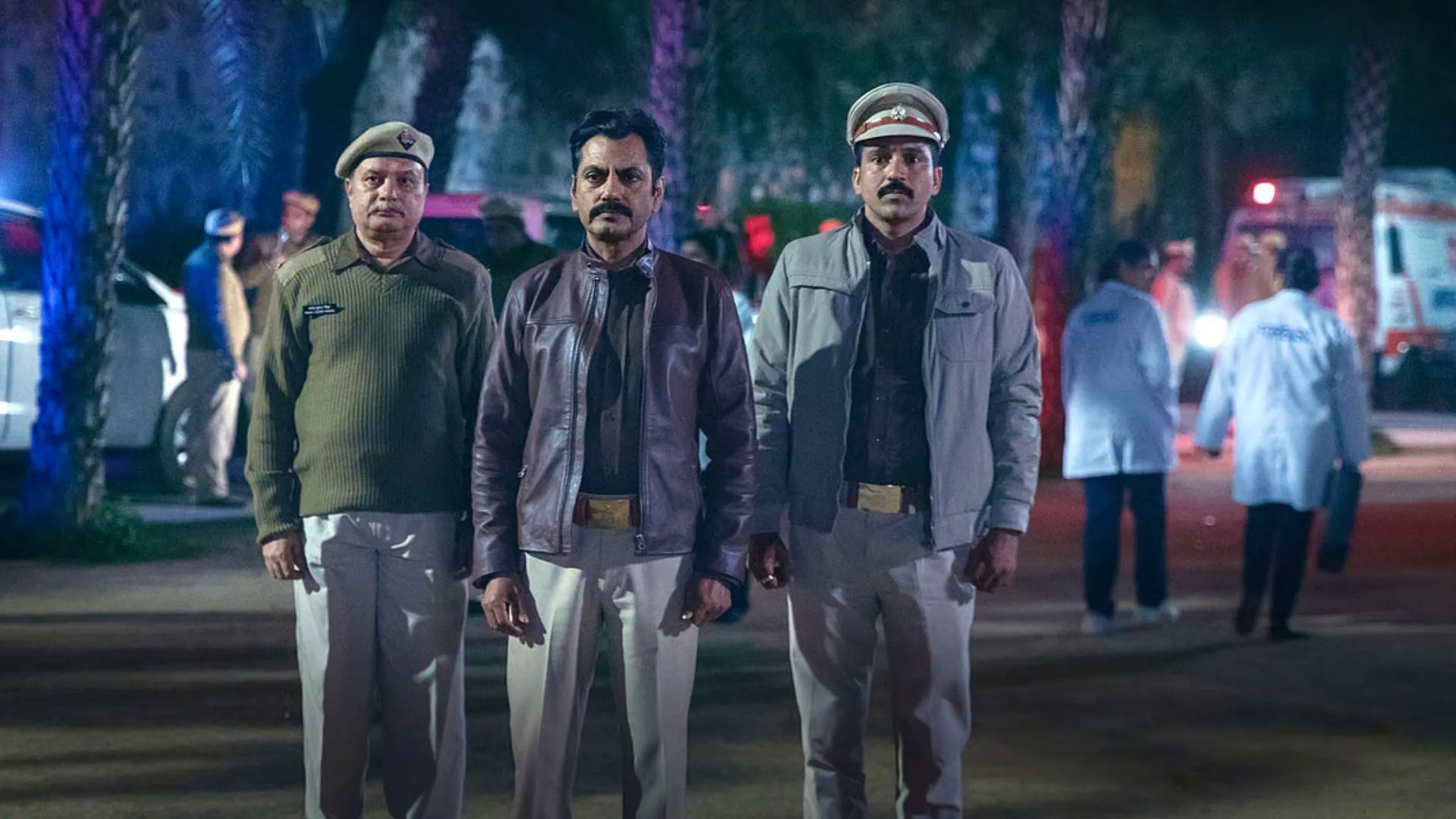
The camera often holds on empty rooms and stretched corridors, letting space speak for the characters. These lingering shots create a physical sense of moral decay and confinement, as if the house has its own grip on everyone inside it.
Sound follows the same restrained discipline. The score and background music remain sparse and subtle, building unease through restraint rather than loud warnings. Trehan includes CGI crows at key moments of the mystery, shifting the atmosphere toward something eerie and faintly surreal.
The effect pushes the procedural toward gothic dread without breaking the grounded tone. The craft keeps returning to the house as a burden the characters carry. Each image implies that the truth sits behind walls built to protect the Bansal legacy, and the film treats those walls as both shelter and threat.
Power, Privilege, and the Cost of Truth
The investigation doubles as a critique of class and hierarchy. The case keeps asking how wealth bends accountability inside a society organized around status. Trehan threads themes of religion and institutional complicity through the inquiry, showing powerful figures working systems to secure their own survival.
That pressure shapes each step of the detective work. Yadav repeatedly doubts the confessions put in front of him, caught between hard evidence and the suspects’ self-serving logic. Every player in the household offers a version of events that protects their place in the family order, turning truth into a currency they spend carefully.
At roughly 140 minutes, the film demands patience. Some subplots run long, and tighter trimming could have strengthened the narrative’s grip. The resolution still pays off the time spent tracing the case. The ending gathers the knot of subplots and underlines the film’s interest in what power does to people and to institutions. A killer is identified. The system that let the decay grow stays largely untouched. The script treats the mystery as a path into social commentary, using the Bansal estate as a sealed space where privilege, fear, and silence keep circling each other.
Raat Akeli Hai: The Bansal Murders premiered globally on Netflix on December 19, 2025, following its initial debut at the International Film Festival of India on November 27, 2025. This crime procedural brings back Nawazuddin Siddiqui as Inspector Jatil Yadav to investigate a brutal mass murder within an influential family. The film is currently available for streaming exclusively on Netflix. It provides a gritty look at social hierarchy and institutional corruption through the lens of a classic whodunnit.
Full Credits
Title: Raat Akeli Hai: The Bansal Murders
Distributor: Netflix
Release date: December 19, 2025
Rating: TV-MA
Running time: 135 minutes
Director: Honey Trehan
Writers: Smita Singh
Producers and Executive Producers: Ronnie Screwvala, Abhishek Chaubey, Sooraj Gautam
Cast: Nawazuddin Siddiqui, Chitrangda Singh, Radhika Apte, Rajat Kapoor, Deepti Naval, Revathi, Ila Arun, Sanjay Kapoor, Akhilendra Mishra, Priyanka Setia
Director of Photography (Cinematographer): Pankaj Kumar
Editors: A. Sreekar Prasad
Composer: Karan Kulkarni, Sneha Khanwalkar
The Review
Raat Akeli Hai: The Bansal Murders
This sequel remains a grounded and atmospheric procedural that benefits from Nawazuddin Siddiqui’s steady presence. The film successfully shifts from a standard homicide case into a sharp look at how wealth protects the guilty. While the pacing feels heavy and the runtime stretches the narrative thin, the technical execution and strong ensemble cast maintain the tension. It avoids the flashiness of typical thrillers, choosing instead to focus on the quiet rot of the elite. It stands as a solid, somber entry in the Indian crime genre.
PROS
- Nawazuddin Siddiqui provides a realistic and weary portrayal of a detective.
- The muted cinematography effectively builds a sense of dread and secrecy.
- The story offers a sharp look at class hierarchy and institutional silence.
- Strong supporting performances from Revathi and Deepti Naval add gravity.
CONS
- The 140-minute runtime feels overextended in several places.
- Certain subplots lack the tightness needed for a fast-paced mystery.
- The use of CGI elements occasionally feels out of place with the grounded tone.