













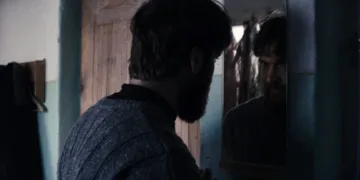














Ariel Winograd brings a distinctly Mexican pulse to A Time for Bravery, a K&S Films production that reworks the 2005 Argentine hit Tiempo de valientes. The story follows Mariano Silverstein, a psychologist whose life veers off course after a traffic accident lands him in court-mandated community service. His assignment: provide psychological support to Alfredo Díaz, a police officer sunk into deep depression after learning about his wife’s infidelity.
Winograd frames the setup as an action-tinged buddy comedy, keeping one eye on private turmoil and the other on the hard gears of genre plotting. What starts in uneasy therapy sessions doesn’t stay there for long. The film swings outward from personal crisis into a higher-stakes thread involving intelligence agencies and arms trafficking.
That pivot plants the story in a tradition where domestic hurt collides with public danger, and Winograd keeps the production grounded in its new setting while preserving the core wiring of the source material. The entertainment lands with the comfort of recognition and the lift of reinvention.
Chemistry Born from Conflict and Crisis
Luis Gerardo Méndez gives Mariano a careful, layered presence, playing him as an anxious, occasionally condescending intellectual. I appreciated how the performance keeps Mariano legible as a person, not a broad therapist sketch. Méndez leans into the idea that professional insight does not insulate Mariano from his own missteps, and the character’s movement toward bravery reads as a quiet refusal to keep living at war with himself. That inner fight supplies real emotional weight.
Memo Villegas meets him with blunt, grounded force as Alfredo, shaping him into an emotionally depleted officer whose exhaustion sits right on the surface. Alfredo’s impatience with psychological jargon comes through clearly, and his focus stays on the concrete realities of the job. Put together, the pairing clicks because each man pushes against the other’s default language.
Their bond develops with a nice sense of restraint. The relationship grows through shared irritation and the immediate pressure of physical danger, with the story letting proximity do the work. A key turn arrives when Mariano discovers his own wife is having an affair.
That mirrored betrayal connects the two leads in a direct, human way, shifting their relationship from a clinical obligation into a partnership built on shared trauma. Pain becomes a common language, and action becomes the route they recognize as necessary for recovery. Their chemistry feels earned because it comes from personal failure and mutual necessity, not from speeches.
Crafting Humor Through Stress and Motion
Winograd shows real ease with comedic rhythm by giving his actors space to improvise and catch sparks in the moment. The performances carry a spontaneous, lively energy, and the comedy tends to rise out of character habits, environmental pressure, and the sheer discomfort of what they’re stuck doing. The film understands that crisis reactions can land harder than carefully arranged punchlines, and it uses that principle to keep scenes moving.

On the technical side, the action is staged with clarity. The camerawork stays efficient and steady, and it tracks the story cleanly without calling attention to itself. The set pieces read as part of the film’s forward motion, not as interruptions built for spectacle. The Mexican cultural shading feels smooth and confident, reflecting Winograd’s experience working in that cinematic space, and the tension stays present even when the jokes are flowing.
The pacing does strong work in the opening act as the world takes shape, and the final stretch keeps a brisk, satisfying momentum. The middle section sags slightly as the story revisits familiar emotional beats, though the craft remains consistent. The editing makes the jump between quiet therapy beats and loud gunfire feel intentional, with transitions that carry purpose. Winograd comes across as a capable craftsman here, respecting the genre’s rhythm while bringing in stylistic touches that keep the ride engaging.
Defining Courage in a Modern Landscape
The film takes a grounded view of its theme. Bravery is framed as staying present and taking responsibility in moments that feel deeply uncomfortable, with emotional accountability treated as the real measure of strength. That angle gives the movie a degree of depth that many standard streaming releases fail to reach.
The screenplay shows some strain, though. A few plot turns lean heavily on coincidence to place characters where the story needs them, and certain stretches of dialogue spell out themes with too much directness, signaling limited faith in the audience’s ability to catch subtext. Supporting characters can feel thin as well, showing up mainly as obstacles or mechanisms for the plot, without the texture Mariano and Alfredo receive.
Even with those weaknesses, the film stands out in today’s streaming ecosystem. It keeps its focus on character growth, and it delivers polished, reliable genre entertainment that respects its origins while settling into a voice of its own. By leaning on the vulnerability of its two leads, it offers a satisfying experience and a pointed reminder that the hardest fight can be the one happening inside an ordinary life.
A Time for Bravery premiered globally on Netflix on December 19, 2025, and is currently available for streaming on the platform. As a Mexican remake of the 2005 Argentine cult classic Tiempo de valientes, the film blends high-stakes crime with character-driven comedy. It follows the unlikely partnership between a stressed psychologist and a grieving police officer as they stumble into an international arms trafficking conspiracy.
Full Credits
Title: A Time for Bravery (Original title: La hora de los valientes)
Distributor: Netflix
Release date: December 19, 2025
Rating: TV-MA
Running time: 1 hour 46 minutes
Director: Ariel Winograd
Writers: Damián Szifron, Ariel Winograd
Producers and Executive Producers: Hugo Sigman, Matías Mosteirín, Leticia Cristi
Cast: Luis Gerardo Méndez, Memo Villegas, Verónica Bravo, Christian Tappán
Composer: Sergei Grosny
The Review
A Time for Bravery
A Time for Bravery succeeds as a grounded, character-driven comedy that values emotional honesty over hollow spectacle. Ariel Winograd delivers a polished production that honors its Argentine roots while establishing a vibrant Mexican identity. The chemistry between Luis Gerardo Méndez and Memo Villegas provides a sturdy foundation, turning a familiar buddy-cop setup into a thoughtful study of resilience. While the middle act wanders and some plot points feel convenient, the film remains a reliable and sharp piece of entertainment. It offers a refreshing perspective on courage as the simple act of showing up.
PROS
- Authentic and lived-in chemistry between the two lead actors.
- A mature take on bravery centered on accountability and presence.
- Clear, well-executed action sequences that avoid visual clutter.
- Natural humor derived from character traits rather than forced gags.
CONS
- Mid-film pacing issues where the narrative momentum slows.
- Over-reliance on coincidence to advance specific plot points.
- Underdeveloped supporting characters who serve primarily as plot devices.
- Occasional heavy-handedness in explaining the film's central themes.