





























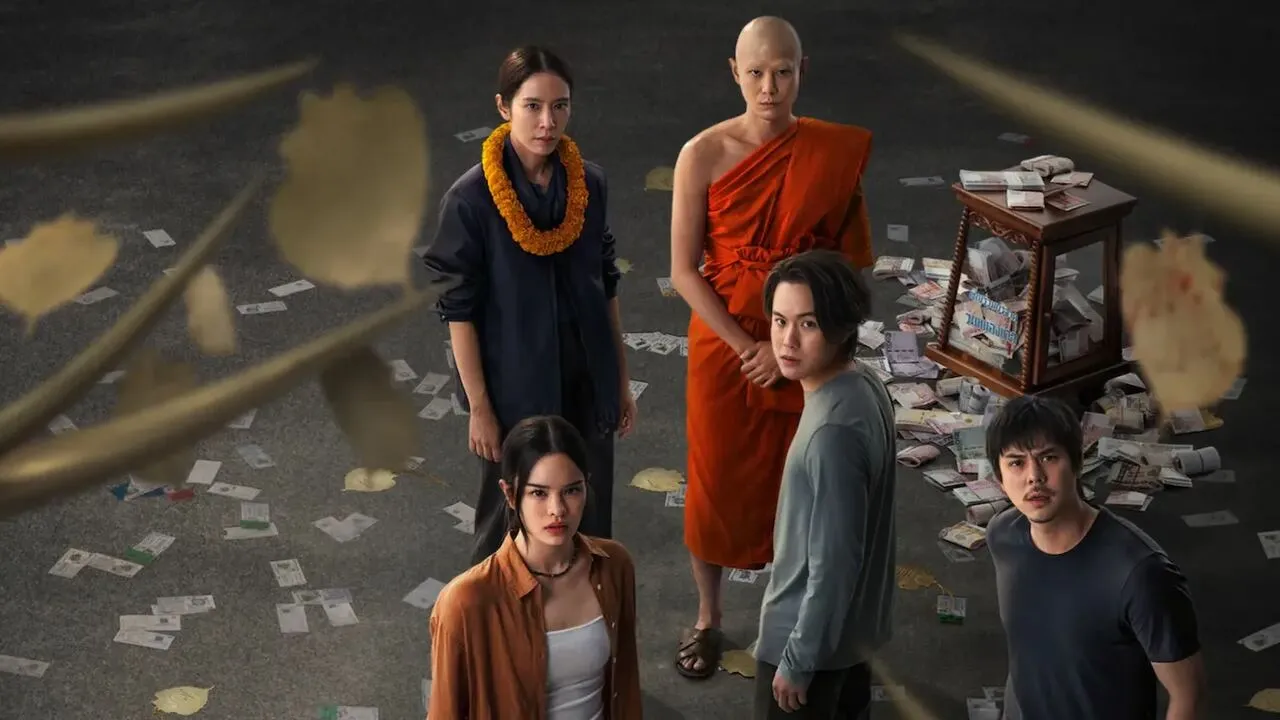

Season 1’s darkly comic startup chaos now feels like a prologue. The Believers first broke out as a surprise Netflix hit by throwing the frantic hustle of three young entrepreneurs, Win, Game and Dear, against the solemn backdrop of a Buddhist temple. Their original “merits for money” concept functioned as a sharp, contained business scheme. That operation closes. This season opens on something far less optional: a demand that arrives like a threat.
The three friends, who narrowly sidestep prison for their earlier scam, now collide with a much larger and nastier force. Ae (Donut-Manatsanun Phanlerdwongsakul), a powerful and corrupt politician, needs an enormous sum of cash, specifically a billion baht (around $31 million), within six months for her “Mega Merit Project,” a hospital development.
She forces Win and Game back into action by placing their families in danger. The stakes sit at an absolute high. The series leaves the playful caper mode and steps fully into brutal, high-pressure thriller territory, where survival functions as the main motive and the story world shifts from opportunity to raw fear.
Faith, Finance, and the Grander Scale
The sharpest idea in The Believers sits in its relentless, unsettling study of the meeting point between spiritual life and cold transaction. The main conflict works like an uncomfortable mirror for real-world problems, showing how faith and trust turn into commodities for financial and political power. This season pushes that hypocrisy to an operatic pitch.
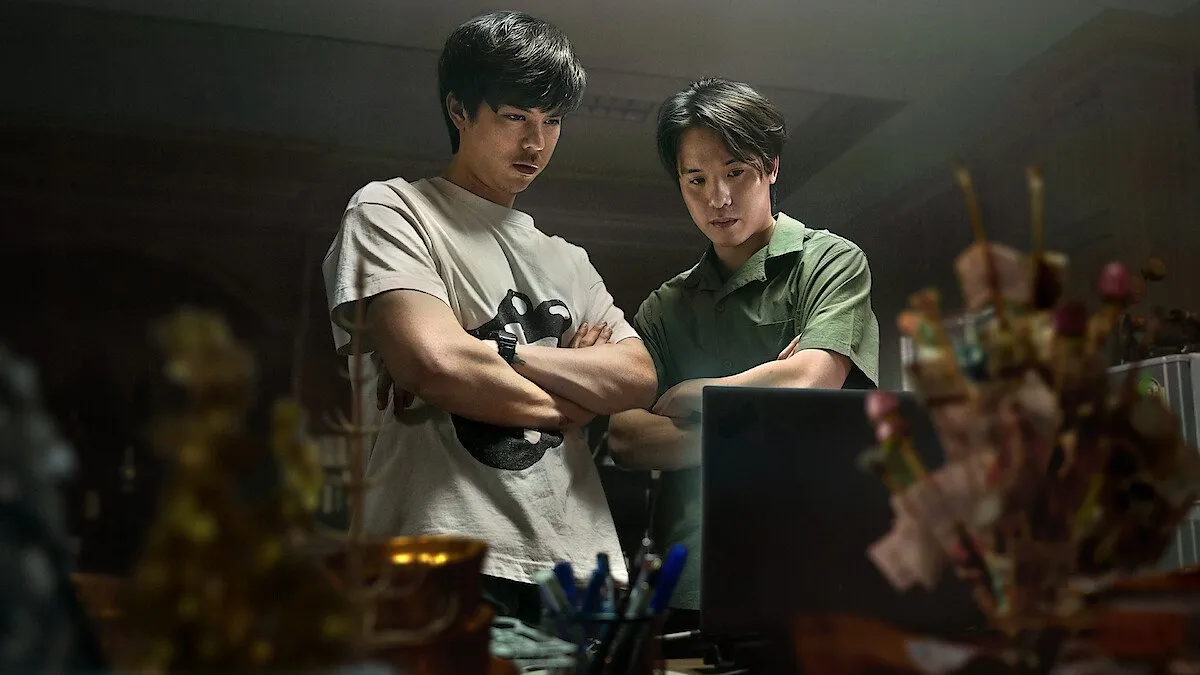
Attention moves to the “Mega Merit Project,” a scheme so large it touches every layer of society. The Pho Tree provides the boldest visual for this monetized religion. Game brands it the “world’s largest Pho tree.” The massive structure turns spiritual practice into a literal marketplace, where people buy leaves to accumulate merit.
The show refuses tidy answers. The writing treats reality as messy and rarely interested in neat resolutions. The trio wreaks havoc, and their panic and fear keep them riveting to watch. Tension grows from the clash between their collapsing ethics and their relentless chase after money, which gives the season its lingering sting.
The series points directly at systemic decay. Corruption spreads far beyond a single misbehaving temple and plays out as a full-scale conflict that draws in high politics, foundations and public welfare projects such as hospitals. This is television that takes institutional failure seriously. When one villain falls, the machinery rebuilds itself. The compromised monk Ekachai, for example, steps up into the abbot position. The hospital project, chaos and all, proceeds under fresh supervision. The season keeps stressing that the real issue, the financial exploitation of belief, sits deep inside the system and does not disappear with one raid.
The Raw, Lived-In Interactions
Rising pressure reshapes the trio’s dynamic and forces sharp shifts in their personalities. The rough, lived-in chemistry among Win, Game and Dear keeps the narrative engine humming.
Win now carries dread in every scene. He looks increasingly haunted and argues openly with his conscience. His arc turns on guilt and on the chilling awareness of how far their morals have slipped. Game reacts to the same threat with reckless moves, the wildcard under stress.
His behavior belongs to a man spinning out yet clinging harder to the hustle. Dear’s path supplies the key emotional force. She tries to climb out of the moral swamp, flies to New York and attempts to rebuild her life. Her eventual return, powered by deep, if naive, loyalty to her friends, locks in her destiny. Her brutal, tragic death lands as a clear, unforgiving statement that the criminal world rarely accepts clean departures.
The season draws heavy strength from its antagonists. Donut-Manatsanun Phanlerdwongsakul’s work as Ae plays as a chilling study in control. Ae acts with ruthless calculation, and she often voices threats in a plain, almost casual register. That calm tone, paired with the cruelty of her choices, makes her a figure of genuine horror. Away from the main scam, the arc of Monk Dol (Pup-Patchai Pakdeesusuk) quietly breaks the heart.
His move into secular life carries deep sadness and shows how hard it can be to build identity and meaning outside a strict framework. His eventual anguish and return to monkhood form a mournful, looping counterpoint to the trio’s chaos. The political plotlines knot themselves tightly with the personal stakes once Win’s father emerges as a vital, complicating witness, pulling the crime story into a generational frame.
Pacing, Ambition, and the Visual Divide
On the craft side, the series works at a high level. Direction and visual design stay sharp and atmospheric, and the editing rides that tone with clean, purposeful movement from scene to scene. The contrast between locations becomes its own visual code. Cinematography sets the quiet, golden light and stillness of temple spaces against the urban grit and harsh, smoky glow of corrupt power corridors. The images keep the moral divide that runs through the story firmly in view, while the sound design supports that split with busy streets and hushed sanctuaries.
Pacing stays tight and keeps the plot moving with thriller energy. High-pressure set pieces hold the tension, from the faked lottery miracle to the disastrous, climactic fall of the Pho Tree. That collapse works as a narrative beat and a physical image of greed finally spinning beyond control.
The enlarged scope of the season, ambitious by design, sometimes produces structural strain. The tangle of double-crosses, political moves and hidden alliances can feel crowded, which briefly breaks the razor-sharp rhythm. Character choices sometimes twist to deliver a needed jolt, a trade that costs a bit of the emotional consistency shown elsewhere.
The drama’s core charge remains strong. The story stays deeply rooted in Thai culture, using the specific world of temple administration and merit-making to tell a universal tale of greed and panic. That local detail gives the critique global reach. The series demands full attention and leaves a residue of unease that lingers after the final scene. How much spiritual capital can people burn through before the bill finally arrives?
The Believers Season 2 is a gripping Thai crime thriller that continues the story of three young entrepreneurs—Win, Game, and Dear—who, after their startup failed, found an illegal way to pay off massive debts by leveraging the generous donation system of Buddhist temples. This season sees the trio pulled into a far more dangerous scheme orchestrated by a powerful and corrupt politician. The eight-episode season is available to stream exclusively on Netflix, where it premiered on December 4, 2025. It follows the original series, which also explored the moral grey areas where religious devotion intersects with ruthless financial ambition in Thailand.
Full Credits
Title: The Believers Season 2
Distributor: Netflix
Release date: December 4, 2025
Rating: TV-MA
Running time: Approximately 48 minutes per episode (7 or 8 episodes)
Director: Wattanapong Wongwan
Writers: Wattanapong Wongwan, Amaraporn Paendinthong, Eksit Thairat, Chanathip Amornpiyapong, Watcharapol Paksri, Perapat Rukngam, Jiraporn Sae-lee, Asamaporn Samakphan
Producers and Executive Producers: Somprasong Srikrajang, Chanajai Tonsaithong (Producers)
Cast: Teeradon Supapunpinyo, Pachara Chirathivat, Achiraya Nitibhon, Manutsanun Phanlerdwongsakul, Patchai Pakdesusuk, Paopetch Charoensook, Channarong Khanteethao, Surasee Phatham
Director of Photography (Cinematographer): Kittiwat Semarat, Krisanapol Somnuke
Editors: Paradorn Vesurai, Teerapong Limthongchai
The Review
The Believers Season 2
The Believers Season 2 successfully amplifies the tension and moral stakes of its predecessor, trading dark comedy for a full-throttle crime thriller focused on survival. The series offers sharp cultural commentary on institutional corruption and the financial exploitation of faith. While its ambitious, large-scale plotting occasionally strains the narrative clarity, the powerful performances, chilling antagonist, and strong visual execution make it a compelling, intense watch. It is a cynical, yet deeply rewarding study of desperation and moral collapse.
PROS
- Successfully transforms into a high-stakes thriller focused on survival.
- Offers sophisticated commentary on the corruption of faith and systemic decay.
- Excellent turns from the main trio and the chilling antagonist, Ae.
- Effective use of cinematography to contrast sacred and corrupt environments.
CONS
- The complex web of politics and alliances occasionally feels messy.
- Structural wobbles sometimes interrupt the flow, relying on convenience for shock.
- Dear's fate is emotionally brutal and denies the audience clean closure.
- The relentlessly high tension may be exhausting for some viewers.