
























![Kingdom Hearts Collection [I-III] Review](https://gazettely.com/wp-content/uploads/2026/10/Kingdom-Hearts-Collection-I-III-1-360x180.webp "Kingdom Hearts Collection [I-III] Review: KHII Holds Steady as Newer Entries Fluctuate 37")





Waterside returns. The fictional Yorkshire haunt functions as a site of environmental penance; weather reads like a resentful presence. One year follows the deluge. Jo Marshall has been promoted to detective. She moves through a town defined by parched earth. Fire has replaced water. A corpse appears on the uplands and that discovery connects to corporate greed. Jo collaborates with Pat, her estranged partner, to trap Sergeant Phil Mackie.
The town faces chemical poisoning and residents grow restless. The script offers a sturdy procedural frame and the climate crisis acts as a structural pillar. Jo risks her family. Past crimes infect the current soil. This season turns its attention to working-class communities, who suffer environmental decay first.
Watching Waterside reads like a petri dish of a late-stage British experiment. The town feels heavy with the scent of wet ash. The sky provides no relief. Jo functions as an anchor amid local indifference. Her promotion plays more like a sentence than a reward as she watches her hometown erode under drier threats.
The Pyro-politics of the Yorkshire Moors
The shift from drowning to burning tracks climatic instability. Last season offered a wet purgatory; this year maps a scorched hellscape. Moorland fires arrive as a largely man-made tragedy. The grouse shooting controversy appears on screen. Landowners burn heather for sport. That practice destroys vegetation and leaves valley people exposed to later floods. Nature emerges as casualty of leisure, and the irony of killing landscape to uphold “sporting” life lands with a sharp edge. The hills operate as a site of “Veblen-burning” (a term the critic uses for the destruction of communal safety in service of elite recreation).
The Aexous chemical plant adds to the rot. The company dumps waste into the river. Toxic barrels sit beneath the water table. The show frames this as aquatic-extractionism at its worst. Xav Palmer’s body is found after the fire. His death resists simple explanation; the blaze hides the truth for a time. The story stages a conflict between old money and environment. The visual contrast of blackened earth against a clear sky reads as a reminder of fragility. Ground proves as treacherous as the people standing on it.
Consider the “Land-trauma” present here. The moor functions as witness; it holds the soot of industrial neglect. Fire behaves like a revealing force rather than a concealer. When smoke clears, bodies remain. Fire is a chemical reaction and a social one. It exposes the council’s eco-negligence. Heat presses on characters; irritability follows. The audience feels the strain. The series stages the slow incineration of a community: soil poisoned, water toxic, air thick with the price of doing business. This registers as the reality of the northern fringe.
Domestic Friction and Professional Shifts
Jo Marshall now carries the letters DS. Responsibility presses on her. She tries to stay clean inside a dirty department. Home life becomes a site of constant negotiation. She lives with Molly. Molly sits on the council now and channels local gossip into service for the state; that functions as a form of maternal surveillance. Molly Marshall operates like a one-woman Stasi of the tea-room. Sam Bradley appears as Jo’s new partner. Trust proves scarce. Sam comes from anti-corruption and keeps an eye on Jo and Pat.
Pat wants to make amends. He betrayed Jo before. Now they work together in the shadows to catch Mackie. Their bond remains fractured; a shared enemy holds the seams together. The kitchen table becomes a tactical center for their investigation. Their separation reads as a physical manifestation of the town’s broken trust. Jo must judge if she can rely on a man who already let her down.
The Marshall household functions as a microcosm of Waterside: crowded, noisy, full of secrets. Molly’s ascent to the council resembles a civic matriarchy in action. She knows who is fly-tipping and who cheats on taxes. Local knowledge becomes a weapon that outperforms police databases. She supplies the show’s humour and often acts as its moral compass. Jo plays detective. Molly plays historian. Together they form two halves of Waterside: one seeks clues; the other remembers transgressions across generations.
Systematic Rot and the Local Hegemon
Phil Mackie represents the primary rot. He is a police sergeant who behaves like a feudal lord. He uses the care system for profit, taking in children and turning them into criminals. The way the state supplies him with victims reads as a stinging critique of modern social services. Saskia Bale figures among his victims. He used Lee Ellison too. Pat was trapped in this web. Money provides proof: a joint account held £23,000. Keith’s insurance fraud started the leak.
Mackie operates as predator. He uses Jo’s phone. He strands Pat on a cliff and assaults him. He conceals evidence. These acts show how power shields itself. The police force functions as a buffer for his crimes. He is a mid-level bureaucrat with a baton; his banality becomes what makes him terrifying. He stands as the face of the system that should protect citizens.
The care-feudalism Mackie practices chills the spine. He treats young lives as capital, invests in their trauma and harvests loyalty. It becomes a cycle of state-sponsored cynicism. The police station functions as his castle. The moors feel like his graveyard. He casts a long shadow over Waterside. He factors into why the floods were so deadly and why the fires burn so brightly. His arrest delivers relief and it also serves as a reminder that many Mackies may exist beyond this narrative. He remains a symptom of a deeper sickness.
The Anatomy of a Post-Mortem Deception
The murder case reads like a riddle. Xav and Todd appear shot. In fact both were already dead. Todd died in a car crash after an epileptic seizure. Xav panicked and shot Todd’s corpse to stage a murder. That “Necro-hoax” aims to baffle the state. Declan later kills Xav with a screwdriver; his motive springs from hatred for how Xav treated Donna. Tony Rower tries to take the fall; he is dying and wants to save his grandson.
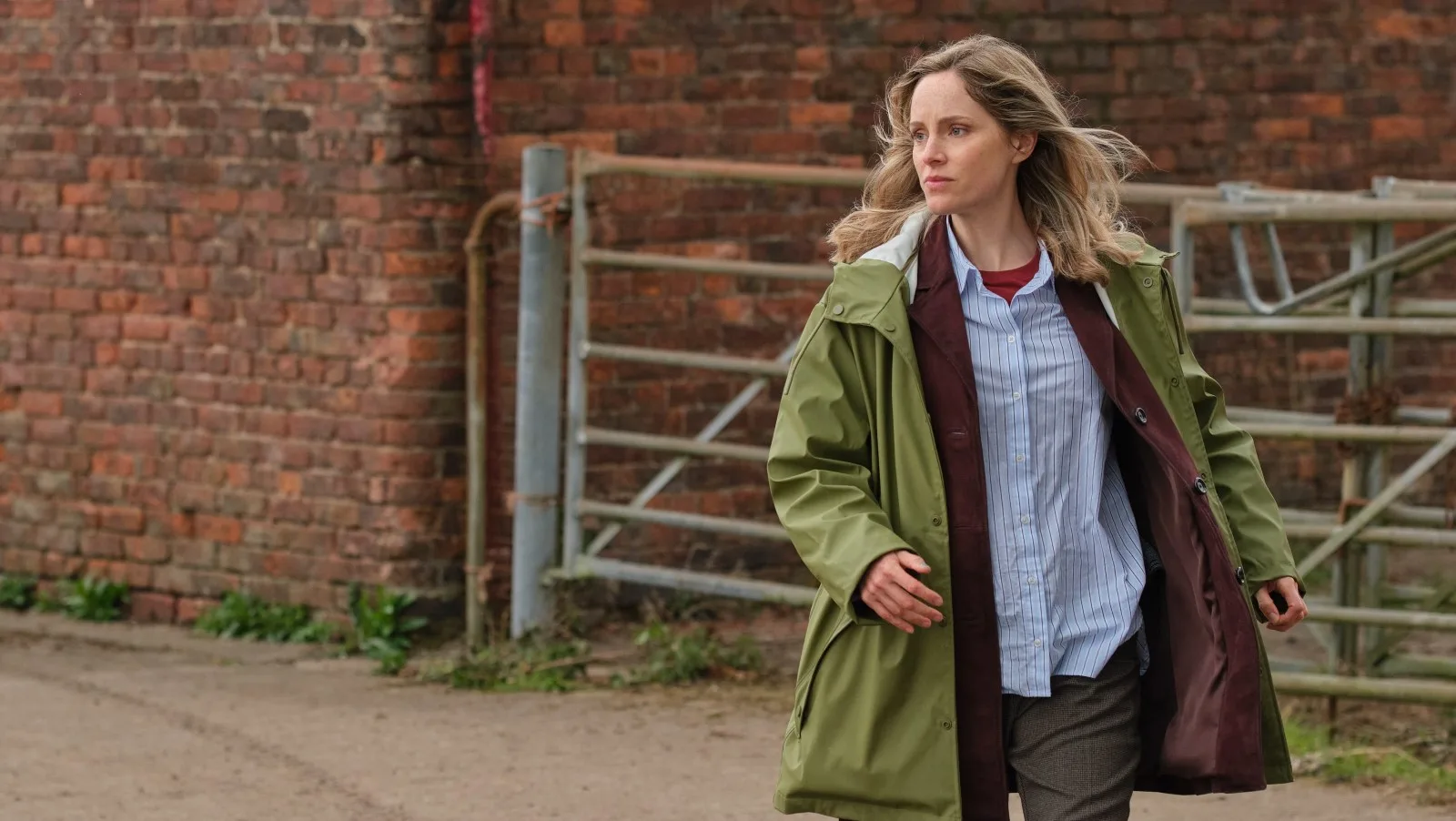
Alan Benson proves to be the figure poisoning the river. He sold land to Geoff Dixon; the site functioned as a landfill. Jack Radcliffe uncovers the truth and presses Benson for a confession. The case resolves with a tracker Pat places on Mackie’s car. Science beats the bully. Mackie goes to jail. Resolution arrives messy and many wounds remain open. The truth emerges at cost. Waterside remains scarred by the actions of a few greedy men.
The “Screwdriver-slaughter” Declan commits reads as a low-tech tragedy and registers as proletarian rage. It is messy and unplanned and it contrasts with the clean corporate crimes of Alan Benson. One death springs from hot-blooded impulse; the other follows cold calculation. Both end in death and both leave the town diminished. The landfill legacy of the Benson family functions as the season’s true villain. They buried mistakes and expected the earth to hold secrets. The earth refuses and returns poison; it forces the town to confront what it has become.
Aesthetic Decay and Northern Realism
The series looks strong. Yorkshire appears beautiful and bleak. The moors and the factories populate the frame. Pacing moves with deliberation and the show avoids the flashiness of season one. Sophie Rundle remains grounded. Lorraine Ashbourne proves a force. Nicholas Gleaves delivers a terrifyingly calm turn as a man who thinks himself untouchable. Dialogue lands with a staccato honesty that captures local anger. People register as tired of being ignored.
The script treats climate as an operative reality; the story concerns people living amid wreckage. The industrial skeletons of the past loom over the characters. The future feels as uncertain as the weather. Production values underline grit. Polished surfaces are absent. Everything appears worn, wet or burnt. This is the North shown without postcard gloss.
The “Grey-scale-realism” of the cinematography functions effectively. It drains hope from the frame and leaves attention on hard facts. Sound design works subtly, using wind and the crackle of fire to tighten tension. Performances form the series’ real highlight. Rundle conveys stoic exhaustion. She tries to hold corruption at bay with a small bucket. That remains heroic and heartbreaking at once. The series demands sustained attention. This television understands weight. It refuses to look away from soot and all that implies.
After the Flood is a gripping British crime thriller that returned for its second season on January 18, 2026. Set in the fictional Yorkshire town of Waterside, the series continues to explore the intersection of climate catastrophe and human criminality. In this new installment, the town transitions from the devastating floods of the first season to the parched, high-risk environment of moorland wildfires. You can watch the series on ITV1 and stream all episodes on ITVX in the United Kingdom, while international viewers can access the show via BritBox.
Full Credits
Title: After the Flood
Distributor: ITV1, ITVX, BritBox International
Release date: January 18, 2026
Rating: TV-MA
Running time: 60 minutes
Director: Azhur Saleem, Tom McKay
Writers: Mick Ford, Joe Forrest, Maxine Alderton
Producers and Executive Producers: Fiona McAllister, Nicola Shindler, Richard Fee, Azhur Saleem, Sophie Rundle, Huw Kennair-Jones, Robert Schildhouse, Stephen Nye, Mick Ford
Cast: Sophie Rundle, Jill Halfpenny, Lorraine Ashbourne, Nicholas Gleaves, Philip Glenister, Matt Stokoe, Alun Armstrong, Ian Puleston-Davies, Matthew McNulty, Faye McKeever, George Bukhari
Director of Photography (Cinematographer): Phil Wood
Editors: Mark Trend, Steve Singleton
Composer: Ty Unwin
The Review
After the Flood Season 2
Waterside remains a harsh mirror for a society losing its grip on social and environmental order. The performances are grounded. The script avoids cheap thrills. It provides a study of "Hydro-corruption." This season is a bleak meditation on the slow rot of local systems. It depicts a town where the earth itself acts as a crime scene. The dry wit balances the grim atmosphere. This is a solid piece of Northern realism.
PROS
- Sophie Rundle provides a grounded performance.
- Lorraine Ashbourne offers a fierce presence.
- The script includes sharp dry humor.
- Environmental themes feel urgent.
- The setting is visually evocative.
CONS
- Middle episodes move slowly.
- It lacks the visual scale of the first season.
- Certain family subplots feel thin.







