




























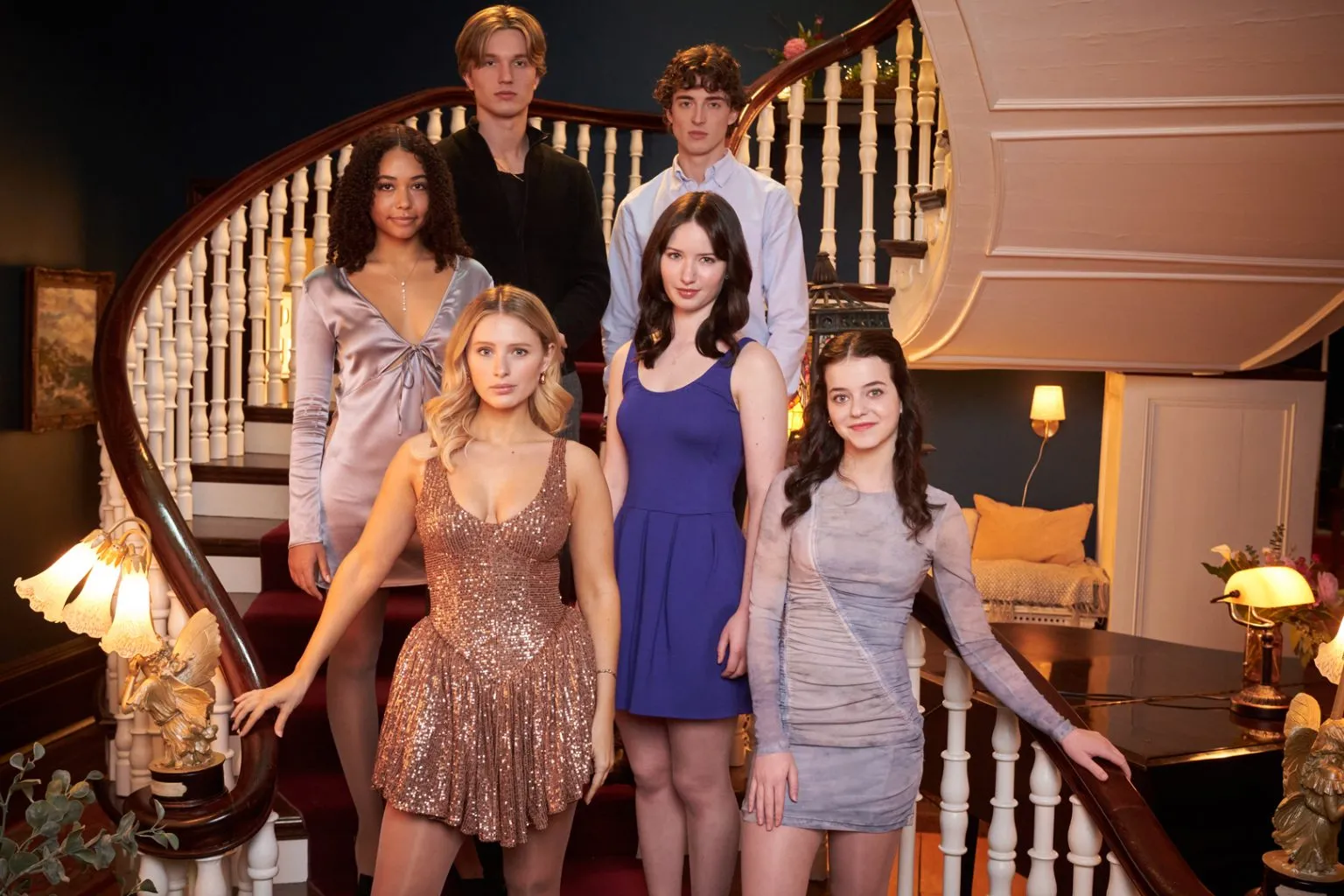
Finding Her Edge lands on Netflix as an adaptation of Jennifer Iacopelli’s young adult novel. It follows the Russo family, a figure skating dynasty shaped by Olympic ambition and personal loss. Adriana Russo, the middle sister, steps back onto the ice after a two-year break that follows her mother’s death. The return comes from pressure, with her father Will facing mounting debt that puts their training facility at risk.
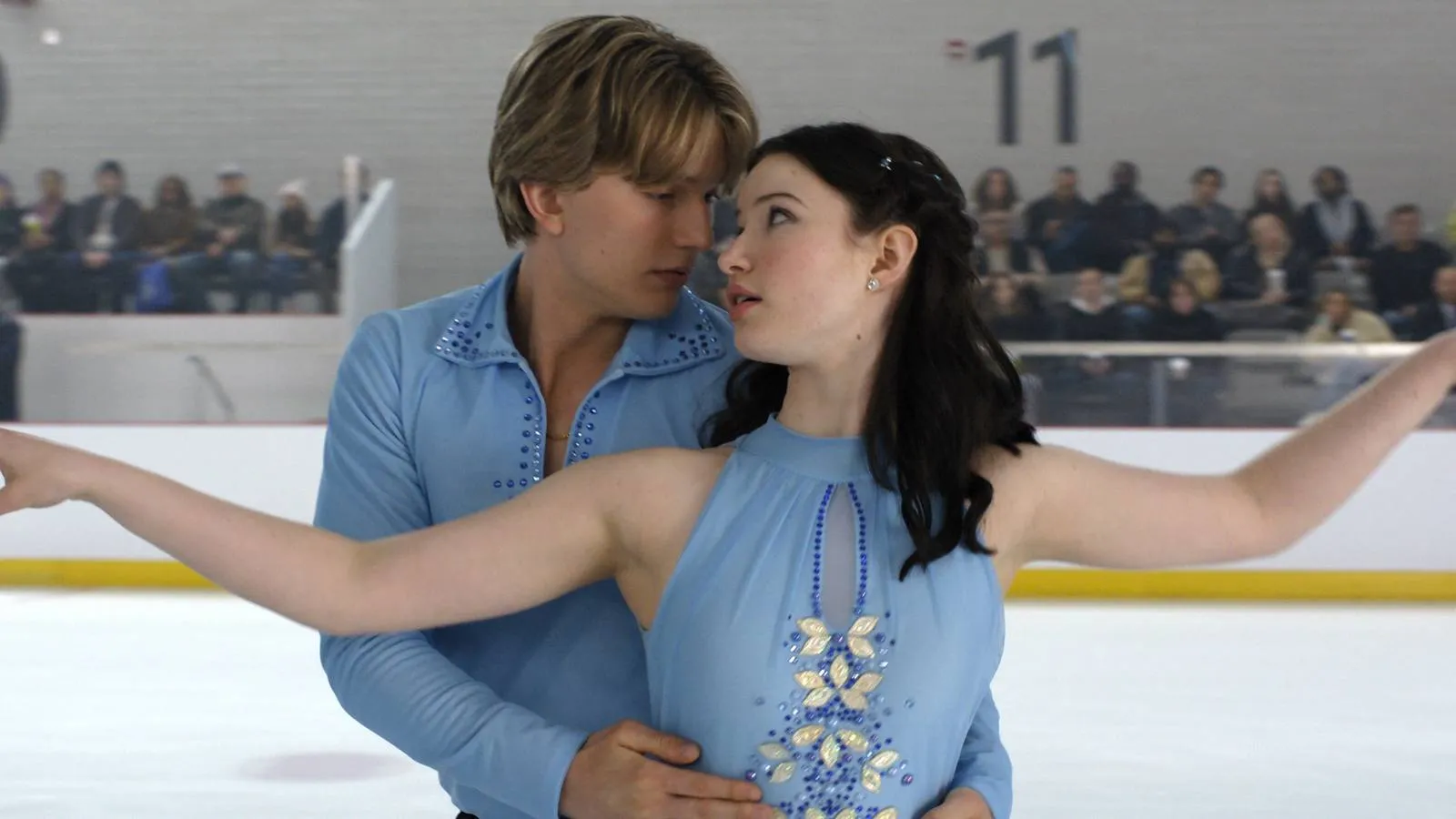
Adriana’s path back begins with a pivot into ice dancing and a new partner, Brayden Elliot. With a reputation as the sport’s bad boy, Brayden feels far removed from Adriana’s disciplined approach. Their pairing anchors the series as they confront elite competition and a carefully planned social media romance meant to bring in sponsors.
Freddie O’Connell, Adriana’s first love and former partner, reenters the picture and sparks tension immediately. Across eight episodes, the sisters face athletic expectations, looming financial collapse, and the emotional weight attached to the family name.
The Weight of the Russo Legacy
The show studies the expectations that come with a sports dynasty. Will and Sarah Russo set a standard their daughters are expected to match. The pressure recalls the intensity of Indian sports dramas such as Dangal, where family honor is tied to achievement and the body becomes a site of duty. Adriana’s return reads as a practical choice made for the business. She skates to keep foreclosure away, with personal satisfaction pushed into the background.
Elise, the eldest sister, carries the sharpest strain. Once positioned as the family’s best shot at gold, she faces an injury that leaves her stalled emotionally. Her fear of stepping back onto the ice presents a grounded look at how elite athletes absorb failure and turn it inward. The youngest sister, Maria, aims for a regular life. Her feisty independence keeps the group from collapsing into the same script of sacrifice. She questions the nepotism baked into their world while her sisters stay locked into chasing attention and approval.
At home, grief sits in delay. The rink becomes the family’s shelter from the pain of losing their mother, and it doubles as the place where that pain keeps resurfacing. Will’s management of the facility comes off as desperate and misguided. He leans on motivational platitudes even as the finances spiral. The series finds its emotional pulse in scenes of sisterly connection. Those moments ease the chill of the professional demands Will places on them, and their shared history builds a dynamic that holds support and quiet competition in the same frame.
Technical Execution and the Arena of Ice Dancing
Finding Her Edge sets out to convey the grace and discipline of professional ice dancing. Adriana’s shift from retired skater to active competitor spotlights the physical grind behind the elegance. Her work is shaped by coach Camille St. Denis, whose warmth differs sharply from Will’s rigid approach. Camille embodies a nurturing model of mentorship, centering athlete development without tying it to family obligation.
The production runs into problems with visual realism. Body doubles appear frequently in skating sequences, and the seams show. That lack of seamless integration can pull attention away from the tension built around competition. Some sequences still capture the energy the sport demands, and Maria’s time on the ice stands out through choreography that carries real momentum.
The training setup keeps pressure constant. Housing the athletes together next to the rink means rivalries have no off switch. The forced proximity drives nonstop interaction and creates a claustrophobic mood that matches the single-minded focus elite competition requires. The show communicates that ice dancing depends on psychological stamina alongside physical skill, with the living arrangement reinforcing that idea scene after scene.
The Mechanics of the Romantic Triangle
The plot leans on familiar genre beats to keep things moving. Adriana and Brayden stage a fake dating arrangement to secure corporate sponsors, a device common in romantic storytelling across global cinema. It gives the series room to explore the friction between public image and private feeling, especially in a world where performance extends beyond the rink. Brayden’s arc is built around change. He starts as an arrogant outsider and grows into a partner committed to Adriana’s success.
The love triangle itself feels uneven on the page. Freddie O’Connell is framed through memory and past attachment more than ongoing presence. The series leans on the idea of the relationship instead of building it through current scenes, which leaves the romance with Freddie thinner in the moment-to-moment drama. Adriana and Brayden, by comparison, register more clearly. Scenes on the train and in the club underline a physical and emotional spark that Adriana’s interactions with Freddie do not reach.
A welcome surprise comes from how the two male leads relate to each other. Freddie and Brayden steer clear of petty jealousy typical of young adult drama and show maturity and mutual respect. They cooperate for the team’s benefit, and that choice grounds the social dynamics in something closer to lived professional pressure. Their behavior suggests an awareness of what is at stake in their environment, where competition can be career-defining and mistakes carry consequences.
Pacing and the Bingeable Format
Finding Her Edge is structured for quick viewing. With eight episodes, it moves at a fast clip through subplots tied to financial collapse and romantic conflict. The writing leans into familiar language and recognizable rhythms, which keeps the series accessible for viewers who like the genre’s established cadence.
The lead performances add dimension even when the dialogue feels thin. Madelyn Keys holds the series with natural charisma. Alexandra Beaton plays Elise with bitterness and vulnerability that fit a fallen star narrative. Cale Ambrozic gives Brayden a quiet intensity that supports his bad boy reputation. The acting strengthens the emotional stakes, even in stretches where the plot turns feel expected.
The tone stays light and easy to follow, avoiding the heavy-handed drama associated with more prestige-minded series. That makes it a workable background watch for a wide audience. Some supporting players feel loosely woven into the story, and dialogue for the secondary skaters can read like a detour. The show still keeps its attention on the Russo sisters, and their movement through a high-stakes skating world provides enough propulsion to carry the season forward.
Finding Her Edge premiered globally on Netflix on January 22, 2026, offering a contemporary look at the high-stakes world of competitive figure skating. As of today, January 26, 2026, the entire eight-episode first season is available for streaming on the platform. In Canada, the series also debuted on CBC Television and the French-language service Ici Radio-Canada Télé. The show captures the intersection of professional athletic ambition and the complex emotional labor of a family attempting to preserve its legacy while facing financial ruin.
Full Credits
Title: Finding Her Edge
Distributor: Netflix, CBC Television, Ici Radio-Canada Télé
Release date: January 22, 2026
Rating: TV-PG
Running time: 40, 49 minutes per episode
Director: Shamim Sarif, Jacqueline Pepall
Writers: Shelley Scarrow, Sabrina Sherif, Jacqueline Pepall, Jeff Norton, Jennifer Iacopelli
Producers and Executive Producers: Jeff Norton, Josh Scherba, Stephanie Betts, Angela Boudreault
Cast: Madelyn Keys, Cale Ambrozic, Olly Atkins, Alexandra Beaton, Alice Malakhov, Harmon Walsh, Millie Davis, Meredith Forlenza, Niko Ceci, Sean Chen, Yona Epstein-Roth, Nicole Volossetski
Director of Photography (Cinematographer): Gregor Hagey
Editors: Shelley Therrien
Composer: Nikhil Seetharam
The Review
Finding Her Edge
Finding Her Edge functions as an accessible, trope-heavy drama that finds its strength in sisterhood rather than its central romance. While the technical execution of the skating sequences lacks polish, the emotional stakes within the Russo family provide a grounded look at the cost of athletic greatness. The series successfully captures the high-pressure environment of sports dynasties, though the romantic resolution feels unearned compared to the buildup. It is a light, bingeable addition to the YA genre that prioritizes family legacy and professional ambition over narrative depth.
PROS
- Strong chemistry between Adriana and Brayden.
- Deeply relatable exploration of family pressure and the burden of legacy.
- Elise’s psychological struggle adds a layered look at athletic injury.
- Surprisingly mature and respectful dynamic between the male leads.
- Fast-paced and easy to watch in a single sitting.
CONS
- Obvious and distracting use of body doubles during skating scenes.
- The final romantic pairing lacks active chemistry and development.
- Dialogue frequently falls into predictable or "cheesy" territory.
- Some supporting characters feel underwritten and distracting.
- Significant narrative reliance on "telling" rather than "showing" past history.