


















![Kingdom Hearts Collection [I-III] Review](https://gazettely.com/wp-content/uploads/2026/10/Kingdom-Hearts-Collection-I-III-1-360x180.webp "Kingdom Hearts Collection [I-III] Review: KHII Holds Steady as Newer Entries Fluctuate 37")



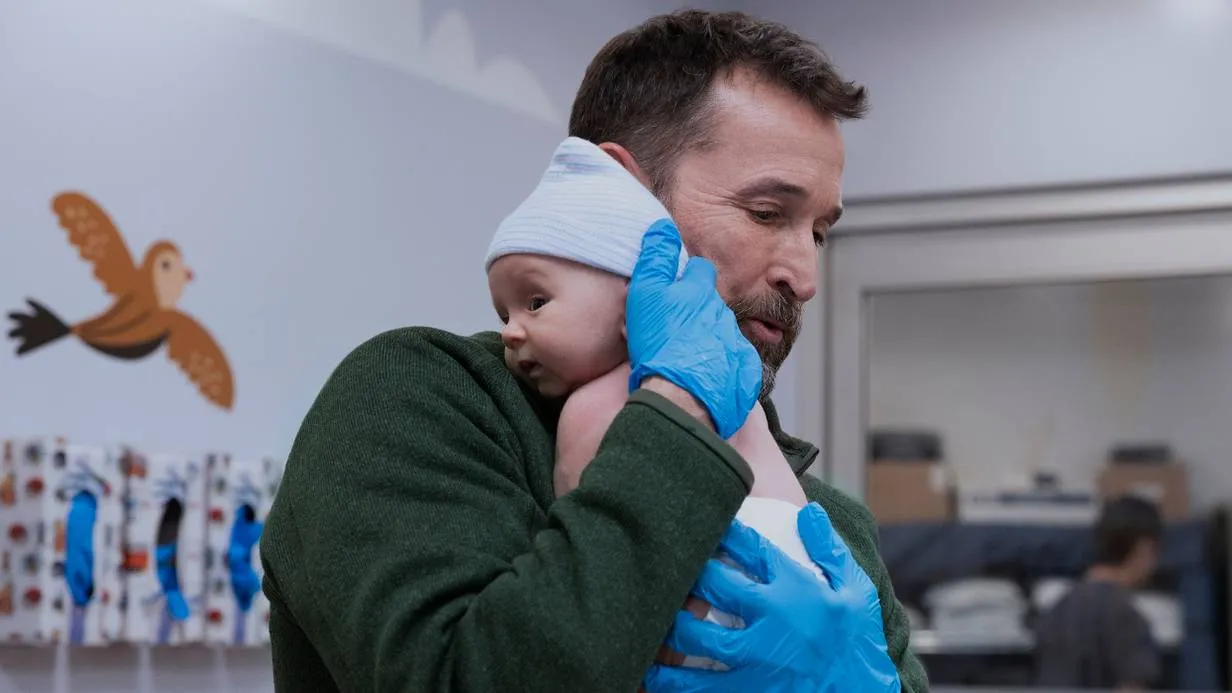

The emergency department in a big-city hospital reads like a rough metric for social strain. HBO Max’s The Pitt treats that reality as its baseline, and Season 2 returns with attention trained on institutional erosion alongside the people trying to keep the doors open. The Pittsburgh Trauma Medical Center remains the arena for that pressure test. This season pins its timeline to the Fourth of July, a date built for public spectacle and the injuries that slip in behind it.
The hospital turns into a receiving point for the bodily fallout of summer celebration. Dr. Michael Robinavitch moves through the day with the weight of accumulated damage, and he is preparing for a major shift. His plan includes a three-month sabbatical on a motorcycle, riding across the northern United States. The trip reads as his last sustained stretch of duty before he steps away. Heat hangs over the season, giving every hallway and bay a thick, physical presence.
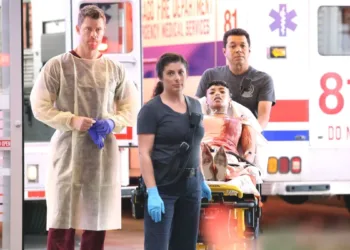
The series keeps faith with its real-time design. Each episode covers one hour of a high-pressure shift, and the format manufactures urgency through repetition rather than manufactured melodrama. Staff members face an unbroken line of patients while their own careers and working relationships keep shifting under their feet. The show sidesteps the soft-focus sentiment that clings to much of the medical genre and chooses a grimy texture that matches the department’s daily grind. The morning begins with a welcome for a replacement, and the first gurneys arrive with no courtesy pause.
Professional Friction and Leadership Changes
Dr. Baran Al-Hashimi enters as a trigger for a larger argument about where medicine is headed. Her clashes with Robby land as a collision between competing models of care. She approaches the hospital through digital optimization, and her “patient passports” push the department toward a quantified, trackable form of treatment. Data becomes the primary language, and the patient’s embodied presence risks becoming secondary.
Robby reads her arrival as interference. He stands for hands-on doctoring shaped by proximity, touch, and intuition earned in the room. Their conflict plays as more than personality friction; it stages a contest over what the healthcare industry chooses to reward.
Al-Hashimi’s push to drop the “Pitt” nickname signals the same impulse. She wants a cleaned-up identity, swapping a name tied to struggle for something closer to corporate branding. The gesture echoes a familiar institutional habit: sanding down history in the name of efficiency, then acting surprised when morale collapses. Robby’s skepticism tracks with years on the front line, where polish rarely saves anyone. His motorcycle sabbatical connects to the pandemic’s lingering trauma. He searches for a life that can hold something beyond loss, and the road offers a pocket of quiet far from sirens and fluorescent light.
Dr. Frank Langdon’s return brings a quieter kind of tension. His route back from drug rehabilitation arrives without easy uplift. Colleagues who witnessed his lowest point carry their judgment in silence, and the show treats recovery as procedural and slow. He regains trust through small, competent choices made repeatedly, and the department measures him by what he does in the shift rather than a single speech. The familiar redemption arc becomes practical labor: time, steadiness, transparency.
The addition of medical students Joy Kwon and James Ogilvie sharpens the season’s interest in generational pressure. Kwon moves through the environment with a distant affect, and Ogilvie carries clear talent alongside a lack of social ease. Their development unfolds under Dennis Whitaker, who has grown into a senior resident role with understated authority.
The hierarchy shows learning as a transfer under stress, with knowledge passed down in fragments between crises. Emma Nolan’s training under Dana Evans mirrors that cycle from the nursing side. The nursing staff functions as the department’s living memory, carrying lessons from earlier shifts into each new one. The emphasis on mentorship keeps returning to the same point: a strained system stays operational through human labor and institutional habit, not slogans.
Pacing, Tech Failures, and the Real-Time Format
The Fourth of July shift, told in real time, pulls the viewer into the staff’s fatigue with an almost physical force. Each episode accounts for one hour inside a grueling twelve-hour run. Pittsburgh’s summer heat never fades into background texture; it makes the trauma bays feel airless and heavy. This season steps away from the previous year’s single mass-casualty centerpiece and commits to the steady surge of holiday injuries. The choice aligns with the department’s reality: emergency medicine often works through accumulation, case after case, with no single event granting release.
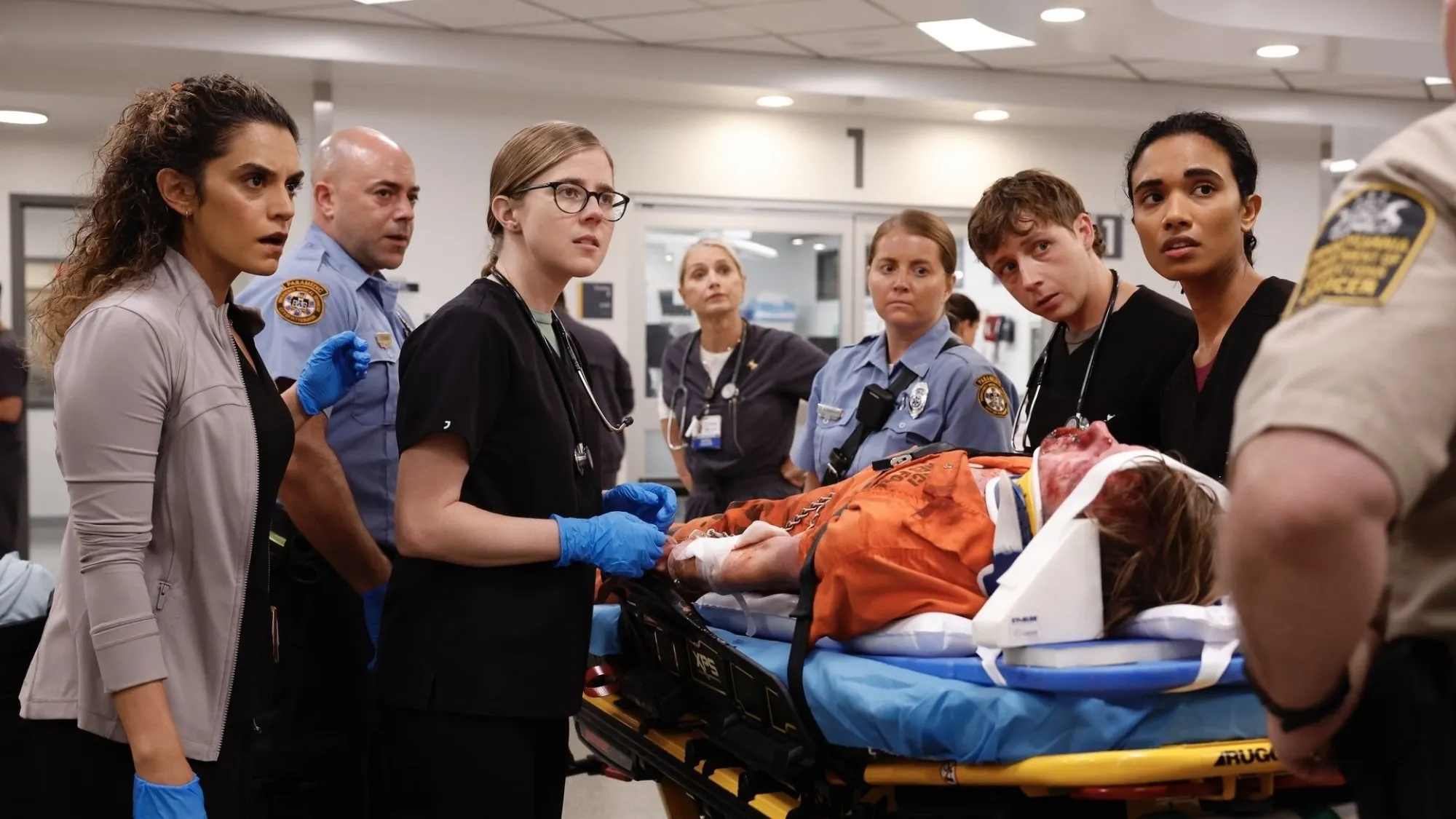
A cyberattack enters as an indictment of technological dependence. Screens go dark, and the staff returns to paper charts and manual procedures. The crisis exposes where competence truly sits. Training, memory, and judgment become the tools that matter most once the interfaces vanish.
Digital systems register as a convenience with a built-in fragility, and the show treats that fragility as a risk with life-and-death stakes. The doctors fall back on tactile skill and instinct, and the sequence warns against a hyper-digital world that confuses software with safety. The episode reminds the audience that lived experience remains a core resource in medicine, even in a department eager to automate itself.
The hospital itself keeps asserting personality. Sterile lighting and drab color palettes press the work into a blunt, unromantic register. Hourly cliffhangers sustain motion, yet they feel earned by the setting’s tempo rather than imposed by a writer’s room craving a hook. One patient stabilizes and another arrives, and the rhythm becomes its own form of suspense. Returning patients from the first season create a sense of shared history and reinforce that care continues beyond a single visit. Continuity adds depth by insisting that decisions echo across time, and the show treats those echoes as part of the job.
The pacing captures the sensation of a shift with no visible finish line. The viewer carries each hour alongside the characters, which turns the streaming binge into an endurance exercise by design. This approach aligns with contemporary prestige television’s interest in immersion, using the platform’s structure to trap the audience inside a sustained experience. For a medical drama, the commitment reads as a statement about how stories of life and death can be shaped for the streaming era, pushing the genre toward something harsher and more experiential.
Social Realism and Medical Ethics
The season’s social realism reaches its sharpest point in a storyline built around a sexual assault forensic exam. The sequence moves with uncommon care, showing the technical steps and the emotional labor required to gather evidence for a rape kit. Dana Evans leads the procedure and creates a calm pocket of safety for the survivor, Ilana.
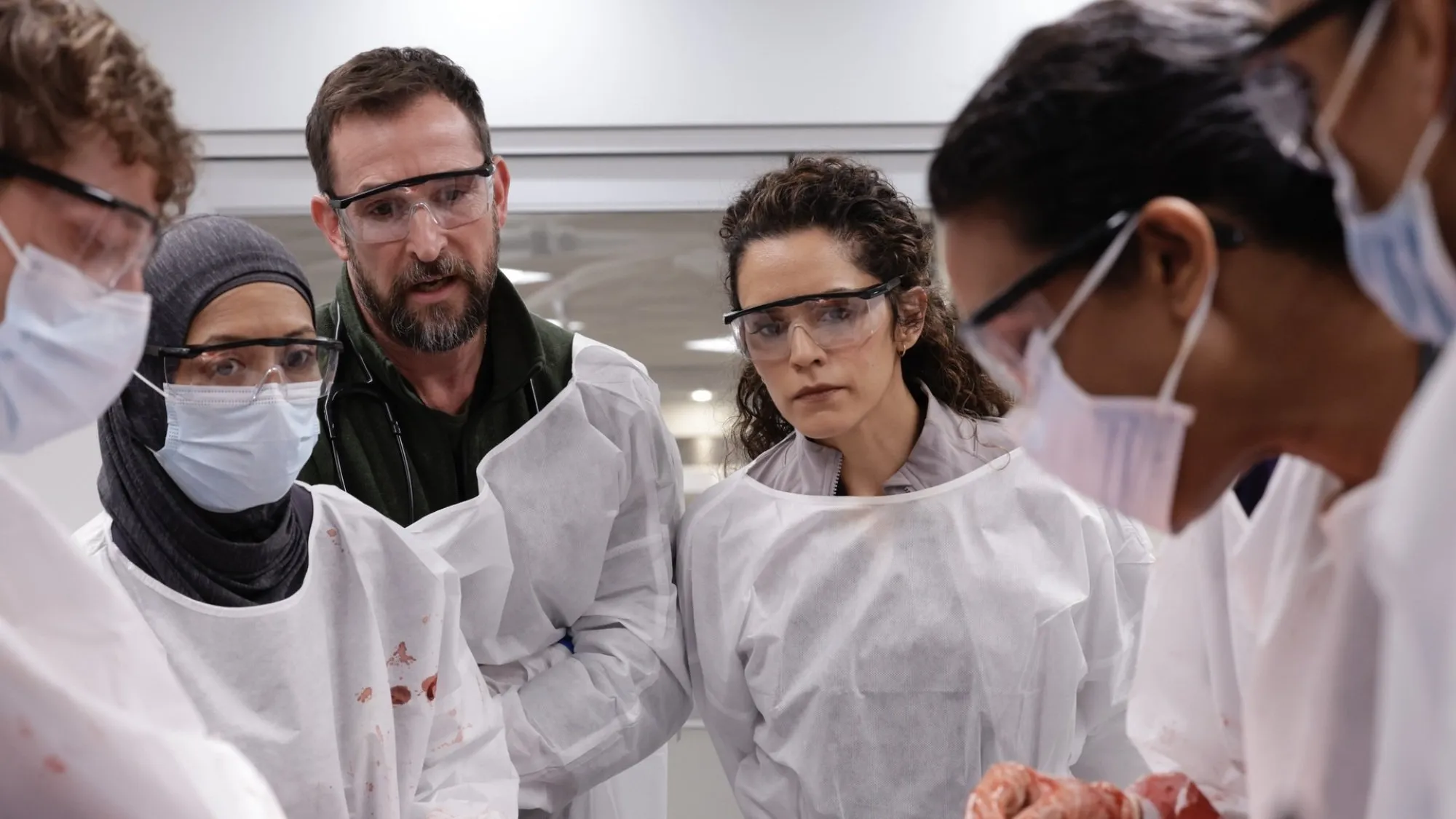
Representation here lives in process and attention: the show depicts a nurse’s work as clinical precision, patience, and empathy carried through difficult minutes. The storyline reads as a critique of a culture that repeatedly fails survivors, leaving institutions like the hospital to serve as one of the first spaces where accountability can begin to take shape.
Medical ethics keep circling back to technology. The season raises the question of artificial intelligence in healthcare through AI apps used for patient charting. The pitch is efficiency, and the risk is error with consequences that cannot be patched with an update. The script interrogates what gets lost when judgment is displaced by an algorithm and how institutional demands for speed reshape bedside care. The friction between system needs and individual patients becomes a recurring stress line, and the show treats it as part of a real-world shift already moving through healthcare.
The series also confronts American healthcare inequality with steady focus. Unhoused patients appear without moralizing framing, presented as people pushed through the holes of a frayed safety net. The health insurance crisis surfaces through the consequences of missing coverage, and the season also references cuts to research funding focused on racial disparities.
The stakes of that choice land in the department’s daily practice. The show cites a Centers for Disease Control and Prevention figure stating that Black women are 2.9 times more likely to die from pregnancy-related causes than non-Hispanic White women. The Pitt links that reality to bias at the bedside, where some patients’ pain receives slower recognition and less urgency than others. The critique aims at both the culture inside medicine and the structures that shape it.
Patients from the state prison system extend that lens. Guards and staff can treat these individuals with indifference, and the hospital becomes a place where the justice system’s failures appear in plain view. Doctors take on the role of advocate for patients with limited power, and the show frames advocacy as part of clinical responsibility. The department becomes a site of moral conflict, and the season argues that care carries political weight, even when clinicians would prefer to treat it as purely technical.
Ensemble Performance and Technical Execution
The acting this season carries a sense of practiced competence that fits the setting’s relentless pace. Noah Wyle plays Dr. Michael Robinavitch with quiet, empathetic exhaustion. He avoids showy blowups and emphasizes small gestures that reveal a life built around service.
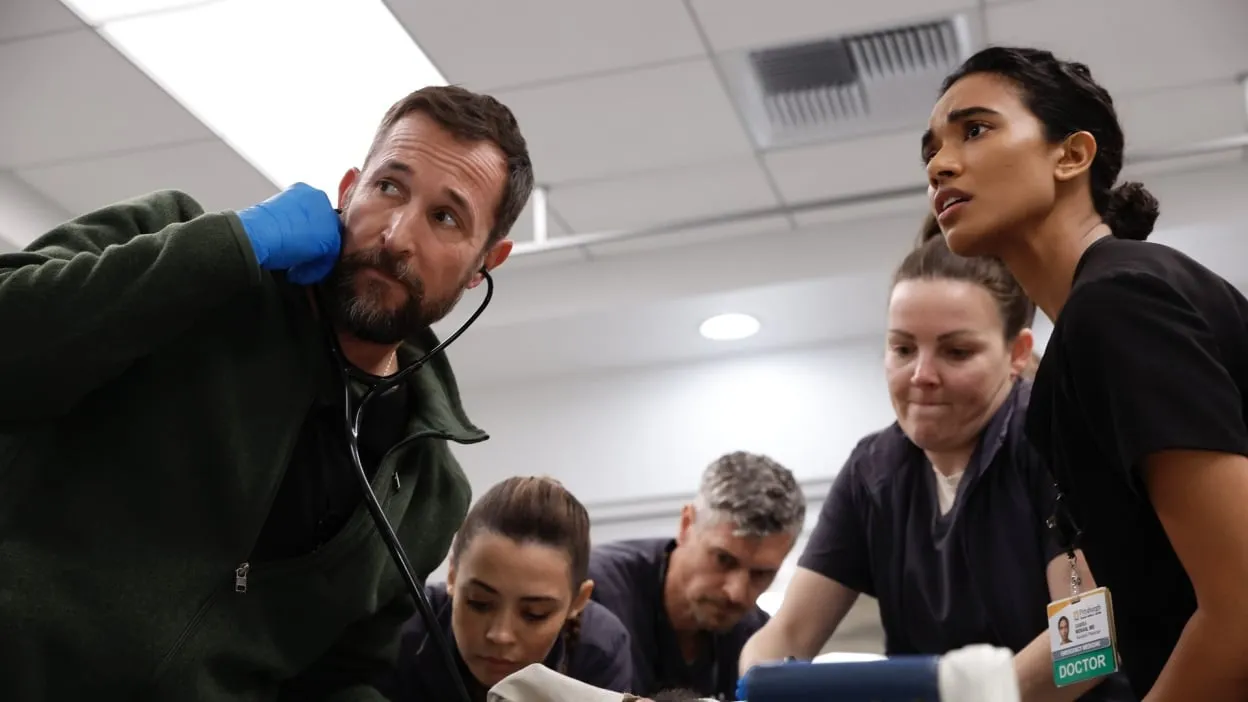
The performance tracks the physical cost of sustained care, letting fatigue register in posture, breath, and restraint. Katherine LaNasa matches that energy as Dana Evans, embodying the department’s stability under pressure. She channels the frustration of a professional expected to deliver excellence with scarce resources, and her presence anchors the chaos with grounded authority.
Wyle and Hatosy both take on directing duties, and the result is a visual style that stays consistent and close to the action. The camera remains tight, keeping the trauma bay’s frantic energy in the foreground. The ensemble widens in this season, giving characters like Donnie Donahue more room to breathe and develop. The shift suggests confidence in the cast’s depth and the show’s willingness to treat secondary staff as part of the hospital’s living ecosystem.
Dr. Heather Collins’ departure arrives with a brief explanation, and the speed of that exit lands as a loss. The choice feels like a missed chance, especially for a character many viewers held onto. The moment also raises an uncomfortable question about what the industry chooses to protect and what it lets slide, particularly in a series that trades so heavily on the politics of labor and visibility.
The show’s medical authenticity remains one of its defining strengths. Holiday injuries are depicted with a visceral bluntness, and the series keeps the physical reality of trauma in view. Blood and bone appear with an ugly honesty, and a scene featuring a degloved hand drives home the dangers of fireworks. These images function as warnings and keep the drama anchored in bodily consequence. Fast-paced stretches of crisis are tempered by slower beats that preserve the human cost of each case.
The script continues to test the balance between the needs of many and the needs of one, framing triage and prioritization as ethical strain rather than abstract policy. Decisions unfold with impressive technical specificity, and medical jargon helps build the world without pausing for constant translation. The dialogue moves at the speed of the room, trusting the audience to track the logic through action and repetition.
The result is deep immersion that fits the streaming era’s appetite for sustained intensity. The Pitt presents a medical drama shaped for modern viewing habits while keeping its focus on the people doing the work, the systems breaking around them, and the cultural forces that shape who receives care, how, and at what cost.
The Pitt Season 2 is a highly anticipated medical procedural drama that serves as a spiritual successor to ER, reuniting key talent like Noah Wyle, John Wells, and R. Scott Gemmill. The second season is slated to premiere this Thursday, January 8, 2026, and will be available to stream exclusively on Max (formerly HBO Max). Set approximately ten months after the harrowing events of the first season, the new shift takes place on the Fourth of July, maintaining the series’ innovative real-time format where each episode covers exactly one hour of a single, high-stakes shift at the fictional Pittsburgh Trauma Medical Center.
Full Credits
Title: The Pitt Season 2
Distributor: Max (formerly HBO Max)
Release date: January 8, 2026
Rating: TV-MA
Running time: 41–61 minutes
Director: John Wells, Noah Wyle, Shawn Hatosy
Writers: R. Scott Gemmill, Joe Sachs, Simran Baidwan
Producers and Executive Producers: John Wells, Noah Wyle, R. Scott Gemmill, Michael Hissrich, Erin Jontow, Simran Baidwan
Cast: Noah Wyle, Katherine LaNasa, Patrick Ball, Supriya Ganesh, Fiona Dourif, Taylor Dearden, Isa Briones, Gerran Howell, Shabana Azeez, Sepideh Moafi, Shawn Hatosy, Irene Choi, Lucas Iverson, Laëtitia Hollard, Ken Kirby
Director of Photography (Cinematographer): Johanna Coelho
Editors: Mark Strand, Joey Reinisch, Lauren Pendergrass, Annie Eifrig
Composer: Gavin Brivik, Taji
The Review
The Pitt Season 2
The Pitt Season 2 maintains its status as a rigorous examination of human endurance against institutional decay. Its real-time structure and focus on systemic inequalities offer a stark reflection of modern society. While the absence of certain characters creates a noticeable void, the arrival of Dr. Al-Hashimi provides a fresh ideological challenge. The series succeeds through its honesty and technical precision. It remains a vital entry in the genre for its refusal to simplify the complexities of trauma care.
PROS
- Unflinching representation of medical procedures and holiday-related trauma.
- Intelligent critique of artificial intelligence and its risks to patient safety.
- Direct confrontation of racial disparities and economic barriers in healthcare.
- Exceptional lead performances from Noah Wyle and Katherine LaNasa.
CONS
- Sudden exit of Dr. Heather Collins lacks a satisfying explanation.
- Persistent high-pressure pacing can feel physically draining for the viewer.
- Limited visual variety due to the consistent hospital setting.