






























To Love, To Lose lands on Netflix as a Turkish drama that ties its stakes to a very ordinary dread: the bill is due, and nobody has a spare miracle in their pocket. The story follows Afife, a screenwriter whose creative ambitions get shoved aside after her family diner suddenly collapses. When the entire staff bolts for a competitor, she ends up drafting a new life outline that recruits her eccentric family as an emergency kitchen crew.
Her path intersects with Kemal, a man whose tailored suits conceal his day job as reluctant muscle for his family’s predatory lending operation. The spark and the stress both trace back to a loan Afife’s mother took from Kemal’s relatives, turning a financial obligation into the basis for an unlikely connection. The series keeps circling personal responsibility and the heavy baggage that comes with family expectations.
It argues that meeting someone special can complicate a life that already feels packed wall to wall. The setting carries a lived-in credibility, moving between the steam and panic of a struggling kitchen and the stiff, quiet pressure of a loan shark’s breakfast table. It’s a place where the price of a meal and the cost of a soul stay in constant negotiation.
The Screenwriter and the Enforcer
Afife stands out as a protagonist who filters her own misfortune through the logic of a script. Her background gives her a weary resilience, because she reads each crisis as another beat she has to play cleanly if she wants the story to continue. She runs the restaurant chaos with a stubborn grace that sidesteps the usual desperate-dreamer routine. Emine Meyrem plays her with grounded energy that makes you root for her even while she’s visibly drowning in problems and trying to smile through it.
Across from her, İbrahim Çelikkol gives Kemal a controlled stillness that does a lot of work. He’s shaped by the choices he hesitates to make, and that restraint becomes its own form of character writing. His shift from rigid debt collector toward someone with a more flexible conscience happens in quiet spaces. He lets kindness arrive through hesitation, through the pause before a threat, through a silence that lingers a second longer than comfort allows.
The supporting cast supplies the friction the leads need. Perihan, the lounge-singing mother, brings welcome lightness to the diner scenes, while the brother Ali adds charm and chaos in equal measure. Those family dynamics raise the stakes because Afife is fighting for people and a place that holds them together. Then there’s Neslihan, Kemal’s fiancée, who plays as something sharper than a convenient roadblock. She embodies the life Kemal is expected to live, and her presence injects real moral uncertainty into every decision he makes.
The chemistry between Afife and Kemal grows out of mutual vulnerability. They clock the weight each other carries, then keep showing up anyway. The performances stay understated, choosing a realistic simmer that fits the show’s tension. That restraint keeps the story believable and helps the characters register as people you might pass in a crowded Istanbul neighborhood and then remember later.
A Balancing Act of Moods
The series moves with noticeable tonal fluidity. One scene plays like a light comedy of errors as Afife’s friends flail their way through waiting tables, and the next scene tightens into somber crime-drama pressure the moment Kemal steps into the frame. The shift underlines how far apart their day-to-day worlds sit, even when they’re standing in the same room.
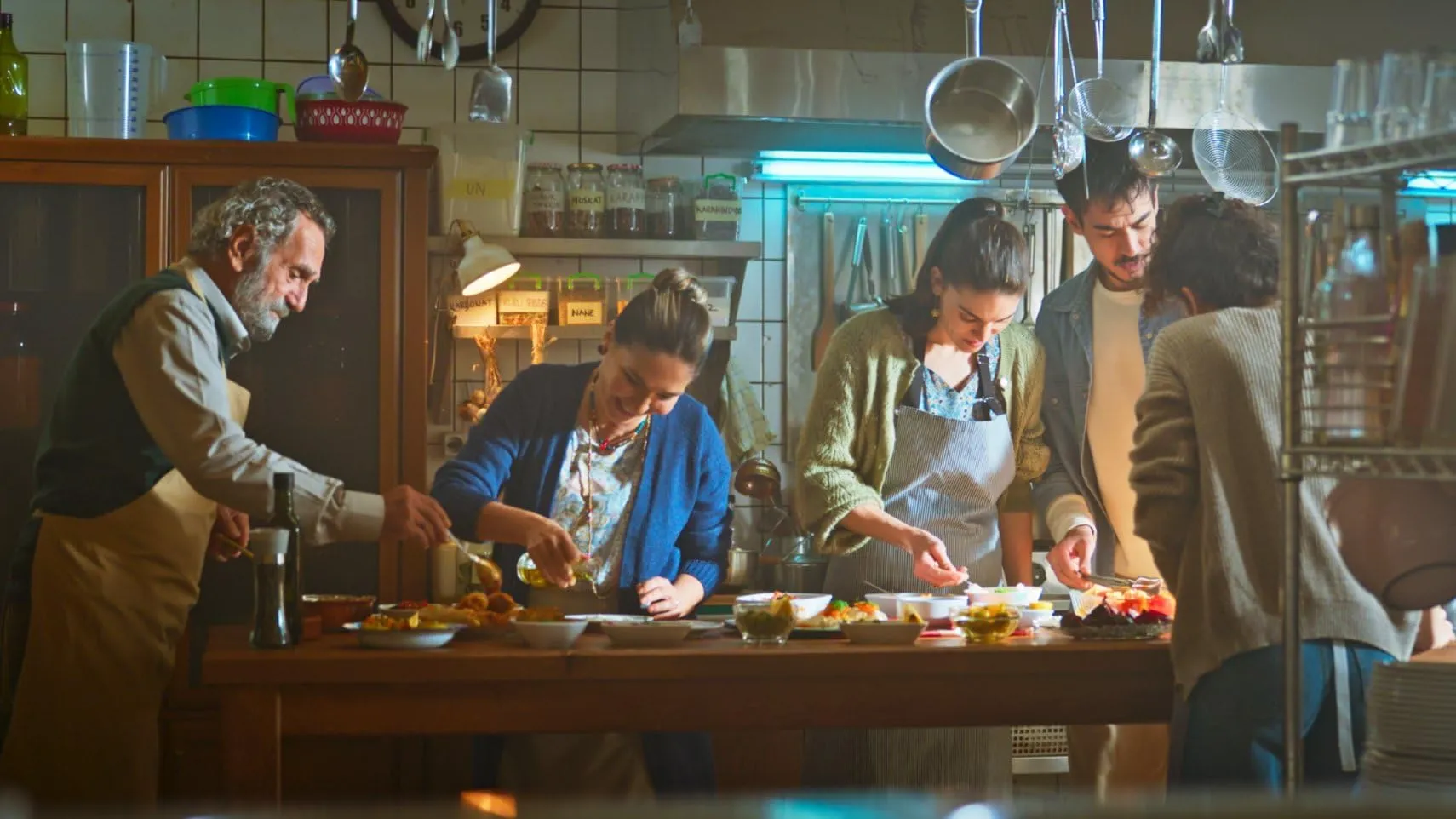
The romance follows a classic slow-burn pattern, building through shared burdens and the gradual recognition that both of them are trapped by circumstance. The writing treats love like a complication that brings consequences. Affection increases the pressure of Afife’s debt and the strain of Kemal’s loyalty to his family.
Tension comes from small, specific choices instead of grand gestures. Long silences over a meal, a brief intense look across a counter, or the simple act of someone waiting before speaking can carry the weight that other shows try to shout into existence. The directors trust the audience to catch subtext and sit with it. That commitment to emotional realism makes the connection feel earned because their pull toward each other grows from recognition.
They keep gravitating because each one sees the other’s situation with unusual clarity, and that recognition becomes its own kind of intimacy. The series fits a television trend that favors mature, lived-in stories where outcomes stay uncertain and clean answers feel dishonest. It leans into mess, and that choice keeps duty and desire in constant friction.
Realism in the Details
The show’s visual approach leans into grit that mirrors the characters’ financial stress. The diner avoids the polished TV-restaurant sheen; it looks lived-in, slightly cramped, and permanently a few bad hours away from disaster. That space turns into a symbol of Afife’s attempt to keep her family’s dignity intact under pressure.
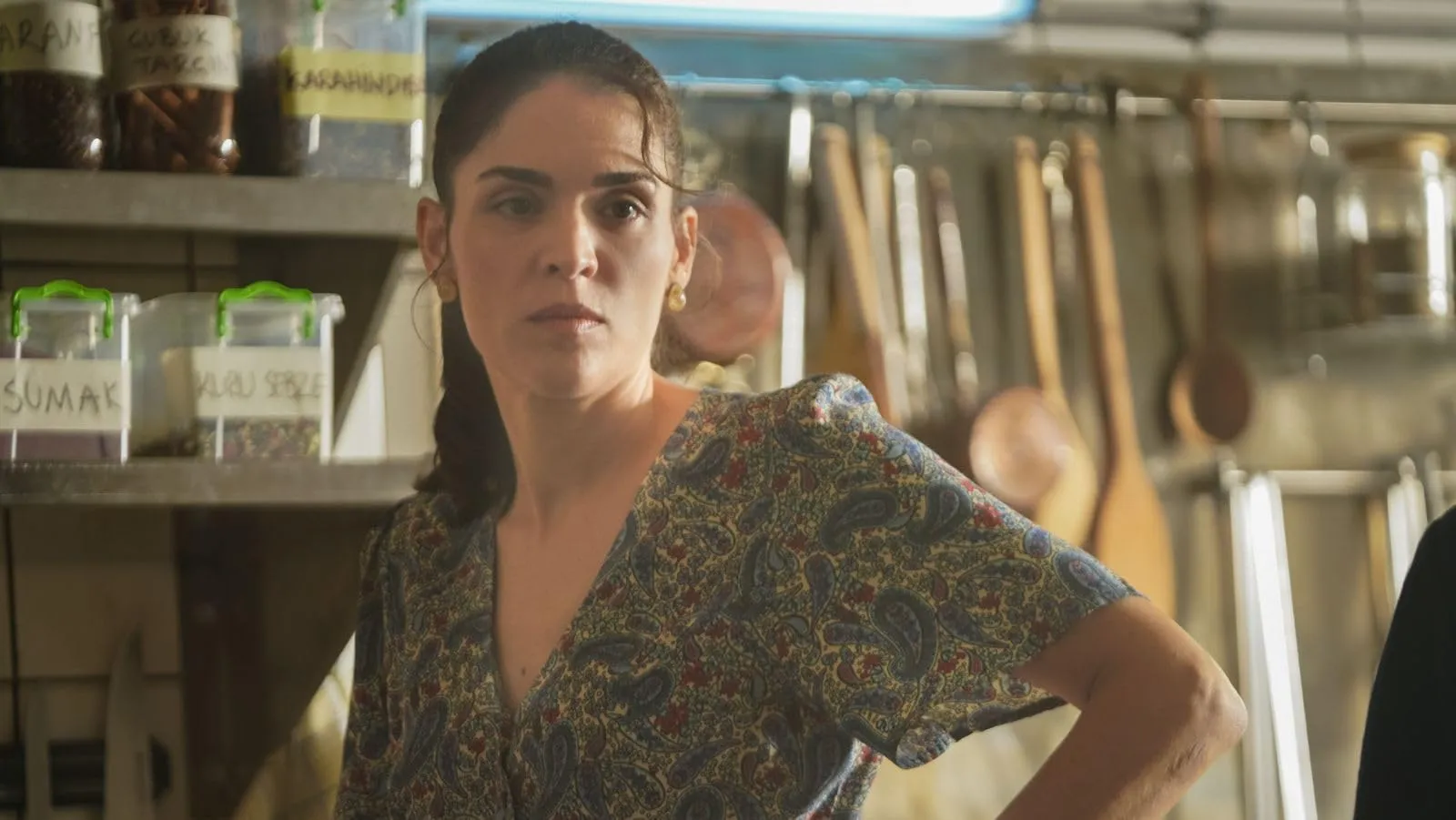
In the lending world, the spaces feel cold, transactional, sterile, and oppressive. The cinematography favors close framing that pulls you into personal space, which heightens the intimacy in the quieter exchanges and makes the tension feel unavoidable.
Directors Selim Demirdelen and Kurtcebe Turgul keep a steady pace that gives scenes room to breathe. The sound design does a lot of grounding work through environmental detail: clinking silverware, the city’s hum, and the constant noise of a working kitchen. Those textures create a tangible sense of place that many glossier productions flatten into background wallpaper.
The pacing supports a gradual build of tension, so later confrontations carry a sense of inevitability. By staying locked on the texture of everyday life, the production keeps the crime elements tethered to the human story. The restaurant reads as a fortress under siege, and the debt Kemal represents becomes a weather system that seeps into every conversation.
The High Price of Moving Forward
The series hits its stride when it studies the costs of affection and the long shadows cast by family history. It asks if anyone can act independently when their past is bound up in financial and moral debt. Those themes give the show enough weight to carry it through occasional narrative stumbles.

There are stretches where the story loses focus, especially when it wanders into secondary plotlines about the inner workings of the television industry. The detours connect to Afife’s career on paper, yet they can feel like they’ve drifted in from another series and they interrupt the emotional momentum between the leads.
Pacing issues show up in the middle episodes, where certain scenes run past the point of maximum impact. The story spends time on side characters whose arcs play more predictably than the leads, and that can make the runway to the final act feel uneven. The late escalation brings energy back as legal consequences and family secrets converge and force choices with real permanence.
The resolution moves fast, maybe too fast, to tie up the conflicts, and it leaves a lingering question about how much space some emotional reckonings actually received. The series closes by returning to its central idea: love complicates the ledger. If a relationship begins with a debt, how long does that origin keep collecting interest?
To Love, To Lose is a Turkish romantic drama that premiered globally on Netflix on January 15, 2026. The series consists of eight episodes and centers on the unexpected intersection of two lives burdened by family duty and financial strain. Afife, a struggling screenwriter, finds herself in a desperate situation when her mother takes a loan from a powerful debt-collection family. Kemal, the stoic heir to that loan shark enterprise, enters her life to collect the debt, leading to a slow-burning relationship defined by emotional realism and moral complexity. You can stream the entire first season exclusively on Netflix.
Full Credits
Title: To Love, To Lose (Ayrılık da Sevdaya Dahil)
Distributor: Netflix
Release date: January 15, 2026
Rating: TV-MA
Running time: 45 to 50 minutes per episode
Director: Selim Demirdelen, Kurtcebe Turgul
Writers: Yavuz Turgul, Kurtcebe Turgul, Nilgün Öneş
Producers and Executive Producers: Erol Avcı
Cast: İbrahim Çelikkol, Emine Meyrem, Yasemin Kay Allen, Hakan Çelik, Deniz Türkali, Görkem Sevindik, Menderes Samancılar, Tarık Papuççuoğlu, Okan Çabalar, Dilşah Demir, Asuman Çakır, Demircan Kaçel
Director of Photography (Cinematographer): Murat Karasul
Editors: Hamdi Deniz
Composer: Tamer Çıray
The Review
To Love, To Lose
To Love, To Lose succeeds as a grounded exploration of how affection complicates an already difficult life. While its pacing occasionally wavers and side plots drift, the central performances provide a steady emotional anchor. It avoids the easy comfort of romantic clichés, opting instead for a gritty look at debt and duty. The series offers a refreshing level of maturity for the genre, proving that the most compelling dramas are found in the quietest moments. It is a thoughtful, sincere watch for those who prefer realism over spectacle.
PROS
- The leads deliver nuanced work that favors subtle emotion over grand gestures.
- The lived-in production design makes the financial stakes feel tangible and urgent.
- It treats romance as a complication rather than a magical solution to life's problems.
- The slow-burn connection between Afife and Kemal feels earned and authentic.
CONS
- Middle episodes occasionally stretch scenes beyond their necessary emotional weight.
- Secondary storylines involving the film industry feel disconnected from the main arc.
- The final resolution arrives quickly, leaving some consequences feeling rushed.