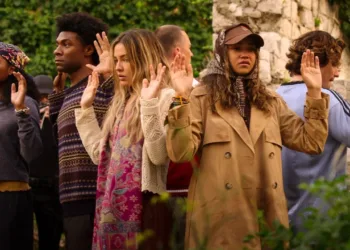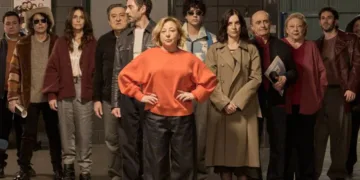



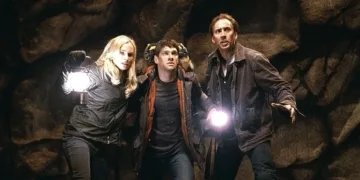
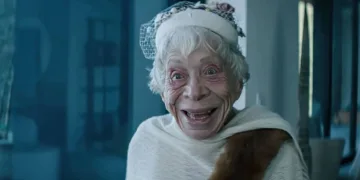
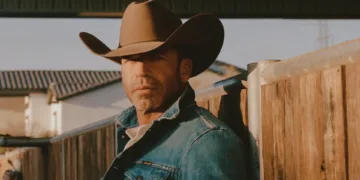
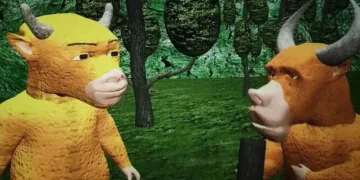







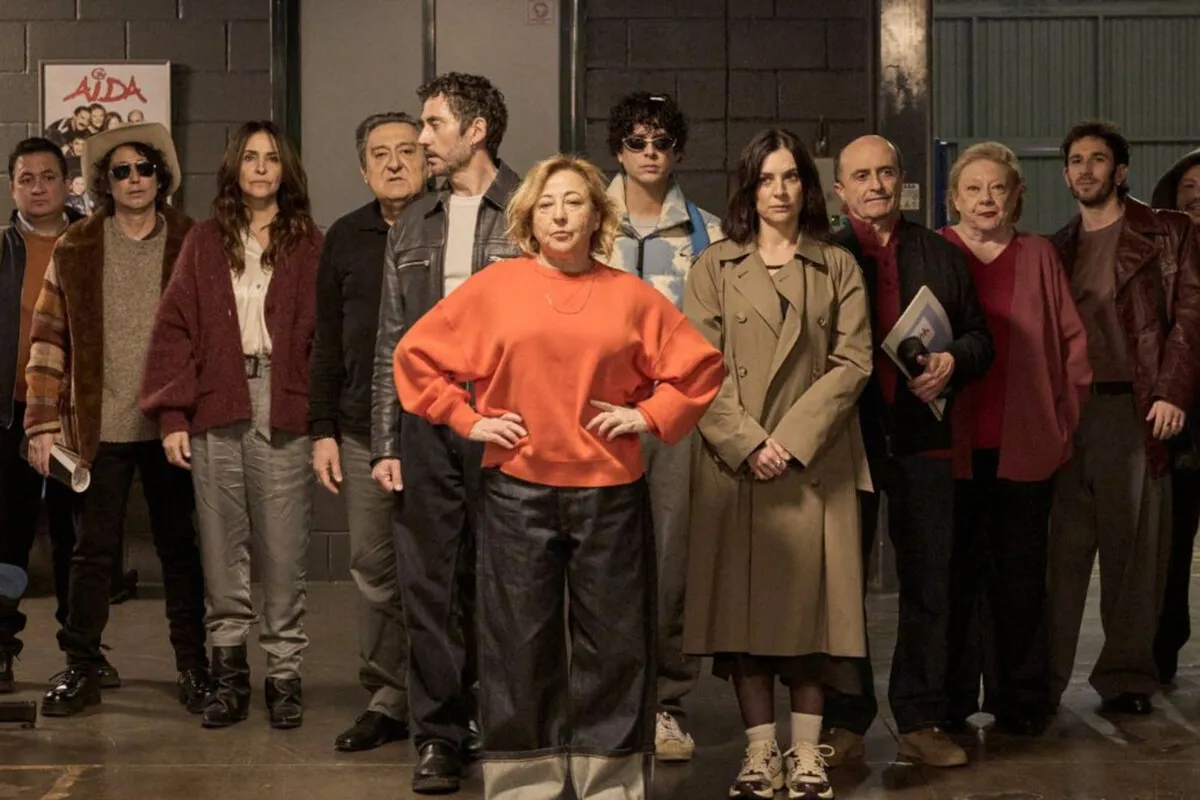

Aída y Vuelta reframes the legacy of Spain’s best-known sitcom through a self-aware, meta approach. It invents a timeline where the series kept running until 2018, placing familiar characters inside a moment of intense social change. Paco León steers a story that merges reality and fabrication, with the ensemble playing versions of themselves while filming what is presented as a last episode.
Carmen Machi steps back into her iconic role with a clear aim: closure. Much of the film’s energy comes from the abrasion between performers and the personas that shaped their careers, captured in the noise and pressure of a working set while the work keeps asking what comedy becomes as the world around it changes.
The project reads as both an affirmation of the series and a pointed take on fame. Sentimentality stays secondary to the harder material about a modern industry that thrives on repetition, exposure, and branding. What emerges is messy and considered, using the past as a tool for speaking to the present.
The Weight of the Mask
Carmen Machi carries a deep fatigue that stains every scene, a weariness that plays like an accumulated debt finally demanding payment. She states her wish to end the character’s life so she can reclaim her own freedom, and the film treats that desire as both personal and professional. The network, hungry for more seasons, pushes in the opposite direction, turning “success” into a contract with no graceful exit. Executives demand continued output with little concern for the artist’s health, and the production starts to feel predatory in its day-to-day rhythms.
Her interactions with Paco León sharpen this conflict. They do not share a single vision of what staying means. Paco holds onto an ambivalence that becomes its own form of pressure, while Carmen reaches for release with the urgency of someone who has lived too long inside a public costume. The film frames fame as a weight that performers carry under bright lights, retreating into the safety of the set because the outside world keeps asking for the same character again and again. That safety is also a trap. Artifice receives more value than their lived experience, and the gap between real identity and television image tightens into a claustrophobic mood.
A specific plot beat makes the point concrete: the cast members become prisoners of their own success. The film describes a gilded cage where the series has to end so they can keep living as themselves, and it stages that idea through the tense logistics of production, not through abstract speeches. Fictionalized confessions erupt mid-process, further clouding what counts as performance and what counts as disclosure. Cameras remain present, and that constant recording changes behavior. Even with the script paused, the actors keep “acting,” aware that any moment can become material.
Also Read




This struggle for artistic independence echoes the ego clashes of classic theatrical dramas, with the backstage environment serving as both arena and confessional. The ensemble plays those tensions with comedy that lands because it sits next to genuine dramatic weight, refusing to separate “funny” from “hurt.” That closeness becomes the film’s emotional engine: laughter is present, but the cost of producing it stays visible in the body language, the arguments, and the exhaustion that never fully lifts.
Comedy in a Changing Climate
Setting the story in 2018 gives the film a precise cultural pressure point. A wave of public reckoning reshapes the atmosphere on set, and the Me Too movement forces characters to re-examine past behavior under a harsher light. That shift matters for a comedy built on irreverence, because it changes the terms of what gets defended, what gets questioned, and what gets reframed.

Paco León argues for risky jokes through the philosophy of “hamor,” a concept that links humor and love as a way of defending the series’ roots. The word functions like a shield and a thesis statement, suggesting that the show’s irreverence came from affection as much as provocation. The film tests that stance with specific gags, including jokes about people with hypertrichosis, and it uses those moments to show how comic material can travel across time with new consequences attached. The story avoids turning into a lecture. Characters remain flawed and recognizably human, which keeps the film from sanding down the very friction it wants to examine.
Laughter becomes a tool in a climate shaped by censorship fears and heightened sensitivity, and the film presents this struggle as part of the creative process rather than a background detail. Social media appears as a force that influences survival, with public sentiment capable of steering what gets made and what gets cancelled. In that environment, creative decisions stop being private, and the set becomes a site of negotiation with an unseen audience.
The film refuses to apologize for the original show’s temperament while still acknowledging a demand for respect. That tension is part of its 2018 setting: comedy is asked to behave like public policy, and the story pushes back by insisting on the role of the impertinent joke. It argues that comic edge dulls when everything gets engineered for safety, and it stages that argument through conflict, not through slogans.
A time jump in sensibility is key to the film’s point. The distance between 2014 and 2018 attitudes highlights the speed of shifting global values, and the story reopens old debates without self-punishment. The protagonists are not framed as role models. They use that freedom to take aim at political correctness, carving out space for an audience to laugh widely while still recognizing that the world has moved. The result is uneasy by design, and that unease becomes a form of honesty about what happens when a culturally specific sitcom tries to keep breathing in a changed era.
Vaudeville and the Digital Avatar
Paco León leans into choices that echo theatrical vaudeville, giving the film the feel of an engineered performance machine that runs hot. The pacing stays rapid and loud, like clockwork powered by anxiety, ego, and adrenaline. A bird’s-eye shot during the cast’s entrance onto the set underlines the artificial nature of the space, presenting the workplace like a constructed stage where people live inside marks, cues, and camera lines.
A key technical idea arrives through artificial intelligence and the creation of an avatar for the character. That digital double gives Carmen Machi a way to confront her own legacy through an object that feels futuristic and haunted at once. It turns nostalgia into a physical problem that can be spoken to, argued with, and reacted against, and it extends the film’s theme of identity by placing a manufactured version of a persona alongside the performer who has carried it.
Editing keeps the tempo aggressive, mirroring the behind-the-scenes chaos as the film swings between humor and tragedy. The camera stays restless and cinematic, resisting the flat familiarity of a typical television look through flourishes that call attention to form. That choice matches the story’s interest in performance as labor: the visual language refuses to pretend this is simply “a reunion,” and it pushes the viewer to see a set as a pressure cooker.
Structurally, the film takes cues from Noises Off, focusing on what happens behind the curtain and how backstage friction can become the real narrative. The ending and epilogue read as a militant defense of creative expression, with visual experimentation reinforcing that stance across the runtime. Craft becomes argument here. The film’s technical confidence helps it register as a considered cinematic work instead of a television adjunct.
In its final stretch, the story detonates into a brutal display of talent that insists laughter remains resistant to control. The sitcom’s last days become tragicomedy played at full volume, demanding attention through speed, artifice, and emotional exposure. The film leaves the audience with the sense that comedy survives through conflict, and that the fight over who gets to define it has become part of the performance itself.
Aída y Vuelta arrived in theaters on January 30, 2026, serving as a meta-sequel that revisits the iconic characters of the long-running Spanish sitcom a decade after its conclusion. Directed by Paco León, the film blends the lives of the actors with their fictional personas as they reunite to film a definitive final episode. You can currently watch the film in cinemas across Spain, with a subsequent international release scheduled for Prime Video later this year.
Full Credits
Title: Aída y Vuelta
Distributor: Sony Pictures Entertainment Iberia, Prime Video
Release date: January 30, 2026
Rating: 12+
Running time: 1 hour 30 minutes
Director: Paco León
Writers: Paco León, Fernando Pérez, Henar Álvarez
Producers and Executive Producers: Álvaro Augustín, Ghislain Barrois, Laura Fernández Espeso, Javier Méndez, Mónica Iturriaga, Clara Nieto, Manuel Sánchez
Cast: Carmen Machi, Paco León, Mariano Peña, Pepe Viyuela, Miren Ibarguren, Eduardo Casanova, Melani Olivares, David Castillo, Canco Rodríguez, Marisol Ayuso, Pepa Rus, Secun de la Rosa, Óscar Reyes, Adrián Gordillo, Emilio Gavira
Director of Photography (Cinematographer): Kiko de la Rica
Editors: Ana Álvarez-Ossorio
Composer: Lucas Vidal
The Review
Aída y Vuelta
Aída y Vuelta succeeds as a smart meta-sequel. It respects its television roots while providing a sharp critique of fame. The film provides an essential look at the evolution of Spanish comedy. Carmen Machi delivers a masterful performance that anchors the chaotic energy. This project proves that nostalgia can be a tool for artistic growth. It offers a rare balance of laughter and reflection.
PROS
- Masterful lead performance by Carmen Machi.
- Smart use of meta-fiction to explore character identity.
- Innovative technical execution and cinematic style.
- Thoughtful critique of the modern entertainment industry.
CONS
- Inconsistent tonal shifts between humor and gravity.
- Uneven development of certain character subplots.
- Heavy reliance on prior knowledge of the original series.