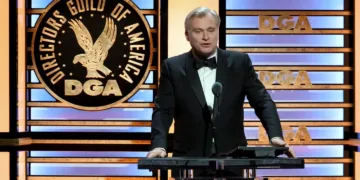












Filmmaker Christopher Nolan, elected in September 2025 as president of the Directors Guild of America, used his opening remarks at the guild’s annual DGA Awards to warn that many directors and directorial team members are absorbing a sharp drop in work as studios and streamers head toward labor talks.
“Tonight is a celebration of extraordinary work and it should be a very joyful one, but I do want to start by just acknowledging that our members are having very hard times,” Nolan said. He told attendees that guild employment fell about 40% in 2024 and slipped again in 2025, then urged members to weigh in on the union’s direction: “If you like the way the organization is running… or… if you don’t like the way we’re doing things, please come and get involved… we need as many voices as possible.”
Nolan argued that audience spending on entertainment has held steady while production has tightened, and he framed the moment as a test of how creators protect their work as new tools and business structures reshape distribution. He also pointed to pressures that union leaders have flagged for months, including artificial intelligence and corporate consolidation.
The DGA has set May 11 as the start of its next TV and theatrical negotiations with the Alliance of Motion Picture and Television Producers; the current contract expires June 30. In a memo announcing the timetable, negotiating committee co-chairs Jon Avnet and Karen Gaviola cited “declining production,” AI, consolidation and rising health-care costs as key issues.
Health benefits have become a central concern. In a November message to members, Nolan and national executive director Russell Hollander said the guild health plan has run negative for the past two years, with losses expected to grow, even with significant reserves.
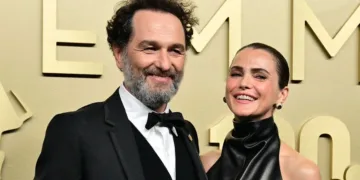
Nolan spoke at the The Beverly Hilton ceremony hosted by Kumail Nanjiani, where Paul Thomas Anderson won the top feature-film prize for One Battle After Another. Nolan drew laughs when he told Warner Bros. film chiefs Pam Abdy and Mike De Luca, “no Pam and Mike, I’m not talking about you,” after praising directors for anticipating what audiences want.