

























![Kingdom Hearts Collection [I-III] Review](https://gazettely.com/wp-content/uploads/2026/10/Kingdom-Hearts-Collection-I-III-1-360x180.webp "Kingdom Hearts Collection [I-III] Review: KHII Holds Steady as Newer Entries Fluctuate 37")



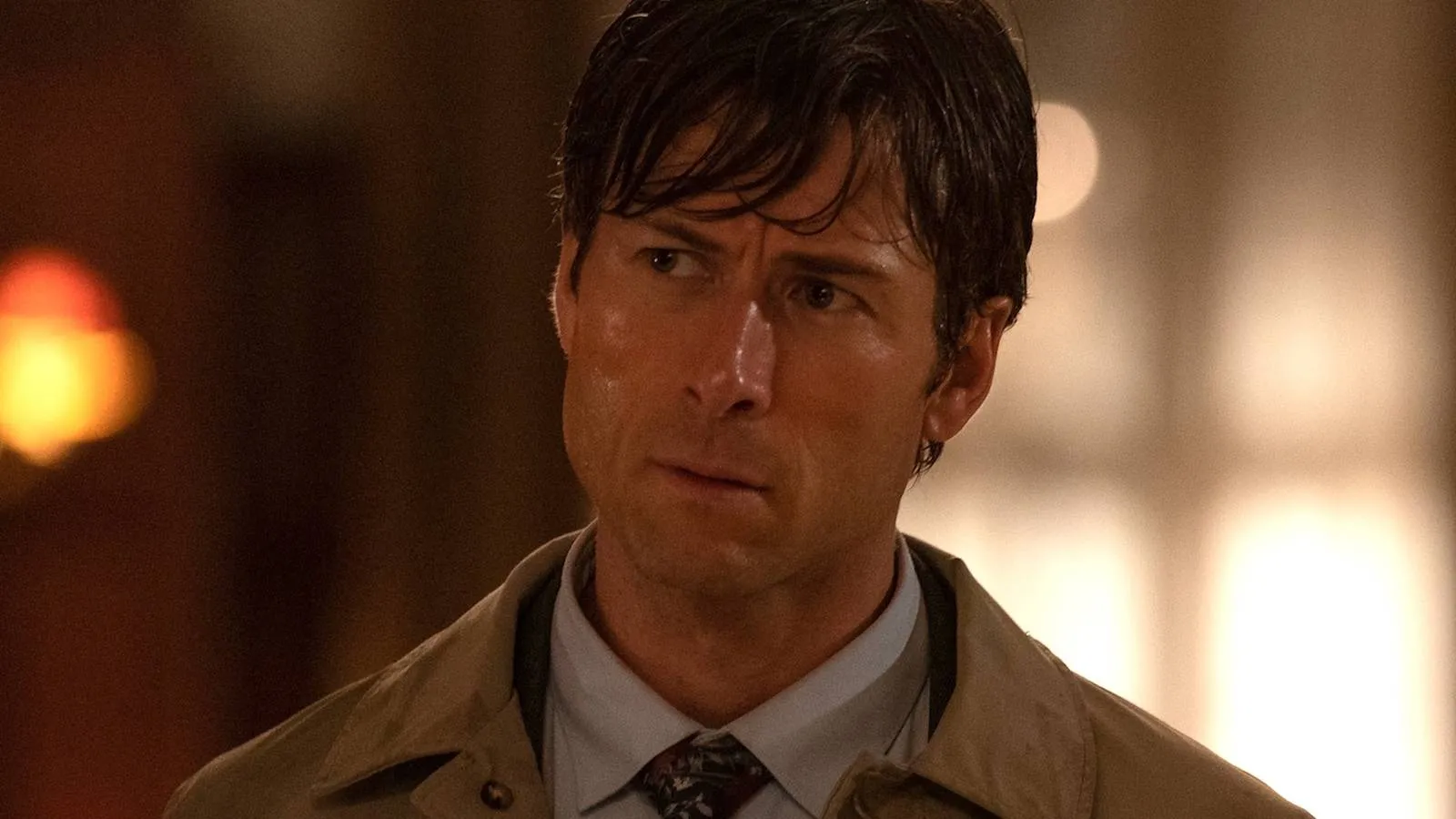

Becket Redfellow sits in a cold prison cell with four hours left before his execution. A priest stays put, serving as Becket’s captive audience, as Becket talks through the chain of events that landed him on death row. The story’s scaffolding reaches back decades, to the moment his mother, Mary, was thrown out of the Redfellow family estate by her father, the billionaire Whitelaw Redfellow. Becket grows up in a modest New Jersey home (a geographic shorthand for the excluded), raised on the steady drip of what he was kept from.
After personal setbacks and a chance run-in with a childhood friend, Becket decides to reclaim the inheritance he believes was taken from him. The law still recognizes him as a legal heir, and seven relatives stand between him and the money. His plan keeps its logic brutally simple: erase every name on that list until the $28 billion fortune has a single owner. Calculated murders follow, aimed at finance bros, artists, and religious leaders. Becket glides through high society with a smile, carrying a private intent to seize the luxury his mother felt he deserved.
A Dynasty of Targets: The Faces of Fortune
Glen Powell plays Becket with a precise, disarming grace. The performance leans on likability as camouflage, turning charm into a tool for a man built from opportunism and calculation. He walks like a predator dressed for a board meeting, a Brioni suit doing the work of a warning label nobody reads.
The result is a nasty little tension: the film dares us to root for a serial killer because he looks like a movie star. That reads as a bleak joke about public forgiveness, the kind handed out freely to the beautiful (beauty-amnesty, payable in advance). Powell handles Becket’s shift from wounded outsider to someone treating bloodshed like clerical labor.
Ed Harris supplies weight as Whitelaw Redfellow, the film’s embodiment of old money as an immovable wall. Even off-screen, he steadies the narrative (the ghost in the counting house). He functions as a gatekeeper for the American Dream, wearing inherited privilege like a second skin, his face set in something close to granite.
The victims form a satirical gallery of modern archetypes. Taylor, the finance bro played by Raff Law, registers as hollow capitalism with a pulse. Noah, played by the perpetually excellent Zach Woods, is a pretentious artist selling a “White Basquiat” persona, and his dark darkroom demise lands like a punchline the movie has been waiting to tell. Topher Grace brings caffeinated hypocrisy to Steven, the megachurch leader who has converted faith into a franchise.
Julia, played by Margaret Qualley, arrives as an antagonistic spark from Becket’s past. She discovers his secret and demands a seat at the table. Her energy cuts sharp and erratic, echoing stock-market volatility in human form. Ruth, played by Jessica Henwick, serves as the moral anchor, the grounded girlfriend who keeps the idea of a normal life in view.
Her sincerity presses against the Redfellows’ greed. Uncle Warren, played by Bill Camp, complicates the kill-list logic in a quieter way. He offers Becket real kindness and a career, a paternal presence that opens the “path-not-taken” conflict inside Becket. The film makes him a test case: can Becket murder the one man who treated him like a human being?
The Confessional Framework: The Narrator’s Monopoly
The movie uses a prison frame that announces Becket’s fate up front. The effect is immediate: the film stops operating as a puzzle box and starts operating as a study in causation, a fatalistic set of steps leading to an end already posted on the wall calendar. Starting at the finish gives the whole thing a tone of grim irony. This plays less like a conventional thriller and more like a post-mortem for a soul.

Becket narrates constantly, filtering the story through the priest as a proxy for the audience. The voiceover creates a form of “narrative-capture,” where the protagonist’s perspective blankets the victims’ reality. That has real consequences for pacing. The narration carries glib humor, a slick self-awareness that can be entertaining in short doses. It also freezes scenes mid-stride, cutting off momentum before it can accumulate.
The pacing lands in episodes, like a grim checklist being ticked down. Each murder becomes its own segment. The film skips the comfort of elaborate planning montages and drops us straight into the moments of the crimes. The approach fits the movie’s own view of killing as transactional work, a “gig-economy” model of assassination where efficiency becomes a moral void.
With capture already baked in, tension shifts toward Becket’s internal hesitation. The question becomes his willingness to stop before the list runs out. The final confrontation with Whitelaw provides the needed climax, heavy with gravitas, then slides into a clever coda. The ending circles back to the prison cell and suggests that defeat does not cancel Becket’s sense of victory. He still finds a way to claim the terms of his own story.
Visual Polish and Tonal Friction: The Aesthetics of Arrogance
John Patton Ford moves from the gritty realism of his debut into a polished, high-gloss world here. That directorial shift mirrors Becket’s rise. The visual language is extreme wealth, built through real locations and expensive costumes that give the Redfellow dynasty a tangible weight, the kind you can almost hear in the room.
Settings sharpen that class divide. New Jersey appears in grey, cramped beginnings. Long Island arrives as opulent, light-filled estates. The cinematography looks sleek and expensive, and that sheen creates tonal friction. The murders have an absurd, farcical edge, and the imagery can feel too grounded for the joke the script wants to play. The film becomes a case of “stylistic-clash,” with the grit of crime drama pulling against the airy menace of dark comedy.
Tone shifts fast. Scenes swing from wry humor to serious drama, and the jump can hit like whiplash. A cousin’s pretension earns a laugh, then the film forces a hard look at the cold fact of a corpse. The laughter does not get time to evaporate before the violence shows up again, like a party trick turning into a crime scene.
The world also carries a striking absence of forensic attention. Becket moves freely with a trail of dead relatives behind him, and the story behaves as if modern surveillance and DNA testing have been misplaced. Some viewers will call that unrealistic. The choice also makes a thematic point: the ultra-rich occupy a bubble where the state’s usual rules lose traction, where consequence becomes a rumor that struggles to enter the room.
The Cost of Wealth: The Right Kind of Rot
The central theme is the pursuit of a “right kind of life.” Becket inherits that phrase from his mother, and it becomes his engine. It frames happiness as an asset, something you can steal, inherit, stockpile, or lose in a family dispute. The film treats that belief as a form of class warfare, with the excluded convinced legitimacy sits one murder away, like a ladder missing only a few rungs (and those rungs happen to have names).
Greed operates as the corruptive force reshaping Becket. He starts out chasing what he calls “rightfully” his. He ends up as someone who cannot stop. Money turns into an addiction, sustained through escalating bloodshed, a feedback loop where each step forward demands another body to balance the ledger. The film’s version of this sickness feels like “inheritance-insanity,” a condition where a human life appraises lower than a trust fund.
The satire of the ultra-rich bites hard. The Redfellows come off obnoxious and disconnected, and the film uses that to pull the audience into complicity. We side with Becket because the targets are so aggressively unlikable, and the movie knows what it is doing when it invites that reaction. It turns moral arithmetic into entertainment, then watches us do the math in real time.
The moral choice arrives once Becket has a chance to stop. Uncle Warren and Ruth offer a path toward a decent life built from merit and affection, the plain version of happiness without the estate gates and bloodline paperwork. Becket keeps going anyway, and that decision reflects the rot created by obsession.
The film suggests the hunger to join the elite carries its own destruction, matching the elite’s ugliness with a mirror-image hunger. It leaves an uncomfortable thought hanging in the air: once killing becomes the price of the “right kind of life,” the life you end up with has very little worth keeping.
How to Make a Killing is set to premiere in theaters across the United States on Friday, February 20, 2026. Distributed domestically by A24, this darkly comedic thriller arrives with significant anticipation following its director’s previous success with Emily the Criminal. The film will be available exclusively in cinemas for its initial run before eventually moving to streaming platforms later in the year. For international audiences, specifically in the United Kingdom, the movie is scheduled for release via StudioCanal on March 13, 2026.
Where to Watch How to Make a Killing (2026) online








Full Credits
Title: How to Make a Killing
Distributor: A24, StudioCanal
Release date: February 20, 2026
Rating: R
Running time: 105 minutes
Director: John Patton Ford
Writers: John Patton Ford, Roy Horniman, Robert Hamer, John Dighton
Producers and Executive Producers: Graham Broadbent, Pete Czernin, Mike Dill, Anna Marsh, Ron Halpern, Joe Naftalin, Diarmuid McKeown, Ben Knight, Glen Powell
Cast: Glen Powell, Margaret Qualley, Jessica Henwick, Bill Camp, Zach Woods, Topher Grace, Ed Harris, Raff Law, Stevel Marc
Director of Photography (Cinematographer): Todd Banhazl
Editors: Harrison Atkins
Composer: Emile Mosseri
The Review
How To Make a Killing
While the film offers a polished observation of generational spite, it suffers from a lack of tonal cohesion. Glen Powell remains a magnetic force, yet the narrative weight of his actions feels light. The movie functions as a watchable lark but fails to bite deep enough into the flesh of its satirical targets. It is a slick, transactional experience that provides entertainment without lasting resonance. Ultimately, the story suggests that seeking a seat at the table of the elite is a pursuit that costs more than any inheritance is worth.
PROS
- Glen Powell delivers a charismatic and layered performance.
- The supporting cast, particularly Bill Camp and Margaret Qualley, adds necessary depth.
- The visual presentation is sleek with high production values.
- Moments of dark humor are effectively biting.
CONS
- The constant voiceover narration can feel intrusive and unnecessary.
- The film struggles to balance its farcical elements with serious drama.
- The episodic structure reduces tension and feels like a checklist.
- The lack of forensic realism occasionally breaks immersion.







