




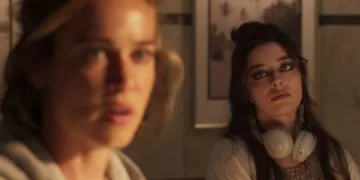










Sara and Jason arrive as figures out of noir lineage, a criminal pair chasing a final score and a clean exit. Their plan sends them into the home of David Blume, a defense attorney with a public image built on high-priced charity work and a past marked by addiction and recovery.
They rely on advanced surveillance tools, tracking Blume’s routine and locating a safe filled with cash and damaging material. The setup projects control, discipline, and technical fluency. The film wastes little time exposing that confidence as fantasy. Blume comes home ahead of schedule, the timing snaps, and the operation ruptures into violence.
Jason takes a gunshot wound, Blume ends up tied in his own bedroom, and the heist mutates into a sealed-room hostage ordeal. From that point forward, the theft matters less than endurance, leverage, and nerve. The house ceases to function as lootable space and starts acting like a pressure chamber. Alliances strain. Surveillance feeds that once gave the intruders an edge now preserve evidence of collapse. Predators step into their own trap and realize the walls have already closed.
Refractions of Paranoia
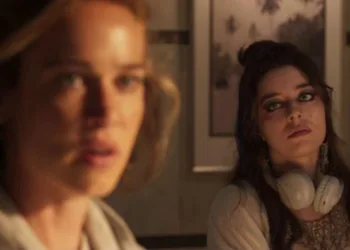
Kevin Lewis treats the modern glass house as a performing force inside the drama, not a decorative backdrop. Glass usually signals clarity in screen language. Here, it produces splintered perception. Matti Eerikainen’s cinematography turns polished floors and transparent walls into a system of reflections that scramble orientation and trust.
Characters appear doubled, sliced, or partially obscured, and the image keeps hinting that sight offers fragments, never certainty. That visual strategy feeds the film’s suspicion. Every frame asks who is watching, who is misreading, and who is staging the view.
The muted, soft palette helps the architecture do its work. Cold surfaces and controlled tones give the house a sterile elegance that presses the characters into isolation. Lewis and Eerikainen stage a smart tension between movement and design: handheld camera motion injects nervous volatility, while the house itself remains rigid, symmetrical, and geometrically severe. The contrast lands clearly. Human control looks shaky inside a space built to project control.
Early wide shots use negative space with real precision, letting empty corridors and open rooms hold the frame long enough to create unease. The effect carries a faint noir afterimage, updated through glass and modern luxury instead of alleyways and venetian blinds. Chiaroscuro is not the dominant tool here, yet the film borrows noir’s expressionistic impulse and reroutes it through reflection, transparency, and architectural coldness. As the night pushes on, the framing contracts.
Shot scale tightens, breathing room shrinks, and the house that first appeared expansive starts to feel compressed and hostile. That shift in visual grammar tracks the characters’ narrowing options with clean narrative logic. Honest interiors are rare here, and the film knows it. Every reflective surface turns disclosure into performance. The setting weaponizes visibility while keeping identity unstable.
The Crucible of Doubt
Frank Grillo plays David Blume with a taut, predatory focus that makes captivity look like an opening argument. His speech patterns carry courtroom polish, and each request for mercy sounds engineered to extract information or shift advantage.
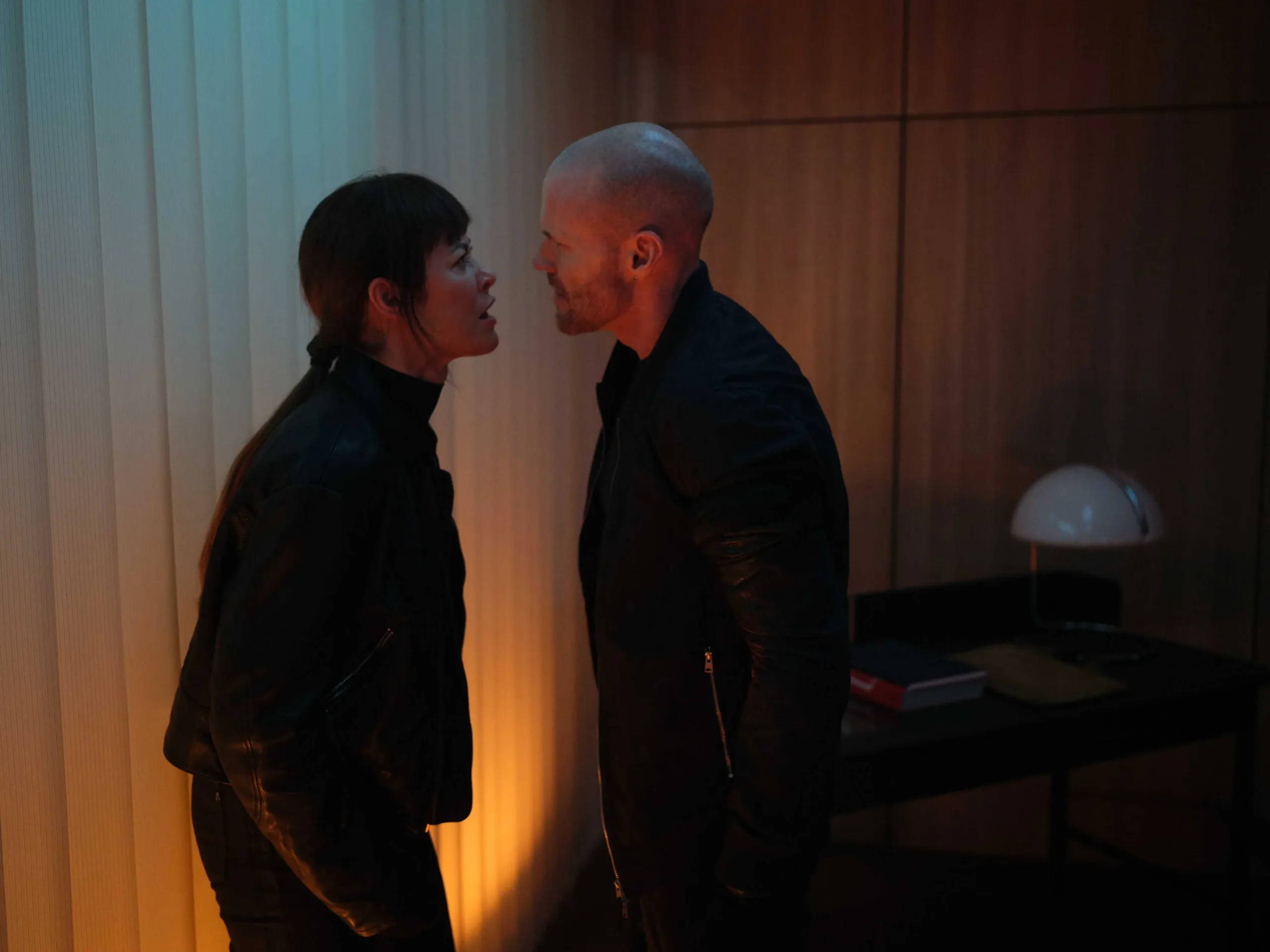
Blume treats the bedroom where he is restrained as another stage for persuasion. Grillo leans into verbal precision, and the performance gives the character a dangerous elasticity. He reads as victim and manipulator at the same time, with the script placing him squarely in an ethical gray zone shaped by his own disreputable history.
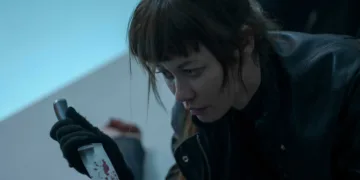
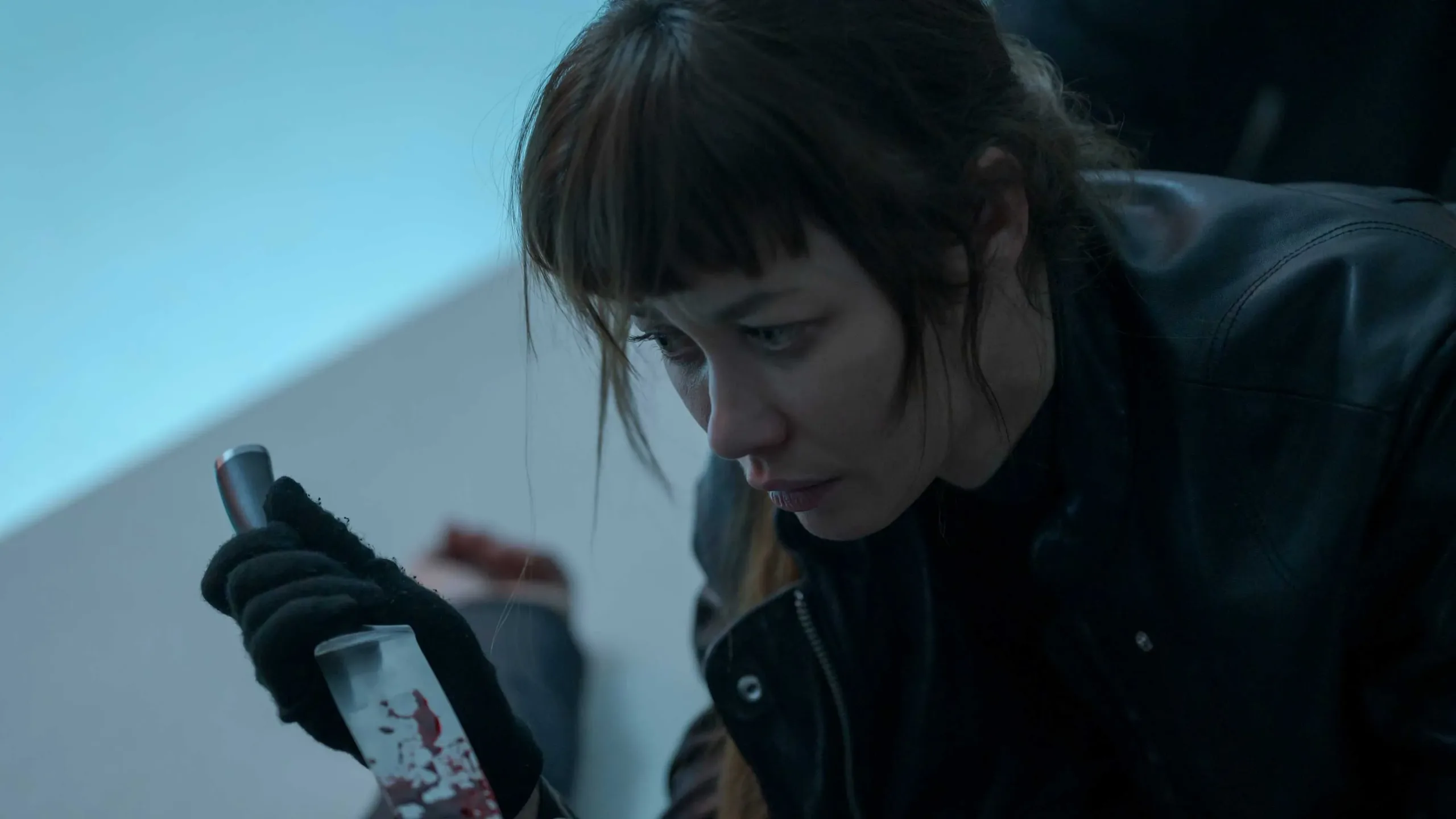
Olga Kurylenko gives Sara a performance built on visible strain and exposed feeling. In the early passages she operates with procedural calm, moving through the break-in with clinical focus. Once the plan disintegrates, guilt starts to surface in her face and posture, especially as Blume’s psychological pressure wears at her resolve. Kurylenko plays that erosion beat by beat, letting doubt register before panic fully takes over.
Oliver Trevena’s Jason functions as the unstable variable. His wound changes the energy of every exchange. Pain, fear, and weakening control push him toward erratic behavior, and the film uses that volatility to thicken paranoia inside the trio. The hidden photos and documents discovered in the house further cloud the moral terrain, adding another source of suspicion and revulsion.
Blume exploits all of it with practiced cruelty, planting distrust between Sara and Jason and reframing their relationship as a bond produced by shared criminality. It is a bitter view of intimacy under pressure, and the film presses hard on that bitterness. Trust evaporates fast here. Dignity goes with it. Even personal narrative starts to fracture, as each character fights to preserve a version of events that keeps guilt, shame, or fear at bay. The contest of intelligence becomes a contest over truth ownership.
The Rhythm of Unraveling
At eighty-four minutes, the film moves with lean discipline and a sense of countdown. Lewis builds the story as a gradual tightening mechanism, starting with the measured tempo of surveillance and turning toward frantic confinement in the later stretches. Recurring images of a digital clock reinforce the closing window and make time feel like an active threat. The device is simple, effective, and a little merciless. Much like a good cross-examination.
Sound design carries substantial weight in this escalation. Ambient hums, room tone, and sudden silences keep the viewer’s perception unstable, nudging attention toward small noises and micro-shifts in behavior. The film understands how suspense grows in the gap between sound and expectation. Some music cues land awkwardly against the dialogue, yet that friction contributes to the disorientation, echoing the thieves’ frayed mental state. The auditory field never settles for long, and that restless quality supports the tightening pace.
Lewis also shows restraint in how he handles violence. The film steers away from large-scale spectacle and keeps returning to faces, sweat, eye movements, and tiny reactions that expose panic or calculation. That emphasis on physical detail over action display strengthens the psychological hold of the material.
Pacing, image scale, and sound all work on audience psychology in concert, pushing perception toward uncertainty while the characters lose their grip on certainty themselves. The structure plays like a descent through a narrowing maze, with exits disappearing one at a time. Time functions as pressure, threat, and tactic. The short runtime keeps that pressure concentrated and leaves very little room for release.
Misdirection officially premiered on February 10, 2026, delivering a tense and atmospheric home-invasion narrative shot primarily on location in Belgrade, Serbia. The film centers on a desperate criminal couple whose final heist goes dangerously awry when they realize their target, a wealthy attorney, is far more dangerous than he appears. Currently, the movie is available for streaming and purchase on major Digital and Video on Demand (VOD) platforms, including Amazon Prime Video and Apple TV.
Where to Watch Misdirection (2026) Online










Full Credits
Title: Misdirection
Distributor: GFM Film Sales, Vertical Entertainment
Release date: February 10, 2026
Rating: R
Running time: 84 minutes
Director: Kevin Lewis
Writers: Lacy McClory
Producers and Executive Producers: Steve Shapiro, Oliver Trevena, Marcus Englefield, George Lee, Matt Drake, Michael Mendelsohn, RJ Collins, Aliethea D’Angelo, Miloš Đukelić, Vladimir Đukelić, Fred Hedman, Vladislav Lapidus, Eduard Osipov, Maxim Yurov
Cast: Frank Grillo, Olga Kurylenko, Oliver Trevena, Landa Morland, Vladislav Lapidus, Lacy McClory, Emilija Matic
Director of Photography (Cinematographer): Matti Eerikäinen
Editors: Ryan Liebert
Composer: Moxy Brothers
The Review
Misdirection
While its premise follows a familiar path, the film succeeds as a disciplined exercise in spatial tension. The choice to swap traditional action for a psychological battle of wits within a glass-walled cage provides a refreshing focus on character over spectacle. Despite some clunky dialogue in the opening act, the performances and sleek visual language elevate the material. It is a taut, cynical neo-noir that understands the value of brevity and the power of a well-placed reflection.
PROS
- Coiled, intense performance by Frank Grillo.
- Sophisticated use of architecture and reflections to build paranoia.
- Lean, efficient runtime that avoids unnecessary padding.
- Strong focus on psychological manipulation rather than generic shootouts.
CONS
- Script contains some stereotypical heist tropes and clichéd banter.
- Jarring sound design choices that occasionally compete with the dialogue.
- Slow initial setup that takes time to find its rhythm.