























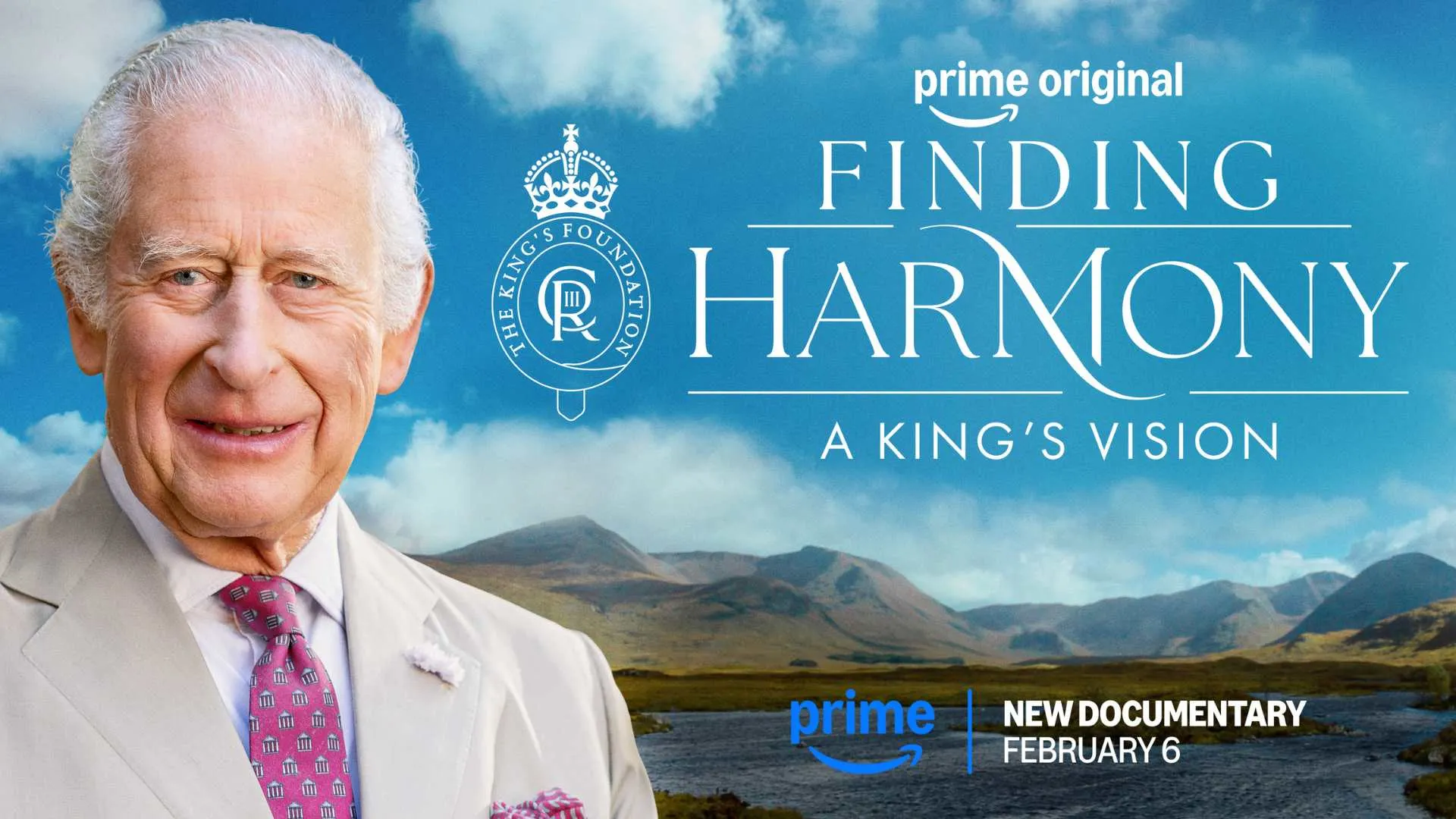

Finding Harmony: A King’s Vision arrives on Prime Video as a major documentary study of environmental thought. Directed by Nicolas Brown, whose work includes high-fidelity nature productions, the film focuses on King Charles III and a fifty-year record of ecological activism.
Kate Winslet narrates, and her familiar voice carries the audience through a story that moves across decades and continents. The documentary builds its case around the need to repair the relationship between human life and the natural world as a condition for future survival.
Its imagery moves from the close scale of the British countryside to large international conservation projects. The film leaves behind the usual shape of a royal profile and concentrates on the goals of the King’s environmental campaign. It plays as a worldwide appeal for a change in outlook, moving across varied landscapes while holding to one message about planetary fragility.
From Eccentricity to Scientific Necessity
The film leans on archival footage to map the long arc of this environmental campaign. It shows a young Prince Charles in the 1970s and 1980s issuing early warnings about industrial pollution and chemical-heavy farming. These passages capture a period of public ridicule, with media coverage often treating his views as fringe ideas or absurdity.
The documentary points to his support for organic agriculture and to the widely mocked remark that he spoke to his plants at Highgrove. That period of ridicule is set against the present day, where the film presents the same ideas as scientific realities with immediate relevance.
The King offers personal reflections on visible biodiversity decline, describing missing cuckoos and the quiet absence of grasshoppers in places that once carried constant sound. These observations give the film’s philosophical argument a concrete feeling of loss.
His principle of “harmony” presents humanity as part of nature itself, not a power standing above it. By following the path from public mockery to present-day urgency, the documentary argues that the King identified elements of today’s climate crisis long before public consensus shifted.
The Architecture of Sustainable Traditions
The documentary moves from ideas into built examples of the King’s philosophy. Poundbury and Dumfries House are presented as case studies for how traditional architecture and sustainable urban planning may respond to housing shortages and economic decline.
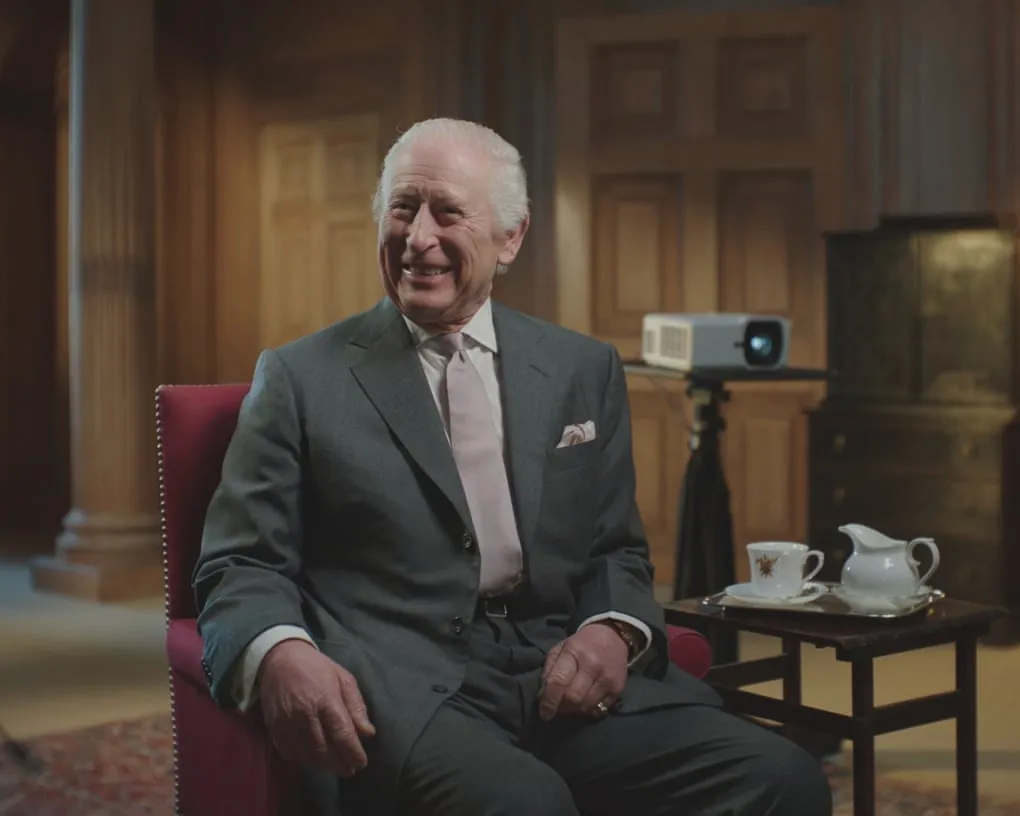
The film then carries this vision beyond the United Kingdom into very different cultural settings. It covers the Turquoise Mountain Foundation’s work in Afghanistan and the Dhun project in the Thar Desert in India. These sections show the philosophy adjusting to local conditions, including check dams used against desertification in Rajasthan and rainforest protection efforts in Guyana.
Vocational training receives strong attention, with scenes of prisoners learning beekeeping and artisans practicing carpentry as part of community renewal. The narrative also introduces the “grammar of harmony,” a concept linking repeated mathematical patterns in the universe to human wellbeing.
By connecting sacred geometry with agriculture and urban design, the film presents a single system of thought. Across these international examples, traditional skills and natural mathematics appear as working models for present-day resilience.
The Aesthetic Rhythm of Environmental Advocacy
Nicolas Brown uses lush cinematography to shape a visual experience that reflects the measured pace of the natural world. Across its 90-minute runtime, the film adopts a slow rhythm that gives its high-quality images of living ecosystems space to register. Kate Winslet’s narration adds weight, and her tone brings warmth that sustains attention through dense philosophical material.
The documentary does use stock footage for abstract ideas such as repeating forms in nature, and those passages can feel detached from the film’s stronger human-centered scenes. The project still holds a careful balance between tribute to a monarch and serious environmental advocacy. The film sidesteps simple praise by keeping the focus on the urgency of biodiversity loss and climate upheaval.
It ends by presenting the King’s life work as a possible guide for future generations. That framing places the mission in the hands of a global community, not a single institution. Through careful craft and an international reach, the documentary offers a vision of a world choosing restoration over depletion.
Finding Harmony: A King’s Vision premiered globally on Prime Video on February 6, 2026, marking a significant cinematic milestone for the British monarchy. Directed by Nicolas Brown and narrated by Academy Award winner Kate Winslet, the film explores the lifelong environmental philosophy of King Charles III. It charts his journey from being a marginalized voice in the 1970s to becoming a recognized figure in the global fight against climate change and biodiversity loss. Viewers can currently stream the documentary exclusively on Amazon’s Prime Video platform, where it serves as both a personal memoir and a call to action for sustainable living.
Where to Watch Finding Harmony: A King’s Vision (2026) Online


Full Credits
Title: Finding Harmony: A King’s Vision
Distributor: Prime Video
Release date: February 6, 2026
Rating: TV-G
Running time: 90 minutes
Director: Nicolas Brown
Writers: Nicolas Brown, Brianna Oh, Tony Juniper, Ian Skelly
Producers and Executive Producers: Alice Henley, David Allen, Gaby Bastyra, Nick Southgate, Andrew Ruhemann, Tom Hugh-Jones, Kristina Murrin CBE, Rob Dersley
Cast: King Charles III, Kate Winslet, Marc Palahí, Tony Juniper, Patrick Holden
Director of Photography (Cinematographer): Pete McCowen, Helen Hobin
Editors: Passion Planet Editorial Team
Composer: Nitin Sawhney
The Review
Finding Harmony: A King’s Vision
Finding Harmony: A King’s Vision succeeds as a visually stunning meditation on ecological philosophy. While it occasionally drifts into abstract mysticism, the film provides a vital historical record of a leader whose early environmental warnings have moved from the fringe to the center of global necessity. It functions less as a royal portrait and more as a serious, global call for a symbiotic relationship with nature.
PROS
- Exceptional cinematography that captures the scale of global restoration efforts.
- A grounded historical perspective that adds weight to modern climate discussions.
- Kate Winslet’s narration provides a steady and engaging emotional anchor.
- Concrete examples of sustainable urban planning and traditional vocational training.
CONS
- The 90-minute runtime feels slow during abstract segments.
- Use of stock footage to explain "natural geometry" can feel repetitive.
- Certain philosophical elements may feel too esoteric for viewers seeking hard data.