













The appearance of The Best Summer feels like an unearthed relic from a shared dream that had almost slipped into dust. Early in 2025, while the Malibu fires threatened physical traces of the past, director Tamra Davis recovered a box of magnetic tape that had sat untouched for thirty years.
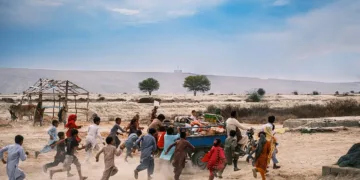
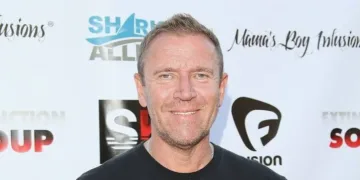
The tapes hold material from a 1995 trip through the Summersault festival, a roaming event that moved across Australia and into the humid terrain of Southeast Asia. Davis was moving away from the loud, glossy mode of commercial comedies and toward the raw life of the road with her husband, Mike D. Her camera catches the Beastie Boys, Sonic Youth, Foo Fighters, and Bikini Kill at a cultural crest, during a period when alternative rock still carried the force of resistance.
The footage records a tour, yet its value runs deeper. It keeps alive a distinct register of human experience from before the digital era. The film stands as proof that history can survive through chance, lifted from literal fire and returned to us as a portrait of who we were before we learned to live under constant observation.
The Texture of a Fading Reality
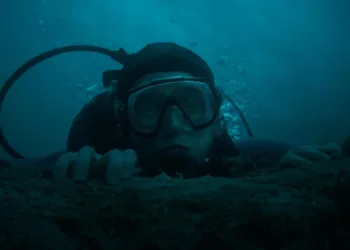
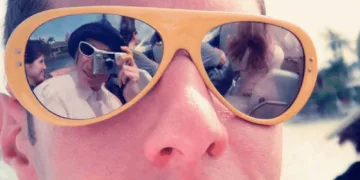
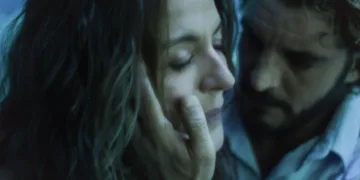
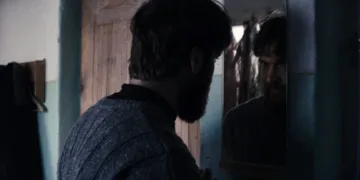
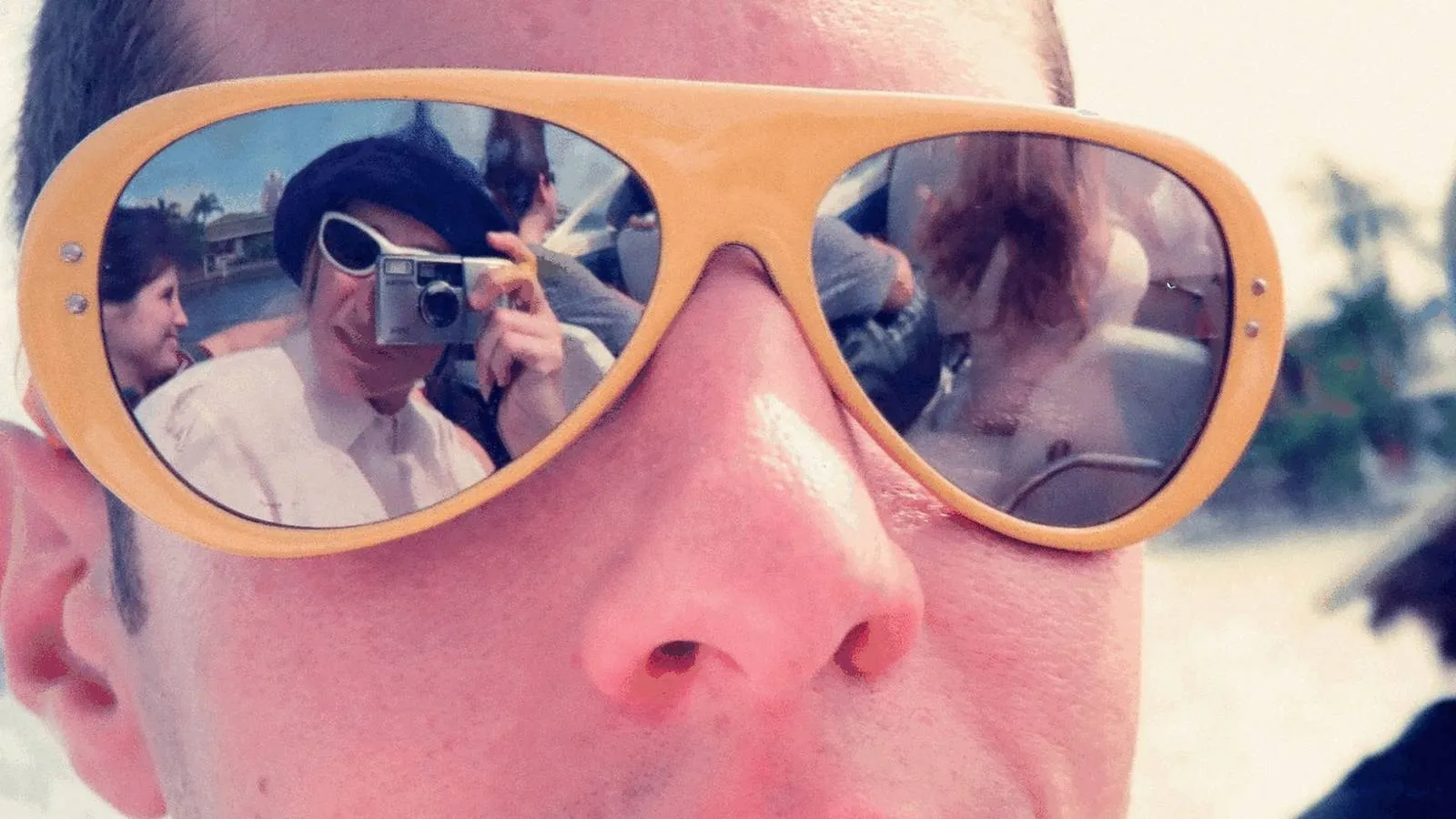
The film’s visual language rejects the polished, sterile finish that defines much of current documentary work. Shot on Sony Hi8 and 8mm, the images carry a tactile tremor that echoes the instability of memory. Grain crowds the frame. Sunlight drains the color.
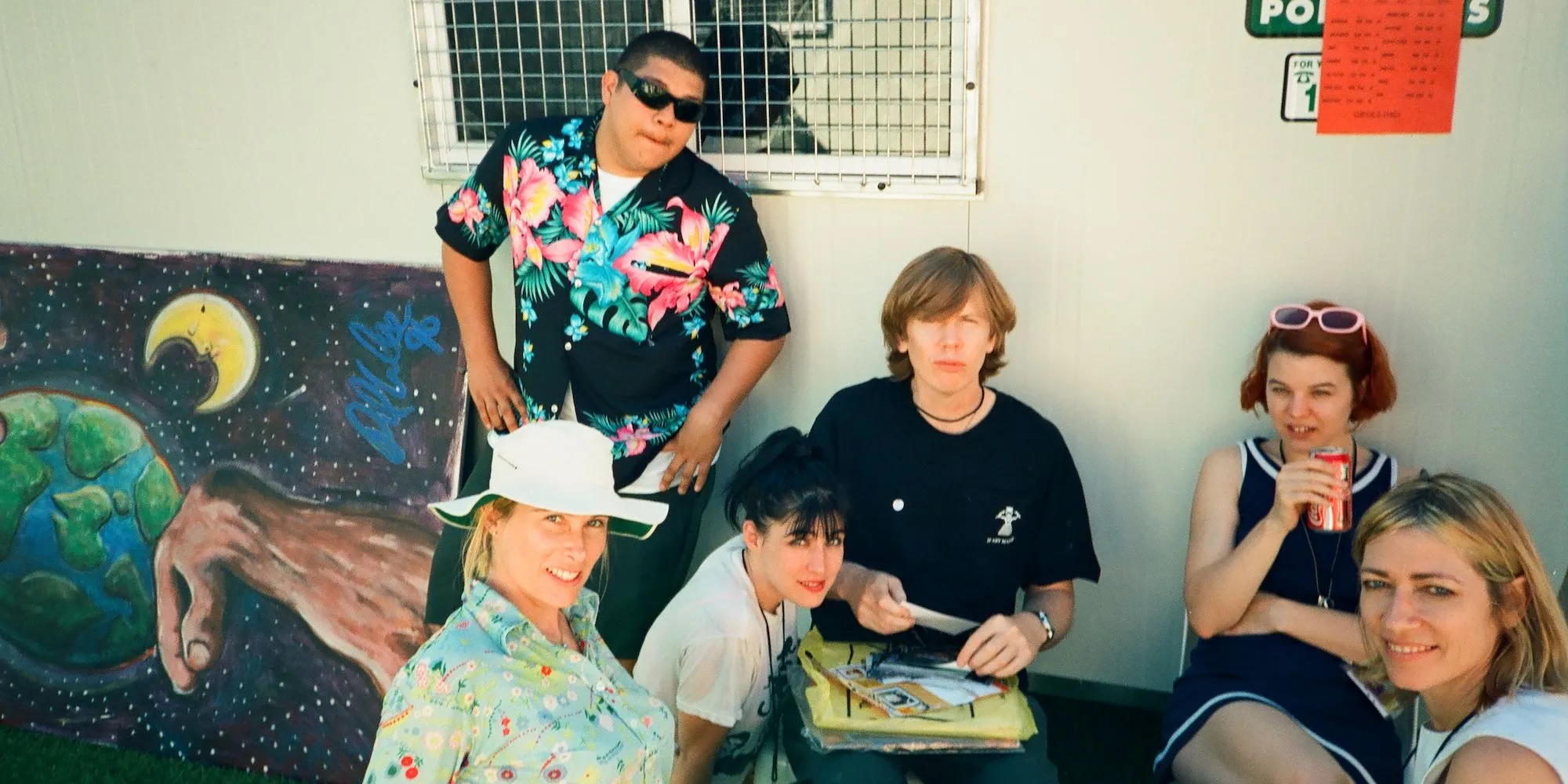
The camera shakes with the pulse of a director living inside the moment, never pretending to hover above it. The result plays like a moving fanzine, a rough scrapbook committed to immediacy and contact. A heavy existential feeling rises from the absence of the glowing screens that organize present-day life. In 1995, people met the camera with a direct gaze. They occupied space without building a digital self for display.
Davis uses a strict chronological structure, and that decision lets fatigue and wonder gather slowly across the running time, the same way they gather on a long tour. The audio clips, distorts, and fades on a regular basis, yet those flaws deepen the sense of closeness. The film places the viewer inside the crush of bodies, against the barricade, or in the corner of a cramped bus.
The lack of a professional sheen creates an intimate refuge where people seem able to exist without public armor. Davis captures a world that still had privacy, a world where a camera arrived as an unusual intruder, not a permanent judge. The flickering light from the 8mm reels becomes a haunting image for youth itself, a beautiful glitch passing through time.
The Violent Grace of the Stage
Once the film turns toward the stage, the energy becomes physical, almost overpowering, and it breaks through the limits of the aging tape. Davis favors long, uninterrupted takes, giving the viewer room to witness the labor inside performance. The Foo Fighters appear in their early period, playing with frantic desperation, as if speed and volume could outrun history.
Dave Grohl stepping out from behind the drums and searching for his voice becomes a study of creative transformation. One of the film’s strongest passages arrives when Grohl joins the Beastie Boys for “Sabotage.” The performance feels like sonic collapse, a burst of collaborative friction in which separate bands merge into a single howl of joy.
The documentary also captures the specific current running through Australian crowds, framing the relationship between artists and audience as a shared act. Sonic Youth move through their set with cold, intellectual ferocity. Bikini Kill’s “Rebel Girl” carries political urgency that remains fully alive decades later. Away from the stage, Davis lingers on festival life itself. Hotel room parties appear.
Quiet, dull stretches of waiting for soundcheck appear too. These scenes show a community of artists drawn to each other’s company, far from the mythology of celebrity. Competition barely registers. What emerges is a temporary family of outsiders finding belonging inside noise. That collective force pushes back against the isolation of touring life and affirms art as a place of real human contact, even during a grueling run.
The Quiet Mirror of the Soul
The film’s most philosophically arresting passages emerge through the informal questioning led by Kathleen Hanna. Her prompts seem small at first glance, questions about favorite foods or personal mottos, yet they dismantle the rock-star mask with startling efficiency.
The simplicity of the questions opens a door to vulnerability that formal interviews rarely reach. Dave Grohl appears here in a different light, wrestling with the weight of sudden visibility and admitting deep discomfort with the performative demands of fronting a band. His uncertainty is palpable. The segment exposes an internal conflict between private self and public image, a conflict the stage can energize without resolving.
Kim Gordon offers the film’s most meditative reflections, speaking about the need for a stage persona as a protective layer. She describes these identities as constructions made from fragments of cinema and literature, tools for surviving exposure while being watched. The film also records the delicate, fleeting beginnings of the relationship between Hanna and Adam Horovitz, and those early interactions carry a tenderness that feels almost too private to witness.
The presence of the late Adam Yauch stretches across the footage like a melancholic shadow. Seeing him in his prime, full of humor and life, forces a direct confrontation with loss. The nostalgia here gives no comfort. It cuts. It points toward entropy and the fate that waits for every body, every scene, every moment of noise.
The Best Summer closes on a lingering shot of a young Beck, his face marked by untapped potential. The image leaves a question hanging in the air: perhaps the finest parts of life live in the moments we fail to mark, those quiet spaces between major events where existence reveals itself and then passes.
The Best Summer premiered on January 24, 2026, as an official selection in the Midnight section of the Sundance Film Festival. This archival documentary was born from a box of Hi8 videotapes discovered by director Tamra Davis while she was evacuating her home during the 2025 Malibu fires. The footage captures the raw, unscripted energy of the 1995 Summersault Tour across Australia and Asia, featuring an unprecedented lineup of alternative rock icons. Currently, the film is continuing its run on the international film festival circuit, offering audiences a rare, handheld glimpse into a pre-digital era of musical history.
Where to Watch to The Best Summer (2026) Online
Full Credits
Title: The Best Summer
Distributor: Independent (Premiered at the 2026 Sundance Film Festival)
Release date: January 24, 2026
Running time: 1 hour 24 minutes
Director: Tamra Davis
Writers: Tamra Davis
Producers and Executive Producers: Tamra Davis, Shelby Meade
Cast: Kathleen Hanna, Mike D, Adam Horovitz, Adam Yauch, Kim Gordon, Thurston Moore, Dave Grohl, Beck, Stephen Malkmus, Kim Deal
Director of Photography (Cinematographer): Tamra Davis
Editors: Jessica Hernandez
Composer: Beastie Boys, Sonic Youth, Foo Fighters, Bikini Kill, Pavement, Beck, Rancid, The Amps
The Review
The Best Summer
The Best Summer is a spectral encounter with a version of the world that no longer exists. It is less a traditional documentary and more a meditation on the persistence of memory and the raw, unpolished energy of youth. While the chronological structure occasionally stumbles and the lack of historical context may leave some adrift, the film succeeds as a visceral time capsule. It captures the fleeting intersection of art and identity before the digital age fragmented our gaze. It is a haunting, beautiful, and necessary record of a lost frequency.
PROS
- The raw Hi8 and 8mm footage provides an intimate, unmediated connection to the artists.
- Captures legendary bands like the Beastie Boys and Sonic Youth at a vital cultural peak.
- The Kathleen Hanna interviews reveal a rare, human side of otherwise mythologized icons.
- The grainy, shaky aesthetic acts as a perfect metaphor for the fragility of memory.
CONS
- The linear progression loses momentum, particularly during the Southeast Asian leg of the tour.
- Certain bands, such as Pavement and The Amps, feel underrepresented despite their presence on the tour.
- Inconsistent audio and blurry visuals may frustrate those seeking a polished production.