































Ultimate Sheep Raccoon signals a major change for Clever Endeavour Games on Nintendo Switch, carrying their collaborative chaos into a party racing format built around bicycles and animal riders. The game still revolves around a race to the finish across multiple rounds, yet the route takes shape during play. Players build the course piece by piece as the match unfolds, turning empty space into a dangerous obstacle route.
This sequel leaves on-foot platforming behind and commits to physics-driven bike racing, with progress tied to balance, momentum, and body positioning in a way that recalls classic trials-style design. That shift gives the game a different rhythm and a different kind of social tension. Mechanical precision matters, and so does a playful urge to sabotage the shared space everyone must cross.
That design choice also carries a wider appeal across play cultures. The game speaks to party-game audiences who enjoy fast laughs and sudden reversals, and it also speaks to players who enjoy systems mastery. Course construction and bike handling feed each other throughout every round, so the match feels authored by the group rather than set by a fixed track. The result is a format where competition comes from skill, improvisation, and the ability to read a changing environment in real time.
The Delicate Balance of Construction and Competition
Matches use a strict turn-based format that creates a steady pulse between planning and execution. Every round opens with a building phase, and each player selects one object from a random pool. A ramp or grinding rail can solve a movement problem by connecting a gap, yet the stranger objects create the sharpest tactical swings.
An electrified television or a slingshotting frog can turn a useful lane into a trap for rivals. The game asks players to think like hostile level designers. You lay down a route you expect to survive, then shape the same route into a disaster zone for everyone else.
That structure gives the game a nice intersection of racing logic and construction logic. Placement decisions carry narrative weight inside the match because each object records a player’s intent. A rail can signal efficiency, a hazard can signal revenge, and a strange placement can signal a bluff. The race phase then reveals which decisions were smart, risky, or self-destructive. This back-and-forth between authored space and physical execution gives each round a strong identity.
Once the build phase ends, the bikes take over, and their response to terrain feels heavy in a good way. The sense of weight makes each landing, climb, and recovery feel earned. Players use analog sticks or shoulder buttons to shift the rider’s center of gravity, and that movement is central to preserving speed and surviving jumps. Bunny hops and trick-heavy maneuvers feed directly into scoring, so style and efficiency share the same run.
The scoring system also expands the stakes beyond simple placement. Points come from finishing position, coin pickups, and trick complexity, which means a player can stay competitive through a strong route, a flashy run, or a smart collection line. Victory comes from hitting a target point total before other players. That target-based structure keeps matches lively because a single round can change the standings through several channels at once.
The respawn system helps maintain momentum and keeps the chaos readable. A fall usually sends you back to the last safe point, which prevents repeated mistakes from killing the pace. A bottomless pit still carries a harsher penalty through full elimination for the round, giving the most dangerous gaps real consequence. The game creates a social tone that feels accessible for mixed skill groups, yet it preserves enough punishment to keep track design meaningful.
Enhancing the Mayhem Through Power-Ups
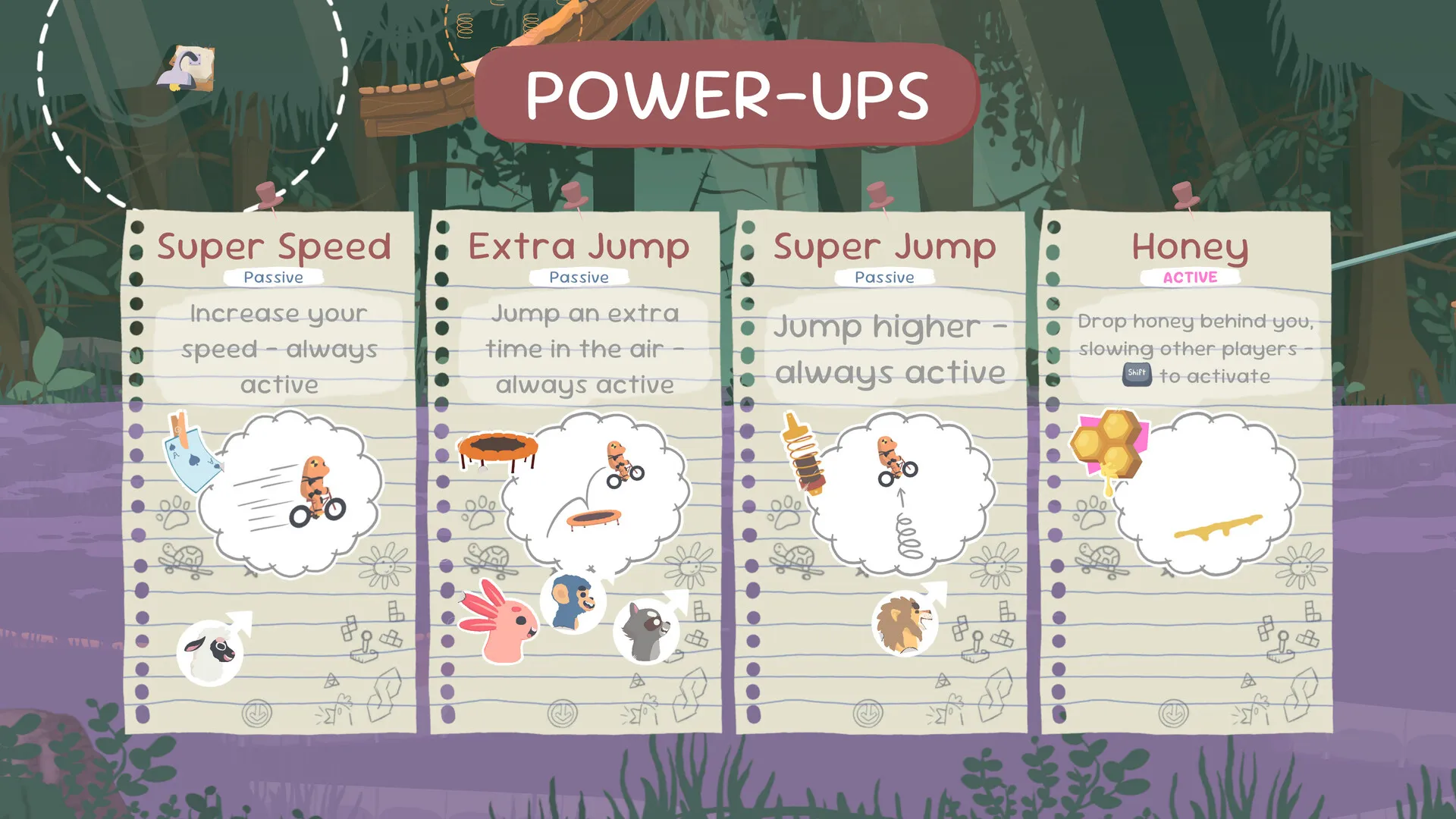
A dedicated power-up system brings a fresh layer of unpredictability to the formula and expands player agency beyond track objects. These items create immediate tactical options that sit alongside the hazards placed during construction. Jetpacks support sustained flight, soda bottle turbo boosts deliver quick speed bursts, umbrellas function as gliders for safer descents, and explosives can launch rivals away from the path they intended to follow.
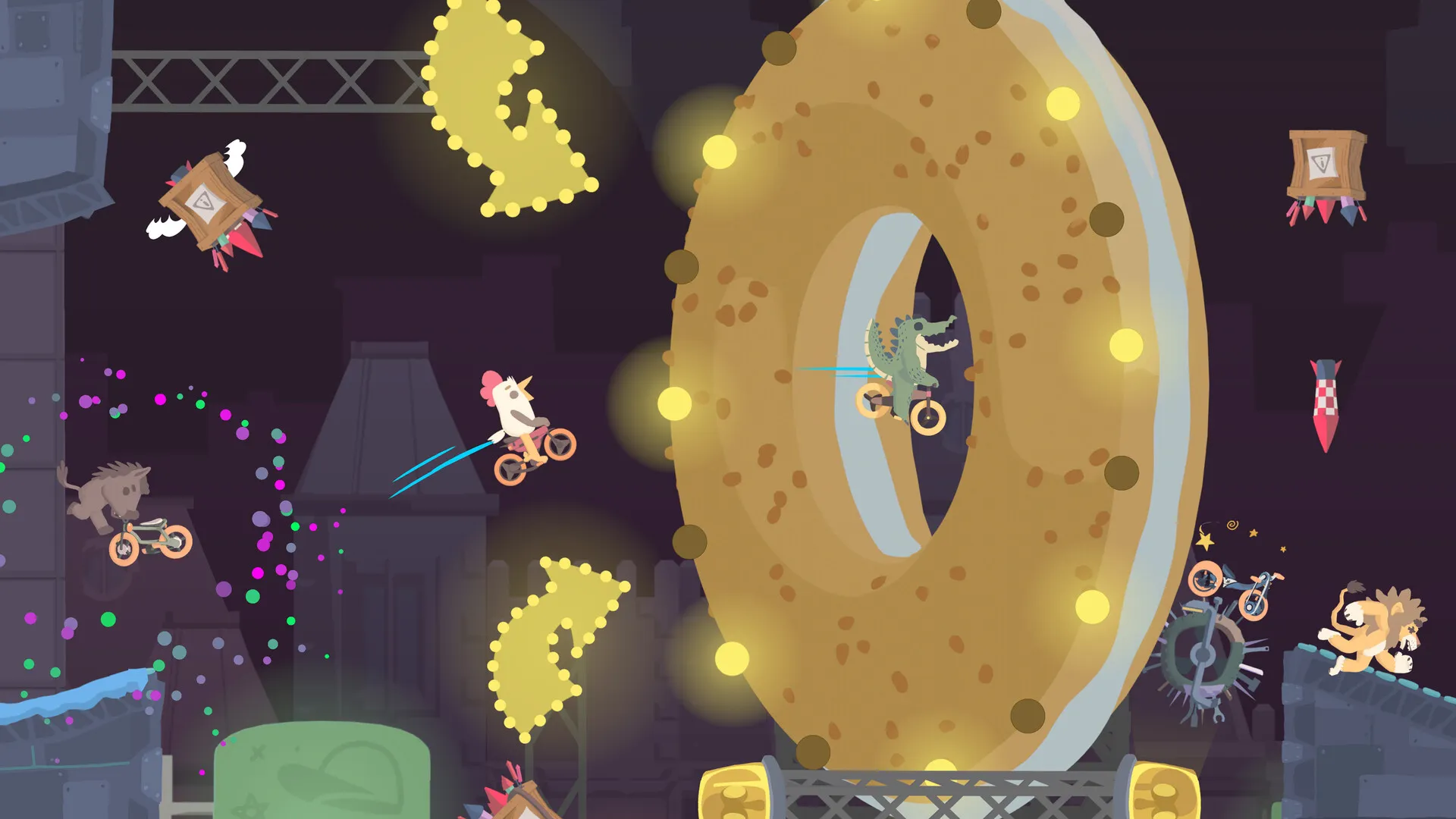
This change matters because it shifts some control back to the rider after the build phase ends. Track pieces define shared space, power-ups define personal responses. A difficult section can still become manageable through the right equipment, which keeps rounds from collapsing into pure luck after a brutal sequence of placements. The game preserves chaos, yet it gives players tools to answer it.
The stacking mechanic adds another strategic layer and rewards planning across rounds. If an extra jump power-up appears again, selecting it upgrades the ability from double jump to triple jump. That progression supports specialized loadouts that can clear player-made obstacles that would block others. The game lets people invest in movement identity over time, and that fits the round-based format well.
Power-up distribution also differs from stage-object selection in a smart way. Multiple players can choose the same power-up in a round, so access does not hinge on a single lucky pick. That choice helps the game stay socially functional during competitive play, especially in larger groups, because it reduces the chance that one random draw leaves someone without tools to respond.
Grappling mechanics widen movement choices even further. Some appear as character tools, and others exist in the environment. Mechanical frogs can grab a bike with their tongues and fling the rider across huge gaps. That visual absurdity matches the game’s comic tone, yet the mechanical effect is practical and important. Even cluttered tracks remain traversable for players who understand their equipment and timing.
Broad Horizons and Technical Flexibility
Ultimate Sheep Raccoon is built around social play, with support for up to eight players across local and online matches. Cross-platform play keeps the player base connected across hardware, which supports the game’s community-focused design.
The package also reaches beyond competitive sessions. Creative Mode offers a substantial toolset for building and sharing custom tracks, and Challenge Mode lets players test speed on courses made by the developers or by players around the world. A training area gives players room to practice bike balance and trick timing before entering live matches.
That spread of modes helps the game travel across different player habits in different regions. Some groups treat party games as local couch events, others meet online, and some players spend most of their time in creation spaces or time-trial challenges. The game supports each of those patterns with a consistent mechanical language, so practice in one mode feeds confidence in another. Bike control, obstacle reading, and trick timing remain central across the package.
Round pacing stays tight through a countdown that starts the moment the first racer reaches the finish. The remaining players have limited time to get there, which keeps sessions moving and prevents long stretches where one person waits for others to finish. That timer preserves energy in group play and sharpens end-of-round drama, especially on tracks filled with hazards and awkward jumps.
The technical options also give players control over the feel of play. In-game menus support fully adjustable control schemes and button layouts, letting players tune inputs to match their habits. That flexibility matters in a physics-heavy game where timing and balance shape every run. Small control preferences can change how quickly a player adapts to the bike system, and the game gives room for that adjustment.
Visually, the focus stays on the chaos players create, yet the base stages do important work. Large chasms and atmospheric backgrounds frame the action and provide a clear stage for the crashes, recoveries, and near-misses that define the match. The environment design supports readability during hectic moments and reinforces the game’s blend of slapstick spectacle and mechanical precision.
The Review
Ultimate Sheep Raccoon
Ultimate Sheep Raccoon succeeds by turning competitive racing into a shared creative exercise. The shift to physics-based cycling introduces a rewarding learning curve that complements the frantic building phases. While the single-player options remain light, the local and online multiplayer modes offer endless variety. It provides a brilliant expansion of a clever concept that rewards both mechanical skill and tactical mischief.
PROS
- Chaotic and creative building mechanics
- Tight physics-based bike controls
- Support for eight players with crossplay
- Satisfying power-up stacking system
CONS
- Limited content for solo players
- Steeper difficulty curve for casual groups
- Basic environment designs compared to predecessors