



























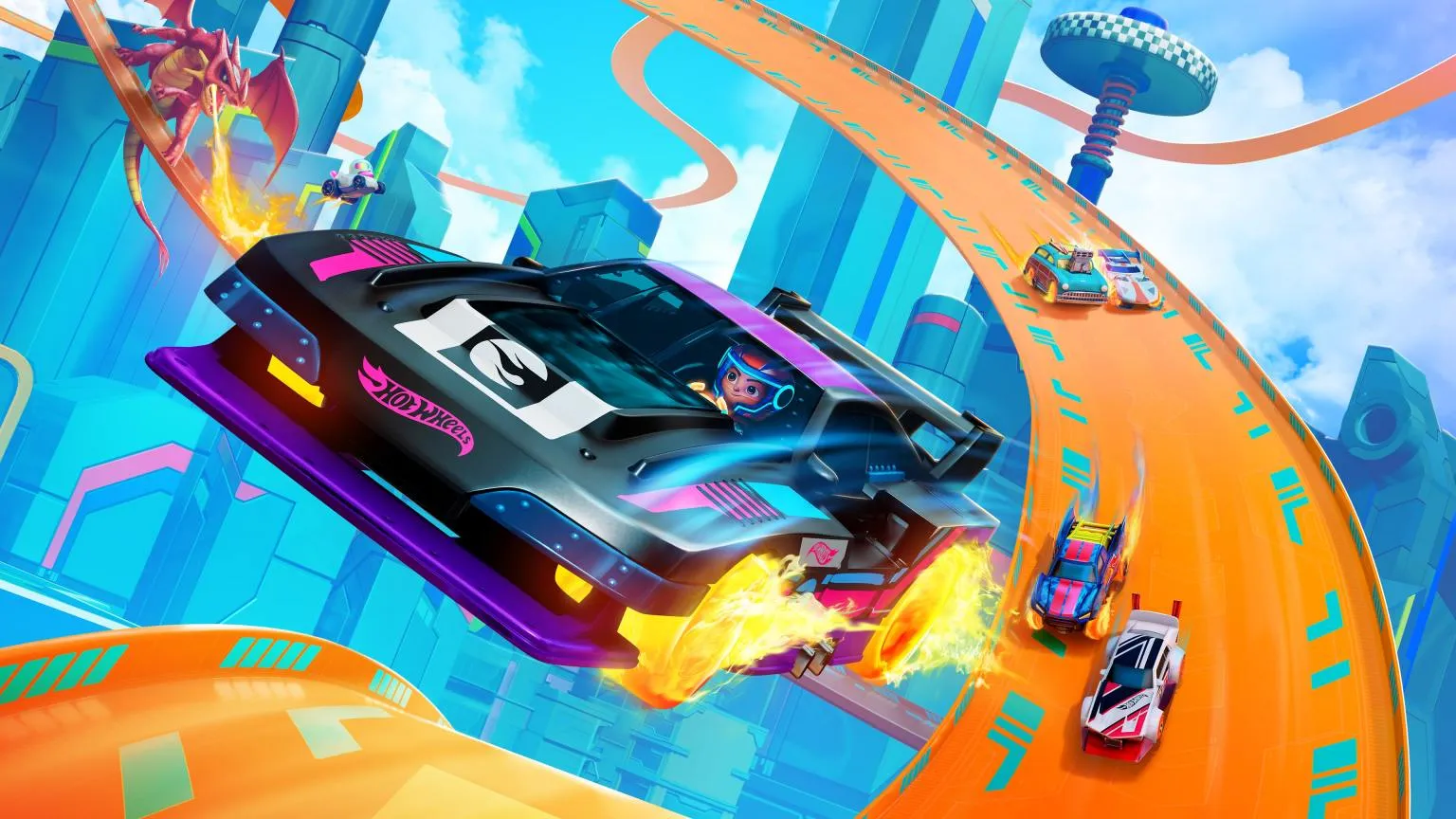

Hot Wheels Let’s Race: Ultimate Speed adapts the 2024 Netflix animated series into an arcade racer that makes its target clear from the opening moments. The design speaks to younger players and fans of the show rather than simulation-focused drivers.
The setup drops you into the Ultimate Garage Racing Camp with familiar faces. Mac, Coop, Spark, and Axle queue up as rivals for the Ultimate Garage Champion title. Tracks echo the show’s iconography with orange plastic loops and ramps, big airtime, and power-ups that fire the action forward. The look stays bright and cartoony, and the soundtrack keeps the tempo high, which fits the rapid pace and Saturday morning energy.
The Mechanics of Toy Car Combat
The handling model reacts quickly and demands practice. Tight turns require a confident drift, since clean slides feed a speed boost and keep momentum alive. The system invites younger players by building in safety nets. Leaving the course triggers a green tractor beam that returns you to the track. Barriers send cars bouncing back with limited time loss, which reduces frustration after a mistake and keeps the race moving.
Progress rests on pairing characters with vehicles and learning how their numbers interact. Each racer and car lists Handling, Speed, and Acrobatics, and the wrong pairing can feel tricky until the inputs settle into muscle memory. Experimentation pays off, since the right combination shapes how each course flows. Decals add tuning on top of this. Some extend a power boost, others strengthen drift boosts, which rewards players who tailor builds to their habits.
Every car carries a signature power-up that charges during a race, such as a burst of speed or a projectile strike. Loadout choices matter before the starting light, since this toolkit replaces random item boxes with defined abilities tied to your vehicle. Tracks keep the orange plastic aesthetic with loops, ramps, and boost pads. Layouts shift challenge from course to course, while the repeated look across environments limits environmental storytelling that could have reinforced the camp setting and show world.
Racing Camp and Creative Outlets
Content lands in a clear framework. Racing Camp acts as a story path with 12 events that gate unlocks on the road to the champion trophy. Cup Champ organizes classic Grand Prix sets and attaches speed tiers labeled slow, medium, fast, and ultra. These tiers let players raise or lower intensity in a single step, which helps both newcomers and veterans find a rhythm. Free Race and Speed Trials provide quick-hit play and time chasing.
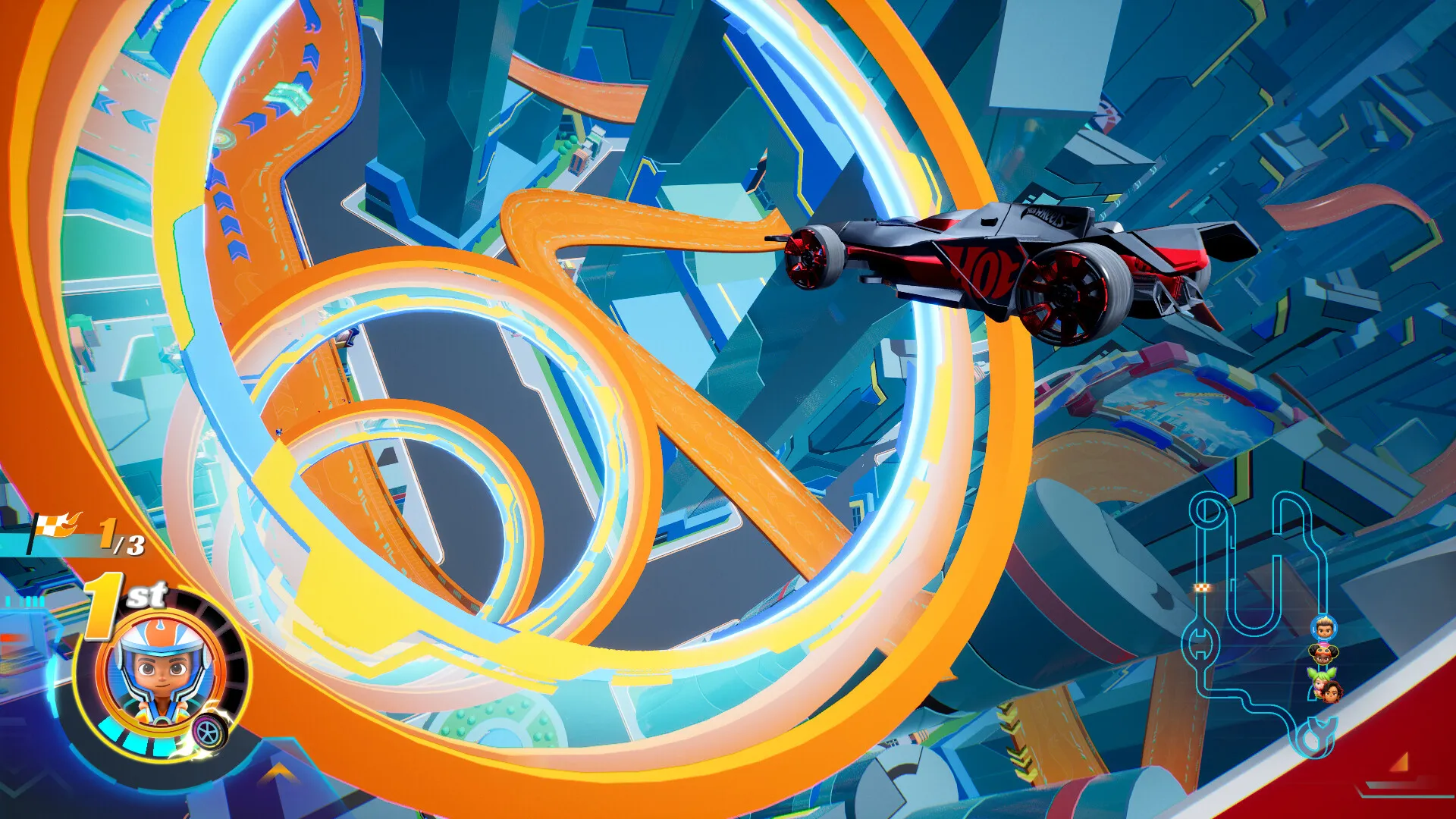
Cup structures add set-piece encounters through Boss Battles. Races pause for fights with giant creatures from the show, such as a dragon or a snake. Success depends on collecting items and throwing them as projectiles while dodging attacks. These scenarios break routine with a different cadence, though the action inside them can feel busy and hard to read. For builders, Track Builder Mode turns play into creation. A grid accepts loops, ramps, and curves, and the system links pieces into a track you can test.
Building Challenges unlock the full catalog of pieces, which encourages learning through small goals before complex designs take shape. Multiplayer lives on the couch. The game supports up to four players in split-screen co-op or versus within supported modes. There is no online play or track sharing, which keeps competition local and limits community exchange.
Balance, Presentation, and Value Proposition
Racers who chase stiff competition may find the difficulty curve light. Even at higher speed settings, the AI often leaves room for wide leads that soften late-lap tension. Courses include sections that test control, yet the field rarely applies pressure that pushes tight finishes. Players seeking a calm, friendly race can enjoy stress-free wins, while drivers who want a push may wish for more assertive rivals.
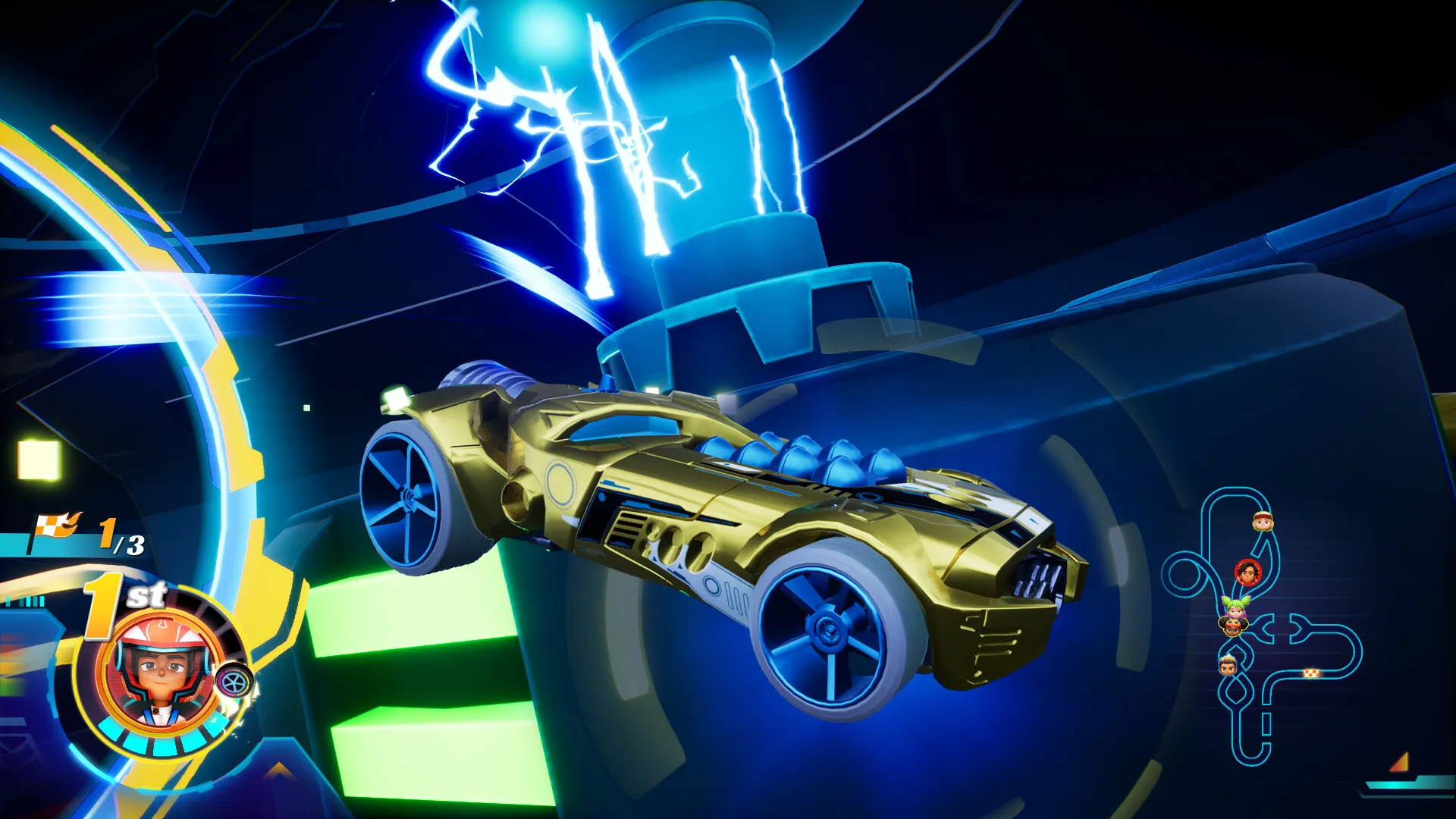
Presentation lands with confidence. The bold color palette fits the series and keeps action legible during loops, jumps, and midpack scrums. High-resolution assets look crisp in motion and give the tracks a toy-bench shine. The soundtrack leans into lively synth lines that match acceleration and boost surges, and effects add character through distinct engine notes and short voice lines from characters. The package fits its audience with clear systems, readable feedback, and a tone that channels the animated show.
Replay value grows from mode variety and customization layers. Racing Camp sets a structured progression across its 12 events. Cup Champ sustains sessions with its tiered speeds. Free Race and Speed Trials provide quick practice or time chasing. The Track Builder invites tinkering and experimentation, while decals and stat pairings encourage loadout changes as skills improve. Fans of the series can recreate the show’s spirit through vehicle choices and flashy stunts on orange plastic loops, and younger players can enjoy forgiving track rules that keep cars in the race.
The handling can feel twitchy until drifts and boosts line up, so early races reward patience while inputs settle. Once drifting clicks, the model supports a repeatable loop: charge a boost through slides, launch from ramps, fire the built-in power-up at the right moment, and chain pad hits to carry speed across long straights. That rhythm suits short play sessions and split-screen nights, where bounce-back barriers and tractor-beam resets reduce downtime between attempts.
Boss Battles bring spectacle and a change of pace, since they ask for target focus rather than lap strategy. The requirement to gather items and throw them while avoiding strikes adds a different skill test. Readability can slip during the busiest exchanges, which makes these set pieces feel messy at times, yet they still function as rewards that punctuate cup progress.
The absence of online features sets clear limits. Track Builder creations stay in the living room, and competition remains local. For households that prize couch play, that focus supports drop-in sessions with family and friends. Players who want global leaderboards or community tracks will not find them here.
Hot Wheels Let’s Race: Ultimate Speed embraces an arcade spirit tied closely to its source material. It presents bright visuals, clear audio cues, and a structure that supports short sessions and creative tinkering. The AI skews easy and the presentation repeats the orange plastic motif across many tracks, yet the mix of character-vehicle stats, decals, and built-in power-ups gives players meaningful choices before each race. Fans of the show and younger drivers can expect a fast, friendly racer with split-screen support, a builder that rewards curiosity, and a track list that keeps stunts front and center.
The Review
Hot Wheels Let's Race: Ultimate Speed
Hot Wheels Let's Race: Ultimate Speed succeeds by bringing the cartoon's energy to the screen. The Track Builder and the array of character/vehicle setups offer plenty of replay value for young fans. While the twitchy handling takes time to master and the AI presents little challenge, the game's accessibility features are well-designed. This racer is a vibrant, content-rich package best enjoyed locally with family.
PROS
- High accessibility features (tractor beam, gentle collisions).
- Robust, creative Track Builder mode.
- Strong local 4-player split-screen multiplayer.
- Vibrant cartoon visuals and energetic sound design.
- Deep customization system using character stats and decals.
CONS
- AI is too easy, lowering competitive tension.
- Handling model can feel twitchy and demanding.
- Lack of any online multiplayer or track sharing.
- Repetitive visual backdrop across tracks.