




























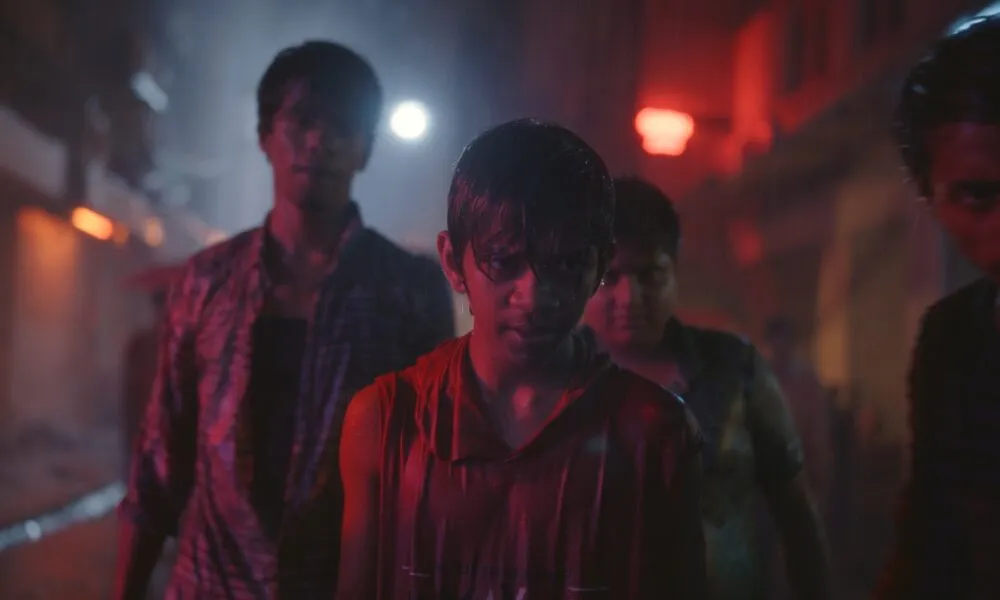

Shyam P. Madiraju’s 55 studies life at the edge of the city and the edge of conscience. The story unfolds across a restless Mumbai, part fable and part street report, where the camera descends into a Dickensian maze. Pachpan (Rizwan Shaikh) moves through this order as a numeral first, a boy filed as 55 inside a disciplined ring of adolescent pickpockets. Sagar Bhai (Emraan Hashmi) governs the system with authority that feels complete and strangely whimsical at once.
A theft tips the structure. Pachpan lifts a large sum from a commuter. The man, having lost the dowry for his daughter Uma, takes his own life. That act ruptures Pachpan’s moral insulation and sets him on a path that reads like a self-imposed trial. The film tightens around that guilt. Drama, pressure, and the search for repair define a world that rarely offers mercy.
The Architecture of Atonement
Madiraju and Shahin Khosravan shape the screenplay on the chassis of Oliver Twist, then steer it into contemporary urban scarcity. Pachpan echoes a modern Artful Dodger with a barcode for a name. In the early passages he studies a mirror and recites stolen names to locate a person inside the tattoo. Identity arrives as homework.
His transformation plays like compressed ethics. He travels from unblinking efficiency to a young man crushed by a single consequence. The film runs on a principle the story itself names by implication, an account of “existential debt.” A lift from a pocket becomes a bill that charges the soul. One choice carries compound interest. That idea gives the narrative its weight and, at times, its severity.
The film maps a set of rules that govern the underclass. The terms feel fixed, the math brutal. Sagar’s crew functions as a small model of a wider contest for survival, a street-level social Darwinism with quotas and punishments. The main arc sometimes brushes a fairy-tale glaze, which softens the frame, yet the surrounding material keeps a rough edge. The track involving Isha, a sex worker, mirrors Pachpan’s own servitude with quiet clarity. It sharpens the script rather than smoothing it.
Velocity and Verisimilitude
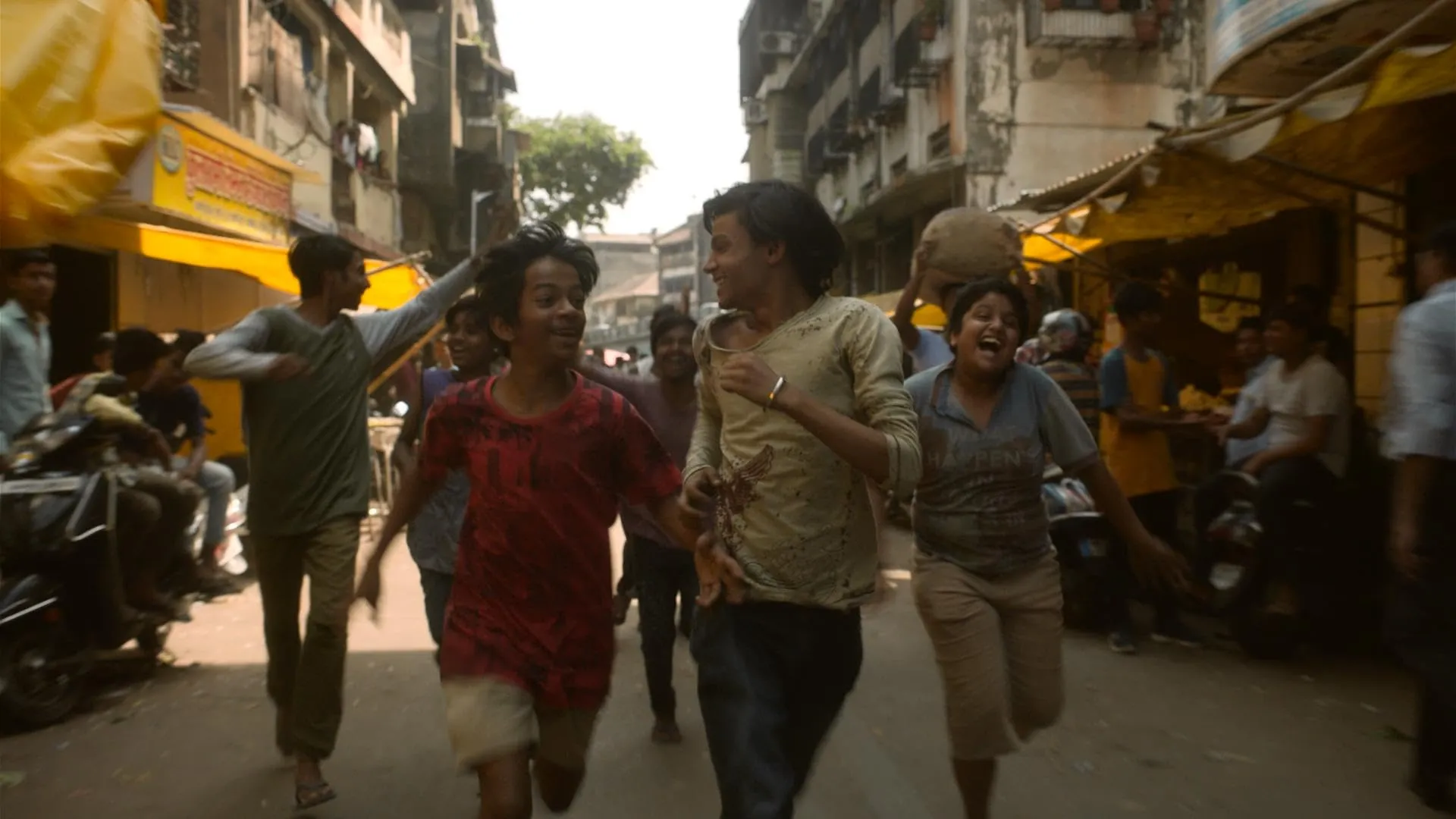
Madiraju directs with pulse. Crime has choreography here. Pickpocket routines and the chases that follow land with percussive timing. The craft shows. Work by Lasse Ulvedal Tolboll and Matt Batchelor behind the camera, paired with Naveen Reddy’s editing, turns motion into story. Glances, fingertip passes, the slip of a wallet, the seam of a crowd in a train station, all read as narrative beats, not noise.

The image track avoids picture-postcard comfort. It lingers in little-seen corners and workaday corridors, which builds texture for poverty and a shadow market. Location functions as organism rather than backdrop, big, indifferent, and always moving.
Tone management matters. The film threads real violence with fragile connection. Call it trauma-adjacent tenderness if a label helps. The machinery stays tight enough that momentum carries the heavy subject matter without sanding it down. The presentation looks steady-eyed and unflinching.
The Algebra of Affect
Rizwan Shaikh centers the film as Pachpan. His face holds naivety, panic, and the slow burn of regret. You can read the character’s arithmetic of guilt across small hesitations and clipped breaths. The struggle for repair feels pained rather than posed.
Dhanshree Patil, as Uma, forms the essential counterweight. Their scenes together open small pockets of sweetness that do not deny the violence around them. Those moments read like test cases for a moral exit, narrow but real.
Emraan Hashmi’s Sagar Bhai carries threat. The performance lands the menace, though the writing gives him a few early entrances that tilt toward stagey or inflated. The archetype of the serene overlord always carries that risk. He must feel lethal and remain credible inside the film’s material economy. The balance wobbles in select introductions.
Ashutosh Gaikwad’s Chappan stands out. The rivalry simmers and adds pressure within the crew’s hierarchy. His presence tightens the net around Pachpan and raises the sense of internal hazard. It is a supporting turn with high yield.
The film keeps pointing back to a city that runs on numbers, debts, and ledgers, a logic as old as industrial Britain and as current as the morning train. The Dickens template is not decoration. It becomes a method for measuring how systems stamp people into codes. 55 treats that stamp as both mask and sentence, then asks whether an act of care can recalculate the total. The answer never arrives as a sermon. It arrives as work, scene by scene, shot by shot, with a little gallows humor left over for anyone counting.
The film 55 is an Indian thriller, primarily in the Hindi language, co-written and directed by Shyam P. Madiraju. Produced by prominent names including Ridley Scott and Paul Feig, the movie tells the gripping story of an orphan teen pickpocket in Mumbai, known only as 55, who is marked with his number tattoo and owes his life to a ruthless boss. His existence is changed dramatically when he meets the daughter of one of his victims, forcing him to confront his moral obligations. While the film has been associated with earlier dates, its US Limited Release is currently slated for August 29, 2025, distributed by Quiver Distribution Inc. The movie runs approximately 101 minutes.
Credits
Title: 55
Distributor: Amor Media, Quiver Distribution Inc.
Release date: August 29, 2025
Running time: 100 minutes, 101 minutes, 1 hr 40 min, or 1 hr 41 min
Director: Shyam P. Madiraju
Writers: Shyam P. Madiraju, Shahin Khosravan, Prashant Pandey
Producers and Executive Producers: Ridley Scott, Paul Feig, Shyam P. Madiraju, Gavin Lurie, Brett Maddock, Dori Zuckerman, Tom Moran, David Taghioff, Najeeb Khuda, Navin Shetty, Munish Batra
Cast: Rizwan Shaikh, Emraan Hashmi, Dhanshree Patil, Harsh Rajendra Rane, Ashutosh Gaikwad, Diksha Nisha (Note: The complete full cast list including secondary roles is not available in a single search result.)
The Review
55
55 is a high-energy cinematic adaptation of classic street literature, grounded by a powerful lead performance from Rizwan Shaikh. The film excels technically, particularly in its fast-paced, rhythmic action sequences capturing the chaos of Mumbai. While the narrative occasionally leans into familiar, somewhat simple territory (especially concerning the antagonist Sagar Bhai), its intense commitment to the theme of conscience and consequence makes it an affecting and rewarding watch. This is a story that hits hard and lands well.
PROS
- An expressive and anchored portrayal of internal conflict.
- The cinematography and editing create thrilling, rhythmically engaging pickpocketing sequences.
- A detailed, unflinching exploration of consequence and atonement.
- The depiction of Mumbai focuses on raw, less-traveled areas, serving as a powerful backdrop.
CONS
- The characterization of Sagar Bhai occasionally feels unconvincing or melodramatic.
- The underlying fairy-tale structure sometimes allows for plot points that feel overly familiar.