























![Kingdom Hearts Collection [I-III] Review](https://gazettely.com/wp-content/uploads/2026/10/Kingdom-Hearts-Collection-I-III-1-360x180.webp "Kingdom Hearts Collection [I-III] Review: KHII Holds Steady as Newer Entries Fluctuate 37")





The second season of this Monsterverse saga resumes immediately after Lee Shaw vanishes into the unstable Axis Mundi realm. Set mainly in 2017, the story tracks Cate Randa, her brother Kentaro, and their grandmother Keiko Miura as they adapt to a world where Titans are publicly known.
Season one centered on Monarch’s founding. These episodes turn to the direct fallout from those early experiments. The Randa family lands on Skull Island, which functions as a link between the human world and the domain of the Great Ape.
Corporate interference moves into the foreground as Apex Cybernetics seeks control of Titan technology and challenges Monarch’s authority. The narrative splits between present-day efforts to recover Shaw and a 1957 research mission to South America.
This two-timeline structure traces the origins of a new aquatic threat called Titan X. As characters move through Skull Island’s hazards and the hidden depths of the hollow world, they confront shared family trauma and the changing nature of the creatures they study.
Echoes of the Past and Corporate Shadows
The season’s emotional engine is the attempt to return to the void between worlds and find Lee Shaw. The rescue mission uses Skull Island as a strategic base for reaching Axis Mundi. Opening these rifts carries severe consequences, including the accidental release of new threats that put global safety at risk. These story decisions reflect current anxieties around scientific overreach and the fallout from rapid technological expansion.
Apex Cybernetics rises as Monarch’s primary adversary and brings a pointed critique of corporate sovereignty into the series. Brenda Holland pursues dangerous plans for Titan exploitation and places profit above ecological balance. The arrival of Isabel Simmons, a wealthy businesswoman with resources comparable to government agencies, underscores the growing power of private capital in shaping world events. The conflict presents a world in which environmental preservation faces constant pressure from industrial greed.
The 1957 research trip to Santo Soledad with young Lee Shaw, Bill Randa, and Keiko Miura gives the season a strong historical anchor. That timeline reveals Titan X’s origin and shows how earlier encounters shape present threats. Monarch’s shift from scientific curiosity toward military containment reflects a larger historical movement toward treating the unknown as a security problem.
The Randa siblings work through their father’s secrets, and their grandmother’s return forces a reckoning with family legacy. The emphasis on trauma keeps the spectacle tied to human experience. The environmental thread stays visible as the show asks if Titans function as planetary guardians or destroyers. Lines between allies and enemies grow less clear as organizations collide, and the series points to a human response to crisis that can match the instability of the crisis itself.
The Scale of the New Pantheon
Kong occupies a central position this season as Skull Island’s main Titan protector. Action scenes framed from ground level stress his scale and the fear of living in his shadow. The interactions between the human characters and the Great Ape in his habitat create a sense of awe and push against familiar destructive genre habits. Watching people move through the territory of a god-like creature offers a sharp view of human smallness within the natural order.
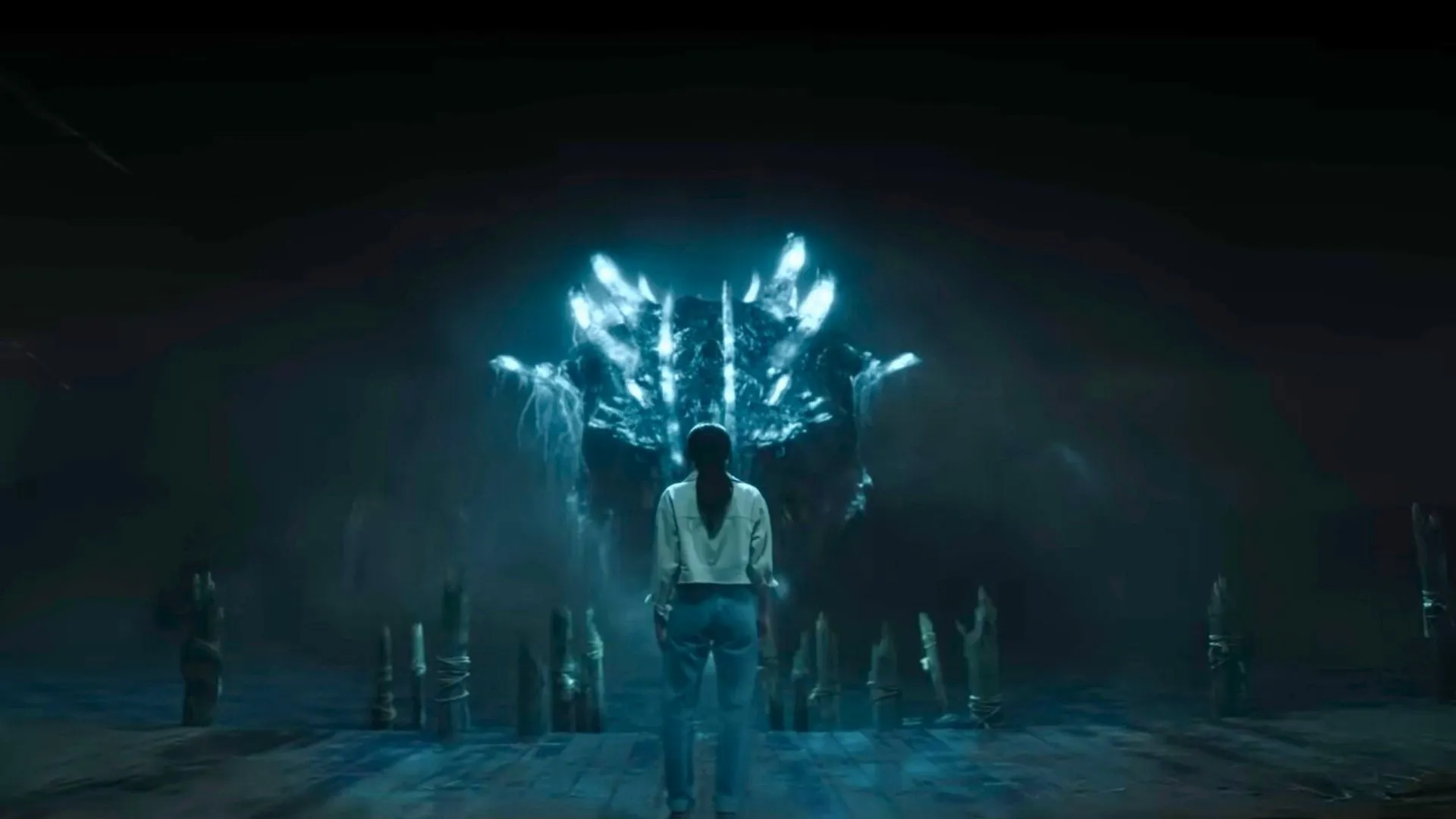
Titan X arrives as a striking original addition to the franchise. This aquatic creature, armed with formidable tentacles, moves away from the returning film monsters and gives the writers room to shape a distinct narrative function. Titan X’s emotional arc connects directly to the show’s environmental concerns, presenting the creature with a degree of intentionality beyond simple beast instinct.
Godzilla still holds the title of King of the Monsters, yet he serves a supporting role here. His roar and the tension surrounding his presence remind viewers of the larger world, and his limited screen time keeps attention on the immediate human-led story.
The CGI for returning monsters and new creatures is impressive for a streaming production. The Titans maintain clear consistency in movie-level quality, though some digital backgrounds can feel less convincing. Practical location shooting in many sequences adds texture and immersion to the monster encounters.
That visual commitment points to a television trend in which streaming platforms now operate with ambitions once associated mainly with theatrical releases. The technical work strengthens a story that examines humanity’s relationship with the planet through mythic creatures.
Multigenerational Legacies and Modern Agency
Mari Yamamoto gives the season its moral and intellectual center as Keiko Miura. Keiko’s experience as a woman displaced in time and reunited with her adult son and grandchildren brings a moving look at the personal cost of scientific sacrifice. She remains the series’ logical anchor, a scientist whose judgment stays clear amid surrounding chaos. Yamamoto moves smoothly across both timelines, and her chemistry with both versions of Lee Shaw adds romantic tragedy to the high-concept plot.
The two portrayals of Lee Shaw gain strength from the different energies of Kurt and Wyatt Russell. Kurt Russell gives present-day elder Shaw a roguish Han Solo energy and carries a sense of duty that feels earned through age. Wyatt Russell plays a younger, more idealistic version in the 1950s, giving viewers a view of how Shaw’s convictions take shape. His feelings for Keiko and his regrets involving Bill Randa provide needed depth for the heroic archetype.
Anna Sawai remains strong as Cate Randa, and Cate’s new abilities extend the series mythology in surprising directions. The shift between Cate and Kentaro from conflict toward a united family front marks needed growth in their maturity. Some viewers may object to questionable choices by the siblings that create dangerous situations, yet those flaws emphasize the desperation of characters living inside an impossible world.
Supporting characters gain stronger footing this season. Joe Tippett’s Tim becomes a larger presence within Monarch, and Amber Midthunder’s arrival as Isabel introduces a mystery that complicates the political terrain. Kiersey Clemons as May serves as a key link to the Apex Cybernetics subplot, which gives each character a stake in the rising global tension.
Expanding the Borders of the Monsterverse
The series fills key gaps in the franchise timeline and sits between the 2014 Godzilla event and the later films. It clarifies the origins of technology and organizations seen across the movie franchise and builds a tighter shared world. Connections to other media, including the animated Skull Island series, point to the interconnected storytelling model that defines much of current streaming television. This design rewards dedicated fans and still supplies enough context for casual viewers.
Further detail on the Axis Mundi void and its link to the Hollow Earth introduces a harder science-fiction layer into the fantasy framework. The physics of rifts and the time dilation affecting those who enter them supply an internal logic for the series’ temporal jumps. New lore tied to the village on Skull Island and Titan myths deepens the story’s spiritual dimension. The world-building points to a Monsterverse with room for complex stories beyond spectacle.
Balancing television scale with cinema scale is a delicate task, and the show handles it with confidence. It feels expansive and keeps its focus on smaller human-centered mysteries. Subtle references for long-time fans enrich the experience and keep newcomers included. The setup for a possible third season points toward a story path that may redefine the franchise’s direction.
Directors such as Hiromi Kamata and Lawrence Trilling sustain a cinematic visual style that works well with Leopold Ross’s atmospheric score. Practical locations give the science-fiction material physical weight and keep attention on the earth beneath the characters’ feet, even in a world populated by giants.
Monarch: Legacy Of Monsters Season 2 premieres on Apple TV+ this Friday, February 27, 2026. It follows the Randa family as they uncover the secrets of a hidden world and the organizations attempting to control these massive creatures. New episodes will be available to stream weekly on the platform.
Where to Watch Monarch: Legacy of Monsters Season 2 Online


Full Credits
Title: Monarch: Legacy of Monsters Season 2
Distributor: Apple TV+
Release date: February 27, 2026
Rating: TV-14
Running time: 45 to 55 minutes
Director: Hiromi Kamata, Lawrence Trilling
Writers: Chris Black, Dan Dworkin, Kari Drake, Ralph Eggleston, Andrew Colville, Maria Melnik, Joe Pokaski, Mariko Tamaki, Tanner Hansinger
Producers and Executive Producers: Chris Black, Matt Fraction, Joby Harold, Tory Tunnell, Hiro Matsuoka, Takemasa Arita, Andrew Colville, Jen Roskind
Cast: Kurt Russell, Wyatt Russell, Anna Sawai, Mari Yamamoto, Ren Watabe, Kiersey Clemons, Takehiro Hira, Joe Tippett, Elisa Lasowski, Amber Midthunder, Cliff Curtis
Director of Photography (Cinematographer): Christopher Probst, Sam McCurdy
Editors: Erika A. Gonzales, Joe Leonard
Composer: Leopold Ross
The Review
Monarch: Legacy Of Monsters Season 2
This season succeeds by grounding massive spectacles in the complex grief and scientific curiosity of its human leads. It moves the franchise forward by prioritizing character-driven lore over mindless destruction. While the Randa siblings occasionally falter through frustrating choices, the dual-timeline structure and the introduction of Titan X offer a sophisticated expansion of the Monsterverse. It is a rare example of a streaming spin-off that rivals its cinematic counterparts in both technical execution and thematic depth.
PROS
- Strong central performance by Mari Yamamoto across multiple timelines.
- Seamless movie-quality visual effects for Kong and the new Titan X creature.
- Meaningful world-building that clarifies the origins of franchise technology.
- Effective use of the 1950s setting to explore the securitization of science.
CONS
- Inconsistent character writing for the Randa siblings.
- Occasional reliance on questionable plot armor for younger protagonists.
- Sidelining of certain supporting characters during the later episodes.