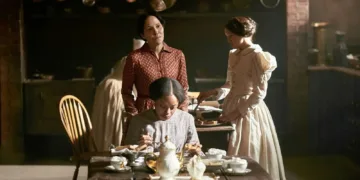

















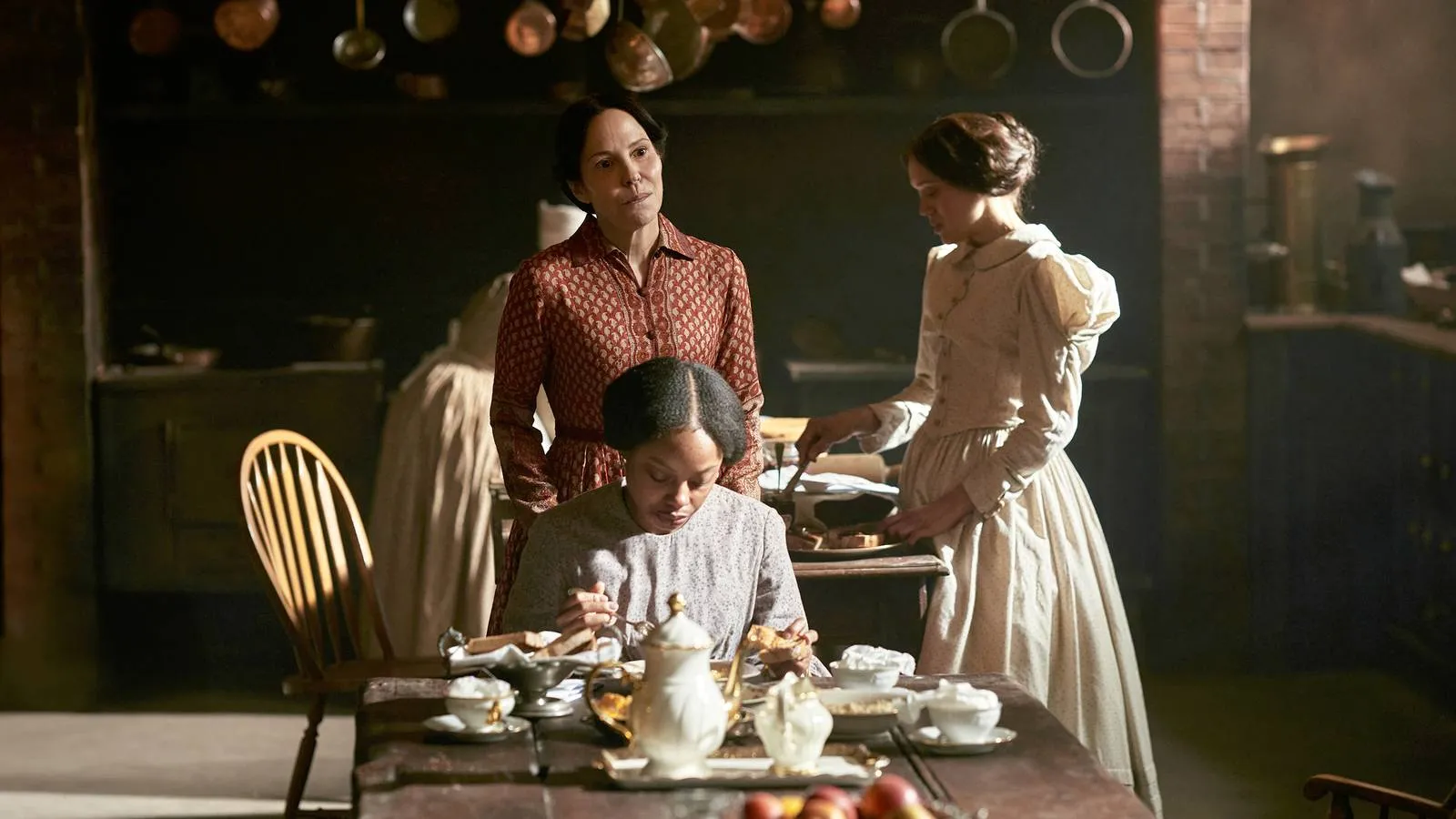

Richmond, Virginia, 1861. The air feels heavy with humidity and with a country pulling apart. History books often fixate on muddy boots and bayonets at the front, yet The Gray House looks to drawing rooms and servant quarters.
The eight-part miniseries follows a clandestine Union spy ring working under the nose of Confederate leadership. Elizabeth Van Lew, a wealthy socialite, and Mary Jane Richards, a formerly enslaved woman, lead the operation. They head a group of women who trade silk for secrets.
Executive producers Kevin Costner and Morgan Freeman give the project major stature. Director Roland Joffé steers a narrative focused on overlooked Civil War heroes. The conflict moves from battlefields to what the series frames as a battle on the doorstep, giving the war a different angle on the cost of freedom. A whispered exchange over tea can carry the same danger as a cannon blast. The series plays as a tribute to people who worked in secret and carried enormous risk without public recognition.
Historical Anchors and Television Flourishes
Balancing documented history from the 1860s with the demands of modern streaming takes precision. The Gray House pulls this off by building around recorded events and adding enough made-for-television drama to keep energy high. The scale is huge. Eight episodes, some running past eighty minutes, ask for the kind of commitment people usually save for tax season. This is a dense, information-heavy saga, and its pacing stays far from breezy thriller territory.
The series fills the screen with major figures such as Jefferson Davis, Ulysses S. Grant, and a sharply narcissistic John Wilkes Booth. It also makes room for people like Timothy Webster. Through creative license, Webster becomes a stylized vigilante presence who feels a little closer to Zorro than a Union spy. The narrative also uses local tragedies well, including the accidental death of Davis’ young son, and folds them into the movement of the plot.
Dropping every episode at once feels like an odd release strategy for a drama this heavy. The number of subplots and names can land like a historical info-dump in stretches. A few secondary threads seem ripe for trimming, which would sharpen the focus. Even so, the main storyline keeps a strong grip, and the series pushes through bouts of narrative bloat without losing too much momentum. For a show with this runtime, that counts as a real win.
Performance Beats and Power Shifts
Daisy Head gives a standout performance as Elizabeth Van Lew. She plays the merchant’s daughter with genteel grace and steely resolve. Her shift into a high-stakes intelligence operative gives the series its emotional backbone. Amethyst Davis matches that energy as Mary Jane Richards, commanding the screen with a character forced into a far riskier path. Richards performs the role of the “uneducated” maid in the Davis household as a survival tactic, all while gathering intelligence that could help end the war.
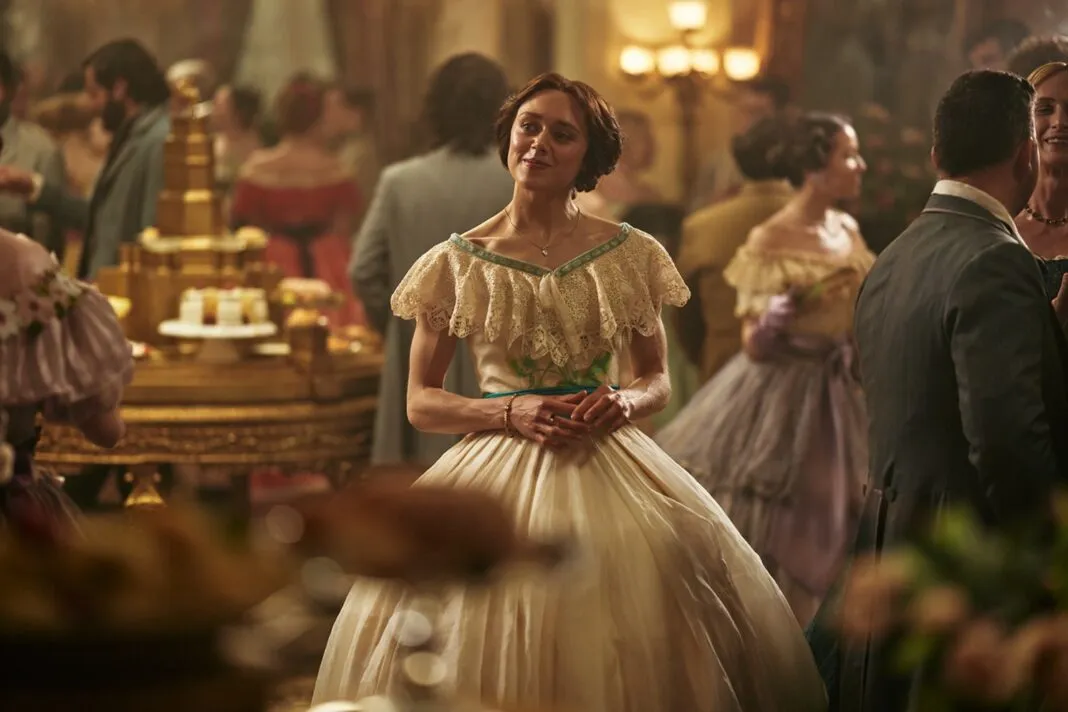
The supporting cast deepens the network around them. Mary-Louise Parker brings quiet authority as Eliza Van Lew, the matriarch whose social position provides cover for the ring’s work. Hannah James delivers a powerful turn as Clara Parish, a sex worker who uses her access to powerful men for the Union cause. Ben Vereen adds historical continuity as Isham Worthy, connecting the story to the Underground Railroad.
The series also gives its antagonistic forces strong shape. Paul Anderson is terrifying as Stokely Reeves, a visceral emblem of the era’s brutality. Sam Trammell’s Jefferson Davis holds equal interest, presenting the Confederate leader as a man whose sense of “honor” erodes under the pressure of a losing war. The ensemble chemistry keeps the stakes personal, which gives the political conflict a human pulse.
The Brutal Mechanics of Espionage
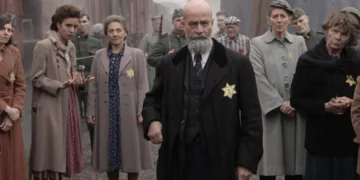
The Gray House faces the realities of slavery directly. It leaves behind the romanticized Gone with the Wind look and chooses a much harsher truth. The institution appears as a system built on unbearable cruelty. That same honesty shapes the violence on screen. Some viewers may find several scenes graphic and deeply unsettling, yet the choice functions as a corrective to sanitized history. The imagery keeps reminding the audience that the fight for human rights was never polite.
The spy craft receives detailed treatment too. The show pays close attention to the psychological cost of a double life. Success depends on overhearing strategy, intercepting letters, and holding a mask of compliance in place. Intelligence work emerges through patience and proximity. The suspense often comes from quiet acts such as intercepting a ledger or decoding a message, and those scenes give the series some of its strongest tension.
The series also addresses the intersections of gender and class with real care. Elizabeth Van Lew’s status provides protection that Mary Jane Richards never has. The script occasionally brushes against a White Savior pattern, yet Richards has enough agency and brilliance to keep the balance from tipping. The show makes clear that the women shared a goal, though the danger they faced was never equal.
Old School Aesthetics and Modern Eyes
Roland Joffé gives the production a prestige-network sensibility. The tone often carries the gravitas of classic sagas such as Roots. Visually, the series shines through production design and costuming. The gap between the austere “Gray House” and the opulent Van Lew estate tells its own story about a society breaking apart. Morgan Freeman’s occasional voice-over adds a “Voice of God” authority that anchors the drama in historical weight.
Filming in Romania instead of Virginia is noticeable. The locations look beautiful on screen, yet viewers familiar with the American South may feel a small disconnect. Eastern Europe’s rolling hills stand in capably, though they miss the exact humidity and grit associated with Richmond. The production values stay high enough that the geographical shift becomes easier to accept across the run.
Sound design and dialogue help sustain the period atmosphere. Most of the cast handles Southern accents skillfully and avoids caricature. Some lines land as hokey or melodramatic, yet that quality fits the sweeping style of this historical epic. The production is handsome and carefully mounted, with visual storytelling carrying as much weight as the script.
The Weight of the Coda
The series succeeds in shifting attention away from generals in tents and toward civilian resistance. It focuses on people who risked their lives without any promise of medals. By placing the Van Lew ring in the foreground, the show addresses a major omission in popular Civil War memory. The war appears in kitchens and brothels alongside the trenches, and that choice changes the shape of the story.
The historical coda is an essential touch. Seeing the real-life fates of these women reminds the audience that these figures came from history, not from script pages alone. Their work had tangible effect, and their sacrifices were immense. The ending pins the drama to a sober reality and leaves one hard question hanging. Does the series do enough to break the long-running myths of the Lost Cause for a new generation?
The Gray House is a gripping eight-part historical drama that premiered its entire first season on February 26, 2026. This high-stakes miniseries is currently available for streaming exclusively on Prime Video. Set against the backdrop of the American Civil War, it follows the true stories of unsung heroes who operated a daring Union spy ring in the heart of the Confederacy.
Where to Watch The Gray House Online


Full Credits
Title: The Gray House
Distributor: Prime Video
Release date: February 26, 2026
Rating: TV-MA
Running time: 53 to 81 minutes per episode
Director: Roland Joffé
Writers: Leslie Greif, Darrell Fetty, John Sayles
Producers and Executive Producers: Kevin Costner, Morgan Freeman, Lori McCreary, Rod Lake, Howard Kaplan, Leslie Greif, Darrell Fetty, Cristian Bostanescu, Christopher Landry, Keith Neal, Eric Tomosunas
Cast: Mary-Louise Parker, Daisy Head, Amethyst Davis, Ben Vereen, Paul Anderson, Robert Knepper, Christopher McDonald, Keith David, Sam Trammell, Rob Morrow, Colin O’Donoghue, Colin Morgan, Hannah James, Ian Duff
Director of Photography (Cinematographer): Jan Moeskops
Editors: Don Cassidy, Naseem Loloie
Composer: Bruce Broughton, John Debney
The Review
The Gray House
The Gray House is a dense, unflinching tribute to the invisible architects of Union victory. While it occasionally stumbles under the weight of historical info-dumps and a bloated runtime, the powerhouse performances from Daisy Head and Amethyst Davis keep the stakes intensely personal. It successfully strips away the romanticism of the Civil War, replacing it with a gritty, claustrophobic look at espionage. It is a demanding watch that finally gives these forgotten women their historical due.
PROS
- Stellar lead performances by Daisy Head and Amethyst Davis.
- Unflinching portrayal of the realities of slavery and wartime violence.
- Fascinating focus on civilian resistance rather than military generals.
CONS
- Runtime feels excessive with several bloated subplots.
- Heavy-handed exposition slows the narrative momentum at times.
- Romanian filming locations lack the specific atmosphere of the American South.