








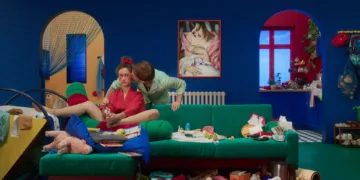




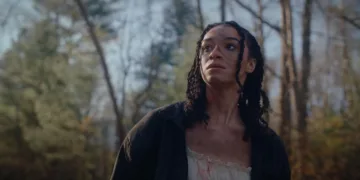

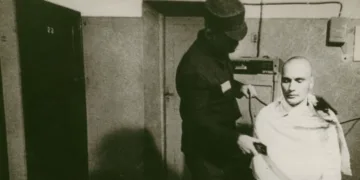










Niaz Ninua has a face that feels shaped by the history of Georgian cinema itself. At 59, he stands for an era of heroic leads and grand gestures that is slipping away. He now moves through a quiet professional decline. The film first places him in a Tbilisi soaked in steady drizzle, and the city reads like a mirror of his stalled life. Wet streets and grey skies echo a career that has stopped moving.
His routine shifts when Aza, a young director, approaches him about her first science fiction film. She offers him a small part, and he takes it as an insult to his identity. The character she describes must shed his skin like a snake before dying. She gives him a hand-drawn storyboard instead of a conventional script.
Niaz receives the drawings with disdain and confusion, then asks for three days to decide. That opening creates a clash between an older masculine star image and an abstract, emerging artistic language. It pushes a man shaped by the spotlight into a moment where the world sees him as secondary.
A Surreal Odyssey through Memory and Dream
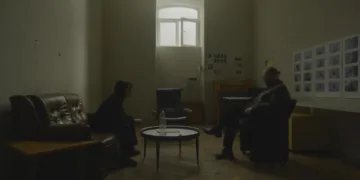
The story moves into surreal territory during Niaz’s three days of reflection. Daily life and the science fiction storyboard begin to bleed into each other. The shift unfolds gradually across 140 minutes. The film works within slow cinema, and it asks for patience of a very specific kind. I tend to love this pace, especially in films that let time sit heavily in a room instead of racing past it.
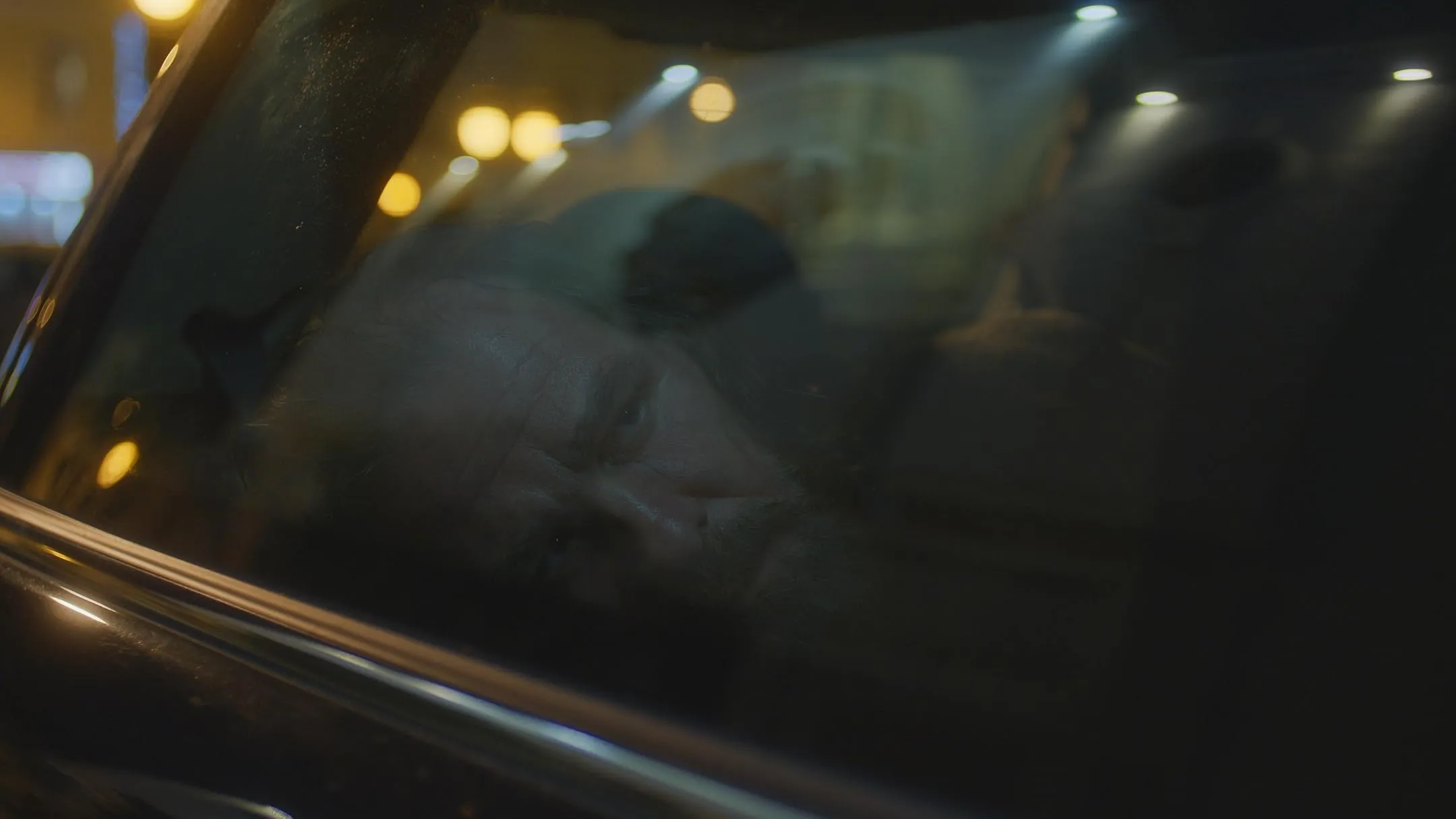
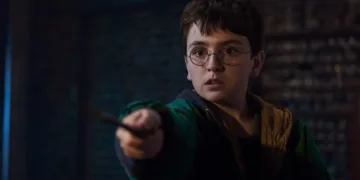
Niaz starts running into situations that seem lifted from the drawings he carries in his pocket. His pet parrot senses an approaching end and flies away to die. Two mysterious Armenians invite him to a bathhouse. The death of his former acting teacher pulls him even farther from the reality he knows. Each event plays like a fragment from a waking dream.
Films that bend time this way often capture aging with unusual precision. A linear drama can describe aging, yet this kind of temporal drift can make you feel it. Niaz passes through cavernous stairwells and rain-slicked streets like a man walking through his own memories.
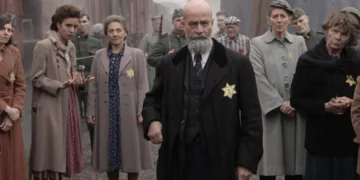
People from his past appear, then vanish, with strange regularity. They greet him with a distant familiarity that makes him seem ghostlike in his own life. The storyboard predicts his movements with an accuracy that feels magical and frightening at once. He remains trapped in self-reflection while the city and everyone in it keep moving.
The Weight of the Ego and the Actor’s Metamorphosis
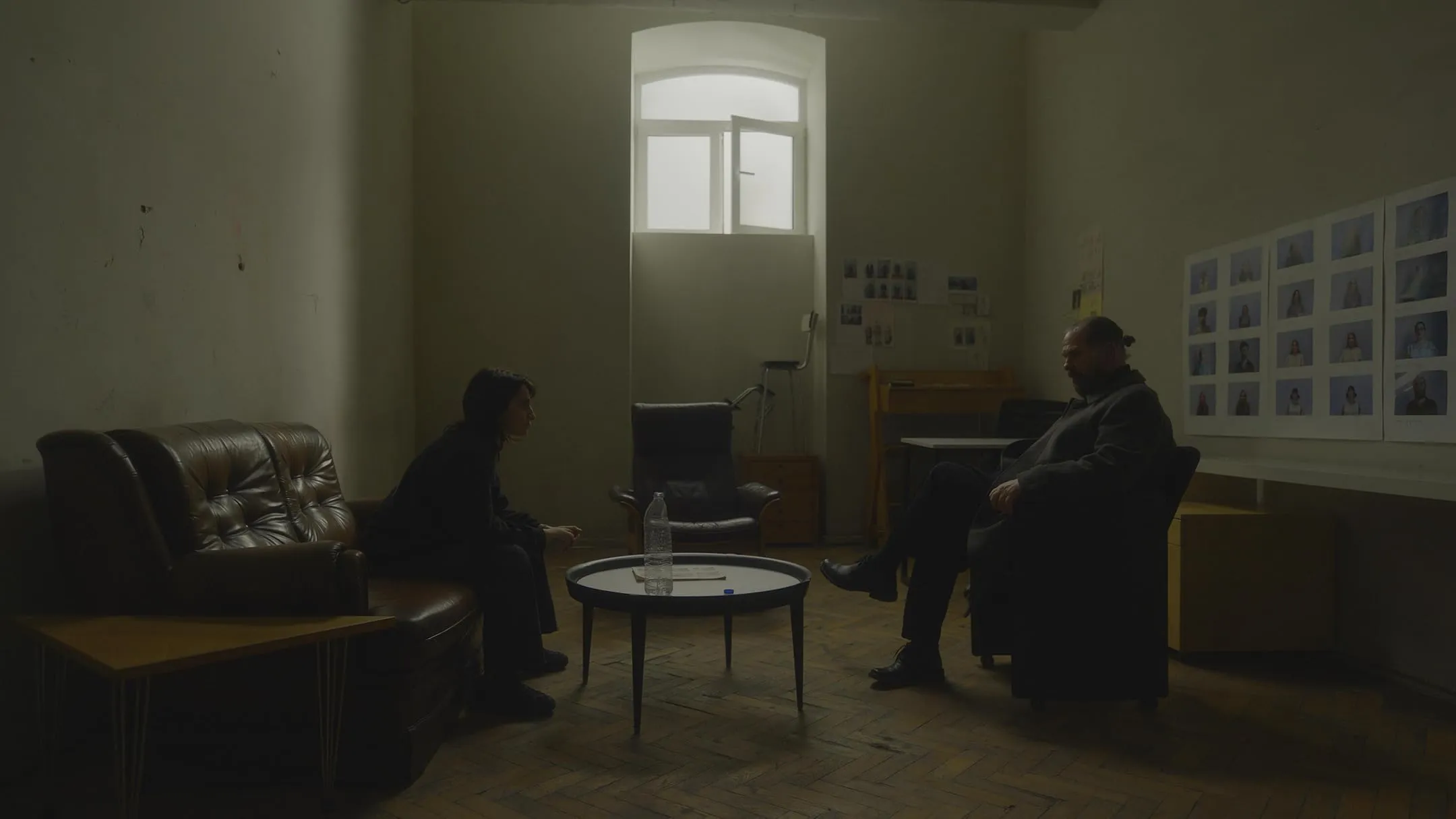
Dato Bakhtadze gives Niaz a performance built on physical heaviness. His bulky frame and long overcoat make him look like someone trying to disappear inside his own size. He carries defeated dignity in his posture. Niaz’s ego stands as his largest barrier. He cannot reconcile a past full of leading roles with the present reality of supporting work.
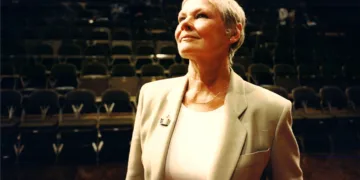
That conflict shapes his interactions with the women from earlier parts of his life. His estranged wife, Liza, looks at him with pity and exhaustion. A former lover, now disfigured after an accident, appears among the cast of the new film. Her presence ties his personal past to his professional future in a painful way.
The most difficult part of Niaz’s character involves his neurodivergent son, Tato. Niaz left his family because a son with special needs did not fit the heroic image he wanted to perform. He chose the applause of strangers over the difficult reality of fatherhood that refused his control.
As his days unfold, he sees his life as a chain of performances. He played the star so completely that he lost sight of the man under the costumes. That irony drives his internal struggle. He hates the idea of this role, yet he has never lived outside one.
The Visual and Auditory Landscape of Transience
The film’s aesthetic builds a strong sense of transience. Rein Kotov shoots with a palette dominated by ochre, brown, and yellow. Those colors create a sepia texture, like old photographs stirring back into motion. The night lighting stands out in particular, offering radiant contrast against Tbilisi’s grey, rain-heavy exteriors. Warm interiors feel like shelter for a moment, then slip away.
Sten Sheripov’s cabaret-jazz score fits the tragi-comic mood beautifully. As someone who always notices how jazz can turn a scene from rueful to sly in a few notes, I found this score especially sharp in the way it swings between upbeat passages and darker, suspenseful stretches. The music deepens the sense of a world suspended between reality and performance.
The snake-skin image becomes a clear symbol of change. Niaz has to shed his old identity to reach any peace. Through image, light, and music, the film shapes a meditation on fame and time passing. It leaves its questions open and asks the viewer to stay with Niaz inside his confusion.
The industry moves on. The world moves on. People who fail to adapt get left behind. What remains is a portrait of a man learning how to accept a different kind of presence in other people’s lives, and a quiet recognition that many of us end up in supporting roles sooner or later.
Supporting Role premiered at the International Film Festival Rotterdam on January 30, 2024, where it received critical acclaim and the Special Jury Award. Directed by Ana Urushadze, this Georgian drama captures the existential unraveling of a veteran actor in Tbilisi as he navigates the blurred lines between his past glory and a strange new film project. As of 2026, the film remains a staple of the international festival circuit and is available for viewing through specialized independent cinema platforms and select international distributors.
Full Credits
Title: Supporting Role
Distributor: Studio 99
Release date: January 30, 2024
Running time: 140 minutes
Director: Ana Urushadze
Writers: Ana Urushadze
Producers and Executive Producers: Lasha Khalvashi
Cast: Dato Bakhtadze, Nato Murvanidze, Nino Kasradze, Eka Demetradze, Elene Maisuradze, Lasha Mebuke, Niara Chichinadze, Lasha Ramishvili
Director of Photography (Cinematographer): Rein Kotov
Editors: Ana Urushadze
Composer: Sten Sheripov
The Review
Supporting Role
Supporting Role offers a quiet, surreal look at the ego in decline. Ana Urushadze creates a world where the lines between art and life blur. The film succeeds because of its visual language and the grounded performance of Dato Bakhtadze. While the pace tests the patience of some, the emotional payoff provides a clear sense of purpose. It reminds me of the best kind of slow cinema that stays in your mind for days.
PROS
- Evocative cinematography.
- Masterful lead performance.
- Effective use of magical realism.
- Memorable score.
CONS
- Lengthy runtime.
- Deliberate pacing.
- Elusive narrative.