









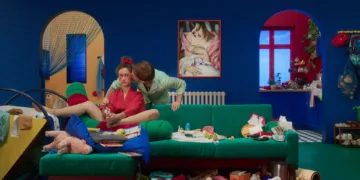


















Rhythm Doctor places you in the role of a remote intern working for Middlesea Hospital. Your assignment involves an experimental treatment program that uses music-based defibrillation for heart conditions. The setup stays minimal. You observe patients through a digital camera feed from your own computer screen. Your actions depend on one button. You press in sync with the rhythm of a patient’s heart pulse to stabilize their condition.
Doctors Ian and Paige supervise your training. They guide your move into this form of musical medicine. The program exists as a response to staff shortages at the hospital. Interns can manage arrhythmias from home, leaving senior doctors free for critical emergencies.
The interface operates like a medical monitor, with a pulsing EKG line marking the timing. Your character exists inside the story world, yet remains physically distant from it. Patients refer to you as Doctor Finger, or as a long arm hovering over a button. That framing creates a strong sense of place. You act as a quiet observer whose healing depends on exact timing.
The Mathematical Precision of a Single Key
The design philosophy focuses on what one input can do. That choice keeps the game accessible across skill levels, including players with little rhythm-game experience. Any key works, and a mouse click works too. Before play begins, the game runs a calibration step to line up audio and visual latency. That technical setup helps the physical timing of your presses match the feedback on screen.
The central rule asks you to strike the seventh beat in a repeating cycle. You count from one to seven in your head. Early levels include visual aids that teach the pacing. Later levels strip those aids away. At that point, your timing depends on your internal count and the audio cues around you. The move from visible guidance to sound-led play raises the tension.
Complexity builds through advanced musical ideas. The game introduces polyrhythms and hemiolas. Swing rhythms can throw off a standard count. Irregular time signatures force frequent adjustments to your internal clock. Each addition tests your ability to hold a steady pulse.
Mechanical variation gives the one-button system range. Freeze notes ask for a held input, then a release at the right moment. Multi-hit notes require rapid strings of presses. A nurse supports these transitions with vocal prompts. The “Ready Get Set Go” calls announce tempo changes. That choice gives players clear warning before the rhythm shifts. Difficulty feels fair because the game supplies the needed information through sound for players who pay close attention.
Patient Records and the Human Condition
Levels are shaped around the lives of the patients in your care. Each stage plays like a short narrative vignette. Cole is a musician dealing with caffeine addiction. Nicole works as a barista in the hospital. Their relationship grows across shared musical segments. The game also tracks the romantic tension between Logan and Hailey, with heartbeats that communicate feelings they cannot easily say aloud.

The stories stay focused on recognizable struggles. You treat patients dealing with work stress and social anxiety. Lucky Jonronero, a baseball star, recovers from an injury and fears losing his identity without the sport. You also meet an elderly couple separated across different hospital wards. These stories give emotional weight to your timed inputs.
The narrative rewards attention through recurring characters. Minor figures from earlier acts return later in the hospital. They cross paths during their time at Middlesea. A miner helps the baseball star through physical therapy. Small moments like this suggest a wider social life beyond your screen and beyond the isolated structure of each level.
The story also carries social and industrial commentary. It addresses staff shortages and the strain placed on exhausted doctors. Administrators receive criticism for prioritizing technical efficiency above human staffing needs. The player feels the emotional cost of remote participation.
Important moments in patients’ lives pass by off-screen because you remain behind a monitor. That distance defines the limits of your role. It also reinforces the value of your work across that distance. The game presents healing as a process tied to spirit and body, with attention paid to the source of a broken heart.
Breaking the Fourth Wall through Window Mechanics
The visual style uses detailed pixel art to shape the world. Character sprites show personality through small animations. Backgrounds change sharply from one stage to another. A level might place you in a traditional dojo, then move to a busy hospital cafe. That range helps the game stay visually engaging across many sessions.

The game treats the software window itself as part of the design space. The window can move across your desktop. It may shrink or dart away to disrupt your focus on the beat. In one sequence, the window follows a character walking off the edge of your monitor. This playful manipulation of the program frame forces adaptation in real time. It also blurs the line between the game space and your computer screen.
Planned distractions test concentration. Virus levels add static and visual noise to the EKG display. Pop-up windows appear with labels such as “DISTRACTION!” and cover timing indicators. These mechanics mimic the chaos of a medical emergency or a poor connection. Success depends on filtering out visual interference and trusting the audio.
The reward structure gives immediate response to performance. Fireworks appear after perfect hits. Story progress requires at least a B rank. Feedback from the mechanics feels satisfying. The audible clack on a successful input strengthens the sensation of precision. Together, these systems create a repeating cycle of challenge and payoff. The rising difficulty pushes players toward fluency in the game’s rhythmic grammar.
A Harmonic Language of Genres
The soundtrack covers a broad range of styles. Tracks include lo-fi beats, drum and bass, techno, and showtunes. One sequence uses a Broadway-style duet during a romantic scene. The range of genres keeps the game’s pacing from feeling stale.

Music functions as the main storytelling tool. A patient’s heart rate sets the tempo for that patient’s song. As two characters grow closer, their heart rates start to align. The composers use silence and muted beats to create tension. These musical choices reflect the characters’ internal states. Each level asks you to interact with emotion through rhythm.
Mechanical information is communicated through audio with strong clarity. The game stresses headphone use for the strongest experience. Character-specific sound effects help you manage multiple patients at once. You can tell who needs a pulse from distinct audio triggers. This approach keeps complex polyrhythms readable through careful listening.
Recurring motifs appear in the hospital lobby music. Those themes anchor the experience. The soundtrack holds a cozy mood alongside high-stakes medical drama. It creates comfort inside the sterile clinic setting. Music becomes the link between player and patient, turning physical ailments into a rhythmic language you can read and treat.
Longevity through the Night Shift and Community Tools
The game builds long-term replay value through Night Shift mode. These stages present harder versions of story levels. Unlocking them requires an A rank on the standard version. Night Shift stages also include extra lore and short story details. They open a deeper view into patients’ lives.

Bonus stages and collaborations expand the package. Some levels play like minigames. One example sends you into a chase with nurses pursuing a limousine. The game includes crossover stages with titles such as Muse Dash. These additions bring a lighter mood than the central hospital drama.
The level editor offers a full toolset for custom creation. Players can build tracks and share them with the community. Community levels often reach very high complexity. The editor helps the player base keep the game active with new challenges. It gives rhythm fans a creative platform inside the game’s framework.
Difficulty scaling keeps the game approachable across different skill levels. Players can lower the difficulty during late-game challenges. Finishing a hard stage still delivers a strong sense of accomplishment. The game encourages repeated attempts until the rhythm clicks. That persistence echoes the story’s recovery themes. Failure becomes part of the process of getting better.
The Review
Rhythm Doctor
Rhythm Doctor is a masterclass in minimalist design, proving that a single button can carry immense mechanical depth and emotional weight. By using the game window itself as a storytelling tool and grounding its rhythmic challenges in relatable human drama, 7th Beat Games has created something truly rare. It is an experience that demands your full attention and rewards it with catchy tunes and a surprisingly touching narrative. While the late-game difficulty spikes may intimidate some, the sheer creativity and heart on display make it an essential play for any rhythm enthusiast.
PROS
- Innovative use of the game window and OS interface
- Deeply moving narrative with relatable characters
- Diverse soundtrack spanning multiple genres
- Robust level editor with a dedicated community
CONS
- Significant difficulty spikes in later acts
- Requires high-quality audio or headphones to truly succeed
- Visual distractions can feel overwhelming for some players
- Some earlier levels may feel too simplistic for veterans