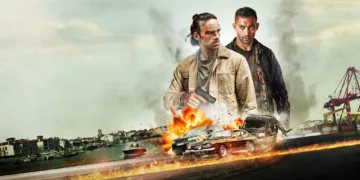





















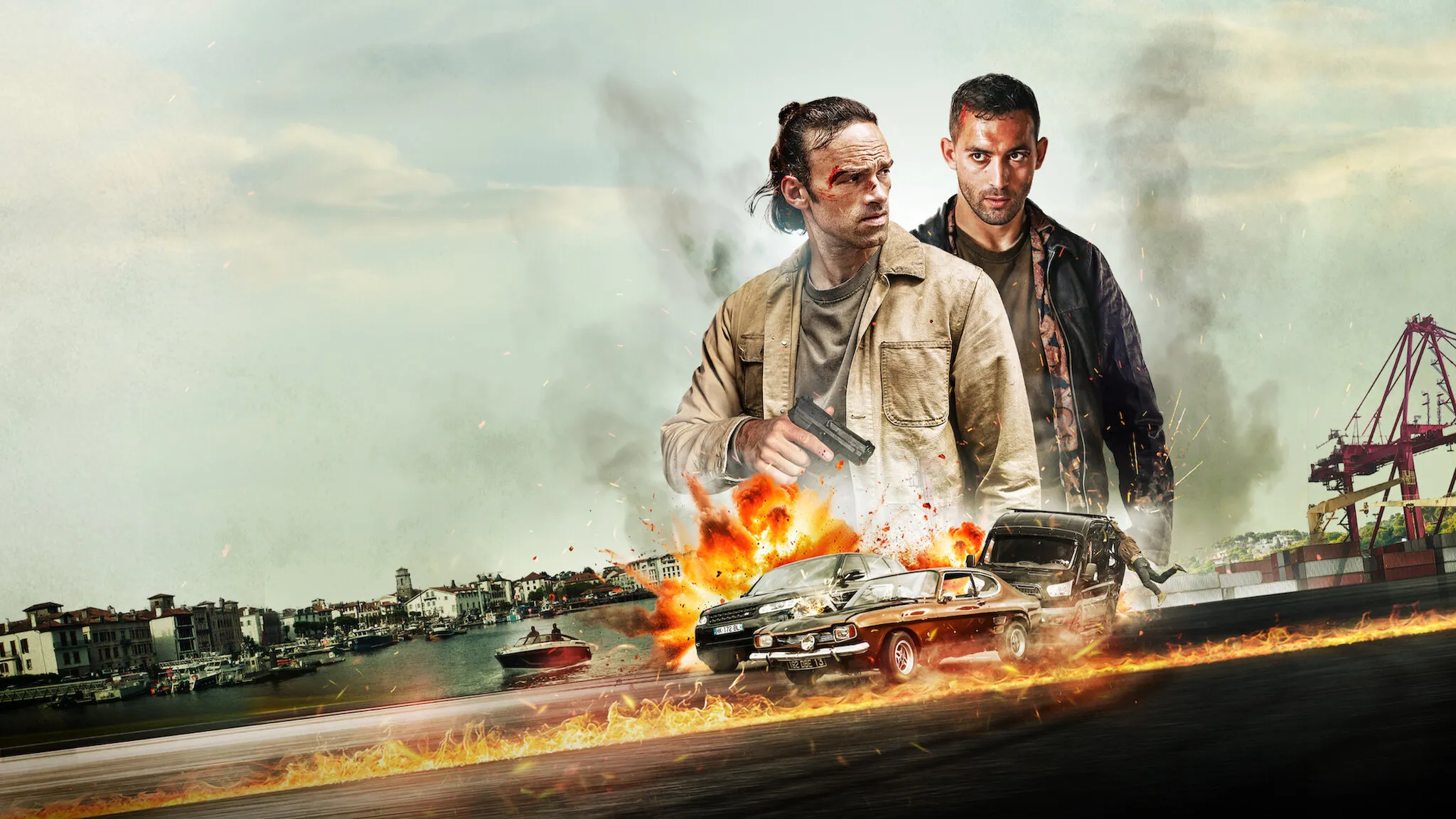

Gab and Driss emerge from the same orphanage with shared scars and opposite public identities. Gab works inside the strict machinery of the IGPN, investigating the police force he serves. Driss has built a life as a fixer, moving through criminal circles with calm precision.
Their fragile balance collapses after Sofia, the woman who once held them together emotionally, dies in a hit-and-run that carries the force of a warning. The vehicle is a neon green luxury car linked to the Rovellis, a family whose influence poisons the region. Sofia’s death leaves Leïla, her seventeen-year-old daughter, standing inside the ruins of her life with her mother’s memory and a fencing blade.
After the system fails to punish the wealthy, Leïla steals Gab’s service weapon and moves toward vigilantism. Her choice drags these two estranged father figures out of their old resentments and into a frantic effort to save the one person who still connects them to their shared past, while corporate deceit closes in around them.
The Friction of Brotherhood and Performance
The film’s emotional framework depends on the unstable chemistry between Alban Lenoir and Dali Benssalah. Lenoir brings years of rugged, working-class physical presence to Gab, and that quality places him in line with an older tradition of French action stars. His Gab carries fatigue and cynicism in every scene, shaped by years spent staring at institutional decay from the inside. Benssalah plays Driss with controlled force and a polished stillness. His work suggests a man who stays alive by anticipating every move in the room before it happens.
Put together, they create the bitter, prickly energy of brothers who never learned how to repair a rupture. Their scenes spark through constant needling, with insults tied to past betrayals and present compromises. That friction gives the film a natural comic rhythm and keeps the drama from sinking under its own weight. The banter also works as character protection. Gab and Driss use it to avoid the kind of honesty that reconciliation demands, and the film keeps that emotional defense visible in nearly every exchange.
Leïla’s paternity thread drives the plot and gives emotional stakes to every broken window and every shell casing on the ground. The script circles the biological question while pushing a stronger idea about fatherhood as something performed through choices and responsibility. The orphanage background deepens that idea and gives the film a stronger thematic pulse than a routine action story. Gab and Driss are fighting for a girl, and they are also fighting for a legacy that does not begin and end with abandonment.
Sonia Faidi’s performance is central to that dynamic. She captures Leïla’s raw anger as a frustrated fencer and channels it into a focused urge for justice that carries real danger. Leïla has agency in the story. She refuses to exist as a passive figure trailing behind two men with guns and old guilt. She pushes back, questions them, and forces each of them to face private failures they would rather leave buried.
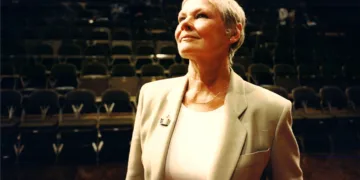
The opposing camp gives the film a sharp portrait of money shielding itself from consequences. Suzanne Clément plays Cristina Rovelli with possessive intensity and a cold problem-solving mindset. She treats people and events like obstacles that can be purchased or hidden.
Her son Mathias sits in her shadow as a failson figure, and that relationship gives the villainy a pathetic streak that makes it feel human instead of cartoonish. Jonas, the head of security, carries the Rovelli arrogance into physical form. He stands as the force Gab and Driss must break, and his presence keeps the danger believable across the runtime.
The Stuntman’s Eye: Directorial Execution
Olivier Schneider’s move from elite stunt coordinator to director shows up in the action design from the first major set piece onward. His experience on projects such as Spectre and Taken comes through in his understanding of impact, speed, and physical consequence.
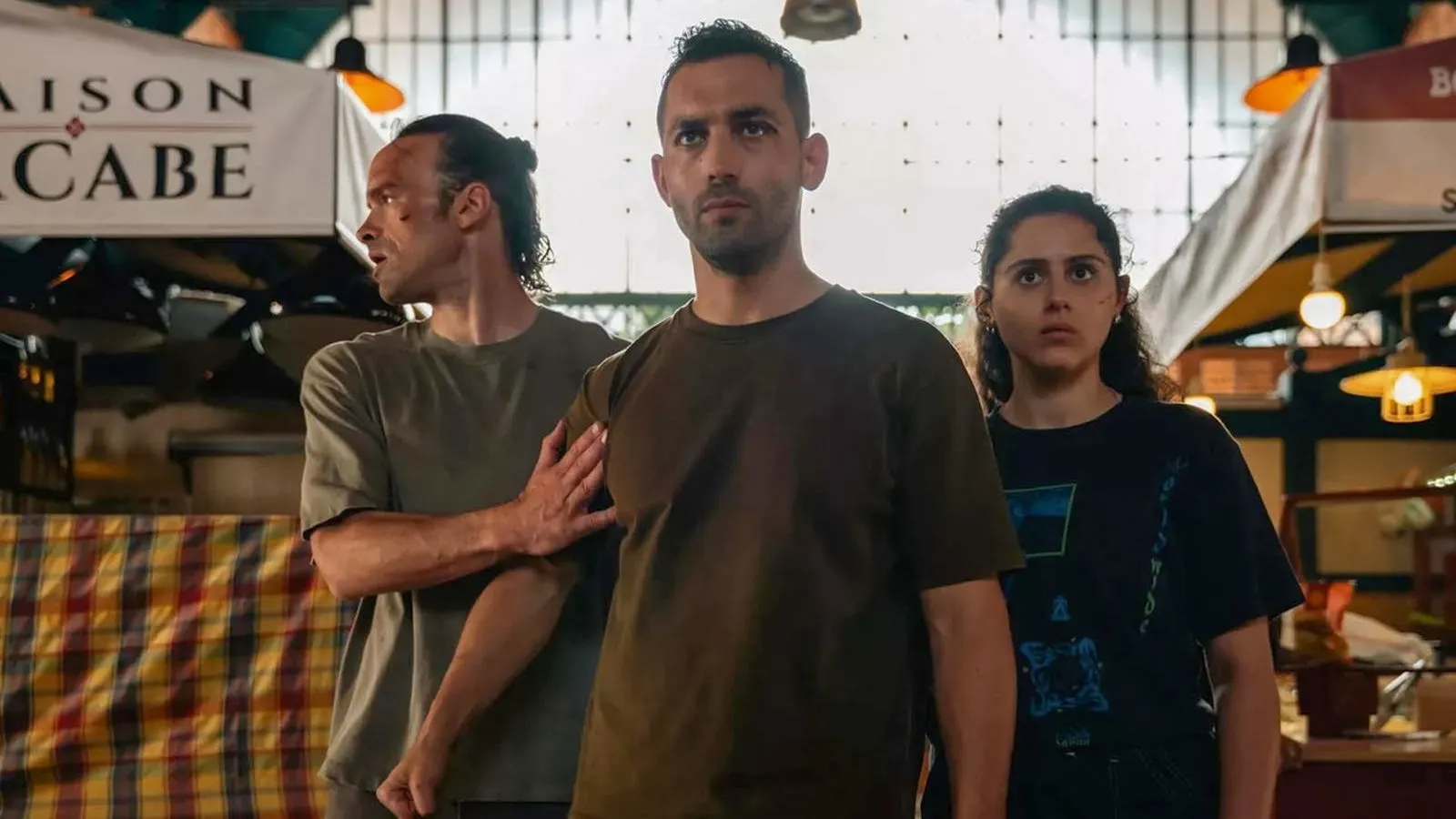
The film wants the audience to feel punches, collisions, and engine heat. Schneider favors a practical, rough-edged approach built on metal, bodies, and sweat, and that choice gives the action a direct charge. The danger feels close because the film keeps returning to physical reality.
The action design also carries variety. The film moves from desperate grappling in a construction-site shootout to the clean velocity of vehicle pursuit choreography. That range helps the story maintain energy, since each sequence feels tied to a different emotional state and spatial problem. Panic, pursuit, and brute force each get their own texture.
The clearest display of the film’s technical skill arrives in the car chase built around a vintage 1970s Ford Capri. The scene treats the car as a character with personality and history. Its shape and engine note give the sequence a sense of identity, especially as it is chased by the polished luxury of the Rovelli vehicles. Schneider films the Capri’s destruction with real feeling, turning the streets into a violent demolition course and making each hit register. The sequence gains extra power from that emotional link to the car itself.
The foot chase through the narrow alleys of Saint-Jean-de-Luz is equally strong for different reasons. It uses the town’s winding layout to tighten pressure and build claustrophobia. The geography does the storytelling. Every turn and corridor pushes the characters into a breathless rhythm that suits the panic driving the scene.
One standout stunt has Gab jumping from a second-story window and using a hitman as a human shield to soften the landing onto a parked car. The moment calls back to an earlier action-cinema tradition where spectacle came from performers taking visible risks in camera space. The film earns a lot of goodwill through moments like that because it trusts motion, impact, and timing.
The direction has a few weak spots in the hand-to-hand scenes. Some exchanges feel too compressed, and the framing can turn crowded and hard to read. The intensity stays high, yet the choreography loses clarity in places, forcing the viewer to reconstruct the action flow through sound cues, grunts, and impacts. The fights still carry force, though a cleaner spatial layout would have let the detail of the movement land with greater precision.
Tonal Shifts and the Architecture of Pacing
The film follows a two-part structure that feels fascinating and occasionally abrupt. Its first stretch plays like a slow investigation built around class tension and social rot beneath polished surfaces. It spends real time on Sofia’s death and on the mental condition of Gab, Driss, and Leïla. Grief hangs over the film during this phase, along with talk of suicide and the pressure of systemic corruption. The story asks the audience to sit inside that discomfort before the action begins to release it.
At the midpoint, the tempo jumps into a long final run of roughly forty minutes that moves with very few pauses. The transition from psychological thriller to buddy-action mode lands with confidence, and the film keeps its emotional line intact even while bodies start dropping. That balance matters because the action grows larger while the family thread still carries the strongest weight.
The ninety-five-minute runtime helps the film a great deal. It gives the story enough room to build character stakes and enough discipline to avoid drag. The pacing mirrors the working habits of its leads, moving with purpose and very little ornamental padding. That momentum carries the film deep into the final act, including points where the plot becomes safer and easier to predict.
Biarritz and the wider Aquitaine region provide a striking visual counterpoint to the violence. The coastal views and elegant town architecture keep wealth visible in the frame, and that visual polish sharpens the story’s class conflict. Violent scenes cutting through pristine markets and polished public spaces create a strong aesthetic jolt. The setting functions as an active force in the film, emphasizing the clash between the refined image of the elite and the harsher reality faced by the people they cast aside.
The Power of the Marginalized Voice
The film finds thematic weight in its portrait of power and exclusion. The corporate high-bourgeois world appears as a fortified structure, and the people who break through it are people with very little left to protect. The orphans stand as outsiders who had to build identity and family ties without guidance.
That struggle, set against a powerful figure who controls the region, gives the story a political charge that strengthens the revenge framework. The conflict becomes a clash between inherited influence and resilience built through survival.
The dialogue can sound plain at times, yet it works because the cast plays the subtext with confidence. Gab and Driss may argue over a shirt or a car, and the emotional subject under that argument is decades of absence, missed birthdays, and shared pain that never found language.
The humor lands because it rises from character behavior and circumstance. Even moments that read as unintentionally funny, including awkward lines about money during a tense standoff, add personality. Those beats make the characters feel improvised and human, like people solving problems in real time instead of polished action archetypes.
The film’s artistic care also shows in its framing choices around the beginning and end. The opening split-screen credits establish the parallel lives of Gab and Driss with clarity and style, setting the emotional distance before the plot pulls them back together. The end credits provide a reflective close that carries warmth after the violence. Small choices like these show real attention to genre craft and to the emotional aftertaste of the story.
This is an unpretentious action film with genuine feeling. It delivers speed, bruising physical stakes, and a family story full of resentment, loyalty, and unfinished grief. Its best scenes come from the way performance, pacing, and stunt design support the same emotional line. The result is a thrilling Saturday-night movie with a messy family pulse that stays alive long after the final chase.
The Orphans (Les Orphelins) is a French action-thriller directed by Olivier Schneider that follows Gab and Driss, two childhood friends from an orphanage whose adult lives have taken drastically different paths. Gab serves as a straight-laced internal affairs officer, while Driss operates as a calculated fixer for the criminal underworld. Their uneasy history is forced into the present when their shared first love dies in a suspicious car accident, prompting her teenage daughter, Leïla, to steal Gab’s weapon and hunt the culprits. Originally released in French theaters on August 20, 2025, the film premiered globally on Netflix on February 20, 2026. The production is notable for its reliance on practical stunts and the grounded chemistry between its leads as they navigate a narrative of grief and vigilante justice.
Where to Watch The Orphans (2025) Online


Full Credits
Title: The Orphans (Les Orphelins)
Distributor: Netflix, Gaumont, Inoxy Films
Release date: August 20, 2025 (Theatrical), February 20, 2026 (Netflix)
Rating: TV-MA
Running time: 95 minutes
Director: Olivier Schneider
Writers: Nicolas Peufaillit, Olivier Schneider, Alban Lenoir, Jean-André Yerlès
Producers and Executive Producers: Rémi Leautier, Rémi Cervoni, Sidonie Dumas
Cast: Alban Lenoir, Dali Benssalah, Sonia Faidi, Suzanne Clément, Anouk Grinberg, Naidra Ayadi, Romain Levi, Jacqueline Corado
Director of Photography (Cinematographer): Maxime Cointe
Editors: Tianès Montasser
Composer: Paul-Marie Barbier, Julien Grunberg
The Review
The Orphans
The Orphans is a robust, practical actioner that thrives on the friction between its leads. While the narrative follows a familiar path, the visceral stunt work and deep-seated "orphan" camaraderie provide a soulful core often missing from the genre. It successfully bridges the gap between a somber character study and high-octane spectacle. It doesn't reinvent the wheel, but it spins it with impressive force and heart.
PROS
- Practical effects and clear, high-stakes choreography from a veteran director.
- Natural, biting chemistry between Alban Lenoir and Dali Benssalah.
- A tight 95-minute runtime that avoids the bloat of modern blockbusters.
- Beautifully utilizes the Biarritz backdrop to contrast class wealth with gritty violence.
CONS
- The story beats are predictable and follow a standard vigilante template.
- The shift from a "Chabrolesque" slow-burn to an action frenzy is jarring for some.
- Occasional claustrophobic camerawork during close-quarters combat.







