

























![Kingdom Hearts Collection [I-III] Review](https://gazettely.com/wp-content/uploads/2026/10/Kingdom-Hearts-Collection-I-III-1-360x180.webp "Kingdom Hearts Collection [I-III] Review: KHII Holds Steady as Newer Entries Fluctuate 37")



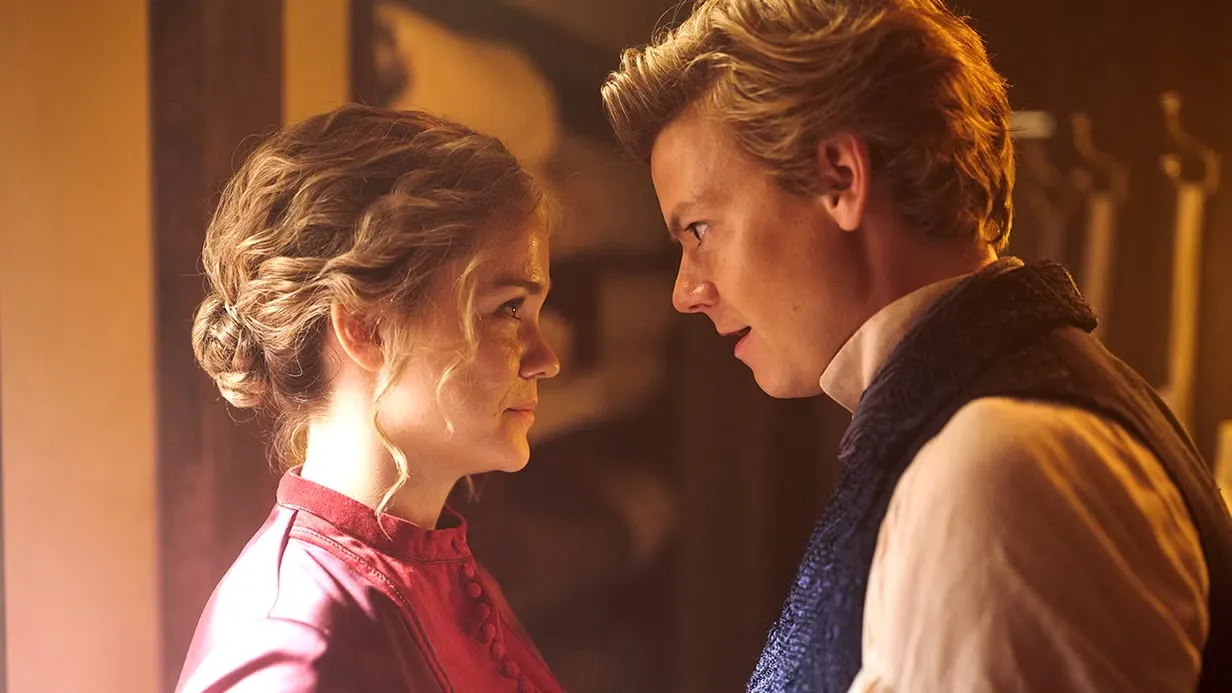

Jack Dawkins survives by splitting himself in two under the relentless heat of Port Victory, Australia. Once a London pickpocket, now a Royal Navy surgeon, he reaches a turning point in this second installment. Six months after the events that nearly stripped him of his freedom, he opens the season staring down the gallows.
The story tracks his effort to hold onto a legitimate medical career as Norbert Fagin’s shadow keeps falling across his days, tugging him toward theft with the familiarity of muscle memory. Lady Belle Fox remains his closest professional ally and romantic pull. She carries a fight that the colony keeps trying to declare unwinnable, pushing for recognition as a doctor in a world built to deny women authority.
Set in an 1850s settlement shaped by colonial strain and medical discovery, the season widens the original Dickensian setup with fresh dangers and sharper internal pressure on the core cast. The production keeps the pace aggressive, pairing modern music with high-energy action to frame its period drama through a streaming-era lens that prizes momentum.
Anatomy of an Unlikely Partnership
This return lives or dies on the changing chemistry at its center, and the series knows it. Thomas Brodie-Sangster and David Thewlis develop a quick verbal rhythm that stabilizes scenes even when the plot leans into chaos. Brodie-Sangster plays Jack as a man wired for risk, a surgeon drawn to the operating table and a thief drawn to the pulse of a heist. That dual appetite lands as character truth rather than a gimmick, and it keeps Jack’s attempts at reinvention from reading as clean or simple. The show treats his skill in medicine as real, then keeps reminding the audience that competence does not erase history.
Thewlis, meanwhile, pushes Fagin into something harsher. This interpretation reads as a corrosive force that feeds on Jack’s weak points, with predation replacing any sense of kindly mentorship. Their scenes carry a familiar entertainment-industry irony: the charismatic older figure who sells himself as a guide often functions as a gatekeeper, policing who gets to change and who stays trapped in the role that benefits him. The series uses that dynamic to make Jack’s “second chance” feel conditional, shaped by power and proximity, not personal willpower.
Maia Mitchell’s Lady Belle Fox marks a pointed shift in how this kind of historical drama handles female agency. Her medical ambition sits on the page as a serious vocation, and Mitchell plays Belle with a refusal to shrink for anyone else’s comfort. The friction with her mother, Lady Jane, becomes a portrait of colonial gender discipline in action: the private sphere enforcing the public rules.
Belle’s decision to keep moving forward carries legal and social danger, and the season frames those risks as systemic, not self-inflicted. Representation here is not a decorative layer. It becomes the engine of conflict, shaping what Belle can do, what she is allowed to claim, and how much punishment the colony is willing to attach to a woman who insists on professional authority.
One of the season’s smartest pivots comes through Fanny Fox. Lucy-Rose Leonard takes a character once steered by marriage-minded expectation and redirects her into crime, with Fanny stepping into apprenticeship under Fagin. The show plays this as funny and biting at the same time, using the “ditzy sister” mold as a setup for a critique of how narrow the respectable options are for women in Port Victory. That comedic edge carries bite because it is rooted in constraint. The laugh often lands right beside the reminder that the colony’s social script leaves very few doors unlocked.
The ensemble gets extra weight with Inspector Henry Boxer and the villainous Uriah Heep. Boxer functions as a moral counterbalance to Jack, offering a version of authority that claims principles even as obsession starts to seep in. Familiar faces like Darius Cracksworth and the sobered Prof return to thicken the community texture, giving Port Victory the sense of a populated place with competing motives. The supporting cast matters here because the show keeps staging power, class, and respectability as shared pressures, not private problems.
The Intersection of Medicine and Malfeasance
The season’s structure leans into collision. Surgery becomes a moral arena where arrogance and compromise carry consequences that the camera does not soften. Epidemics and medical marvels push the hospital staff to exhaustion, and the show trusts viewers to sit with the discomfort of 19th-century medicine rather than prettifying it. Those scenes do more than raise stakes. They connect bodily vulnerability to social hierarchy, reminding the audience who receives care, who is denied it, and who gets blamed when systems fail.
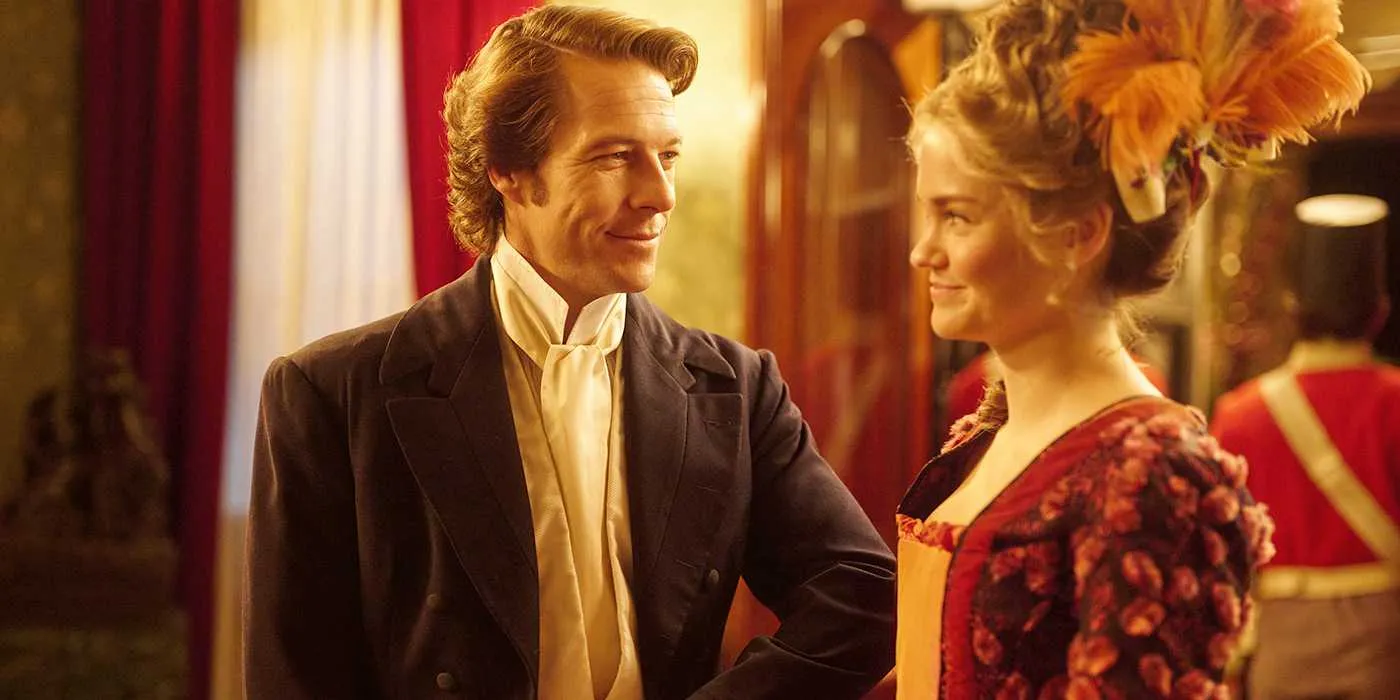
The criminal machinery of the Fagin & Son enterprise supplies the main pressure line. Each caper interrupts Jack’s push for legitimacy, turning stability into something that can be stolen from him at any moment. The season frames Port Victory as a place where a past can cling to you like dust, and where reinvention reads as a privilege tightly rationed by class and reputation. Every heist sends consequences rippling outward, threatening the fragile life Jack is trying to construct.
Inspector Boxer’s serial killer subplot drags the story into darker territory. It adds a new flavor of order, one driven by fixation and control. The mystery can feel detached from the characters’ emotional arcs at times, and it slows when placed beside the urgency of the medical and criminal tracks. Still, its presence sharpens the show’s sense of institutional anxiety: the colony wants rules, wants certainty, wants someone to name the monster, even as everyday power structures keep producing harm in quieter ways.
Where the series stands out is tonal agility. It can slide from seriousness to silliness without collapsing its world. Fast dialogue and scandal-heavy scenarios keep the air charged through bleak stretches, and the season treats that tonal switching as part of its streaming identity. The show behaves like a product of an era that rewards hybrid storytelling and impatience with rigid genre lanes, using speed and flexibility as formal choices that match the instability of its setting.
Designing a Lived-In Colonial Frontier
Port Victory looks upgraded in ways that support the story’s social arguments. Production designer Nicholas Hare builds a setting that feels filthy, sun-baked, and lived-in, with wealth and deprivation pressed up against each other. The governor’s residence carries visible opulence, while the alleys where Fagin operates feel cramped and abrasive. That visual split keeps class division present in the frame, and it reinforces the colonial project as a hierarchy you can see, touch, and smell.
Designers Marion Boyce and Gabrielle S. Carey sharpen the costumes and sets, making the world feel fuller and more precise than in the first season. Clothing becomes an immediate read on status and aspiration, turning fabric and cut into social language. The polish in the production values signals serious buy-in from the streaming platforms, and it reflects a wider industry pattern: period storytelling presented with contemporary energy, calibrated for audiences trained by fast viewing habits and high visual expectation.
The direction wears its influences openly, drawing from Guy Ritchie’s high-energy playbook. Modern music creates a contemporary pulse from the start, and the opening needle drop of Blur’s “Song 2” throws down a confrontational tone that refuses genteel heritage-drama comfort. The effect links the 1850s setting to present-day mood without forcing a lecture, suggesting that ambition and survival remain recognizable pressures across time.
Cinematography leans into the literal heat. The frame fills with grit and dust, emphasizing exhaustion and the physical cost of living in a settlement still under construction. The look pushes back against the cleaned-up aesthetic common to Regency romance, and it keeps colonial life grounded in labor, discomfort, and uneven power. The visuals support the season’s interest in who gets protection and who gets exposed.
The Price of Reinvention and the Weight of History
The season’s thematic core circles redemption and its price tag. Jack carries his past like a debt that compounds, and each attempt at growth meets a world eager to invoice him for who he used to be. The story asks a blunt question about social memory: how much change counts as change if the surrounding society keeps refusing to update its judgment. Jack stays suspended between the respect he earns as a surgeon and the stigma attached to his roots as a thief, and the tension is treated as structural, not spiritual.
Romance functions as danger, not comfort. Jack and Belle share chemistry and genuine care, yet their relationship sits under threat, with legal and physical risk baked into every step they take together. Their love plays as messy, tangled in duplicity and deceit, which keeps the show from drifting into easy melodrama. The bond gives them strength and also gives their enemies leverage, a reminder that intimacy can become a liability in a society built on surveillance and punishment.
The scripts aim a steady critique at colonial and class politics, filtering the colony through prejudice and exclusion. Belle runs into barriers tied to gender in a male-dominated field, and Jack faces marginalization linked to lower-class origin. The season connects those pressures to present-day conversations about representation and systemic gatekeeping, using period drama as a mirror for modern patterns that still shape who gets to be seen as competent, credible, and worthy of authority.
Identity remains the show’s driving question. Jack strains to keep his two lives from tearing each other apart, and Fagin stays committed to his own methods. Fagin sees profit in concealing his intellect, treating social climbing as a bad investment. That stance collides with Jack’s frantic drive to transform himself, building a conflict shaped by power, temptation, and the limits of social mobility in Port Victory. The season closes on the idea that survival depends on continuous negotiation between past and aspiration, with no clean exit offered by the colony’s rules.
The Artful Dodger returns for its highly anticipated second season on February 10, 2026. Set against the vibrant and grit-filled backdrop of 1850s Port Victory, Australia, the series continues the story of Dr. Jack Dawkins as he navigates a precarious life between the operating theater and the criminal underworld. Following the cliffhanger of the first season, Jack begins this installment facing the immediate threat of execution while being pursued by a relentless new lawman, Inspector Henry Boxer. Fans can stream all eight episodes of this high-energy Dickensian sequel on Disney+ globally and Hulu in the United States.
Full Credits
Title: The Artful Dodger Season 2
Distributor: Disney+, Hulu
Release date: February 10, 2026
Rating: TV-14
Running time: 45–60 minutes per episode
Director: Ben Young, Ben C. Lucas, Gracie Otto
Writers: James McNamara, Kate Mulvany, Dan Knight, Miranda Tapsell
Producers and Executive Producers: Jo Porter, Rachel Gardner, James McNamara, David Maher, David Taylor, Cameron Welsh
Cast: Thomas Brodie-Sangster, David Thewlis, Maia Mitchell, Damon Herriman, Tim Minchin, Susie Porter, Kym Gyngell, Damien Garvey, Lucy-Rose Leonard, Luke Bracey, Nicholas Burton, Vivienne Awosoga, Aljin Abella, Jeremy Sims, Zac Burgess
Director of Photography (Cinematographer): Katie Milwright
Editors: Ross Allsop
Composer: Antony Partos
The Review
The Artful Dodger Season 2
The second season of The Artful Dodger succeeds by complicating its characters rather than merely repeating their past hits. It treats 19th-century medicine and colonial survival with a modern grit. The show rejects the safety of a standard period piece by leaning into the messy reality of reinvention. The central performances create a powerful anchor for the narrative. A few subplots feel less integrated. It remains a sharp and entertaining expansion of the Dickensian world.
PROS
- Strong central chemistry between Brodie-Sangster and Thewlis.
- Subversive development of female characters like Belle and Fanny.
- High-energy direction and modern musical integration.
- Gritty and detailed production design of Port Victory.
- Clear-eyed critique of colonial class structures.
CONS
- Disconnected serial killer mystery subplot.
- Occasional pacing issues in the mid-season episodes.
- A few minor supporting characters lack depth.







