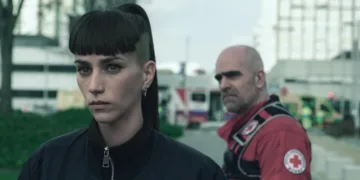






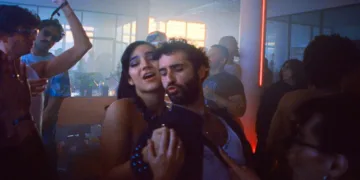

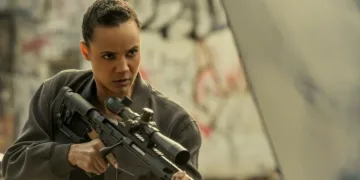







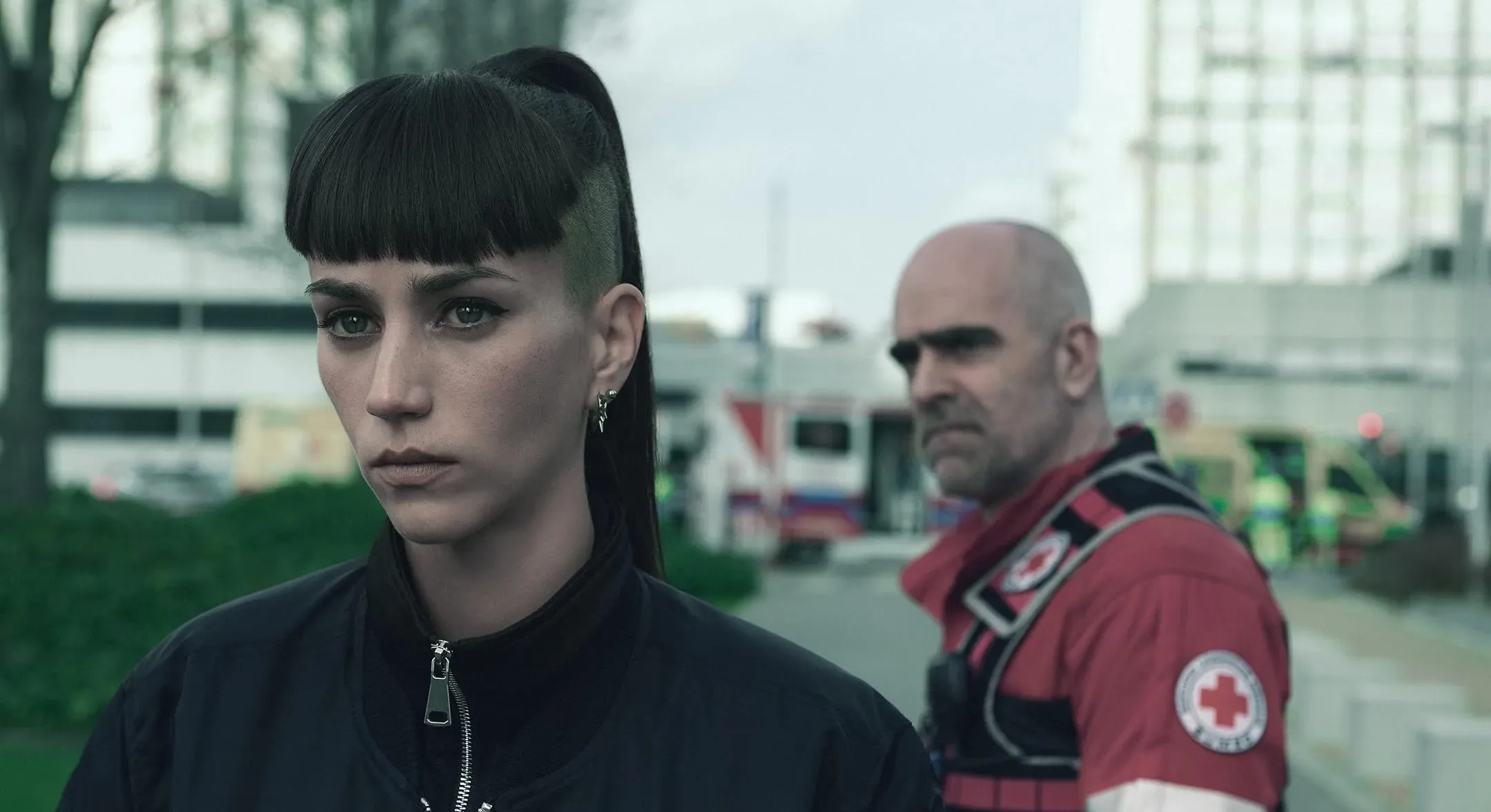

Salvador Aguirre moves through life like the aftermath of a wreck he helped cause and never fully cleaned up. He used to be a respected doctor. Now he spends his nights driving an ambulance through a city vibrating with the charged menace of a Champions League match between Real Madrid and Olympique de Marseille. That roar of sport becomes cover. The White Souls, a neo-Nazi group, use the noise and the crowds to spill blood on the cobblestones.
Through tear gas and shattered glass, Salvador spots his daughter, Milena. She is not caught in the chaos by accident. She is part of it. The series tracks Salvador as he tries to grab a scrap of fatherhood while the city fractures into street fights and recruitment pitches. It’s grim, fast-moving television that treats neglect at home as kindling for firebombs outside.
The Sins of the Father
Salvador Aguirre reads like a biography written in bad wagers and empties. His slide from physician to ambulance driver lands as a blunt image of self-demotion, the kind that arrives with no paperwork because the damage is already done. Gambling and alcohol do most of the work dismantling his career, then finish the job with his family. When he tries to talk to Milena, the response is colder than a morgue slab. Her contempt feels earned. He spent her childhood as a ghost.
The soccer match turns into a giant, sweating incubator for extremism. The White Souls fold into the stadium crowd and treat it like camouflage, then step out to do the ugly work. The series makes the shift from team loyalty to tribal hatred feel frighteningly smooth, like one chant changing tempo.
Salvador’s discovery of Milena in a backroom bar, ringed by skinheads, lands like a punch. Seeing her again during a melee on a bridge locks the stakes in place. He has to face the simplest math here: absence creates space, and monsters love empty rooms. Radicalization plays as a consequence of a family that broke and stayed broken.
Faces in the Crowd
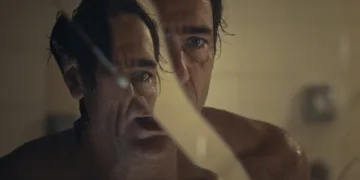
Luis Tosar carries the series with a face that looks carved from a cliff and then left out in bad weather. He plays Salvador with jittery, abrasive momentum, like a man running on fumes and regret. The performance refuses the safety net of charm. Salvador knows he has failed, and he keeps trying to patch a wound that does not want to close. It’s gritty work, and Tosar keeps it unsentimental.
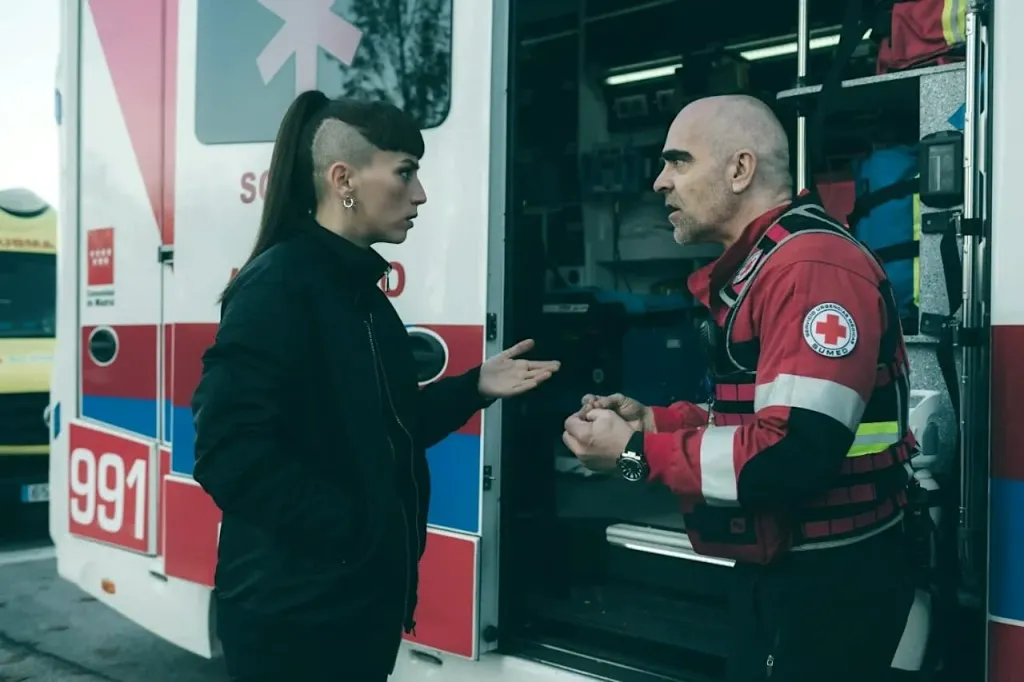
Claudia Salas gives the story a necessary counterweight as Julia. She works like a mirror held up to Salvador: another parent cut off from a child, caught in the same extremist orbit. Her drive stays plain and painful. She wants her daughter back. Her cooperation with the police plays like a desperate bet, not a halo-polishing turn. That parallel adds human scale to the bigger blasts of action and outrage.
Then there’s Carla. Leonor Watling plays her with a chilling, maternal warmth that makes the pitch feel even more dangerous. She presents herself as a protector of “lost” Spaniards, offering meals and a ready-made “family,” the sort Salvador never managed to provide.
The manipulation lands as the series’ most unsettling move, because it wears the face of care. The supporting cast, including Toni and Marjane, grounds the story in the professional world Salvador once belonged to. Toni’s own hidden struggles widen the sense of rot beyond one man’s collapse. Salvador can save a life in the ambulance, then watch his own life keep bleeding out in real time. Busy night at work, quiet catastrophe at home.
The Rhythm of the Riot
Daniel Calparsoro brings frantic, high-octane force to the screen, and he leans hard on handheld cameras. The effect pins the viewer into the passenger seat of a vehicle headed for impact. The riot scenes hit as controlled chaos, crowded and claustrophobic, with frames packed tight enough to make the air feel thin.
Sound design does its share of the bruising. The track becomes a thick stew of sirens, soccer commentary, and human screams. Silence never shows up in Salvador’s Madrid, and the overload mirrors his internal state. The city takes on the weight of a character. The gleaming modern facade of the stadium sits beside filthy, narrow alleys where the White Souls hunt, and the series keeps cutting between those spaces like it wants the contrast to sting.
Violence arrives with jarring realism. A police officer engulfed in flames. A victim beaten in a bar backroom. The scenes avoid polish and aim for pain. Editing keeps the pace relentless, rarely granting a full breath. That kinetic approach makes the political themes hit the body first. The show leans on momentum to cover gaps in the script, using adrenaline to jump across leaps in logic. It works often enough to keep you watching, then makes you notice the seams the moment the volume drops.
The Hate That Identity Built
The White Souls operate less like a political party and more like a predatory cult with a recruitment budget. They offer a warped version of social services: food, shelter, belonging. The detail matters, because it makes their growth feel plausible, then terrifying. The series frames them as people who understand needs and exploit them, with the patience of hunters.
Institutional failure runs through the story as a repeating alarm. The police and justice system come off overwhelmed or complicit, and the show underlines the sickness with a blunt detail: some members wear uniforms during the day. That rot inside the system makes Salvador’s vigilante leanings read like a response shaped by exhaustion and rage, even as it raises the cost of every choice he makes.
The series mirrors fractures across contemporary Europe, painting a society stuck between rising extremism and a confused establishment. Opposing factions read like forces that have traded speech for collision. The “new family” drives the tragedy. Once biological ties fray, extremists step in with open arms and full plates. Milena’s devotion to Carla traces straight back to Salvador’s neglect, and the show turns that domestic failure into a national warning. A house that does not eat together eventually burns together. That line lands like a curse and a diagnosis at the same time.
The Mechanics of Revenge
Salvador’s story leans heavily on dialogue to fill in blanks. The past surfaces through sharp, often cruel exchanges, keeping the narrative planted in the present. Long flashback sequences never take over, and that choice keeps the tempo from sagging. It can also make characters sound like they’re reading from a file, handing each other bullet points like evidence bags.
Eight episodes give the series room to breathe, and it sometimes uses that room to pace in circles. The narrative can feel like it keeps returning to the same drain, watching the same water spin. A tighter edit could have sharpened the impact. The script favors visceral shocks over deep psychological inquiry, pushing forward through chases and confrontations. Energy stays high, and some motivations end up thin at the edges.
The show’s strongest move is its refusal to hand out clean labels. No one comes off spotless. The “good guys” look broken and selfish, and the “bad guys” sell a version of community that plenty of people crave. That moral murk is where the series finds its bite, because victory never lasts long here and the bill always comes due. Is one crack in the armor enough to sink the ship?
Salvador is a gripping Spanish action-drama series that premiered globally on Netflix on February 6, 2026. Created by Aitor Gabilondo and directed by the veteran of tension, Daniel Calparsoro, the eight-episode series follows an ambulance driver, Salvador Aguirre, who discovers his estranged daughter has been radicalized by a violent neo-Nazi group. Set against the restless backdrop of contemporary Madrid, the show explores themes of ideological extremism, familial neglect, and the moral boundaries of a father seeking redemption. You can currently stream the entire first season exclusively on Netflix.
Full Credits
Title: Salvador
Distributor: Netflix
Release date: February 6, 2026
Rating: TV-MA
Running time: 50 minutes
Director: Daniel Calparsoro
Writers: Aitor Gabilondo, Joan Barbero, Anna Casado, Fabia Castro
Producers and Executive Producers: Aitor Gabilondo
Cast: Luis Tosar, Claudia Salas, Leonor Watling, Fariba Sheikhan, Patricia Vico, César Mateo, Alejandro Casaseca, Candela Arestegui, Richard Holmes, Guillermo Lasheras
Director of Photography (Cinematographer): Tommie Ferreras
Editors: Antonio Frutos, David Pinillos
Composer: Carlos Jean
The Review
Salvador
Salvador is a kinetic, gut-wrenching descent into the fractures of modern Madrid. It succeeds as a high-octane thriller powered by Luis Tosar’s weathered, explosive performance. While the narrative occasionally favors adrenaline over deep character development and the eight-episode length feels slightly stretched, its portrayal of radicalization as a byproduct of domestic neglect is chillingly effective. It is a grim, uncomfortable, and visually arresting experience that refuses to offer easy moral exits.
PROS
- A powerhouse lead that grounds the chaos.
- Calparsoro’s visceral, high-energy visual style.
- A sharp look at the roots of extremism.
CONS
- Eight episodes feel slightly overextended for the plot.
- Some side characters rely on dialogue-heavy tropes.
- The script often prioritizes shock over nuance.