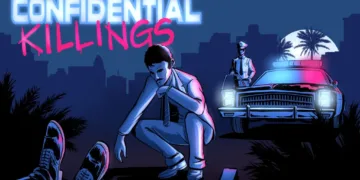
















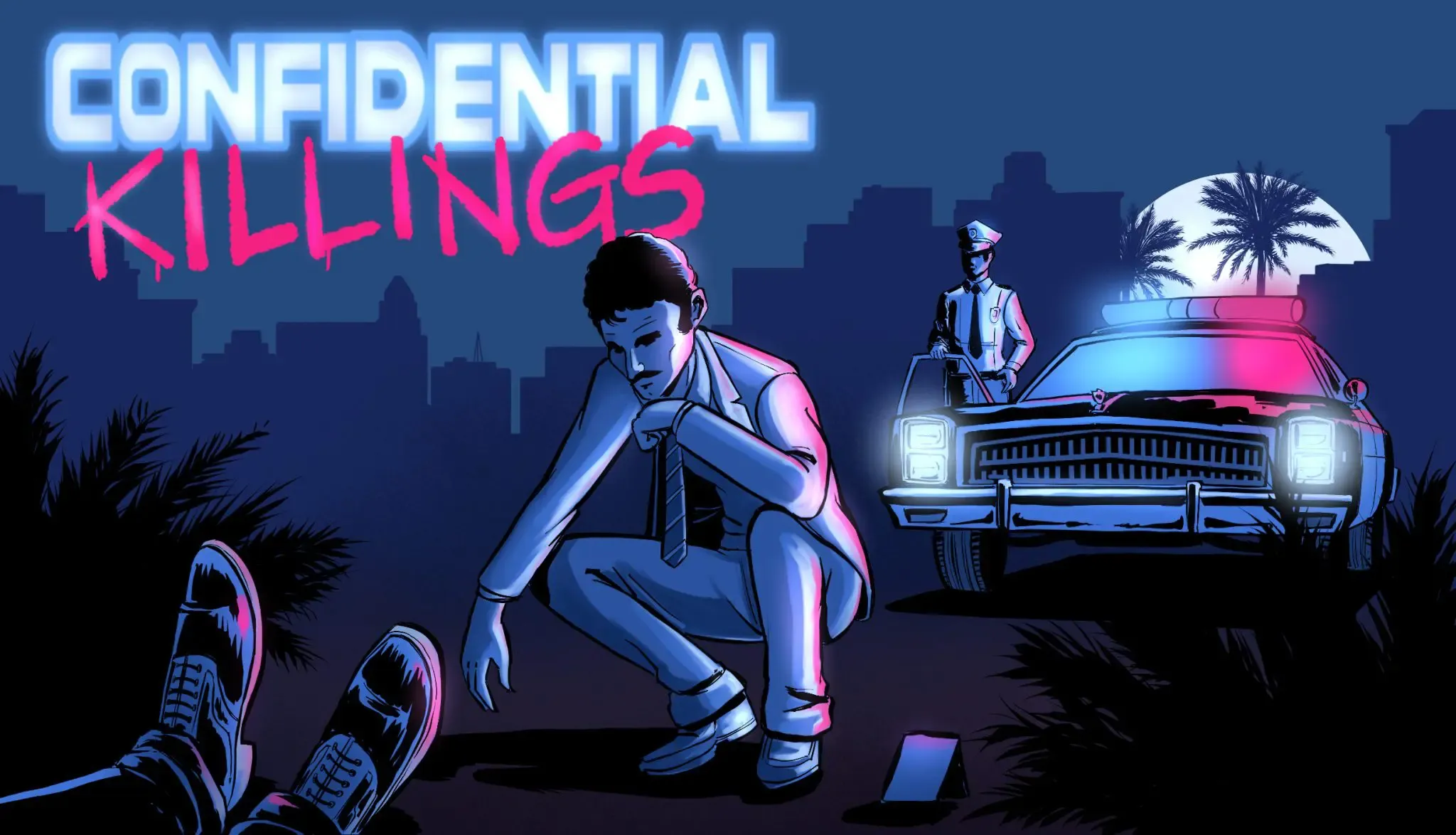

Confidential Killings casts you as a homicide detective in late-1970s Los Angeles. The air feels weighted down, shaped by drug use and systemic corruption. Your career opens on what reads like a routine car accident investigation, then a hidden thread starts to show. That thread ties your day-to-day work to a large criminal network.
The game aims its spotlight at a moneyed Hollywood sphere of actors and powerful producers, with moral rot as a steady presence. Institutional pressure follows you through a set of twelve cases. Each episode can seem self-contained in its opening moments, then the pieces begin to lock together into a wider conspiracy. The tone stays serious and grounded.
Answers rarely arrive in clean categories, and justice can feel unfinished because the truth arrives in fragments. That story structure mirrors the game’s view of police work: you do the job inside a system where corruption sits close to the surface, certainty stays scarce, and each new discovery adds another imperfect piece to the picture.
The Logic of the Keyword System
Play revolves around point-and-click investigation inside static scenes. You comb environments for clues by clicking objects highlighted in red, which produces specific keywords. These words function as the case’s raw materials: names, verbs, and objects that matter to the chain of events. You take those keywords to a board that asks you to solve the mystery by placing them into a fill-in-the-blank narrative. Progress depends on logic and on tracking what happened, in what order, and why it matters.
Some of these puzzles land on the simple side, partly because the board’s sentence structure can steer you toward the right fit. That guidance can create a soft spot in the design: you can land on correct placements through educated guessing without fully internalizing the reasoning behind them. When the phrasing points too directly at a single answer, brute forcing becomes a real temptation. The game breaks up the keyword loop with tasks such as opening safes and running interrogations, which helps keep the investigations from feeling like one repeated motion.
A stranger decision shows up in the detective’s memory. Each new level expects you to rediscover character names, with the protagonist failing to remember people from earlier cases. Recurring figures still need to be identified again. A manual note system supports the process, letting you track evidence and keep your own paper trail while you work.
The rhythm is methodical: gather terms, cross-check details, and synthesize the evidence into a coherent account of the case. The design places responsibility on the player to think like an investigator and accept the outcome they assemble. Your results carry consequences inside the investigation flow, and mistakes remain possible. The interface stays clean and keeps attention on deduction, which gives the game a slow, inward-looking pace where progress is measured by how well you understand what you have uncovered.
Pulpy Visuals and Melancholic Sound
Visually, the game uses hand-drawn two-dimensional art with a pulpy style that recalls an eighties comic book. Dark colors and heavy shadows define its grimy spaces, and the lighting leans into noir. Small animations keep scenes from feeling frozen: rain falls behind the action, a sign spins in the wind, a body drifts in a swimming pool. Those touches do a lot of work in building place and mood.

With no voice acting, silence becomes part of the texture, shifting extra weight onto music and ambient sound. The score is melancholic, with a mysterious and ominous tone that frames each crime scene. Character designs come through clearly, using visual cues to suggest personality and status. You can read a suspect’s role quickly from their look, which fits a game built around scanning and interpreting details.
Neon accents cut into the darker frames, giving the Hollywood backdrop a sharp, stylized edge. Art direction stands out as a key strength, capturing low-key classic-film lighting while keeping the writing’s realism intact. Subtle touches, like a twinkling mirrorball, push immersion forward and reinforce the mood the story is chasing.
Technical Performance and Interface Constraints
Confidential Killings is built as a compact experience, with a playtime of about three hours. The story moves quickly across twelve cases, and it runs on the Godot engine. The interface is functional, yet it creates friction during play. Keyword selection uses alphabetical dropdown menus, which can become unwieldy as your list grows. It is easy to lose track of a name or term you meant to use, and menus sometimes extend past the bottom of the screen, obscuring options.

Mouse and keyboard feel like the cleanest control setup. Controller support is present, though the pointer lacks precision. Taking notes on a Steam Deck is also awkward, which undercuts the game’s reliance on manual tracking. For players new to puzzle games, the structure makes for an accessible entry point. Players with more experience may find the mechanics thin, and the absence of red herrings keeps the route forward very direct.
The episodic format keeps momentum up, and the short length makes it fit neatly into a single afternoon. The writing stays professional and avoids melodrama. The technical limits show, yet the thematic identity holds steady. Stability is solid in use, and the game keeps its scope tight and respectful of your time.
The Review
Confidential Killings - A Detective Game
Confidential Killings delivers a stylish noir experience with a strong sense of place. The deduction system is intuitive. It makes investigating 1970s Hollywood engaging for newcomers. However, the logic puzzles lack depth for veterans. The interface needs polish to avoid frustration during word selection. It is a focused and brief experience. The narrative weight carries the project despite the technical flaws.
PROS
- Striking comic book art
- Authentic 1970s atmosphere
- Straightforward deduction mechanics
CONS
- Puzzles are often too easy
- Clunky dropdown menu interface
- Short three hour duration