


















Heroes Battle Awakening is published by eastasiasoft and developed by Josep Monzonis Hernandez. It launched on January 28, 2026, and it is available on Nintendo Switch, PlayStation, Xbox, and PC. The game builds its defense tactics around a five-lane grid where you command monsters to hold off incoming waves.
The campaign is split into four chapters, with ten levels per chapter, for a total of forty stages. During each level, you gather coins in real time to fund unit placement. Those coins appear on the battlefield, and you collect them by moving a cursor across the screen and picking them up manually.
At five dollars, it targets a low-cost entry point. Your objective stays simple: stop enemies from crossing to your side by placing creatures that block lanes and deal damage. Some units exist to generate money, while others focus on high-impact attacks. The fantasy backdrop stays steady with enemies like skeletons, orcs, and flying sorcerers, and success comes down to placement choices and timing under pressure.
Managing the Chaos of the Grid
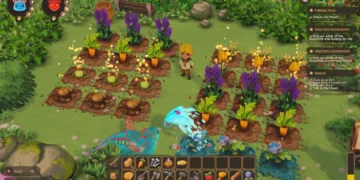
The moment-to-moment loop hinges on the strict five-lane grid. The structure echoes the familiar setup seen in Plants vs. Zombies, where you commit units to fixed tiles to intercept advancing threats. Once you place a creature, it remains locked to that space for the rest of the fight. That fixed positioning makes your opening decisions matter a lot, since you cannot reposition a unit to patch a lane after you misread the flow of enemies.

The manual coin system adds another layer of attention management. Coins drop from defeated foes and also appear at intervals, and you have to move the cursor to grab them. That choice keeps you active during downtime, since your hands stay busy collecting resources while scanning lanes for the next placement window.
The unit roster communicates roles clearly and supports a steady rhythm of build decisions. Knights function as reliable ranged support, firing single shots or diagonal projectiles to chip away at enemy health. Golems operate as the heavy hitters, using strong slams that can wipe out an entire row.
Siege engines form the backbone of your economy by generating passive income, and they shape how aggressive you can be with expensive placements. Cost management turns into a constant risk calculation, since you frequently face a choice between placing a cheaper blocker to stabilize a lane or holding coins for a row-clearing golem that can reset the board state. Consumable spells help cover gaps in your formation.
Bombs, ice potions, and poison mushrooms matter a lot during messy waves. A mushroom placed at the right moment can melt a cluster of archers, and a bomb serves as a dependable answer when a heavily armored knight threatens to push through your defenses. Watching all five lanes at once becomes mandatory, since one breach ends the stage immediately. Each level asks you to balance short-term survival against the need to keep your economy growing.
The Friction of Fixed Solutions
The campaign travels through four themed chapters, and each one ends with a boss level. Those boss stages pressure-test how well you can manage dense waves while keeping your economy afloat. The difficulty curve behaves in a strange way, since it spikes fast early on.

Failing by the fifth level can happen, and that pacing tends to push you into trial-and-error play. Some stages flood a specific lane with little warning, and you end up restarting after learning you needed a particular counter placed early. That dynamic shifts the feel toward a rigid puzzle structure, since clearing a stage can depend on knowing exactly where the first threat appears and how the opening seconds will unfold.
Certain units start to define the dominant strategy. After you unlock options like the bomb-throwing witch and the heavy golems, many alternatives feel less effective in practice. The same approach can carry you through a large portion of the campaign: build out a wall of siege engines, then pour coins into high-cost damage units to erase waves.
That pattern can make the back stretch of the forty levels feel repetitive. With no upgrade tree or persistent progression system, you keep returning to the same baseline stats, so variety relies heavily on self-imposed experimentation.
Technical inconsistencies make that harder. At times, a freeze potion or bomb fails to activate, and an enemy can pass through a trap without taking damage. When that happens, the restart feels forced by something outside your decision-making. On the tougher levels, that can turn the challenge into a mix of skill and luck. The package stays focused on the campaign stages, with no extra modes or custom challenges layered on top.
Clear Visuals and Functional Design
The presentation puts readability first. The art style leans bright and cartoony, and each monster is designed with a distinct silhouette, which helps you identify threats even when effects fill the grid. Colors stand out against the lane backgrounds, and the animations for spells and explosions stay simple enough to communicate impact without muddying the screen.

On PC and Steam Deck, the game runs smoothly and stays stable during heavier waves. Controller settings may need a quick tweak, since the default cursor speed can feel too fast when you are trying to collect coins with precision.
The audio matches the medieval fantasy tone. The music is light and upbeat, keeping the mood pleasant while you juggle lane pressure. Sound effects for placing units and picking up coins come through sharply and often draw more attention than the soundtrack, which helps you keep track of resource collection by ear. For trophy hunters, the value proposition is clear.
The PlayStation release includes Cross-Buy across both console generations, and each version has its own trophy list. Earning the Platinum trophy comes down to finishing all forty stages, so the progression stays direct and tied to campaign completion. The end result is a clean, readable tactics game that sticks to its core formula and maintains a consistent fantasy atmosphere from stage to stage.
The Review
Heroes Battle Awakening
Heroes Battle Awakening offers a straightforward, functional take on the lane-defense genre. Its manual coin collection and distinct unit roles provide a solid tactical foundation. The bright, cartoony visuals ensure clarity during chaotic waves. However, the experience suffers from sudden difficulty spikes and technical inconsistencies with certain items. The shift from open strategy to rigid puzzle-solving limits creativity in later stages. Without a meta-progression system, the gameplay loop eventually feels repetitive. It remains a competent choice for fans seeking an affordable, direct challenge on a budget.
PROS
- Simple, readable art style.
- Engaging manual resource gathering.
- Affordable price point.
- Accessible cross-buy and trophy support.
CONS
- Frustrating technical glitches with items.
- Lack of unit upgrades or progression.
- Repetitive late-game strategy.
- Harsh difficulty spikes.