


























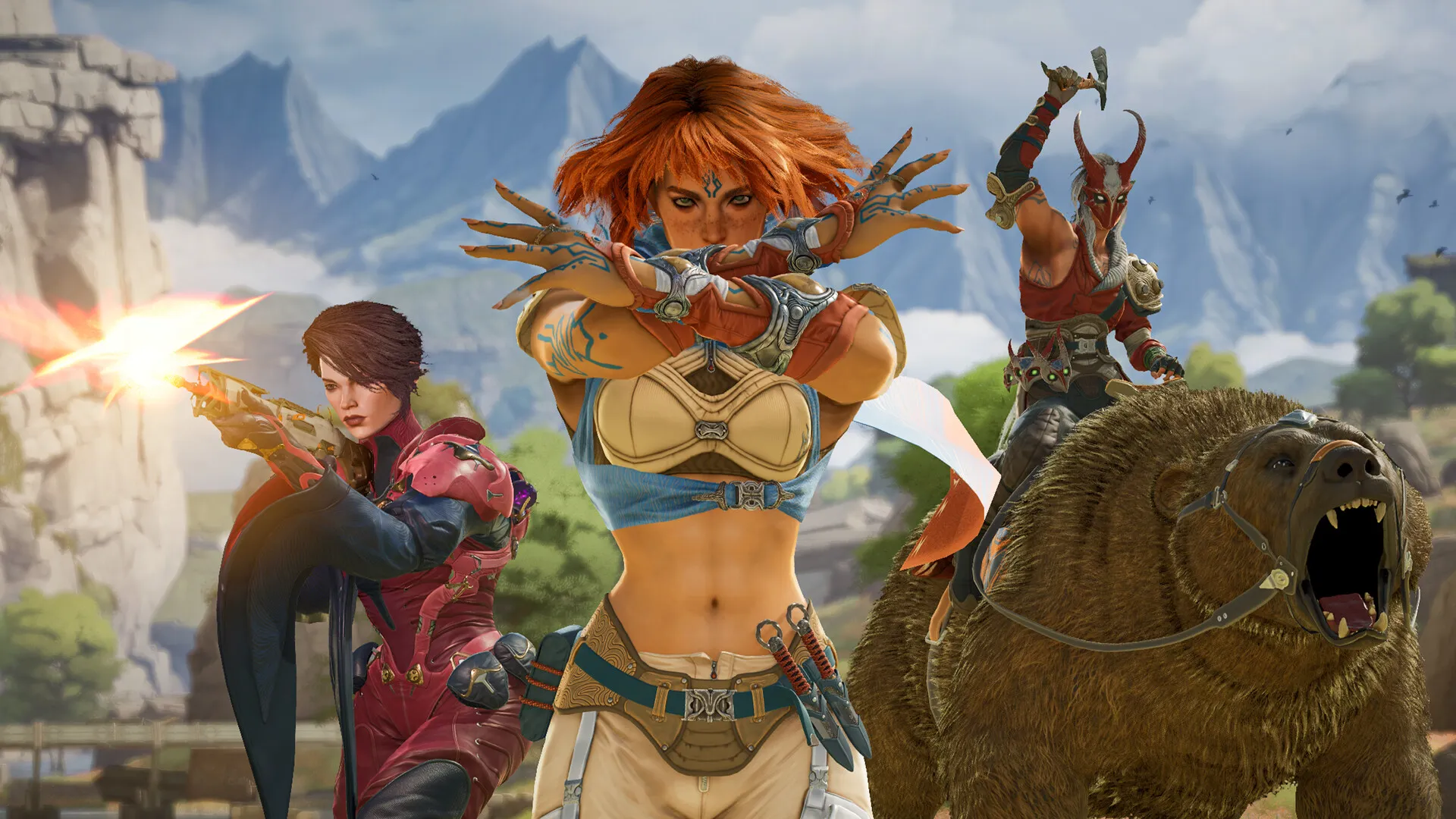

Wildlight Entertainment arrives with Highguard. The debut comes from a team of veterans tied to some of the most famous shooters in the industry. The game frames itself as a “PvP raid shooter.” Its core idea pairs the tactical demands of a team shooter with the scavenging and gearing cadence of a survival experience. You drop in as a three-person squad, balancing home-base defense with the planning required to crack an enemy fortress.
The match loop revolves around the Shieldbreaker, a heavy sword that serves as the key for collapsing the opposing team’s magical defenses. Highguard leans into a high-fantasy worldview while firing industrial-age ballistics through it, creating a battlefield where sorcery and firearms share the same space.
You pick a Warden, and each hero’s ability kit changes how you fight, support, and control space for your teammates. The free-to-play setup is paired with a model that steers clear of expiring battle passes. Highguard pulls multiple competitive ideas into one structure, aiming for players who like objective-driven wins and coordinated execution.
The Rhythms of Conflict
Matches move along a fixed timeline. The opening minute is dedicated to base prep: you fortify with iron, strengthen walls, and guard two small generators alongside the primary Anchor Stone. That start reads like a controlled pause, a short stretch of setup before the match accelerates.
Once the base is set, the squad heads into the wild to locate the Shieldbreaker. This phase plays like a reversed capture-the-flag scenario. One player hauls the massive sword while the other two form a moving defense, turning the route to the enemy dome into a high-stakes race. Delivering the sword to the gates drops the shields and triggers the siege, and the mode then pivots into a bomb-defusal-style structure. Attackers work to destroy generators while defenders swarm and pressure every angle.
If the base holds through the timer, everyone returns home and the cycle begins again, with better loot feeding the next push. That repetition can drag. Some matches stretch to thirty minutes because victory can require multiple successful sieges, and the back-and-forth rhythm slows the pace compared to a standard deathmatch. The emotional peak lands during the carry.
The objective has physical weight, coordination tightens, and a single collapse of the sword carrier can flip momentum in an instant. The reset between rounds acts like a full breath: time to regroup, time to plan, and time to feel the pattern settle in. The downside is predictability. You can see the next phase coming, and that clarity can drain some surprise from the experience.
Firepower and Folklore
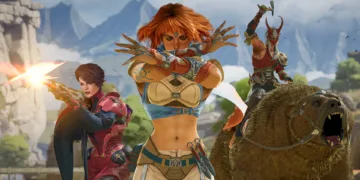
Eight Wardens shape the tactical ceiling. Scarlet can transform a solid wall into a sandy portal, while Redmane focuses on ripping down fortifications through brute force. Those picks matter most during sieges, when a single ability can create a breach, rescue a push, or stall an enemy plan.

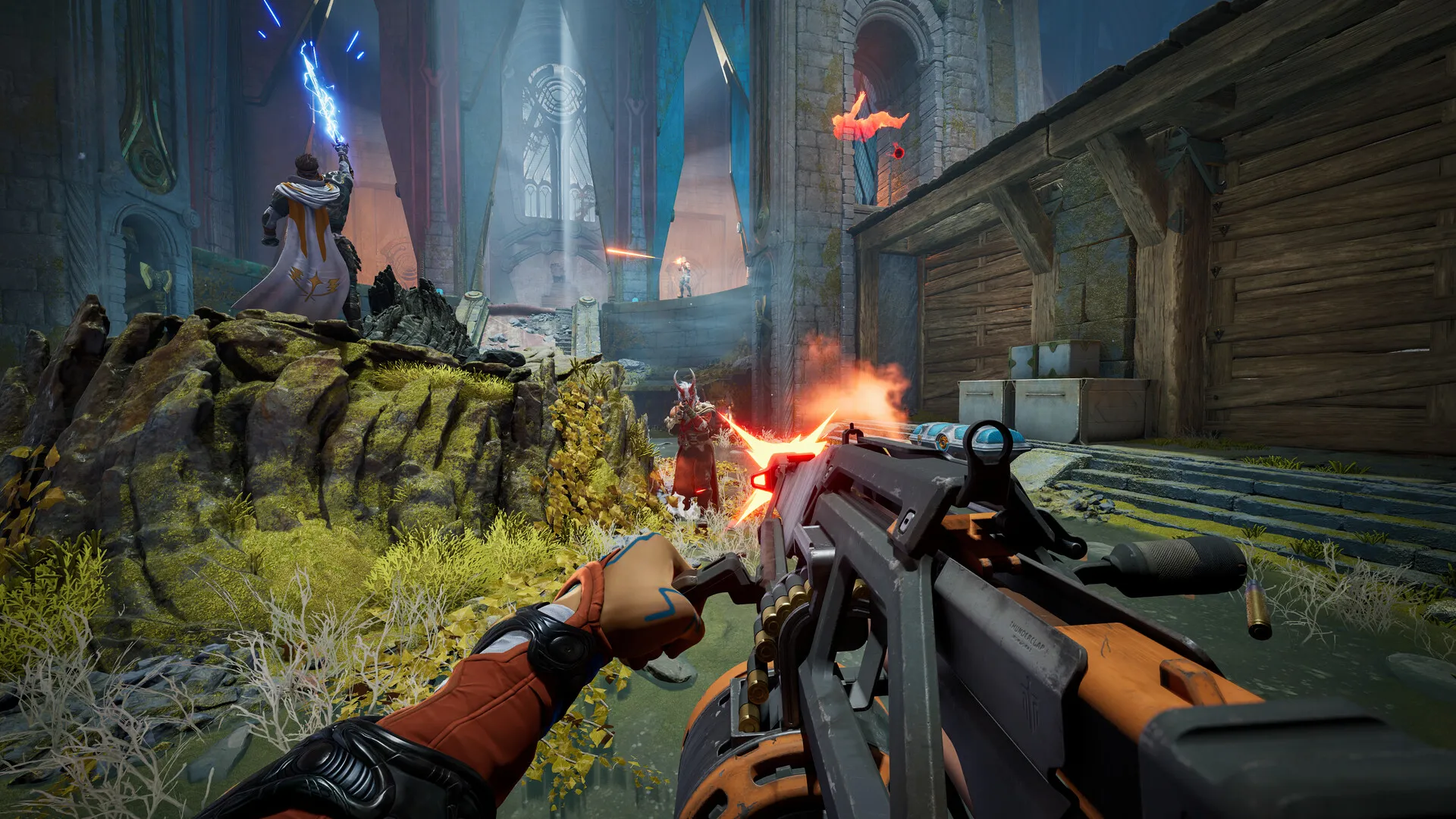
Gunplay stands out as the game’s strongest piece. It feels recognizable to fans of fast competitive shooters, with weapons that carry real heft and crisp animation work. An AK-47 has its own identity beside a magical staff, and the “tacti-cool” style mixes modern military gear with arcane symbols to establish a clear visual language for combat reads.
The armor system is the big friction point. High-tier vests boost health so heavily that firefights can stretch into endurance tests. You can dump an entire magazine into an opponent and still miss the kill. That high time-to-kill demand reshapes the rhythm of combat. Persistence becomes the defining skill, and long sessions can feel exhausting once the fights turn into repeated damage checks.
Abilities still need to lock in with firearms to keep the combat sharp: a pulse helps you locate enemies before you commit to a shot, and smoke gives you the cover needed to disengage or reposition. That link between hero powers and gunplay sits at the center of how Highguard wants its fights to function.
Kinetic Traversal
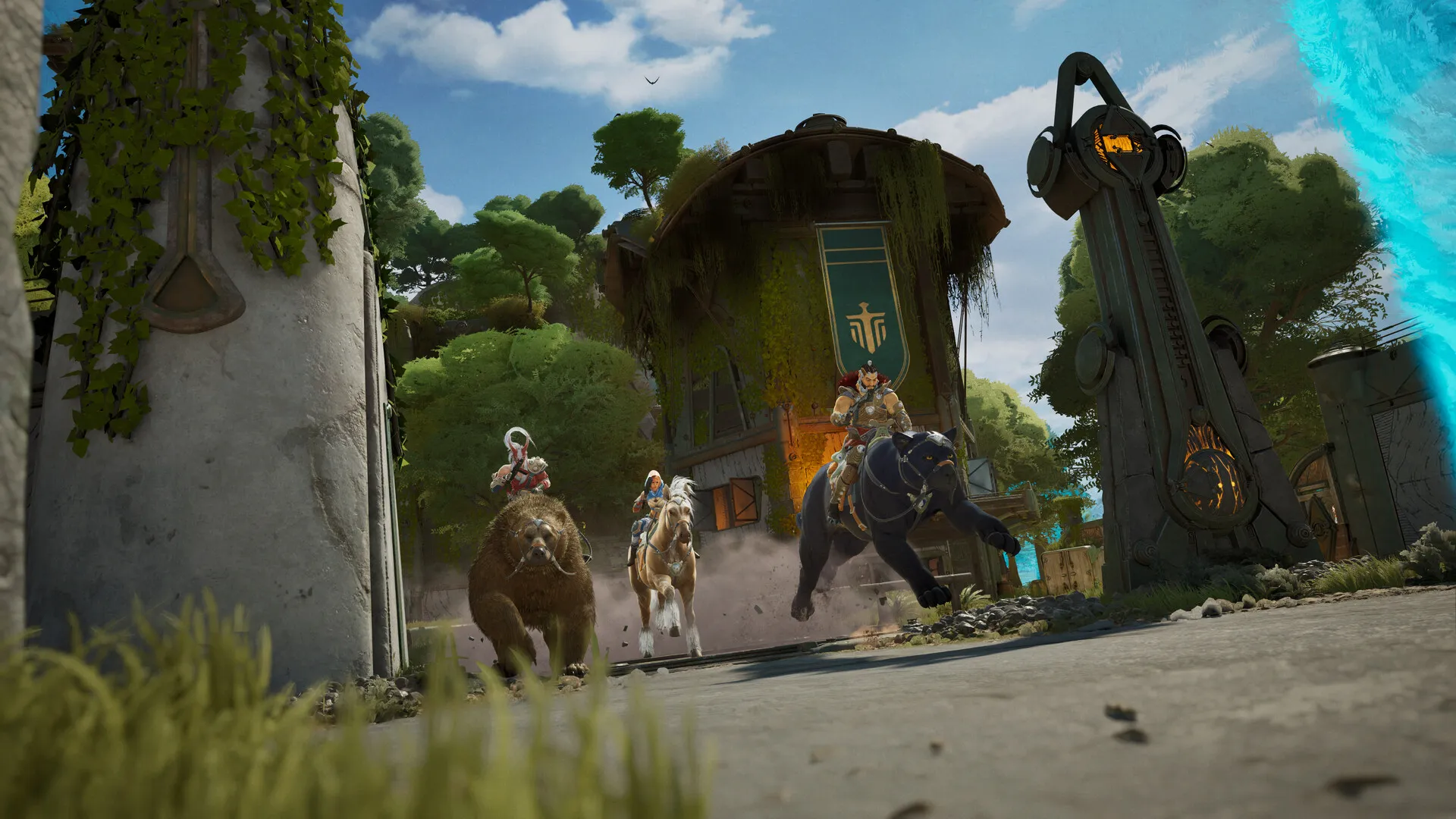
Mounts are one of the game’s cleanest design wins. A quick double tap calls a horse or a bear, and the mount materializes instantly beneath you. The system keeps movement flowing and supports fluid chaining: sprint to a ledge, leap, summon midair, and keep momentum rolling. The decision to remove screen shake while riding also pays off. Galloping stays readable, and you can shoot with accuracy while moving at speed.

These animals matter most during the Shieldbreaker phase. They let you sprint away from an ambush, close the gap on a fleeing carrier, and compress the time spent crossing open ground. A better saddle purchased from a vendor boosts speed, giving the traversal layer its own progression texture during a match.
The result is freedom that makes long objective distances manageable. Movement feels like the most polished system in the game, pushing you toward constant mobility and rewarding players who master the handoff between boots and hooves.
The Scavenger Economy
Highguard forces you to earn your strength through scavenging. Red boxes supply weapons, blue boxes supply armor, and that color split keeps looting readable under pressure. You can also mine Vesper crystals, glowing rocks that act as currency, then spend them at a vendor to buy targeted upgrades.
Gear escalates as matches run. Common weapons climb into Legendary tiers, and even a pistol can gain a fully automatic firing mode at the highest level. That rise creates a strong sense of growth, while also opening a large gap between teams.
Armor permanence makes the economy feel especially sharp: death breaks your armor and sends you back with basic protection. Late-game deaths carry real sting, turning you into a glass cannon facing opponents with gold-tier defenses while you scrape by with minimal safety.
The cost is time. Looting can pull attention away from what many players show up for: the shooting. Minutes go into cracking boxes and mining rocks, and the preparation can feel like work. The match structure expects it, and survival hinges on it.
Scale and Stagnation
The maps follow a traditional three-lane layout, and they are huge. That scale clashes with the 3v3 format. You can roam for minutes without seeing another player, and the tension that defines a shooter fades when the space feels vacant. During the loot phase, the experience can resemble a solo survival routine, with long stretches of movement and resource chasing before contact arrives.
The “Arcane Punk” look has consistency, yet it can blur together. Many locations share similar silhouettes and textures, which weakens the sense of place over repeated matches. The experimental 5v5 mode eases several of these issues.
More players create more encounters, team fights arrive more often, and the world carries a stronger pulse. The 3v3 mode struggles to match that energy, with downtime that stretches too long. Combat balance is present in the lane structure. The map scale fits larger lobbies more naturally. Small teams need more targets for exploration to feel like meaningful pressure instead of empty travel.
Interface and Execution
Highguard runs smoothly on modern hardware, holding a steady frame rate with sharp resolution. Its visuals aim for clarity over technical flex, and the result looks clean. On PS5, the ability to adjust field of view is a welcome option. Controller haptics stay simple, delivering a basic rumble on gunfire without much nuance.
The UI reads well, keeping objectives easy to track. The main irritant comes from hero dialogue. Wardens talk constantly and lean on repeated catchphrases, though the setting to disable this helps restore focus to environmental audio. From a technical standpoint, the game feels polished, with very few bugs and a level of stability that reads like a complete release.
The Review
Highguard
Highguard succeeds as a technical showcase for smooth movement and tactile gunplay. The sensation of leaping from a mount into a slide remains a highlight of the experience. However, the game struggles with its own scale. Large maps often turn matches into lonely scavenger hunts rather than intense raids. While the hero abilities offer strategic depth during base sieges, the surrounding systems feel bloated. It is a competent shooter that lacks a distinct soul to help it stand out in a crowded market. It offers a solid foundation for those seeking a more deliberate, objective based experience.
PROS
- The ability to chain mounts, ziplines, and slides creates a fluid flow through the environment.
- Firearms have a satisfying weight and sound design that rewards precision.
- The Shieldbreaker phase offers a unique twist on objective based multiplayer.
- A free to play model that avoids predatory practices like expiring battle passes.
CONS
- The current 3v3 format leaves the massive environments feeling barren and devoid of tension.
- Gathering resources and mining crystals often feels like a chore that delays the real action.
- The Wardens lack the distinct personality or visual flair found in competing hero shooters.
- Matches can stretch into repetitive cycles that drain the emotional impact of the victory.