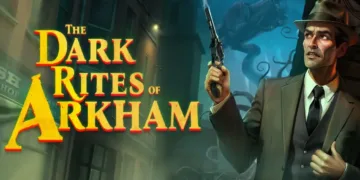



























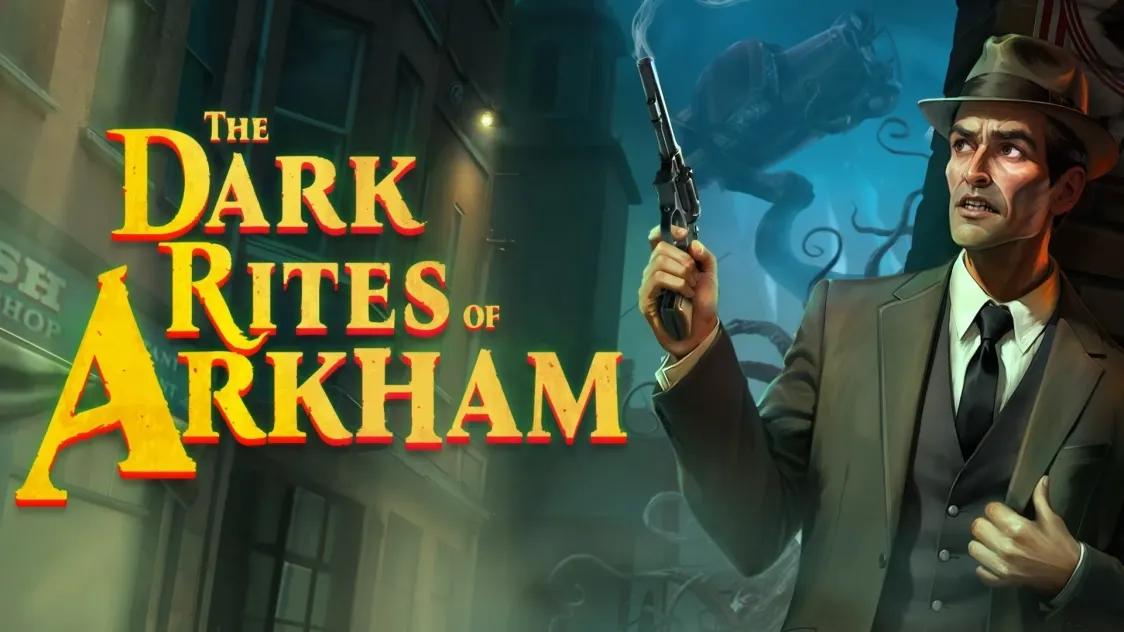

The Dark Rites of Arkham drops you into a rain-slicked 1930s city where crime fiction and supernatural dread share the same wet sidewalks. Your detective arrives at a locked hotel room and immediately meets a scene designed to rattle any sense of order: a decapitated body on the floor, a severed hand nearby that came from somebody else, and a set of strange symbols framed by a scorched patch of flooring that points to ritual intent.
It is a grim opening staged against an Art Deco backdrop, and the setting leans hard into the era’s pressure points. The streets carry the weight of Prohibition and economic struggle, and the mood suggests a place where standard procedures offer no help once the shadows start moving.
That tone does most of the heavy lifting, supported by writing that keeps the occult mystery tight and readable. The investigation moves through a traditional point-and-click interface, and the structure fits the story’s pulp detective energy even as cosmic horror creeps in at the edges. The locked-door puzzle lands early as a strong hook because it adds tension and asks you to chase logic inside a crime that seems to ignore physical rules. Even before the plot opens up, the period texture feels convincing: grime, desperation, and a city stuck between world wars.
Mismatched Partners and Forgotten Lore
The story finds its momentum through a buddy cop pairing built on friction. The lead detective comes across as cynical, and that cynicism reads like armor for personal trauma tied to an earlier case. His partner, Harvey, arrives from a different angle entirely, an academic who knows cults and black magic well enough to treat them as working theories. Their partnership sets the rhythm for the early hours.
The detective keeps returning to tangible clues and concrete timelines. Harvey keeps scanning for signs that the case belongs to older forces. That push and pull gives the mystery a steady current and frames a wider tension between rational law and ancient madness.
The city gains texture through side figures that feel rooted in its myths and its fears, including Salem witches and religious fanatics. The script stays dense, and the game rewards patience for anyone willing to read every document. That commitment to text makes the world feel lived in and old, like you are walking through layers of history instead of a flat set of locations.
The game also understands pacing at the sentence level. Small jokes and sharp remarks show up at the right moments, easing the pressure without deflating the dread. The leads’ personal histories remain tied to the present case, so the stakes keep a human edge. Each major discovery opens the mystery further and sketches the men more clearly, keeping the killer and the investigators linked through the same chain of revelations.
Logical Deduction and Visual Density
Mechanically, The Dark Rites of Arkham sticks to classic point-and-click logic, with problem solving built around careful observation and clean cause-and-effect. Progress comes from using items you find in the environment to overcome obstacles, and the game makes a key choice with inventory design. Items stay separate, and the interface keeps you thinking about how each object fits into the world around you. That approach supports the detective fantasy because it keeps the focus on places, people, and physical context.
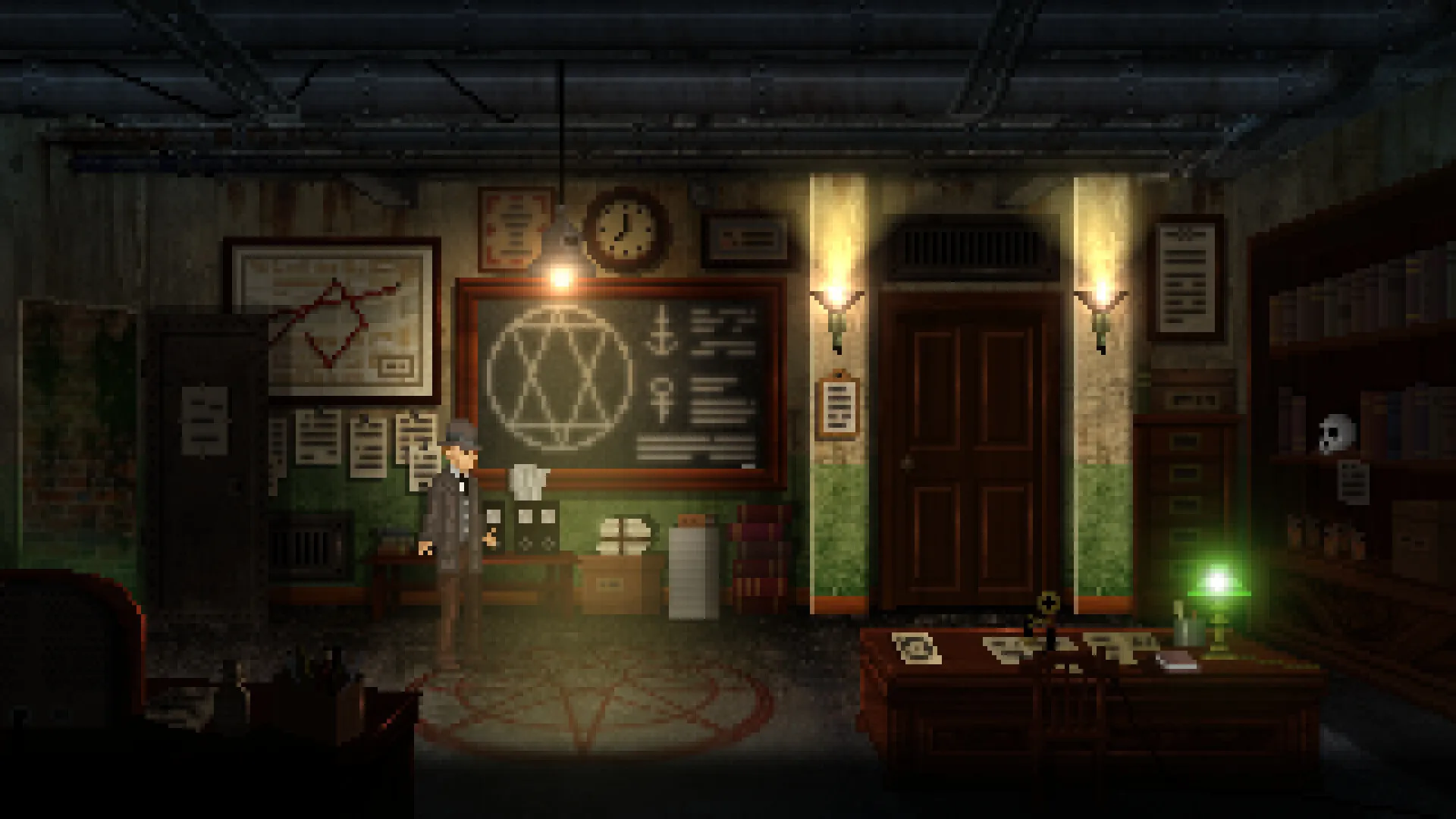
The trade-off shows up in the visuals. The pixel art is packed with detail, and that density can slow you down in ways that feel intentional and occasionally frustrating. Important objects can blend into the scenery, so a moment that should read as simple discovery can turn into a careful scan of the screen.
The game even offers clear examples of that challenge: a green bus parked near a bookshop can hide what you need in plain sight, and a specific box in a basement can demand more attention than you expect. These moments turn pacing into a mechanical issue, since your progress depends on scrutiny as much as deduction.
The world map helps restore forward motion by letting you jump quickly between districts, and new locations appear as the investigation advances. That structure creates steady progress across the city, keeping the case moving even when a single scene asks for slow inspection.
Optional interactions add extra value for players who like to poke at systems. Hidden achievements come from trying items on unexpected people, and those small rewards encourage experimentation inside the genre’s familiar limits. Even as the plot grows more fantastical, the puzzle logic stays grounded, which keeps the investigation feeling like work you can actually do.
The Aesthetic of Art Deco Horror
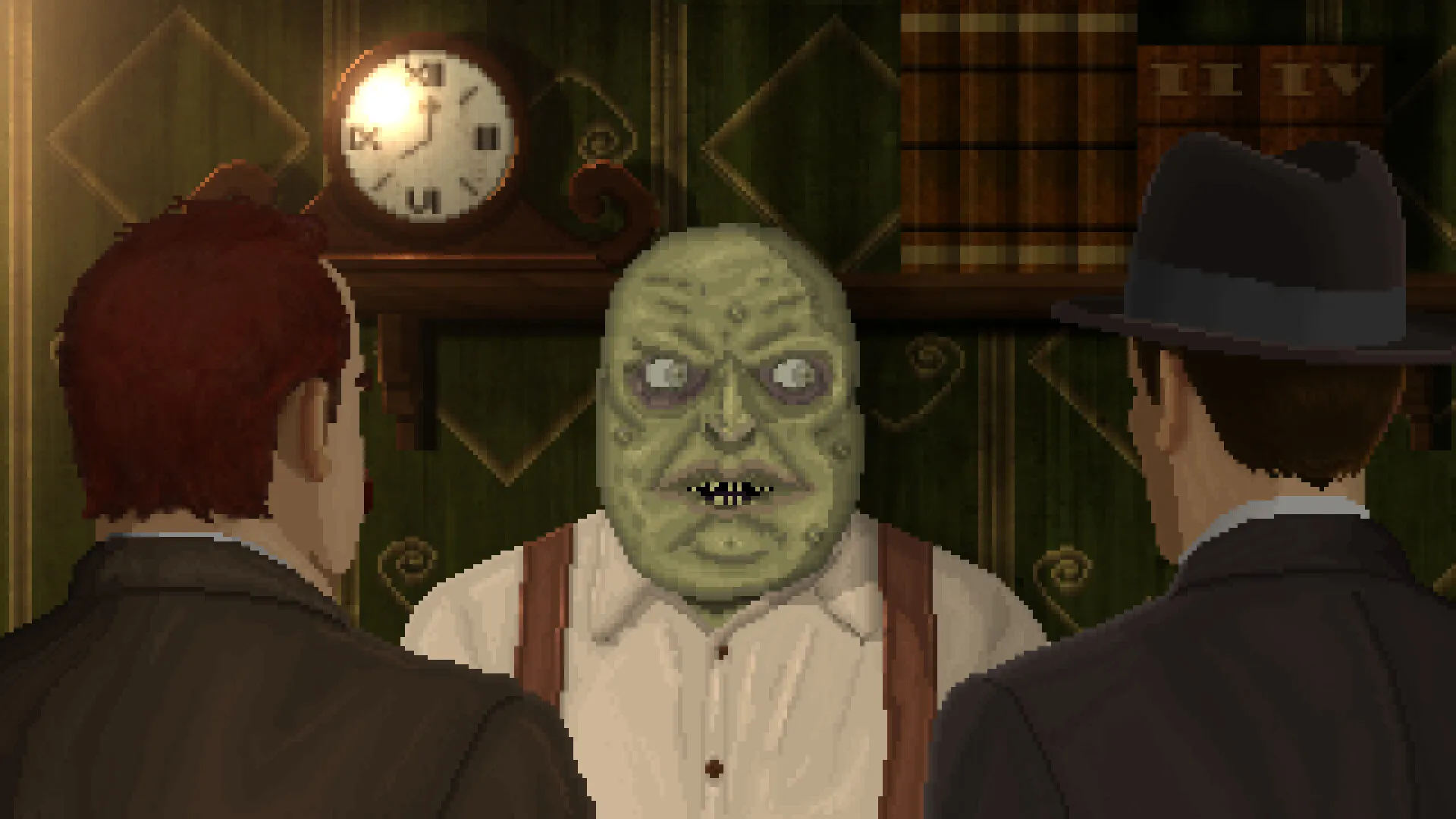
The presentation sells the era with high-quality pixel art that turns the 1930s into something tactile and ominous. Interrogations bring in detailed character portraits, and those close-ups carry a lot of the emotional information: suspicion, strain, calculation, fear. They give real personality to suspects and allies, and they help the story land its quieter beats without needing big set pieces. Art Deco architecture rules both skyline and interior spaces, giving the city a faded elegance that fits the noir mood.
Sound does a lot of narrative work too. A jazz-heavy soundtrack follows you through streets and buildings, echoing the feeling of a period detective film. Small audio touches, like shoes tapping on pavement and the city’s distant noise, keep the world active even in moments where the screen stays still. With no voice acting, the text and music carry the performances, and that choice supports player-driven pacing.
You can read at your speed, sit with a detail, and let the atmosphere build without the game pushing you through a line delivery. From that first hotel room to the final reveal, the style stays consistent, creating a cohesive experience that respects its cinematic and literary roots.
The Review
The Dark Rites of Arkham
The Dark Rites of Arkham is a polished, moody tribute to both noir cinema and Lovecraftian horror. While the pixel hunting can occasionally frustrate and the final act feels abrupt, the strength of its atmosphere and the chemistry between its leads carry the experience. It serves as a testament to the enduring appeal of traditional point-and-click design. This is a journey worth taking for any fan of investigative thrillers or cosmic dread.
PROS
- Atmospheric Art Deco pixel art and jazz soundtrack.
- Engaging "buddy cop" dynamic with deep character backstories.
- Richly detailed world-building and occult lore.
- Logical and rewarding puzzle design.
CONS
- Occasional "pixel hunting" due to high visual density.
- Pacing stumbles toward the end of the narrative.
- Lack of item combination might feel too simple for genre veterans.