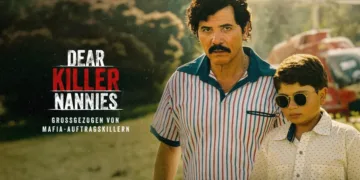






















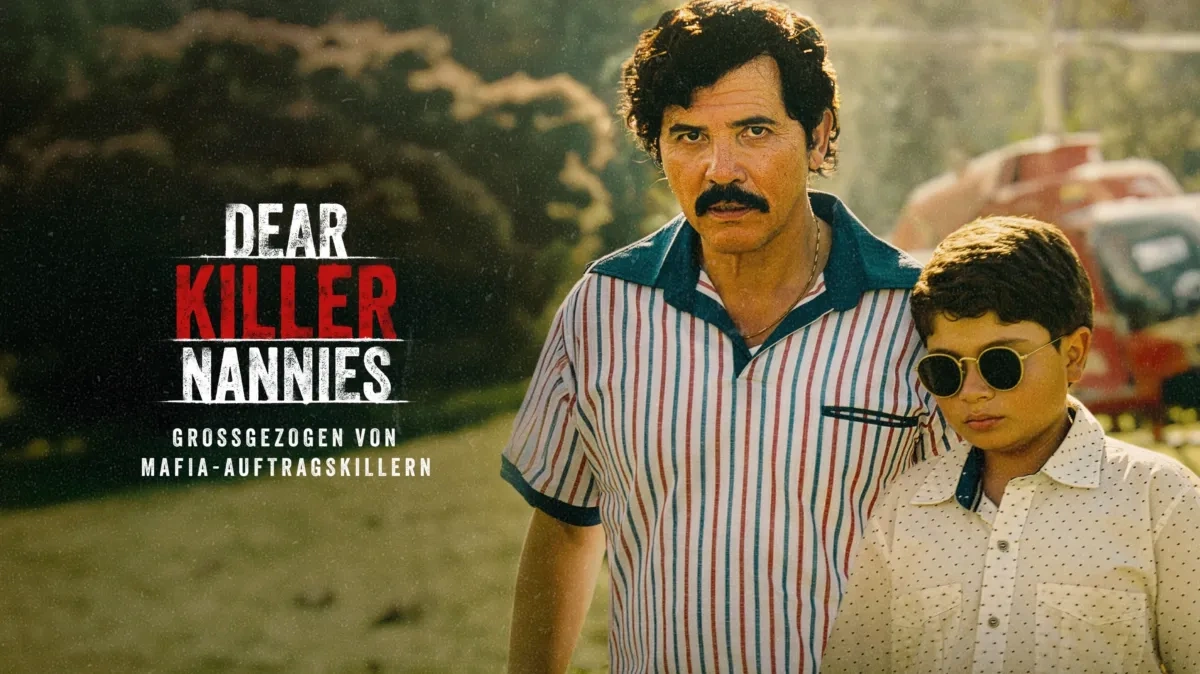

Dear Killer Nannies: Raised by Hitmen takes a familiar stretch of history and views it from inside the house. Many recent series about the Medellín cartel build their drama around operations, police pressure, and public violence. This one keeps its attention on Juan Pablo Escobar’s home life.
Created by Sebastián Ortega, Pablo Farina, and Juan Pablo himself, the series studies what childhood looks like inside a world shaped by immense wealth and routine brutality. Directed by Pablo Fendrik and Felipe Cano Ibañez, it places the viewer inside the homes and tightly watched spaces occupied by the Escobar family during 1984 and 1993.
The drama is framed as a coming of age story shaped by a cruel contradiction. The people assigned to protect the boy are tied to the violence defining the period. First person narration from the real Juan Pablo gives the series a reflective texture, as if memory is trying to sort affection, fear, and control long after the damage has settled in.
Time as a Mirror of Shattered Innocence
The series builds itself around two timelines, using that split to show changes in age, knowledge, and emotional damage. I remember watching cartel dramas years ago that leaned hard on sirens, raids, and piles of confiscated money. This series looks elsewhere. By moving between two periods, it forms a psychological portrait of its lead character. In 1984, Juampi is seven years old and still wrapped in ignorance.
He sees his father as a heroic figure and a congressman. That child’s view creates a chilling charge, because the audience can already sense what he cannot. The arrival of the “nannies” becomes one of the clearest signs of that crack in innocence. These caretakers are trained assassins.
In 1993, the atmosphere tightens and darkens. The sixteen year old heir is running from Medellín to Bogotá and carrying the weight that follows his father’s death. This section examines what it means to lose control over your own life before you have had a chance to shape it. He becomes a symbolic successor in a war he never chose. Juan Pablo’s narration plays like a reflective account filtered through pain and distance. It creates tension between remembered experience and the dramatized version unfolding on screen.
That tension makes the series ask hard questions about memory itself, especially memory formed in childhood and scarred by trauma. The transitions between periods feel fluid in a way that resembles the workings of recollection. One image glows with the bright sun of 1984. The next is cold, hurried, and gray with the panic of 1993. The structure keeps the boy visible inside the older figure, and it lets the older figure haunt the child we are watching.
The Architecture of the Golden Cage
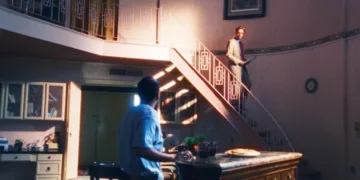
This production has a sharp feel for confinement, both physical and emotional. It studies a household where security comes from dangerous men, and where comfort is tied to threat from the start. The “nannies” take on the duties of substitute family members. Tina, El Dorado, Kiss, and Lagaña fill space left empty by a father frequently away on business.

One scene involving an injured gazelle and a Jeep lingers in the mind. It captures the way violence is taught as a reflex, almost as a household lesson. Rodri functions as a nearer companion, someone closer to Juampi in age and energy, and he links the child’s world to the cartel’s adult machinery.
The image of the golden cage fits the series well. Juampi grows up surrounded by privilege, surveillance, and isolation. He is cut off from life outside the cartel and separated from children who live beyond that circle. The result is social estrangement. He exists inside a sealed environment where violence often arrives dressed as care. When he visits his father’s office, he watches people ask Pablo Escobar for help and call him Robin Hood. For a child, that creates a warped moral picture.
Gratitude from the poor sits beside armed protection and constant fear. The series is very attentive to the confusion this creates. The hitmen offer tenderness and threat in the same breath. They care for him, and they kill for a living. Growing up under that kind of attention leaves deep marks on a child. One of the show’s smartest moves is its refusal to chase the usual crime saga rhythms. It stays indoors, close to the house, and shows cartel power through inheritance, fear, and the emotional cost paid by someone born inside its reach.
The Visual Language of Internal Chaos
Pablo Fendrik and Felipe Cano Ibañez rely on clear stylistic choices to carry the emotional force of the story. Visual metaphors recur throughout the series. Water and fire appear as signs of calm, rupture, and danger arriving without warning. The first image in the 1984 material establishes the child’s perspective with real precision.

The world is framed from lower angles, keeping us close to Juampi’s scale and field of vision. Tight compositions strengthen the feeling of surveillance and enclosure. The effect is claustrophobic. The Escobar estate feels large in material terms and very small in emotional ones.
The series is also strong at conveying psychological damage. Nightmares and flashbacks are used to register trauma that will not stay in the past. Physical symptoms show how deeply violence enters the body. The show presents adultification with painful directness. A seven year old is made to absorb responsibilities and horrors far beyond his years. The half hour episode structure helps this material. The pacing feels urgent, and each episode lands like a broken piece of memory.
That rhythm gave me the feeling I sometimes get from intimate independent films that trust character and sensation more than event mechanics. Historical milestones remain present, though they sit in the background like distant pressure. That choice keeps the emphasis on private harm. The sound design works in the same direction. Natural sounds blend with the metallic click of guns, pulling the viewer into the child’s inner world and marking the collapse of any ordinary version of childhood.
Living through the Eyes of Others
The ensemble gives the series emotional stability. Miguel Tamayo is excellent as young Juampi, carrying a vulnerability that makes each intrusion of violence feel harsher. Janer Villareal has a different task as the teenage Juan. He plays someone hollowed out by circumstance, a figure caught in a conflict that has already chosen his place for him. The connection between the two performances is persuasive, and the series makes you accept them as the same person at different points in life.
John Leguizamo brings Pablo Escobar to the screen through precise behavior and detail. He captures the split between public warmth and private horror. The series shows him as an affectionate father and as a man who burns someone alive. Leguizamo keeps that contradiction grounded, avoiding the broad treatment that has shaped other portrayals of Escobar. Laura Rodríguez gives Victoria Henao a steady, durable presence that fits the survival logic of the household.
Carmen Electra appears as Margarete, and the uncertainty around her link to the family gives her scenes added strain. The “nannies” work best as a group presence. They are unstable, protective, and deeply unfit for the role they occupy. That idea sits at the center of the series. These are the people shaping a child’s sense of safety. The casting helps the show stay fixed on the psychic damage of that arrangement and keeps the glamour of cartel mythology at a distance. What remains is the experience named in the title itself: a child raised by hitmen.
Dear Killer Nannies premiered on April 1, 2026, as a gripping exploration of the domestic life of Juan Pablo Escobar. The series is currently available for streaming on Hulu and Disney+ in the United States, as well as on Disney+ in international territories. As of today, April 22, 2026, the complete first season has been released, allowing viewers to witness the complex coming of age story of a child raised within the confines of the Medellín cartel. The production offers a rare glimpse into the “golden cage” where the son of a notorious kingpin found care and instruction from professional hitmen while remaining largely isolated from the outside world.
Where to Watch Dear Killer Nannies Online


Full Credits
Title: Dear Killer Nannies
Distributor: Hulu, Disney+
Release date: April 1, 2026
Rating: TV-MA
Running time: 35 minutes
Director: Pablo Fendrik, Felipe Cano Ibañez
Writers: Alejandro Quesada, Ana María Parra, Martín Méndez, Sebastián Ortega, Pablo Farina
Producers and Executive Producers: Sebastián Ortega, John Leguizamo, Pablo Culell, Leonardo Aranguibel, Roxana de Candia, Florencia Efron, Julieta Fernandez, Jerome Merle
Cast: John Leguizamo, Janer Villareal, Miguel Tamayo, Miguel Ángel García, Laura Rodríguez, Juanita Molina, Rafael Zea, Danharry Colorado, Carmen Electra, Andrés Delgado
Director of Photography (Cinematographer): Pablo Bernst
Editors: Guille Gatti, Francisco Freixá
Composer: Julio Reyes Copello
The Review
Dear Killer Nannies
Dear Killer Nannies: Raised by Hitmen succeeds by trading typical gunfire for the quiet terror of the nursery. It effectively uses a dual timeline to map the psychological erosion of a child surrounded by wealth and weaponry. While the narrative occasionally feels fragmented, the emotional honesty of the perspective provides a rare, grounded look at the human cost of the cartel era. It stands as a thoughtful exploration of adultification and inherited trauma.
PROS
- A grounded domestic focus that avoids glorifying violence.
- John Leguizamo delivers a nuanced, dual performance.
- Sharp visual metaphors involving water and fire.
- Effective portrayal of the psychological impact of trauma.
CONS
- The jumps between timelines occasionally disrupt the narrative flow.
- Historical events stay on the surface without deep interrogation.
- The teenage version of the protagonist lacks a distinct personality.