

























![Kingdom Hearts Collection [I-III] Review](https://gazettely.com/wp-content/uploads/2026/10/Kingdom-Hearts-Collection-I-III-1-360x180.webp "Kingdom Hearts Collection [I-III] Review: KHII Holds Steady as Newer Entries Fluctuate 37")





The strangest thing about Euphoria Season 3 is that its return once felt doubtful, then impossible, then oddly beside the point. Four years is a long absence for any series. It is an eternity for one built on youth, immediacy, and the unstable chemistry of teenage life. By the time these new episodes arrive, the delay has already become part of the text. You watch with a split awareness: curiosity about where these characters have gone, and suspicion that the show itself may no longer know what it was built to do.
Season 3 answers that problem with a leap forward. Five years have passed. High school is gone. The characters are older, harsher, and scattered across adulthood in forms that range from plausible to feverishly contrived. Rue is still the center, yet her world is now shaped by debt, trafficking, spiritual confusion, and the threat of sudden violence. Around her, the series widens its field toward sex, money, faith, labor, self-invention, and the myth of America as a place where a new identity can be purchased, performed, or stolen.
The surfaces remain immaculate. The show still glows. It still knows how to place a face in light and make misery look hypnotic. The real question is simpler. Once the lockers, hallways, and teenage claustrophobia are stripped away, what is Euphoria actually about?
The Leap Forward and the Loss of Containment
The five-year jump is the season’s boldest decision, and nearly every strength or weakness flows from it. Earlier seasons depended on the architecture of high school. That setting gave the series shape. It forced collisions. It kept characters in circulation with one another. It made petty cruelty, erotic obsession, and emotional catastrophe feel immediate because adolescence has its own warped scale. A hallway slight can feel apocalyptic at seventeen. Euphoria understood that instinctively, even during its messier stretches.
Season 3 moves into adult terrain with startling speed. Marriages are being planned. Debts have swollen into life-threatening burdens. Jobs appear half-legitimate at best. People drift into influencer management, Hollywood writing rooms, adult content economies, strip clubs, and cross-border criminal work. The range is large. The issue is not ambition. The issue is dramatic compression. The season often asks viewers to accept that these people have transformed in major ways off-screen, then tries to fill in the blanks after the fact.
That creates a peculiar kind of whiplash. Characters reappear as if they have been shoved several chapters ahead in their own biographies. The show treats that dislocation as part of its new mood, yet it does not always dramatize the changes with enough patience. It tells us where people have landed. It is less persuasive about how they got there.
What emerges is a series trying to become several things at once. The teen melodrama has given way to crime plotting, social satire, spiritual inquiry, and a kind of American nightmare western. At its best, that shift gives the season a jagged energy. At its weakest, it leaves the show oddly unmoored. The old frame contained the excess. Without it, the excess floats.
Euphoria has room to move now. It has fewer reasons to hold together.
Rue Still Holds the Center
Rue remains the closest thing the series has to a stable point of view, which says a great deal about both the character and Zendaya’s grip on the material. Season 3 pushes Rue from addiction drama into survival thriller. She is still caught in Laurie’s orbit, still carrying debt, still making choices from inside systems designed to erase choice. Her new life involves trafficking, border runs, swallowed baggies, dangerous errands, and the constant threat that one mistake could turn her body into a crime scene.
That shift works because it extends the logic of Rue’s past rather than replacing it. She has always lived one bad decision away from catastrophe. Season 3 simply gives catastrophe a larger map. Her struggle is no longer framed only as relapse versus sobriety. It is about staying alive inside a machinery of coercion, cash, and fear. In several scenes, the series makes that brutally literal. Rue’s body is now part of the business model.
The season also threads faith through her story. Rue’s interest in Christianity and surrender suggests a search for order after years of psychic wreckage. She seems drawn to the promise that a person can submit to something larger and start again. It is one of the season’s most fertile ideas, partly because it connects recovery to longing rather than self-help rhetoric. Yet the writing does not always trust the idea enough to sit with it. Faith often hovers around Rue as a concept, a mood, a line of inquiry. It has force. It rarely has depth.
Zendaya does a remarkable amount with that tension. She gives Rue quick wit, visible fatigue, panic masked as bravado, and a bruised intelligence that keeps scanning for an exit. Even when the show leans too hard on narration, explaining what sharper structure might have revealed on its own, she gives those passages momentum. She can make exposition feel like confession, and confession feel like strategy.
That remains her great value to the series. Zendaya turns abstraction into human pressure. When Season 3 feels urgent, it is often because she supplies the urgency herself.
An Ensemble Pulled Back Into Orbit
Once the shared social world of adolescence disappears, the ensemble has a harder time justifying its own shape. That is the central structural problem of Season 3, and the cast can only solve part of it.
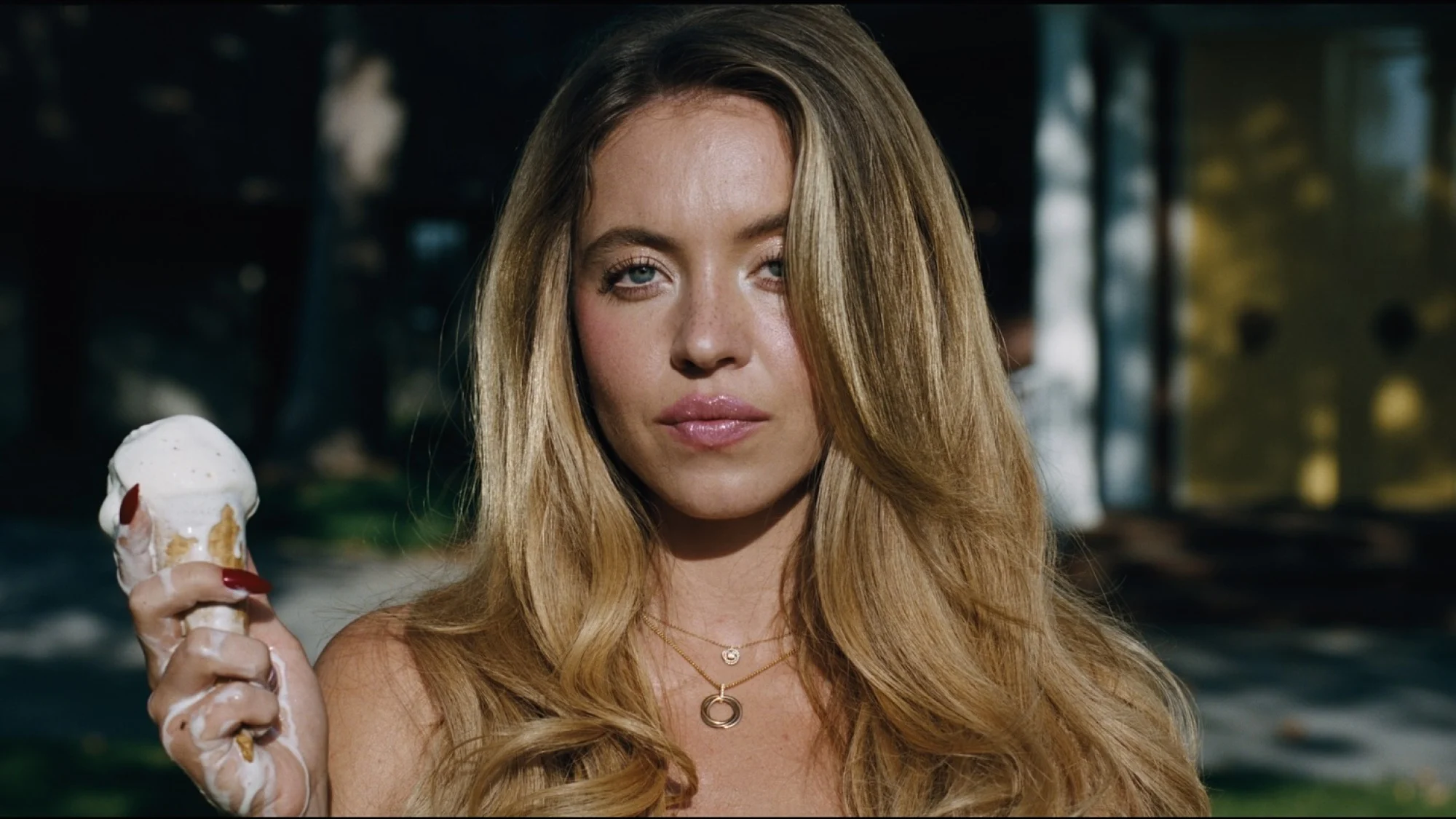
Nate and Cassie are still locked in a relationship powered by image, control, fantasy, and humiliation. The suburban setting gives their dynamic a fresh wrapper, all manicured surfaces and expensive bad taste, as if the series has dropped them into a cracked vision of adult American prosperity. Their engagement, financial strain, wedding mania, and disputes around Cassie’s sexual self-display turn them into a bitter joke about couplehood as performance. There is real bite in that. There is also a lingering problem with Nate’s characterization. His altered softness, or at least his modified public face, is not fully persuasive. The show seems to want evolution without paying the full dramatic cost of earning it.
Cassie, by contrast, makes a grim kind of sense. She has always been vulnerable to self-invention through desirability. Season 3 pushes that trait into a life organized around visibility, commodified sexuality, and romantic delusion. Sydney Sweeney plays her with a precise mix of neediness, vanity, panic, and wounded insistence.
Maddy fits the new world on paper. Influencer culture, image management, and professionalized surface are natural extensions of the show’s long-standing interests. Yet her emotional role feels thinner. Much of her presence still depends on damage carried from the past, and the season does not always find a new dramatic engine for her.
Lexi fares better. Her Hollywood trajectory tracks with the observant, quietly authorial role she held before. She feels like one of the few characters whose adult life follows a discernible line from adolescence into work. There is something reassuring in that continuity.
Jules is a tougher case. By steering her into a sugar-baby storyline, the season folds her into its larger fixation on transactional intimacy. That may fit its themes, yet it also flattens something that once felt singular in her connection with Rue. What had been emotionally tender, volatile, and specific now risks becoming another entry in the show’s interest in bodies, money, and exchange.
The cast keeps these people watchable. The writing struggles harder to keep them organically connected. Too often, they feel like figures from separate series meeting by contractual arrangement.
Beauty, Shock, and an Unsteady Point of View
On a purely visual level, Euphoria remains formidable. The season knows how to weaponize scale and texture. Desert horizons, roadside dread, border crossings, strip-club interiors, suburban mansions, and cheap rooms all arrive with a polished menace. Every frame appears carefully composed for myth, for performance, for the idea that America is a stage set built from lust, money, and heat damage. The photography is sumptuous. Even the ugliness is curated.
The atmosphere has changed, though. The earlier seasons had a narcotic pulse, helped in no small part by a musical identity that could push scenes into a dream state. Season 3 feels colder. The intoxication has drained out. What remains is emptier, flatter, and in some ways more severe.
That tonal shift might have opened a richer dramatic lane if the show were less dependent on shock as a delivery system. It still reaches for grotesque imagery, sexual provocation, sudden violence, and forms of humiliation pitched to produce either nervous laughter or recoil. In the high school years, those tactics had a clearer relation to adolescent extremity. Here, they often feel detached from inner life. The series still knows how to provoke. It is less certain about what the provocation is for.
That matters because Season 3 keeps gesturing toward large subjects. America as reinvention myth and moral sinkhole. Faith as surrender. Sex as labor. Gendered exploitation. Empty suburban aspiration. Drug economies that consume the vulnerable and reward the monstrous. These are potent themes. The show raises them constantly. It rarely sharpens them into a sustained argument.
There is also a nagging uncertainty about point of view. Season 3 seems drawn to the language of critique, especially around the treatment of women as commodities, fantasies, and casualties. Yet it remains fascinated by the same imagery it appears to question. The camera lingers. The script circles. The effect is slippery. Is the show exposing a culture of exploitation, or dressing it in prestige lighting and asking to be admired for noticing it?
That tension leaves Season 3 in an awkward place. It is technically assured, often mesmerizing in isolated scenes, and led by performers who understand the assignment better than the scripts do. It is also unstable in its storytelling, hazy in its convictions, and increasingly unsure how to turn sensation into meaning. For long stretches, Euphoria still looks like television’s most intoxicating train wreck. This year, the wreckage is easier to see than the route.
Created by Sam Levinson and based on the Israeli miniseries of the same name, Euphoria is a visually striking drama that explores the complex lives of high school students as they navigate drug addiction, identity, trauma, and social media. The series originally premiered on June 16, 2019, and quickly became a cultural phenomenon, earning critical acclaim and multiple Emmy Awards for its lead star, Zendaya. After a significant hiatus, the highly anticipated third season premiered yesterday, April 12, 2026, introducing a time jump that follows the characters into their post-high school lives. Viewers can watch the series exclusively on HBO and its streaming platform, Max, with new episodes releasing weekly on Sunday nights.
Where to Watch Euphoria Season 3 Online






Full Credits
Distributor: HBO, HBO Max (now Max)
Release date: June 16, 2019 (Series Premiere), April 12, 2026 (Season 3 Premiere)
Rating: TV-MA
Running time: 48–65 minutes
Director: Sam Levinson, Augustine Frizzell, Jennifer Morrison, Pippa Bianco
Writers: Sam Levinson, Ron Leshem, Daphna Levin
Producers and Executive Producers: Sam Levinson, Kevin Turen, Ravi Nandan, Drake, Adel “Future” Nur, Ron Leshem, Daphna Levin, Hadas Mozes Lichtenstein, Gary Lennon, Mirit Toovi, Tmira Yardeni, Yoram Mokadi, Jim Kleverweis, Zendaya, Will Greenfield, Ashley Levinson, Harrison Kreiss
Cast: Zendaya, Hunter Schafer, Sydney Sweeney, Jacob Elordi, Alexa Demie, Maude Apatow, Colman Domingo, Eric Dane, Storm Reid, Nika King, Austin Abrams, Dominic Fike, Adewale Akinnuoye-Agbaje
Director of Photography (Cinematographer): Marcell Rév, Drew Daniels, Adam Newport-Berra, André Chemetoff, Rina Yang
Editors: Julio C. Perez IV, Laura Zempel, Harry Yoon, Aaron I. Butler, Darrin Navarro
Composer: Labrinth
The Review
Euphoria Season 3
Euphoria Season 3 still has visual force, star power, and flashes of sharp character work, especially through Zendaya. Yet its time jump, scattered ensemble, and heavy reliance on shock leave the season searching for a firmer dramatic spine. It remains watchable, often striking, and frequently frustrating.
PROS
- Zendaya keeps Rue gripping
- Lush, high-end visual design
- Strong mood and atmosphere
- Sydney Sweeney gets rich material
- Bold shift in genre
CONS
- Time jump feels undercooked
- Character links feel forced
- Shock often lacks purpose
- Themes stay frustratingly thin
- Pacing drifts too often







