
























![Kingdom Hearts Collection [I-III] Review](https://gazettely.com/wp-content/uploads/2026/10/Kingdom-Hearts-Collection-I-III-1-360x180.webp "Kingdom Hearts Collection [I-III] Review: KHII Holds Steady as Newer Entries Fluctuate 37")



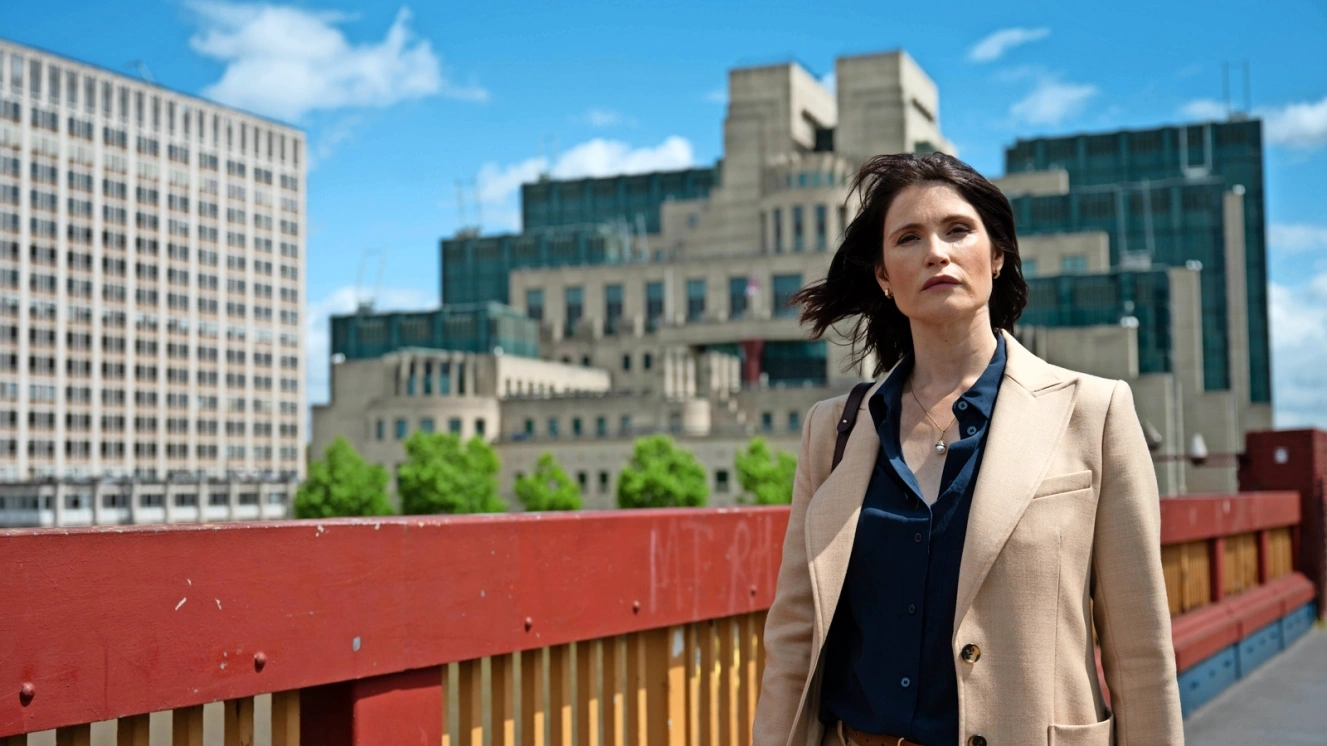

ITV steps into the packed field of British espionage with Secret Service, a five-part adaptation of the 2019 novel by news anchor Tom Bradby, co-written with Jemma Kennedy. The story opens with a high-risk MI6 operation in Malta, where surveillance of a Russian oligarch’s nanny leads to a severe discovery. A senior mole is sitting inside the British Cabinet and working as a direct Kremlin asset. That revelation sends the drama back and forth between the Mediterranean coast and the hushed, wood-paneled corridors of Whitehall.
Kate Henderson, played by Gemma Arterton, stands inside this gathering crisis. She is a senior MI6 officer assigned to identify the traitor while handling the pressures of a home life already close to boiling point. The threat grows sharper through a parallel political emergency.
With the Prime Minister preparing to resign, a brutal leadership contest begins, turning every ambitious politician into a possible suspect. The series tries to root its international intrigue in the plain, frequently dull mechanics of British governance and family survival. It wants to capture the nervous mood of a country whose security feels increasingly permeable.
The Architecture of Betrayal
The series functions mainly as a political whodunnit. The hunt for the mole drives the plot, though the five-hour runtime occasionally stretches that mystery close to snapping. Some passages feel thin in tension, yet the question of identity remains sturdy enough to keep the episodes moving.
Many modern spy dramas use quick banter or cynical humor to release pressure. Secret Service keeps its jaw clenched. It presents itself as a serious drama about serious consequences. That sternness is a deliberate stylistic decision, pointing the focus toward national security rather than genre playfulness.
Much of the narrative is built around the two sides of Kate Henderson’s life. We see her dealing with breakfast-table stress and teenage rebellion, then shifting into her work as a cold-blooded agent who keeps a handgun in the bedroom safe. The script tries to bind those halves together, suggesting that running a household and running an agent require related forms of judgment, patience, and control. The domestic material sometimes feels like a required ingredient, yet it gives the show a grounded counterweight to the deception unfolding at the office.
The political commentary is direct. The show engages modern fears about Russian interference in Western democratic systems. Characters often deliver “state of the nation” remarks, usually tied to a cynical belief that British politics has been poisoned.
This comes through most clearly in Ryan Walker, a populist Foreign Secretary who relies on inflammatory rhetoric. The plot studies how such figures can be manipulated or compromised, folding current political habits into the structure of a traditional thriller. It asks if democracy’s greatest danger comes from a foreign enemy or from institutional rot already working inside the walls.
Players in the Corridors of Power
Gemma Arterton carries the series through a performance built on physical and emotional fatigue. She avoids the easy image of the invincible super-spy and gives Kate a tenacity shaped by duty and quiet, simmering anger. Her Kate Henderson becomes a maverick because the system above her starts to break down. Arterton makes the double life feel believable, even during moments where the script leans into familiar action-heroine patterns.

The political sphere is filled with opposing temperaments. Mark Stanley plays Ryan Walker as a blunt, volatile Northerner whose populist instincts make him an obvious suspect. He is loud, visible, and openly threatening. Amaka Okafor’s Imogen Conrad brings a calmer and sharper presence. As Home Secretary, she gives the government scenes a more controlled intelligence. The friction between them creates a credible picture of a government in transition, where ambition can blur any reliable sense of loyalty.
The intelligence network is held in place by Roger Allam as Sir Alan Brabazon. Allam can suggest a lifetime of secrets with one tired glance. He fits the terse head-spook archetype with ease, giving the department a sense of steadiness while it comes under attack. Rafe Spall gives solid support as Kate’s husband, Stuart. The character has a function beyond domestic framing. As a Whitehall advisor, Stuart’s own ambitions create a real conflict of interest, tightening the pressure inside their marriage.
The use of real ITV news figures, including Robert Peston and Susanna Reid, is a more debatable creative move. The intent is clear: these appearances are meant to lend authenticity and flavor to the show’s political reporting. In practice, the cameos often distract. Familiar journalists grilling fictional characters can weaken the drama’s spell, reminding the viewer of the production’s corporate connections rather than deepening the reality of the story.
Directing the Cold War Aesthetic
Director James Marsh gives the production a clear visual language. The Malta sequences have style, using natural light and open spaces to create scale. The London scenes carry a more routine, almost claustrophobic look. The camera sits with the grey stone of government buildings and the tight interiors of surveillance vans, reinforcing the idea that espionage often means dull, repetitive work carried out under extreme pressure.
The pacing is uneven. The early episodes move confidently, setting up the stakes and the main players with efficiency. The middle chapters sometimes seem to trudge toward the finish line, with too many scenes built around characters staring hard at computer monitors.
The dependence on text messages and digital screens to deliver key plot information may reflect modern intelligence work, yet it limits the visual storytelling. It is hard to sustain cinematic tension when a major development arrives as a line of text on a smartphone.
The action, when it arrives, is handled with professional control. The murders and gunfights avoid heavy stylization, which suits the show’s somber tone. They feel like abrupt, violent interruptions inside a bureaucratic process. The production design supports that grounded approach. The sensible car coats and specific loafers worn by the political class feel lived-in and accurate. The depictions of Downing Street and the SIS building resist excess glamour, favoring a texture aligned with the British civil service.
The Familiarity of the Fold
Secret Service often comes close to the generic. It uses many standard spy-thriller devices, including the hidden mole and the secret safe in the wardrobe. Some scenes feel pulled from a familiar manual of espionage plotting. Still, the show commits to those devices with enough discipline to stay engaging. Its focus on the meeting point between domestic pressure and high-stakes intelligence gives it a workable hook, handled here with a bracing lack of sentimentality.
The series tries to claim space in a television field already crowded with female-led espionage thrillers. Its identity comes through its commitment to plain, unvarnished realism. The mystery’s resolution feels dutiful. It supplies answers that fit the preceding five hours, even if the dramatic force is somewhat muted. The payoff is earned, leaving behind the exhausted feeling of the profession rather than any clean sense of victory.
The show reflects a current industry appetite for serialized political mysteries that echo real headlines. It feels sharply tied to its moment, catching a particular strain of British political instability. Its narrative structure follows known paths, yet it delivers a sturdy, well-acted study of the cost of secrecy. In Westminster, the most dangerous assets may be the people convinced they are doing the right thing for the wrong reasons.
Secret Service premiered on April 27, 2026, as a cornerstone of ITV’s spring drama lineup. The five-part series, which launched with back-to-back episodes on Monday and Tuesday nights, is currently available for streaming in its entirety on ITVX. Centered on a high-stakes hunt for a Kremlin asset within the British Cabinet, the show has quickly become a standout in the political thriller genre, blending domestic drama with international espionage.
Full Credits
Title: Secret Service
Distributor: ITV, ITVX, All3Media International
Release date: April 27, 2026
Rating: TV-MA
Running time: 60 minutes
Director: James Marsh, Farren Blackburn
Writers: Tom Bradby, Jemma Kennedy
Producers and Executive Producers: Gail Egan, Andrea Calderwood, Tom Bradby, Chloe Sizer, Huw Kennair Jones
Cast: Gemma Arterton, Rafe Spall, Mark Stanley, Amaka Okafor, Rochenda Sandall, Alex Kingston, Roger Allam, Khalid Abdalla, Avi Nash, Aoife Hinds, Steven Elder
Director of Photography (Cinematographer): Adriano Goldman
Editors: Jinx Godfrey
Composer: Dickon Hinchliffe
The Review
Secret Service
Secret Service is a disciplined, if somewhat conventional, addition to the British espionage canon. It succeeds by grounding high-level geopolitical anxiety in the wearying reality of domestic duty, anchored by a resilient lead performance from Gemma Arterton. While the solemn tone and reliance on familiar tropes prevent it from reaching the heights of the genre's finest, its steady pacing and technical polish make for a sturdy political thriller. It is a work that prioritizes professional competence over narrative fireworks, offering a somber look at the vulnerability of modern democracy.
PROS
- Brings a necessary grit and emotional weight to a character juggling two high-pressure lives
- The focus on the mundane, bureaucratic side of spying provides a refreshingly unglamorous take on intelligence work.
- Mark Stanley and Amaka Okafor create a credible sense of internal government friction.
- James Marsh uses the contrast between Malta and London to visually reinforce the story's scale and stakes.
CONS
- Frequent use of familiar spy tropes can make the narrative feel predictable and generic at times.
- The use of real-life news presenters can pull the viewer out of the fictional world and break immersion
- The middle chapters occasionally lose momentum, relying heavily on digital screen interactions to move the plot.
- A total lack of levity or humor makes the five-hour runtime feel more taxing than necessary.







