














![Kingdom Hearts Collection [I-III] Review](https://gazettely.com/wp-content/uploads/2026/10/Kingdom-Hearts-Collection-I-III-1-360x180.webp "Kingdom Hearts Collection [I-III] Review: KHII Holds Steady as Newer Entries Fluctuate 33")







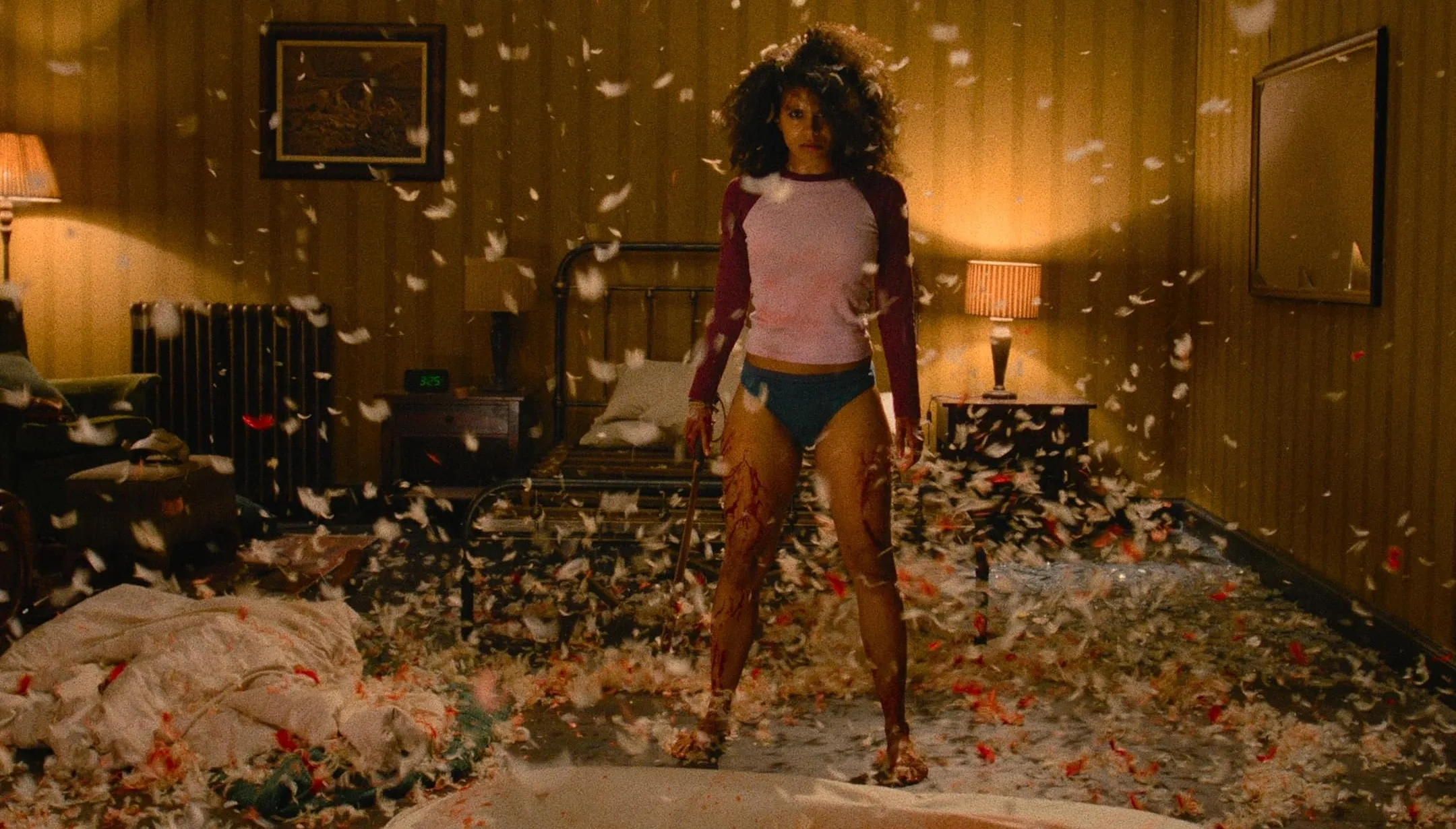

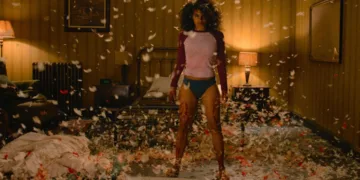
Asia Reaves enters The Virgil, a luxury high-rise in Manhattan, by posing as a housekeeper while searching for her younger sister, Maria. Inside, she finds a community of wealthy residents guarding a dark secret. These elites belong to a Satanic cult that pursues immortality through blood sacrifice, and Asia is pulled into a savage fight for her life.
She relies on the combat skills she developed in prison as she cuts through one dangerous figure after another. The film plays as a fast, bloody rush powered by gore, dark humor, and a sharp sense of style.
Director Kirill Sokolov builds the story around Asia’s deadly climb through the building, filling each stretch of that path with eccentric enemies, practical stunt work, and a satirical view of upper-class cruelty. The confined setting keeps the action moving at a hard pace as Asia fights floor by floor to reach Maria, and that rescue mission turns into a brutal collision with supernatural forces.
The Architecture of Guilt and Immortality
Asia Reeves spent ten years in prison after shooting her abusive father to protect Maria. That punishment shaped her into a lethal fighter, and it also left her carrying deep guilt over the sister she had to leave behind. Once she is free, her purpose is simple. She has to find Maria. The film gives that mission real emotional weight, since every violent turn grows out of a childhood trauma that still controls Asia’s choices. Her time in prison feels like the harsh training phase of an action game, preparing her for the rules and punishments waiting inside The Virgil.
That building, constructed in 1923, serves as the temple of a cult made up of wealthy residents who preserve their status through ritual sacrifice. Their power includes regeneration from wounds that should kill an ordinary person, and that supernatural trait changes the rhythm of every fight Asia enters.
She cannot treat violence as a clean solution. She has to study how this place works, adapt to it, and keep pushing upward. That structure gives the film a strong mechanical logic. Each floor opens into a fresh layer of decay, and each encounter teaches Asia something about the system she is trapped inside.
Maria works as a servant for these people, which keeps the bond between the sisters at the front of the story. Asia is trying to save Maria, yet she is also trying to repair the damage left by those lost years. The Virgil becomes a vivid image of class division, with each level operating like another locked gate between the poor and the powerful.
The residents’ immortality turns combat into a punishing cycle, closer to a boss fight that refuses to end after the first win. That repetition gives the action a strong emotional effect. Asia’s physical force stops feeling like empty destruction and starts reading as the only language this world understands.
Kinetic Cinema and the Grammar of Violence
Kirill Sokolov makes his move into English-language filmmaking here, carrying over the personality of his earlier indie work. His direction suggests affection for Sam Raimi, Quentin Tarantino, Hong Kong action cinema, John Woo, Oldboy, and The Raid, yet the film stays coherent because all of those influences feed the same purpose.
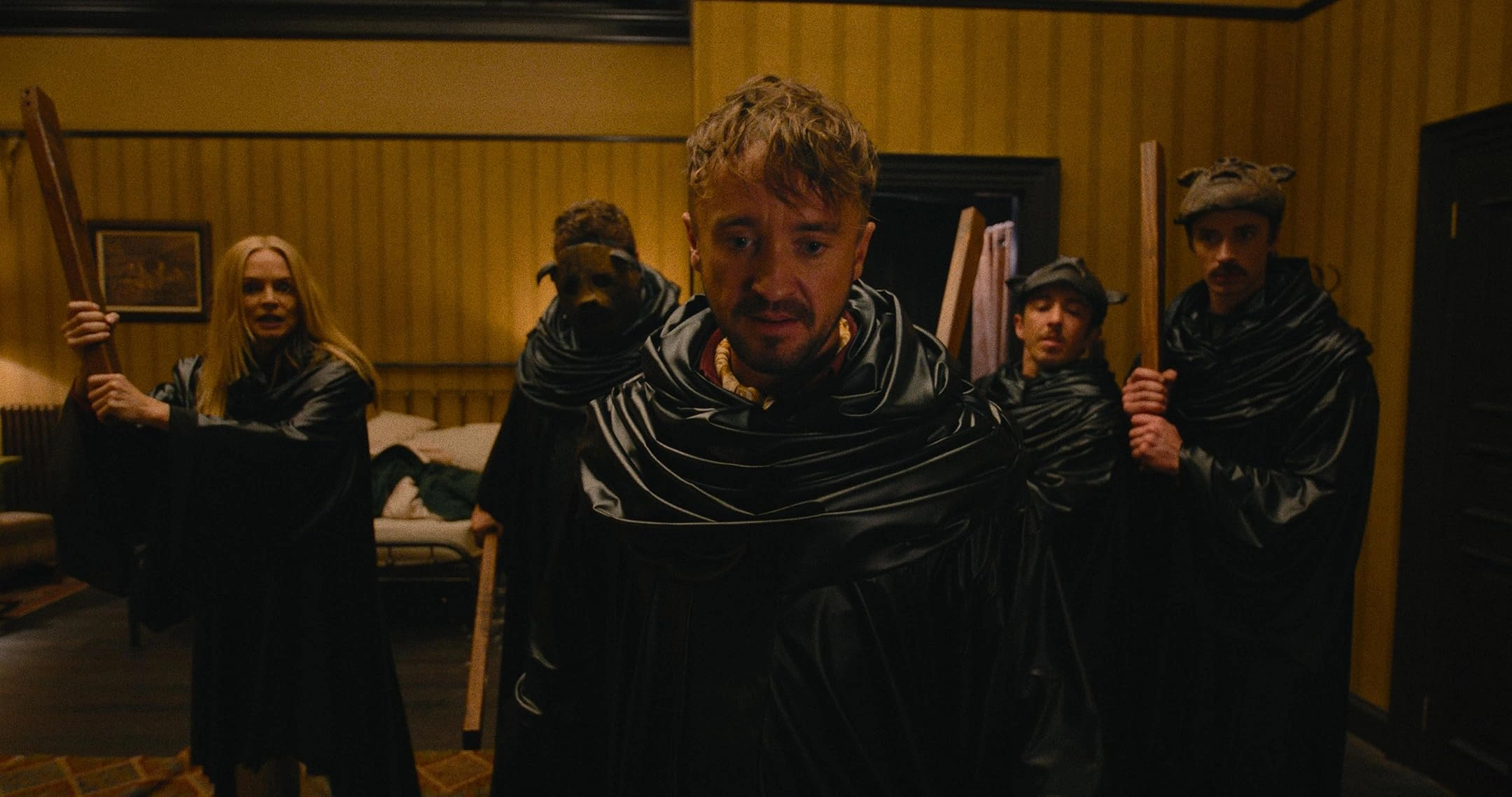
He treats extreme violence with a playful, almost mischievous energy, letting gore and dark comedy exist in the same frame without draining the danger from either one. The result feels lean, aggressive, and very aware of how movement can tell story.
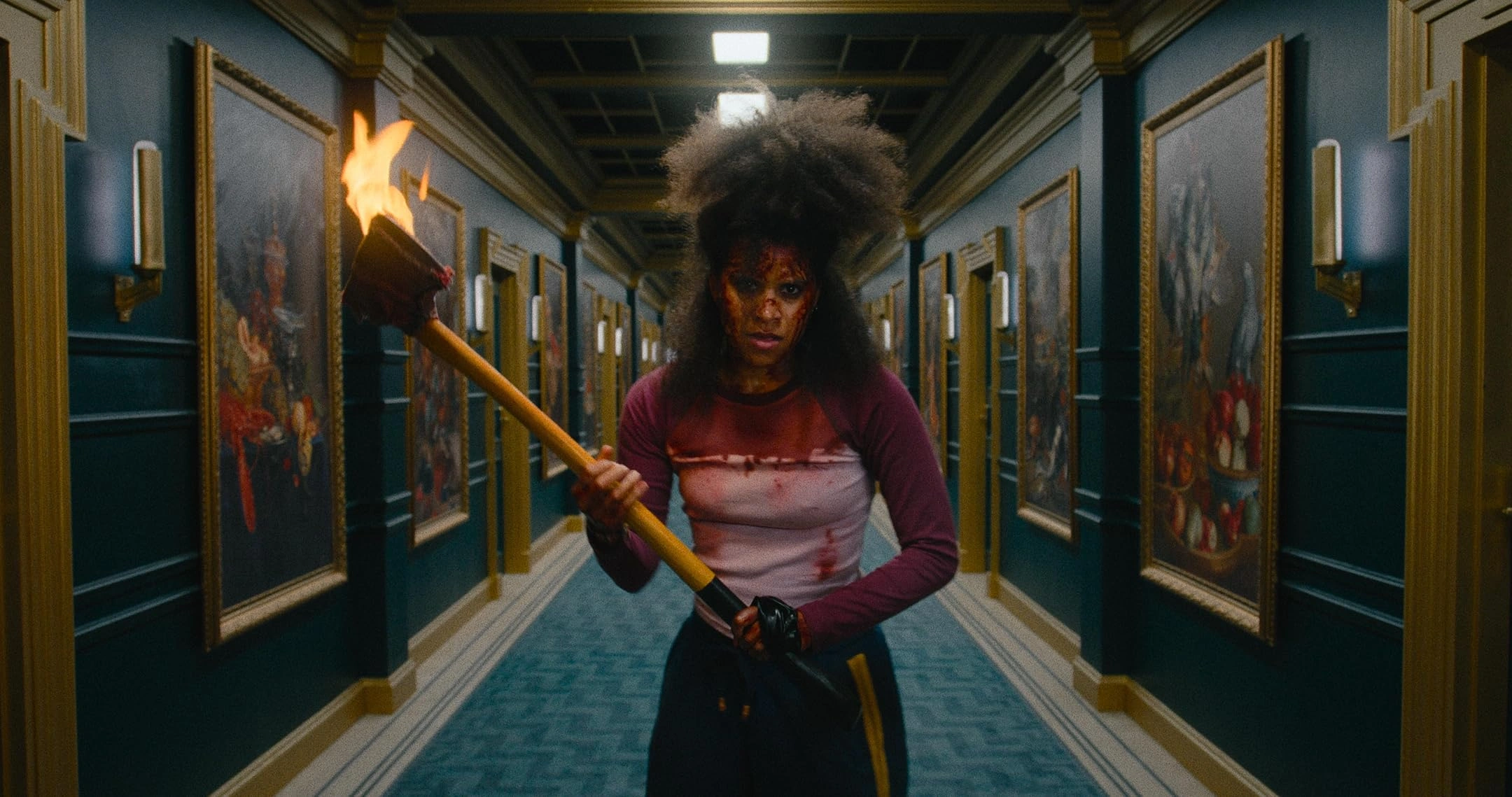
Asia moves through the building like a contemporary samurai. She swings a flaming axe with control, shotgun blasts send bodies flying across rooms, and the camera often holds long enough for the stunt work to speak for itself. Those extended takes give the action a readable shape, which matters in a film built around enclosed spaces and fast transitions.
There is a pleasure in seeing bodies move through a room with precision, in watching cause and effect play out cleanly inside chaos. For a viewer who responds to action the way a player responds to a well-built combat system, the film has a clear rhythm. Every strike lands with intent, every new space changes the terms of the fight, and every escalation asks Asia to read the room faster.
The first half hour runs on relentless momentum that matches the urgency of her search for Maria. Sokolov mixes horror with slapstick, keeping the film lively and preventing its uglier material from sinking into monotony. The visual framing also carries a trace of anime energy, especially in the heightened poses, the violent impacts, and the speed with which a scene can shift from menace to absurdity. That tone makes the film easy to lock into. It knows violence can be horrifying, funny, and exhilarating in the same breath, and it builds its pacing around that fact.
Faces of Greed and the Cost of Survival
Zazie Beetz holds the film together through a performance that feels intensely physical and emotionally readable at the same time. Her work gives Asia grit, endurance, and a visible layer of regret that comes through in small shifts of expression. The stunt work carries extra force because Beetz makes the pain feel connected to memory. Every hit seems tied to a history Asia cannot shake, which keeps the performance grounded even as the film grows stranger.
Patricia Arquette gives Lilith Woodhouse a cold, unsettling authority as the superintendent and public face of the cult. Heather Graham brings chaotic energy to Sharon, and Tom Felton adds humor to the villain group. Paterson Joseph plays Ray with a deceptive quality that fits the atmosphere of the building.
Together, these characters sharpen the film’s satire. The wealthy are framed as literal monsters feeding on other people, and the horror setup turns class disparity into something physical, immediate, and ugly. Asia and Maria are viewed as expendable assets by people who assume power gives them the right to consume others.
Beetz keeps Asia human inside that exaggerated world, and her scenes with Myha’la help anchor the film’s wildest ideas. Their connection gives the film a pulse that the gore alone could never provide. Around them, the supporting cast leans fully into the script’s camp sensibility. Arquette’s sinister calm works especially well against the frantic motion of the action scenes, giving the film a useful contrast in tempo without slipping into empty caricature. The performances make greed look ridiculous and terrifying at the same time, which suits a story built on excess.
The Art of the Macabre and Practical Design
The Virgil’s visual design draws strength from an Art Deco look shaped by green and gold, dark wood, and bronze sculptures. Those details create the sense of old money fused with occult ritual, turning the building into a character with its own sick aura. Isaac Bauman’s lighting presses against the narrow spaces and helps the high-rise feel claustrophobic. That trapped feeling matters because the film depends on vertical movement. Asia keeps pushing forward, yet the walls, hallways, and rooms always seem ready to close around her.
Luke Doolan’s editing keeps the pace tight, using slow motion and GoPro shots as sharp stylistic accents. The practical effects define the film’s texture. Blood floods the frame in large quantities, and the physical craft gives the violence a nasty tangibility that suits the material. One striking image involves a severed eyeball moving through vents by its optic nerve, a grotesque detail that captures the film’s commitment to hands-on effects work. That choice gives the horror a tactile quality digital imagery rarely matches.
At 94 minutes, the film shifts from a martial arts-driven structure into a paranormal horror mode. The opening stretch carries the strongest kinetic charge, while the later passages lean harder into body horror and supernatural shocks. The sound design supports that progression. Blows and gunfire land with a heavy, satisfying impact, making each confrontation feel dense and physical.
The color palette also changes as Asia descends deeper into the building’s corruption. Green tones suggest rot and sickness, while gold surfaces keep reminding the viewer of wealth and decadence. During emotional beats, the editing loosens its grip and gives the actors room, which helps the film hold onto its emotional thread amid all the carnage.
They Will Kill You arrived in theaters on March 27, 2026. This production is distributed by Warner Bros. Pictures as a theatrical release. The film is currently available for viewing in cinemas across the country during its initial run this April. Audiences can see this story of survival and cult secrets on the big screen at local theaters.
Where to Watch They Will Kill You (2026) Online








Full Credits
Title: They Will Kill You
Distributor: Warner Bros. Pictures, New Line Cinema
Release date: March 27, 2026
Rating: R
Running time: 94 minutes
Director: Kirill Sokolov
Writers: Kirill Sokolov, Alex Litvak
Producers and Executive Producers: Dan Kagan, Andy Muschietti, Barbara Muschietti, David Ellison, Dana Goldberg, Don Granger, Alex Litvak, Kirill Sokolov, Russell Ackerman, John Schoenfelder, Carl Hampe, Marisa Sonemann-Turner, Rudi Van As
Cast: Zazie Beetz, Patricia Arquette, Myha’la, Tom Felton, Heather Graham, Paterson Joseph, David Viviers, James Remar, Angus Sampson
Director of Photography (Cinematographer): Isaac Bauman
Editors: Luke Doolan
Composer: Carlos Rafael Rivera
The Review
They Will Kill You
The film succeeds as a visceral exercise in style and practical effects. Zazie Beetz delivers a commanding physical performance that carries the weight of the narrative. While the momentum slows as the plot moves into supernatural territory, the initial action remains a highlight. It serves as a sharp, bloody critique of class dynamics within a confined horror setting. Fans of kinetic genre cinema will find plenty to enjoy in this dark, imaginative climb through The Virgil.
PROS
- Intense and dedicated lead performance from Zazie Beetz.
- Inventive use of practical gore and puppet work.
- Striking Art Deco visual design and color palette.
- Expertly choreographed martial arts in the opening act.
- Effective satirical take on the monstrous wealthy class.
CONS
- Noticeable dip in energy during the middle section.
- Supernatural shifts feel less impactful than the grounded combat.
- Several supporting roles lack meaningful development.
- Late-stage action sequences become somewhat repetitive.