





















![Kingdom Hearts Collection [I-III] Review](https://gazettely.com/wp-content/uploads/2026/10/Kingdom-Hearts-Collection-I-III-1-360x180.webp "Kingdom Hearts Collection [I-III] Review: KHII Holds Steady as Newer Entries Fluctuate 37")



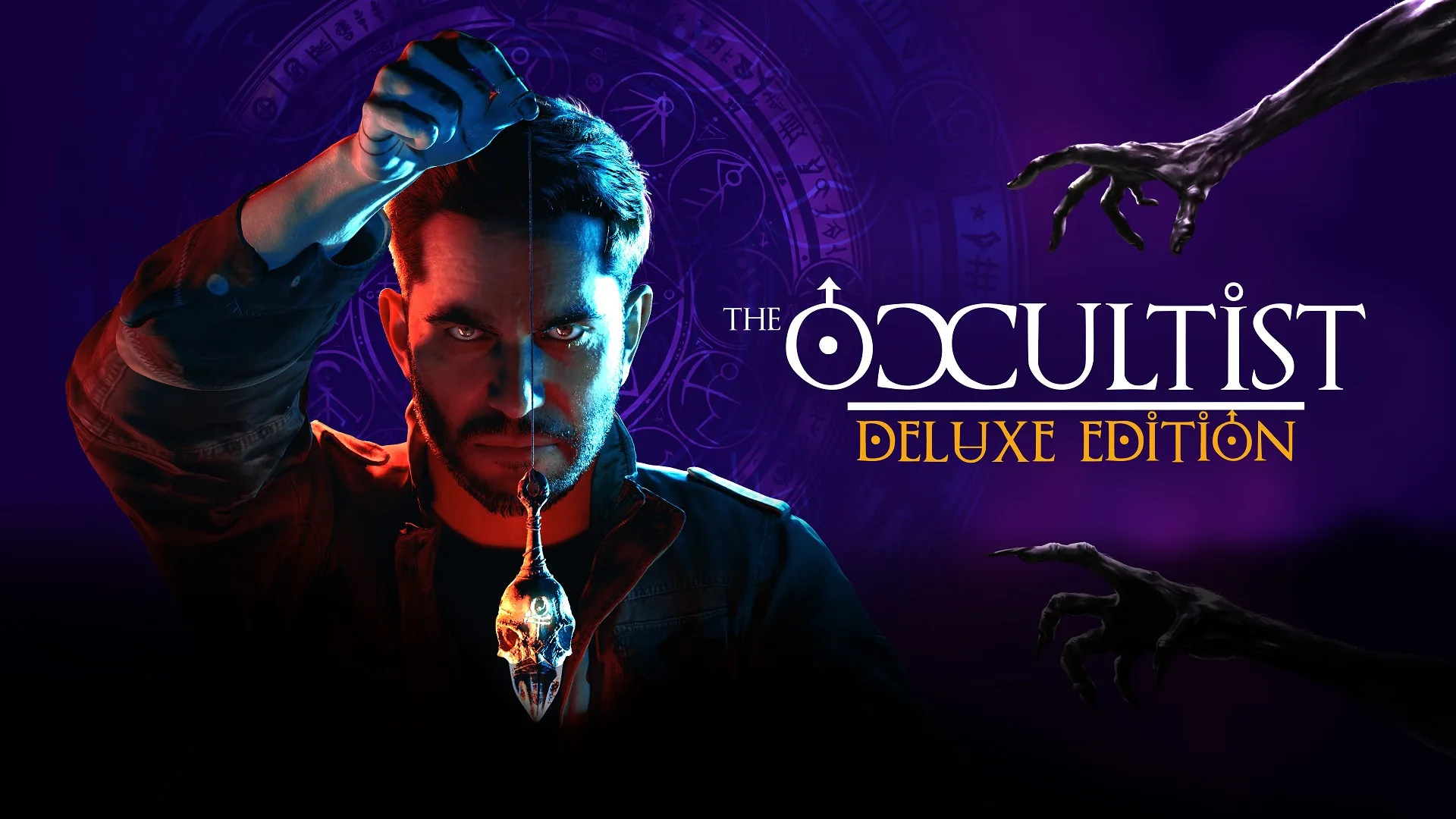

A community erased by its own devotion leaves a very specific kind of silence. The isolated British island of Godstone embodies this quiet ruin, standing entirely frozen since the 1950s. Paranormal investigator Alan Rebels steps into this postwar relic initially seeking his vanished father, Gabriel. The premise quickly fractures from a conventional missing person case into a deeply supernatural excavation.
Godstone operates as a physical manifestation of mid-century esoteric obsessions. The local cult attempted a ritual that collapsed violently, and that catastrophic event permanently stained the geography. Alan must walk through spaces where traditional insular village life violently intersected with the occult. The air remains thick with the remnants of those failed rites.
The untouched ghost town and its ramshackle buildings present a melancholic atmosphere, forcing the protagonist to confront the physical remnants of a society consumed by zealous belief. This setting mirrors regional folklore traditions dealing with isolated communities hiding dark secrets, establishing a stage entirely devoid of the modern world.
Esoteric Mechanics and the Investigator’s Arsenal
To decipher the layered history of this haunted space, Alan relies on a specialized skull-shaped pendulum. This artifact serves as his primary interpretive tool, vibrating or flashing to signal nearby clues and entirely preventing tedious pixel-hunting. The pendulum grants several distinct abilities that evolve organically as the investigator moves deeper into the island.
The Vera Visio skill allows Alan to perceive objects, spirit trails, and invisible clues hidden from the naked eye. The Tempus Fugit ability gives him the power to rewind time on specific objects, clearing blocked paths or recovering lost information. He can command an ethereal raven to retrieve distant items, expanding the spatial puzzle-solving elements. The Vermis Mentis ability allows him to control groups of rats to bypass complex environmental obstacles.
These mechanics require the player to continuously read the architecture. The synergy between narrative and gameplay emerges strongly here. The tools of the occult are strictly necessary to decipher the history of the occult. Alan utilizes the very esoteric forces that destroyed Godstone to map its ruins. This mirrors global folklore traditions where the investigator must adopt the methods of the transgressor to uncover the truth.
The progression of these skills aligns neatly with the deepening mystery, forcing the player to think like an initiate of the island’s forgotten cult to progress through the locked gates and hidden chambers. The mechanics demand observation over aggression, translating occult energy into practical progress.
Visualizing Ruin Through Unreal Engine 5
The game leverages Unreal Engine 5 to render Godstone with striking visual fidelity, turning the island into a meticulously detailed archive of societal collapse. The environment presents a stark divide between expansive, open landscapes like dense forests or an eerie seaside circus, and the tight, claustrophobic interiors of the local hospital and orphanage.
These spaces reflect a period-accurate 1950s design, heavily saturated with cult iconography built directly into the local architecture. Lighting plays a critical role in establishing mood, casting long shadows that generate a profound sense of unease in both open spaces and enclosed corridors. The island is visually arresting, creating a constant feeling of danger maintained entirely by the presence of ghosts and a complete lack of human life.
Environmental storytelling carries significant weight in this space. Notes and newspaper articles scattered among the debris provide necessary context for the tragedy that occurred decades ago. This visual storytelling technique echoes cinematic traditions of the ruined utopia. The static, highly detailed environments act as silent witnesses to past horrors.
The player reconstructs the downfall of Godstone piece by piece through this careful environmental reading. The visual design effectively translates the abstract dread of British cult cinema into a tangible, explorable physical space. The juxtaposition of a cheerful, mid-century aesthetic with gruesome occult remnants creates a universal sense of the uncanny.
The Architecture of Evasion and Problem-Solving
The interactive systems prioritize evasion over confrontation, completely removing traditional combat from the experience. Alan must rely entirely on stealth, running, and hiding to survive encounters with hostile entities. These spirits often follow fixed paths and can be bypassed by simply ducking into nearby rooms. Specific enemy types dictate different defensive responses.
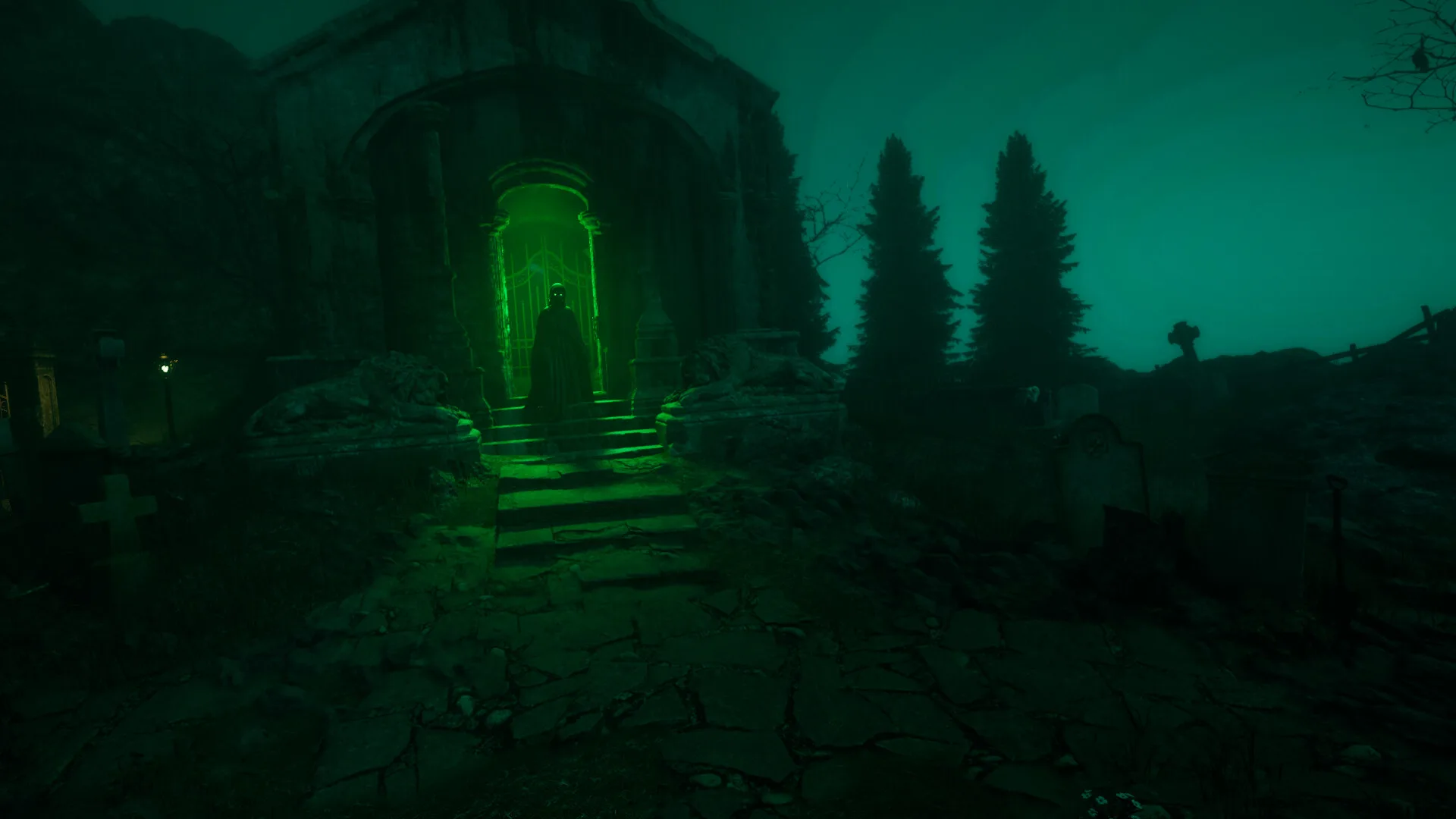
A haunted doll that explodes on proximity and aggressive figures stalking the hallways force the player into a continuous loop of hiding and seeking. Boss encounters function as complex puzzles rather than tests of physical reflex, requiring careful use of the pendulum over brute force. The general puzzle design reinforces the cerebral tone of the game.
Alan must draw symbols on doors, find word codes for padlocks, and consistently consult his journal to track collected clues. The characterization of Alan Rebels anchors the entire experience. Voiced by Doug Cockle, Alan maintains a stoic, gravelly demeanor. He remains largely unperturbed by the horrors he witnesses. This vocal performance defines him as a hardened professional, creating an interesting friction against the terrifying supernatural elements.
It shifts the tone from pure panic to calculated, methodical investigation. Cockle’s delivery grounds the supernatural elements, acting as a tether to reality for the player. The divide between his calm analysis and the erratic behavior of the ghosts highlights the clash between rational investigation and irrational belief systems. The technical stability of the game is mostly solid during the exploration.
There are occasional minor graphical issues, including problems with item legibility and slight frame rate drops on current consoles. These small technical hiccups do little to break the heavy, oppressive mood established by the vocal work and the intricate puzzle design. The mechanics and the narrative align to present a deeply atmospheric study of a vanished culture, demanding patience and careful observation from the player.
The Occultist is a first-person psychological horror and narrative adventure game that emphasizes atmospheric investigation and stealth over direct combat. Released on April 8, 2026, the game follows Alan Rebels, a paranormal investigator who travels to the abandoned island of Godstone to uncover the truth behind his father’s disappearance and a ritual gone wrong. Players utilize a mystic pendulum to interact with the environment through unique mechanics while navigating a world designed with Unreal Engine 5. The title is available on PC (Steam), PlayStation 5, and Xbox Series X|S.
Full Credits
Lead Voice Cast: Doug Cockle
Art Director/Lead Artist: Kevin Flórez (Art Director), David Álvarez (Environment Artist)
Key Engineering/Technical Leads: DALOAR Engineering Team
Composer/Sound Director: Pepe Herrero
Developer, Publisher: DALOAR, Daedalic Entertainment
Release Date: April 8, 2026
The Review
The Occultist
The Occultist succeeds as a visual archive of mid-century British dread. Its strengths lie in the atmospheric rendering of Godstone and the clever use of the pendulum for environmental analysis. The experience feels somewhat limited by a stoic protagonist and predictable stealth sequences. While it provides a solid foundation for a new property, the lack of genuine scares and mechanical depth keeps it from the top tier of horror. It remains a worthwhile experience for those seeking atmosphere over high-stakes action.
PROS
- High-fidelity Unreal Engine 5 environments.
- Evocative 1950s British aesthetic.
- Creative pendulum-based environmental manipulation.
CONS
- Predictable and repetitive stealth loops.
- Stoic protagonist lacks emotional connection.
- Repetitive puzzle solutions.