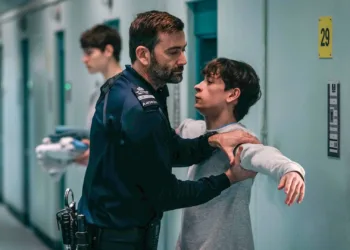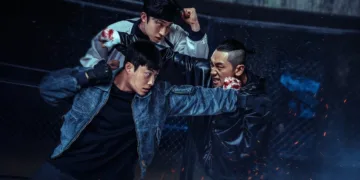




















Boxing, in Bloodhounds, speaks with cruel clarity. It strips away performance and leaves the body to negotiate survival punch by punch. Kim Gun-woo knows that language intimately. The desperate street fights of his youth have given way to the sanctioned violence of a professional championship, yet his defining feature remains silence. His discipline carries weight, almost like a burden he has chosen because noise would make the danger easier to see.
Hong Woo-jin now occupies a different role. He stands outside the ring as coach and strategist, turning instinct into instruction. Their altered dynamic gives the season its emotional frame as the story moves past the local debts of Seoul. Im Baek-jeong’s arrival raises the scale. An ex-professional with a swollen sense of self, he runs a global underground syndicate that treats human beings as disposable assets.
Gun-woo becomes the prize target of his illegal fighting league. Once Gun-woo refuses, organized retaliation begins. The visual identity shifts with that escalation. The previous grit gives way to a slicker, darker underworld, polished enough to look corporate and vicious enough to feel predatory. The series turns personal survival into a fight against a criminal machine with international reach.
The Psychological Weight of the Corner Man
Gun-woo stands at the peak of his physical ability. His body works like a precision instrument, trained to absorb, read, and return force. His mind carries a different strain. Success has made him visible, and visibility has made him vulnerable. He uses stoicism as armor, trying to shield loved ones from the violence that keeps circling him.
Championship status offers prestige, yet prestige makes him a richer prize for Baek-jeong. Woo-jin’s conflict mirrors that pressure from another angle. His move into coaching is a reckoning with physical decline. Past injuries have closed the door on his life as a fighter, leaving him to redefine himself in the corner. That position carries its own humiliation. He must watch his brother take blows he once helped absorb. The series finds convincing emotional friction in that imbalance.
Woo Do-hwan and Lee Sang-yi keep the show breathing. Their chemistry remains the lifeblood of the series, giving Gun-woo and Woo-jin a warmth that survives the machinery around them. Their banter matters because the season is otherwise built from impact, recovery, and consequence.
Humor arrives in small doses, often with the relief of someone opening a window in a room full of bruised men making terrible decisions. Their chosen brotherhood works as the moral anchor, the rare relationship in this environment that has resisted corruption. The supporting cast expands the social texture.
Kang Tae-yeong’s disability keeps the permanent cost of violence in view, while Hong Min-beom’s involvement brings class and influence into the fight. High-profile allies can help the duo, yet privilege cannot erase loss. The team’s wounds feel intimate this time. Money has receded as the main motive. The fight now concerns the right to live free from pursuit. Each tragedy presses the characters to ask what morality costs when decency keeps making them targets.
The Narcissism of the Underworld CEO
Im Baek-jeong turns power into vanity with a business card. Jung Ji-hoon gives the antagonist a sharp dose of star presence, shaping him as a bully who happens to run an empire. Baek-jeong runs on ego before strategy. He sees the fighting world as his personal mirror, a place where rejection becomes an insult worthy of bloodshed. Once Gun-woo declines him, Baek-jeong responds with the emotional discipline of a spoiled child and the physical threat of a trained killer. That volatility becomes the plot’s engine.
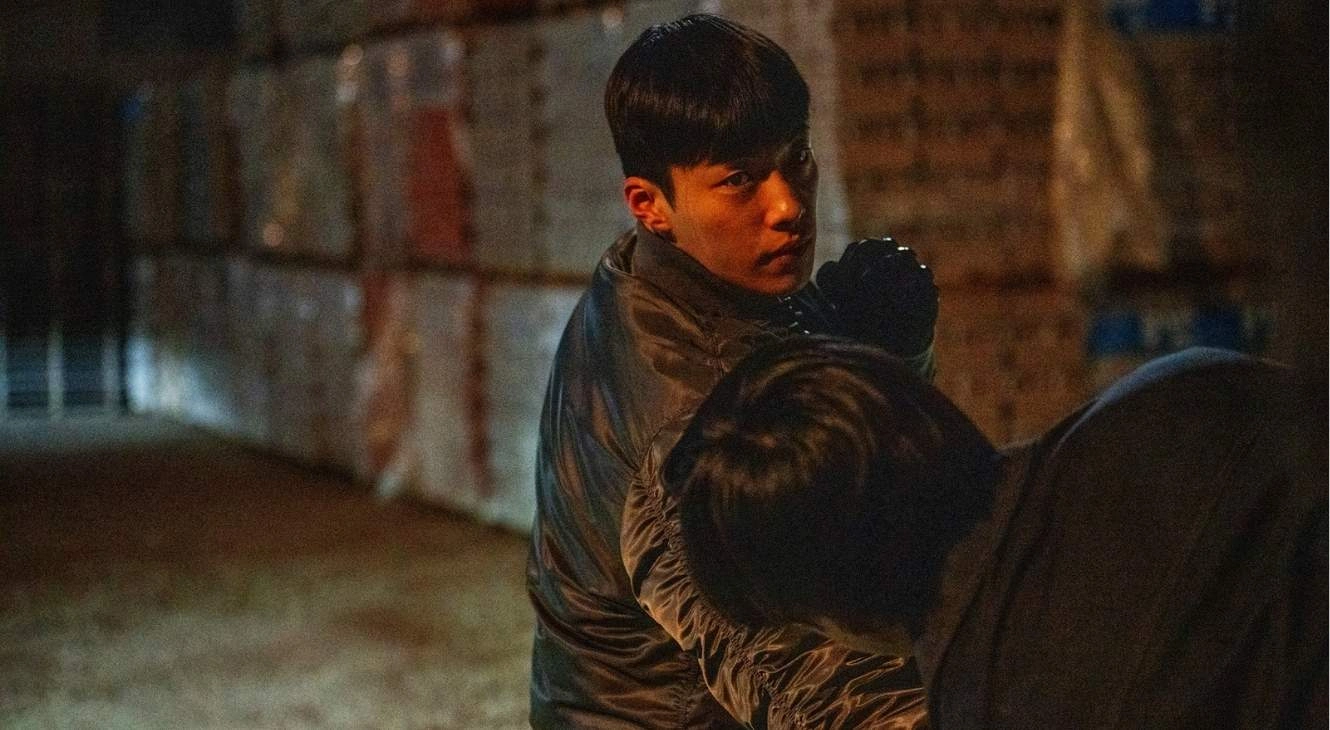
His syndicate operates on a global scale, bringing in international fighters and vast, untraceable wealth. The anonymity gives the enterprise the feel of a shadow government, an extravagant criminal system built on bodies and secrecy.
This kind of evil feels less grounded than the local threats of the previous season, yet it fits the show’s expanded reach. Baek-jeong rules through fear, surrounded by workers who often appear smarter than he is. They remain because exit means death. A bathtub scene provides a brutal statement of method. He wants to own the best talent, control the room, and win at any cost.
Park Seo-joon enters as Premium, bringing a mysterious and threatening presence that signals the professional killers operating near the top of this world. Minor figures such as Lee Woo-jeong receive thinner treatment, often functioning as temporary barriers on the way to the next blow. That compression reveals one of the season’s streaming-era contradictions.
The scale has grown, yet the rapid format leaves less space for secondary lives to matter. The villains’ black attire creates a visual uniform, turning them into parts of a machine. Baek-jeong gets the volume, the posture, and the attention. Through him, the series critiques narcissistic leadership as a destructive force that hollows out everyone nearby.
The Visceral Language of Close Quarters
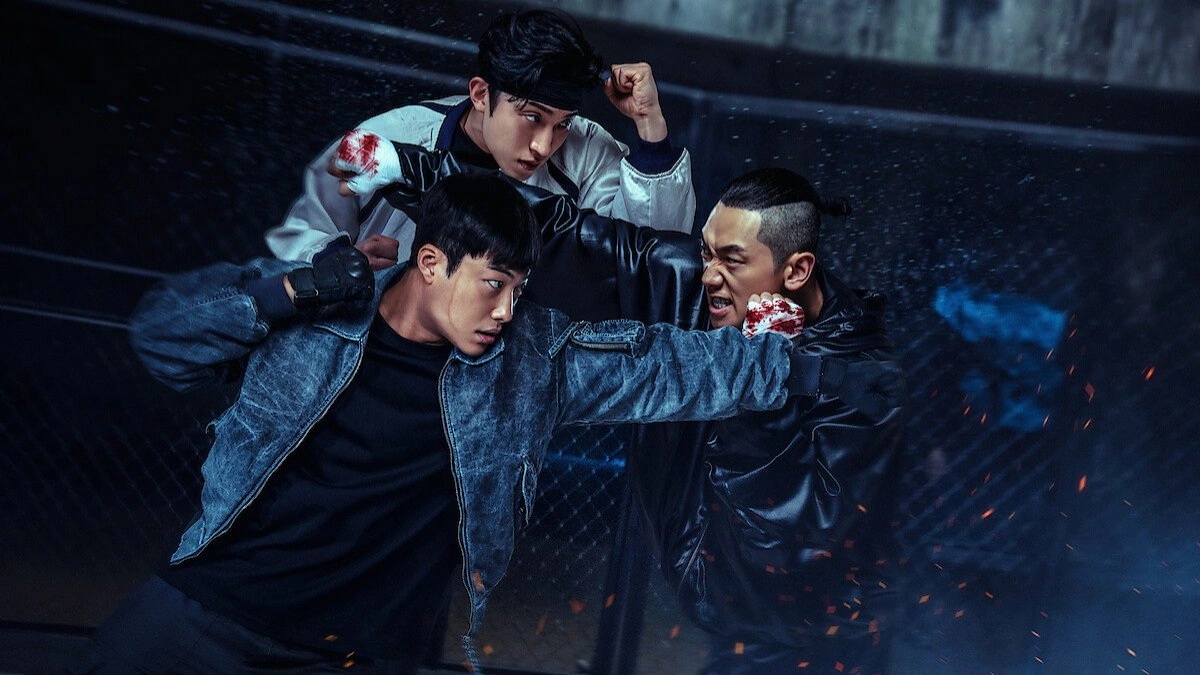
Bare-knuckle strikes define the action choreography, giving each fight a personal charge. Hand-to-hand combat fits this story because the violence is intimate, transactional, and deeply tied to identity. The boxing sequences carry a force that separates them from standard action habits.
The production avoids theatrical flourishes and trusts raw, heavy contact. Liver shots land with purpose. Parries feel like survival. The cinematography works like a third fighter in the ring, placing the viewer inside the claustrophobia of each match. Underground arena lighting isolates the combatants until the next punch appears to be the entire world.
The pacing of these scenes runs hot. Adrenaline rarely drops, and the fighters reveal character through movement. Gun-woo is technical. Woo-jin uses his reach. Baek-jeong fights with underhanded aggression. The Uzbek boxer in the opening episode signals a world filled with unknown threats, a useful reminder that the show’s global expansion brings fresh bodies into its violent economy.
The actors’ physical commitment gives the combat credibility. Sweat, exhaustion, and strain register in the eyes. The sequel uses more gore, with violence fierce enough to flirt with spectacle while still rooted in bodily consequence. Sound design deepens that effect. Air leaves lungs. Bodies hit canvas with dull force. The sensory design keeps the stakes tangible, which matters for a series where fights carry the emotional labor. The characters say plenty with their fists, because in this world speech often arrives too late.
The Mechanics of the Streaming Sequel
The seven-episode structure creates urgency. The story moves fast, making the season easy to binge and easy to follow. Efficiency brings a cost. Newer characters receive limited room to grow, and the plot takes a direct path. The tension comes from the gap between high-level action and a predictable narrative route. Still, the show understands its identity. It commits to clean momentum, muscular set pieces, and the bond between Gun-woo and Woo-jin.
The title Bloodhounds keeps its irony intact. Gun-woo and Woo-jin remain too pure for the profession that keeps calling them back. They spend the season searching for normalcy, then get dragged into conflict by a world determined to claim them. Their moral stance becomes strength and weakness in the same breath. That duality gives the series its social pulse.
In a story filled with syndicates, wealthy enablers, damaged bodies, and disposable workers, decency becomes an act of resistance. The post-credits scene reframes the season and prepares a possible third outing. It points toward a larger threat that could reshape the series’ scale and suggests prior conflicts opened the gate to a wider criminal order.
The narrative now faces its hardest creative task. Brotherhood has carried enormous weight, and the action already has depth, texture, and impact. The story needs to match that force as the transition to a global stage settles into place. Gun-woo and Woo-jin have reached the point where survival may demand a terrifying question: how much of the monster can a righteous fighter absorb before the mirror starts answering back?
Bloodhounds Season 2 premiered globally on Netflix on April 3, 2026, marking a high-octane return for the fan-favorite South Korean action thriller. Set three years after the events of the debut season, this seven-episode installment follows the relentless boxing duo Kim Gun-woo and Hong Woo-jin as they are drawn out of their newfound stability and into the crosshairs of a massive international fighting syndicate. The series is currently available for streaming exclusively on Netflix, where viewers can watch the entire season.
Where to Watch Bloodhounds Season 2 Online


Full Credits
Title: Bloodhounds Season 2
Distributor: Netflix
Release date: April 3, 2026
Rating: TV-MA
Running time: 49–75 minutes per episode
Director: Kim Joo-hwan (Jason Kim)
Writers: Kim Joo-hwan, Jung Chan
Producers and Executive Producers: Kwon Mi-kyung, Park Joon-ho, Studio N, Seed Film, Seven O Six, GHOST STUDIO
Cast: Woo Do-hwan, Lee Sang-yi, Jung Ji-hoon, Hwang Chan-sung, Lee Si-eon, Choi Si-won, Choi Young-joon, Park Ye-ni, Park Seo-joon, Ryu Soo-young, Kim Jin-young, Ha Young
Director of Photography (Cinematographer): Jo Sang-yoon
Editors: Kim Sang-beom
Composer: Jawan Koo
The Review
Bloodhounds Season 2
This season shifts from local debt collection to global syndicates with visceral results. The action remains world class. The core bond between Gun-woo and Woo-jin provides a necessary moral center. The plot follows a predictable path. The physical dedication of the cast keeps the energy high. It works as a high octane follow up.
PROS
- Superior boxing choreography and physical realism.
- High level chemistry between the lead actors.
- Polished visual production and cinematic lighting.
- Strong presence from the antagonist.
- Rapid pacing suitable for a single sitting.
CONS
- Thin narrative depth.
- Reduced focus on the supporting lead.
- Limited growth for secondary cast members.
- Departure from the original street level atmosphere.