






















![Kingdom Hearts Collection [I-III] Review](https://gazettely.com/wp-content/uploads/2026/10/Kingdom-Hearts-Collection-I-III-1-360x180.webp "Kingdom Hearts Collection [I-III] Review: KHII Holds Steady as Newer Entries Fluctuate 37")



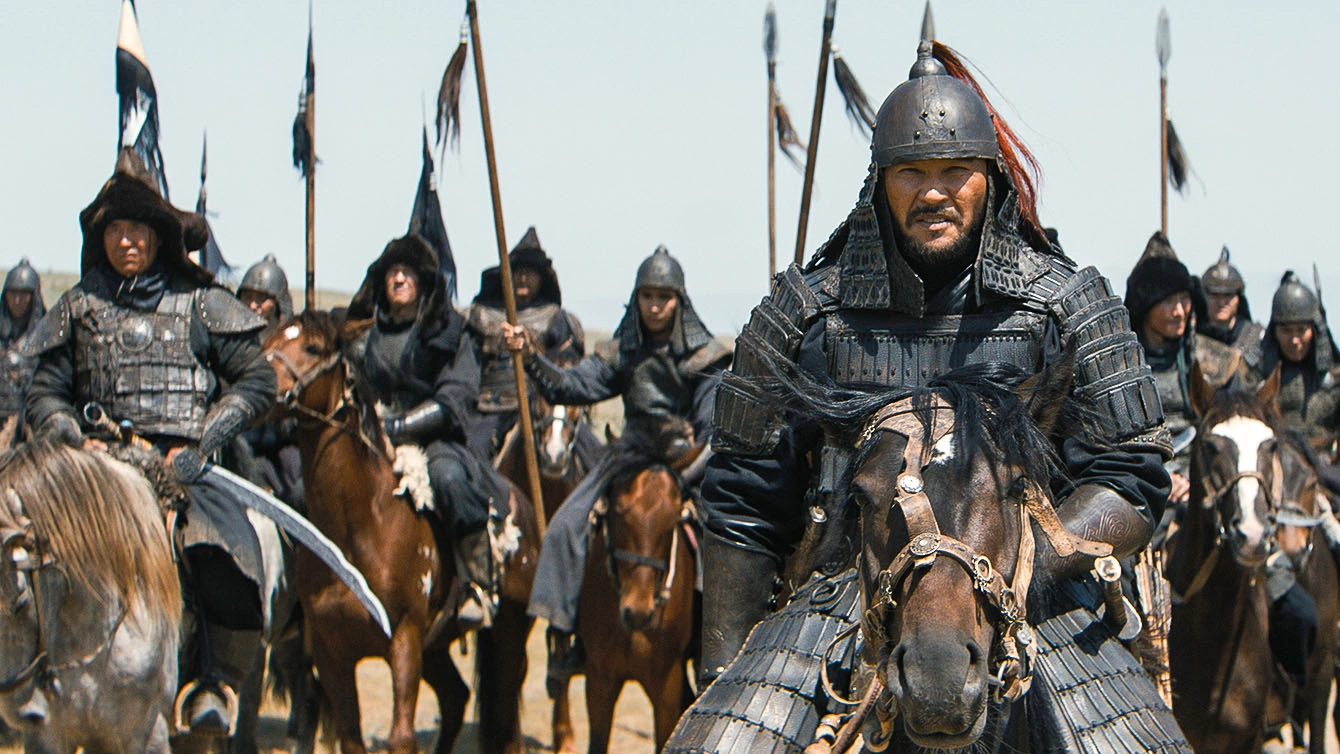

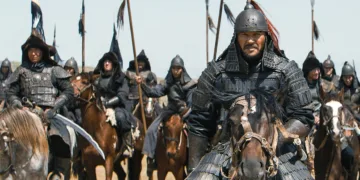
Rise of the Conqueror brings the 14th-century Central Asian world to the screen through director Jacob Schwarz’s view of Timur Barlas. The film begins with Timur as a nobleman and trusted advisor to the Mongol-backed Ilyas Khoja, then places him in a Silk Road era shaped by tribal loyalty, imperial ambition, and fragile alliances.
A sudden betrayal leaves him poisoned and exiled, sending him into the wilderness where survival becomes the first stage of political rebirth. His movement from courtly figure to leader of the Barlas tribe gives the film its epic spine. The story follows a man drawing splintered clans together to retake Samarkand from oppressive rule.
Court scheming and steppe hardship sit side by side, giving the drama both palace texture and physical strain. The film frames the early rise of a future emperor through the pressures that shape him from within and from outside.
Archetypes and Cultural Collisions
Christian Mortensen plays Timur as a hesitant, somewhat naive leader, a choice that softens a figure history remembers with far sharper edges. This version of Timur resists command at first, which places him inside a familiar heroic pattern, one often found in historical epics built for wide international reach.
Mortensen has the necessary physical authority for the role, with a carefully groomed beard and layered period clothing that mark him as noble, practical, and prepared for hardship. The script charts his shift from advisor to hardened warrior through his time in the wild. His performance gives Timur a durable stoicism. The writing leans on the image of a man pushed toward greatness by circumstance.
The antagonists express different models of authority. Joshua Jo plays Ilyas Khoja with blunt menace, shaping him as a figure of “pure evil” and an easy counterweight to Timur’s moral position. Maruf Otajonov’s Tugluk carries a different political charge: he sees Timur’s strategic gifts and values them. Together, these figures create the outside pressure that forces Timur’s development. Ilyas represents destruction. Tugluk represents the practical intelligence needed to survive rule on the steppe.
The Barlas tribal rivalry brings the conflict inward. Mahesh Jadu’s Hussayn, Timur’s brother-in-law, carries visible tension into every dispute over Samarkand. Their competing claims give the political drama much of its force. Their shared past and mutual suspicion give the tribal material a textured quality, keeping the disputes from feeling flat.
The supporting roles widen the world. Yulduz Rajabova’s Aljai appears early as Timur’s intellectual and physical equal. She fights with striking skill in the opening combat sequence, then fades into a less active position once the film turns toward Timur’s exile.
Arazou plays Banu, a healer who leads a community of outcasts, and this section adds a fictionalized dimension to Timur’s recovery. Within the group, Paul Marlon appears as James, a Scottish warrior who once fought beside William Wallace.
James teaches the wounded Timur to adjust his swordsmanship around his disability. This choice gives the film an unexpected cross-cultural charge. It imagines a link between separate historical struggles for independence, creating a global echo inside a Central Asian story. The presence of a 14th-century Scotsman in the region strains historical plausibility.
The Aesthetics of the Steppe
The production design stresses architectural scale and historical texture. Samarkand’s palaces and courtyards carry a sense of imperial grandeur, making the city feel like a prize shaped by memory, wealth, and power. Schwarz uses sweeping aerial shots to map the size of Central Asian cities, placing dense urban spaces beside the surrounding plains. The costume design for the Barlas tribe and Mongol forces shows careful attention to fabric, armor, and layered construction, helping distinguish each faction. These visual decisions anchor the film in a clear cultural and historical setting.

Schwarz favors a pallid, mystical visual style. The color palette stays muted, with cool tones and natural light creating a feeling of distance from the present. The effect makes the film seem viewed through a haze of time. Outdoor lighting stresses the severity of the environment, and interior lighting uses shadow to reflect the secrecy of court politics. The visual storytelling often works through atmosphere, turning space, weather, and light into signs of political danger.
Action choreography and stunt design, led by Zhaidarbek Kunguzhinov, give the film its most kinetic passages. The opening assassination attempt uses fluid movement and immediate danger to pull the viewer into the instability of Timur’s world. Later battlefield clashes shift toward grit and group chaos. The close combat carries physical weight, with weapons that feel heavy and fighters who seem visibly taxed by each exchange. The action works best when the mechanics of combat serve the larger narrative of adaptation.
The Battle of the Mud in 1365 becomes the film’s clearest tactical showcase. The sequence lays out the military maneuvers used during the clash and brings Chinese gunpowder weapons into the combat, adding technological history to the spectacle. Torrential rain and thick mud become active forces in the scene. The environment changes the battle’s rhythm and forces the characters to adjust strategy as events unfold. Here, the film’s visual design and historical mechanics align with unusual clarity.
Symbolic imagery tracks Timur’s growth. A recurring board game piece signals his developing strategic mind, treating leadership as a sequence of calculated choices. A burning sword placed in the middle of the steppe marks his inner drive in visual form. These motifs create a silent thread beside the dialogue, giving the film a way to express political awakening through objects and images.
History Through a Globalized Lens
The film uses strong historical revisionism by presenting Timur as righteous and gentle. It leaves aside the brutal parts of his reputation, including the mass executions linked to his later conquests. Regional production interests likely shaped this cleaner portrait, turning him into a national hero with little moral complication. That decision narrows the character. The historical Timur contained brilliance and terror, and the film’s gentler approach reduces the contradictions that would have made him richer on screen.
The American lead in a Central Asian story reflects the demands of global film distribution. Mortensen gives a capable performance, and the English-language dialogue sometimes weakens the sense of historical immersion. The script follows the formulas of the Western epic, favoring familiar narrative beats over a storytelling structure rooted with greater specificity in Central Asian artistic memory. The result feels approachable for international viewers. Some history enthusiasts may find the cultural texture less convincing than the production design promises.
Pacing creates another strain. The narrative moves unevenly, spending extended time on Timur’s exile and then hurrying through major developments. The retaking of Samarkand arrives through a rapid, montage-heavy passage that lacks the weight of the earlier chapters. The abrupt ending sharpens that imbalance. The film devotes its running time to Timur’s early struggle, then shifts into his imperial era through a handful of title cards. This creates a gap between the man seen on screen and the emperor he becomes.
Religious and mystical elements receive restrained treatment. Timur’s faith appears through solitary prayer scenes, which remain surface gestures and never become a fully integrated part of his identity. The Zoroastrian raiders and the “witch” label applied to Banu bring a mystical layer to the world. These details feed the film’s distant atmosphere and suggest a society where spiritual belief and physical survival exist in close contact.
Destiny becomes the film’s guiding theme. The message suggests that fate selects a person regardless of personal desire. Timur’s first rejection of command and later acceptance follow a classic heroic arc, one that suits the film’s international epic grammar. The final title cards connect the intimate story of early survival to the vast scale of Timur’s later legacy. They remind the viewer that the events shown here form the foundation for a reign that would eventually alter the map of the world.
Rise of the Conqueror premiered digitally in the United States on April 14, 2026, bringing the epic 14th-century history of Timur Barlas to modern audiences. This historical action-adventure is currently available for streaming and digital purchase on major platforms including Amazon Prime Video, Apple TV, Google Play, and YouTube. Filmed on location across the breathtaking landscapes of Uzbekistan and Kazakhstan, the movie offers a large-scale look at the tribal conflicts and strategic brilliance that defined the early life of the future emperor.
Where to Watch Rise of the Conqueror (2026) Online










Full Credits
Title: Rise of the Conqueror
Distributor: Well Go USA Entertainment, Signature Entertainment
Release date: April 14, 2026
Rating: NR, 16+
Running time: 119 minutes
Director: Jacob Schwarz
Writers: Matthew Greene, Jacob Schwarz, Christian Mortensen
Producers and Executive Producers: Matthew Siemers, Azam Abdullaev, Bekruz Hamzaev, Willem Kampenhout, Christian Mortensen, Kathryn Crapo Schwarz
Cast: Christian Mortensen, Mahesh Jadu, Yulduz Rajabova, Joshua Jo, Dulguun Odkhuu, Sanjar Madi, Arazou, Paul Marlon, Sayed Badreya
Director of Photography (Cinematographer): Peter Mosiman
Editors: Evan Michael Carpenter
Composer: Jonathan Keith
The Review
Rise of the Conqueror
Rise of the Conqueror provides a visually striking entry into the historical epic genre. It captures the architectural beauty and tactical complexity of 14th-century Central Asia with technical skill. The screenplay favors Western formulas and sanitized characterization, which prevents the film from achieving true historical depth. While the action sequences and art direction excel, the uneven pacing and safe narrative choices leave the production feeling like a missed opportunity for a more profound exploration of Timur’s legacy. It serves as a polished introduction to a legendary figure without fully grappling with his complexity.
PROS
- Exceptional art direction and architectural detail.
- Strong action choreography and stunt design.
- Detailed exploration of historical tactics during the Battle of the Mud.
- Effective visual use of symbolism and recurring motifs.
CONS
- Sanitized and historically simplified portrayal of the protagonist.
- Uneven pacing featuring a rushed final act.
- Reliance on Western epic tropes and English dialogue.
- Limited development for supporting characters.