






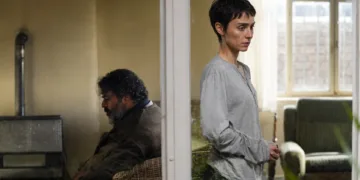








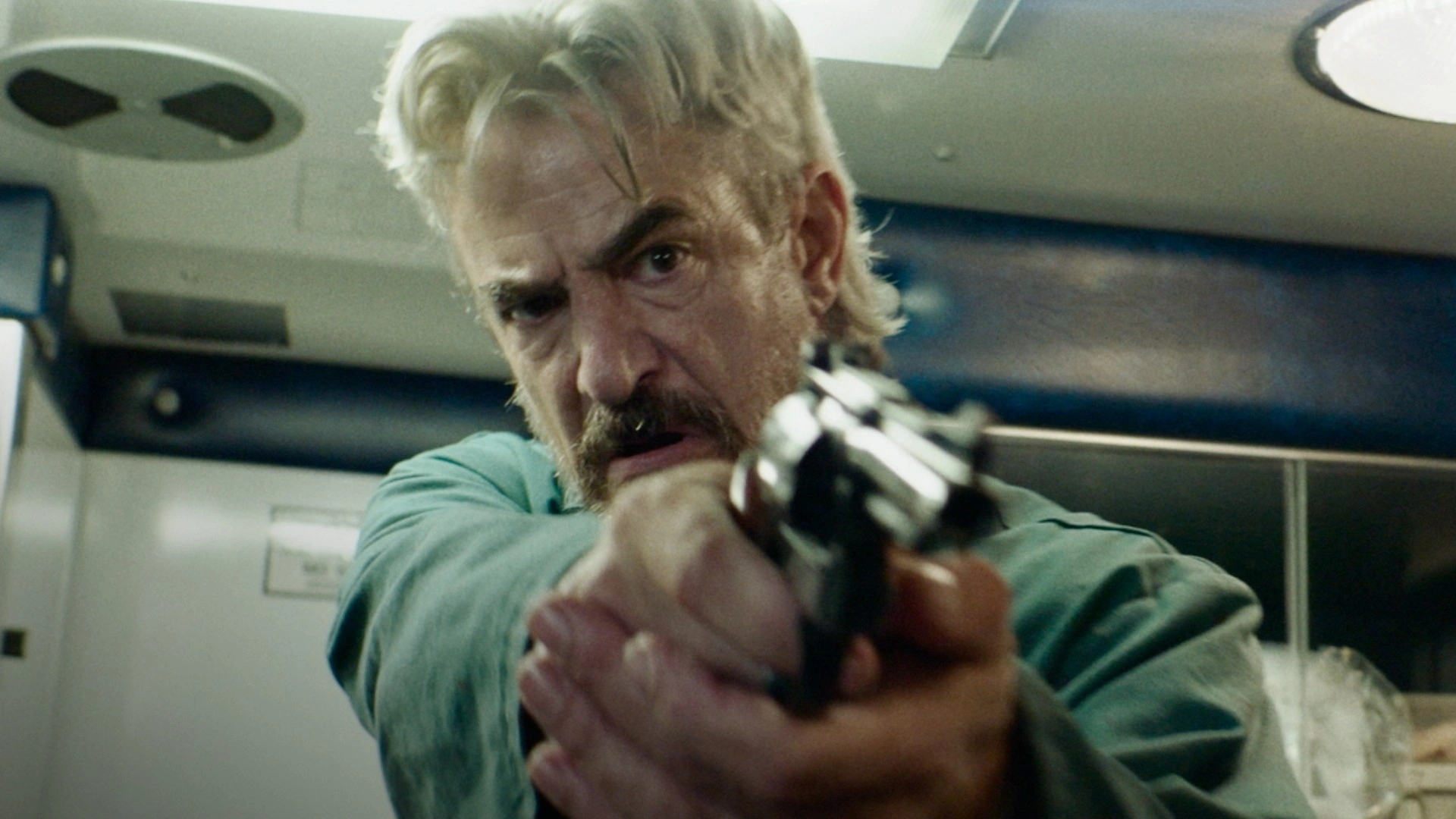

Max Morgan’s debut feature, Breakwater, studies friction with a severe, almost mineral patience. Oxford appears through rigid sandstone geometry, a world of angles, rules, and academic containment. The Suffolk coast answers with jagged geography, weathered edges, and water that seems to think in threats.
Otto, a theology student and aspiring violinist, moves between these spaces with visible unease. He visits his girlfriend, Lucy, yet the reunion has little warmth. Silence chills the space between them. Some holidays send people searching for beaches. This one could sell a library membership.
Otto’s refusal to drink gives that distance a body. His sobriety becomes a social barricade, a small ethical fortress that makes him unreadable to his peers. Then Otto meets John, a retired fisherman with a navy past, and the film shifts into darker water.
The encounter breaks the safety of Otto’s academic world and pushes him toward self-discovery with a dangerous edge. The waves operate as psychic architecture, reflecting his inner disorder. From its opening frames, Breakwater builds dread through environment and composition. The university isolates him with stone precision. The sea gives him violent clarity.
The Anatomy of Silent Grief
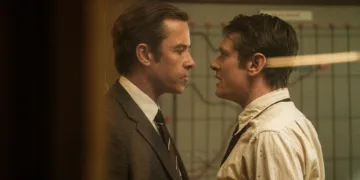
Otto and John’s relationship gives the film its quiet intensity. Daniel McNamee plays Otto with fragile innocence and deep conflict, letting buried pain surface by degrees. Shaun Paul McGrath gives John the necessary counterweight.
John lives on the social edge, shaped by the sea and scarred by his own history. Their bond develops through trauma, a private language formed by people who recognize the same kind of damage. The film sidesteps standard romantic mechanics and fixes its attention on their shared sense of drift.
The age difference is handled with welcome restraint. The point is psychological alignment, and the film keeps its gaze there. Each man becomes a shelter for the other. Otto’s scenes with Lucy sharpen that idea. Lucy tries to join her community by giving in to its rituals. She drinks because the room expects drinking.
Otto stays apart, immovable and faintly accusatory. Matt, Otto’s performative Oxford roommate, makes the isolation more visible. He brings dry comic relief and pushes a version of hedonism Otto cannot reach. Youth is wasted on theology students, apparently. The film argues, with bruised conviction, that shared pain can form a bond stronger than shared history. Their partnership becomes a survival tactic in an unkind world.
Tactile Dread and Fluid Morality
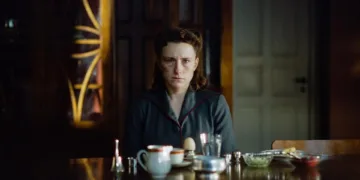
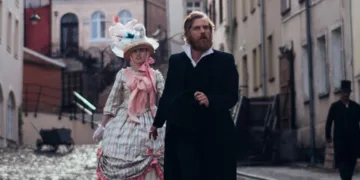
Breakwater builds its visual identity through expressionistic cinematography. Muted color, compressed framing, and patient camera movement create anxiety with physical texture. The camera studies small gestures until they become moral evidence. A panicked eye. A hesitant hand.
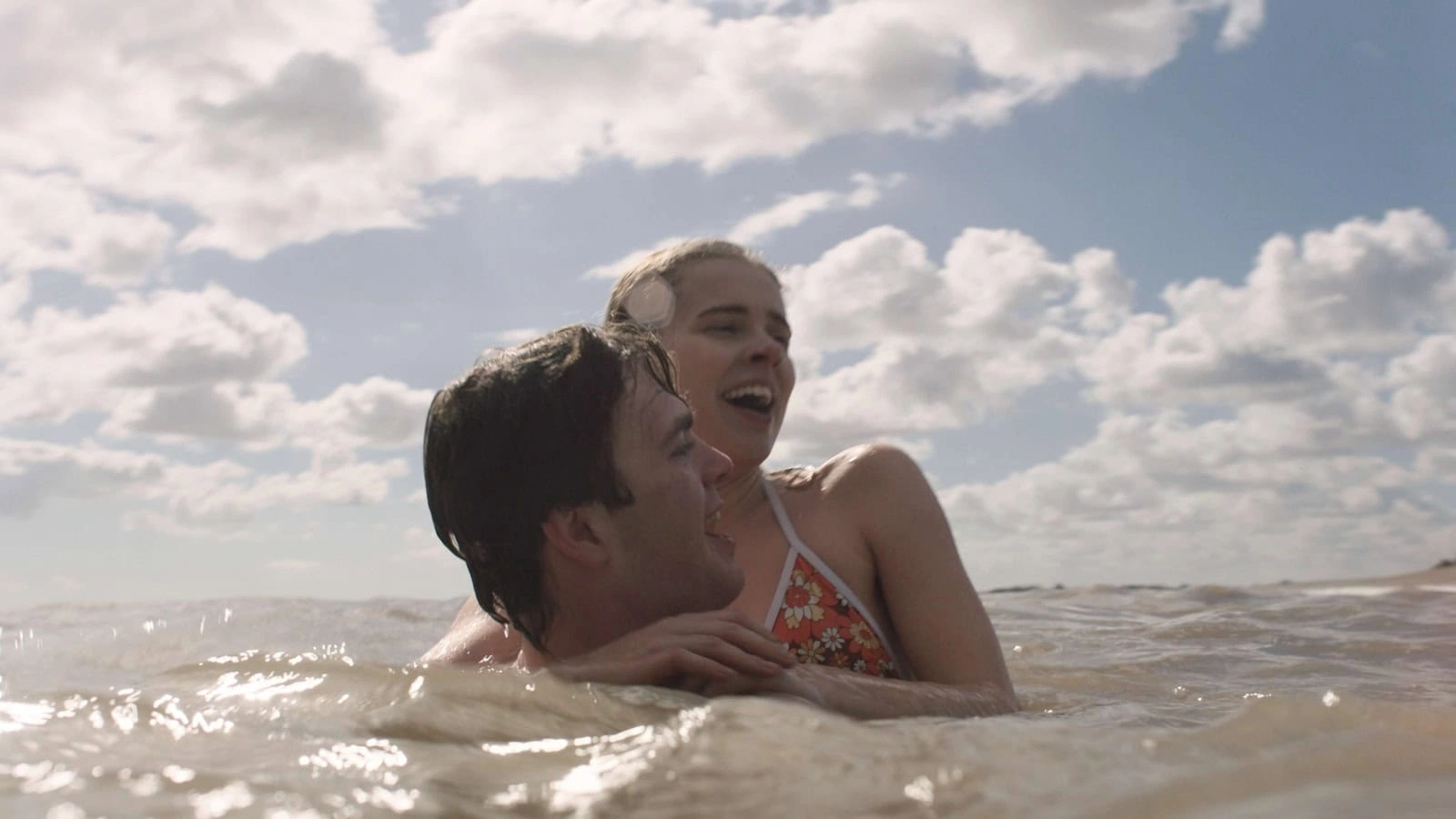
A body pausing before choice hardens into action. The intimacy edges toward intrusion, which is exactly the point. The viewer is pulled into Otto’s claustrophobia and kept there. The move from coastal summer light to the starkness of Christmas mirrors the plot’s tightening grip.
Alcohol carries the film’s symbolic pressure. Otto’s rejection of drink functions as a claim to control. Lucy reads that abstinence as moral bullying. The town treats it as the mark of an outsider. Through this motif, Morgan touches purity, liberation, judgment, and self-command without turning the drama into a lecture.
The setting becomes an antagonist in its own right. Storm-cut cliffs imply that the past stays near the surface, waiting to claw its way back into view. The score sometimes reaches for sentiment, clashing with the grim, salt-crusted visual design. That friction keeps perception unstable. Sound, pacing, and framing make safety feel provisional. The quiet drama begins to breathe like a psychological thriller.
The Mechanics of the Thriller Transition
Morgan handles the movement from character study to romantic thriller with firm stylistic control. The film studies masculinity and faith through constant questioning, withholding clean answers. Its noir lineage sits in the pressure of shadow, secrecy, and moral fog, updated through coastal realism and intimate psychological exposure. There is a hint of chiaroscuro in the way faces seem trapped between concealment and confession. Expressionistic framing turns rooms, cliffs, and shorelines into mental states. The old thriller machinery is present, tuned to a quieter frequency.
The script sometimes relies on expository dialogue to connect its threads. That habit makes the final act feel slightly compressed, with catharsis arriving before the emotional architecture is fully braced. Still, the central performances preserve the film’s gravity. McNamee and McGrath keep the melodramatic turns rooted in credible suffering. Breakwater studies the fear of leaving a prescribed path and the futility of absolute control.
Its characters are flawed people searching for direction inside guilt’s storm system. Morgan denies them traditional epiphanies and leaves the visceral weight of choice in place. The coastal isolation remains a sharp metaphor for their inner lives. Atmosphere and ambiguity carry the debut past its structural roughness. Morality moves like the tide.
The psychological thriller Breakwater had its world premiere at the Raindance Film Festival on June 18, 2025. Set between the academic halls of Oxford and the rugged Suffolk coastline, the film explores connections forged through shared trauma. Viewers can currently catch screenings at select independent theaters such as The Ultimate Picture Palace, as the project continues its run through the 2026 season.
Full Credits
Title: Breakwater
Distributor: Breakwater Pictures Ltd
Release date: June 18, 2025
Rating: 12A
Running time: 91 minutes
Director: Max Morgan
Writers: Max Morgan
Producers and Executive Producers: Jemima Chen, Lord Neil Mendoza, Andy Paterson, Mike Hoffman, Maria Aries, Harvey John, Tim Flynn, Danhua Chen, Su-Mei Thompson, Sarah Marshall, Anthony Todd, Daniel Gordon
Cast: Daniel McNamee, Shaun Paul McGrath, William Gao, Agnes Halladay, Noah Radcliffe-Adams, Jamie Pulley, Tess Gustard, Louise Gustard
Director of Photography (Cinematographer): Evan Bridges
Editors: Talia Caouki, Cenk Baysan, Ed White, Luke White
Composer: Alessandro MacKinnon-Botti, Bella Simpson
The Review
Breakwater
Max Morgan delivers a textured work that thrives on atmospheric dread and hushed performances. The film succeeds as a psychological study of isolation. It falters slightly when the script leans on heavy exposition during the final act. The connection between the leads provides a grounded emotional anchor. It is a work of significant visual ambition.
PROS
- Exceptional lead performances.
- Richly textured visual storytelling.
- Sophisticated handling of complex character dynamics.
CONS
- Hasty narrative resolution.
- Excessive use of dialogue to explain plot points.
- Thematic threads that remain partially thin.