

























Gwanglim Station is a burial ground for urban transit, an architectural wound through which thousands pass each day, unaware of the metaphysical grime clinging to the tiles. Da-kyeong enters as a YouTuber with a career pulse barely registering. Her hunger for relevance sends her to the unnamed station master, whose knowledge has the air of something stored too long underground.
Their encounter plays like a séance with receipts: high-end liquor offered for the station’s oral histories. The exchange echoes the classic noir informant arrangement, with digital clout serving as the modern currency. Ozone, fatigue, and old secrets seem to thicken the air. Da-kyeong treats these accounts as uploadable material, stripped of warning value.
She becomes a contemporary investigator with a ring light and a camera, dragging darkness toward an audience trained to consume borrowed terror. The station master functions as a tired custodian of nightmares. He watches her prepare to trade safety for a brief rise in engagement. A bleak bargain. A supernatural case file with poor workplace protections.
Vignettes of the Cursed Passenger
The station master offers a procession of grim vignettes. The first follows an abrasive dropout who encounters a passenger violently fixated on glass surfaces. The repeated impact of a head against a train door forms a brutal metronome, and the rhythm works on the nerves with rude efficiency. This sequence studies casual rudeness and the collapse of empathy in public space.
The second tale turns toward the predatory machinery of beauty standards. A high school girl is chased by a bandaged figure carrying a cup of acid. The pursuit makes literal the corrosive pressure of physical perfection, using the station’s sterile bathrooms as a chamber for body dysmorphia. The third story concerns a homeless man and a vending machine that dispenses fortune and erasure.
Enchanted cans allow him to make rivals vanish, lifting him up a social ladder built from ghosts. Each character suffers from a precise moral blindness. Their flaws operate like invitations to the supernatural forces living inside the station. Taken together, the stories register as symptoms of social decay. The movement from the framing narrative into these nightmares stays fluid. The station master’s voice becomes the passage between the ordinary and the macabre.
Fluorescence and the Architecture of Dread
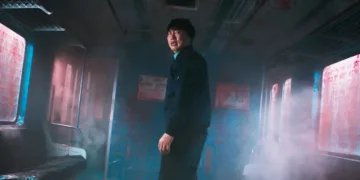
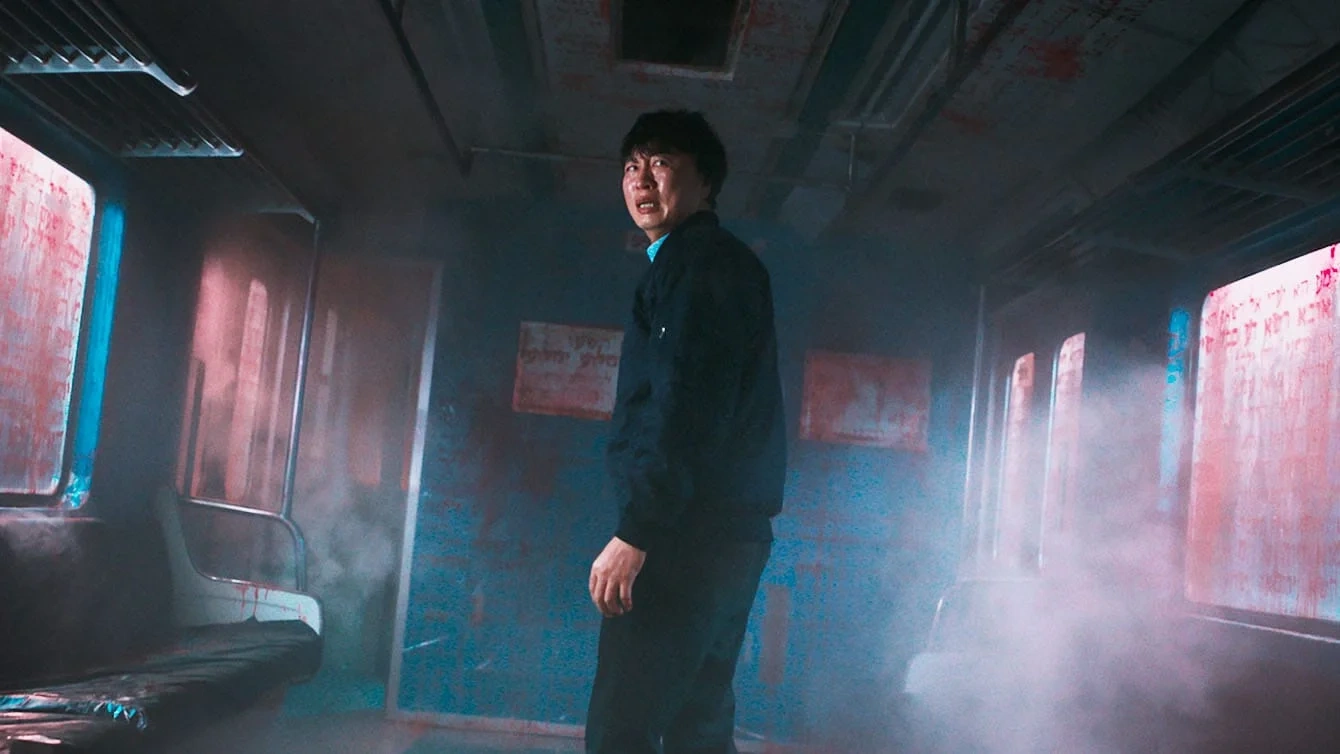
Tak Se-woong uses the station’s geometry to generate sustained claustrophobia. Tunnels stretch into maze-like conduits with no clear exit, giving every corridor the manners of a trap. Kwon Yeong-il’s cinematography draws force from sharp visual extremes. Harsh, sickly platform fluorescence drains into the dense shadow of maintenance rooms.
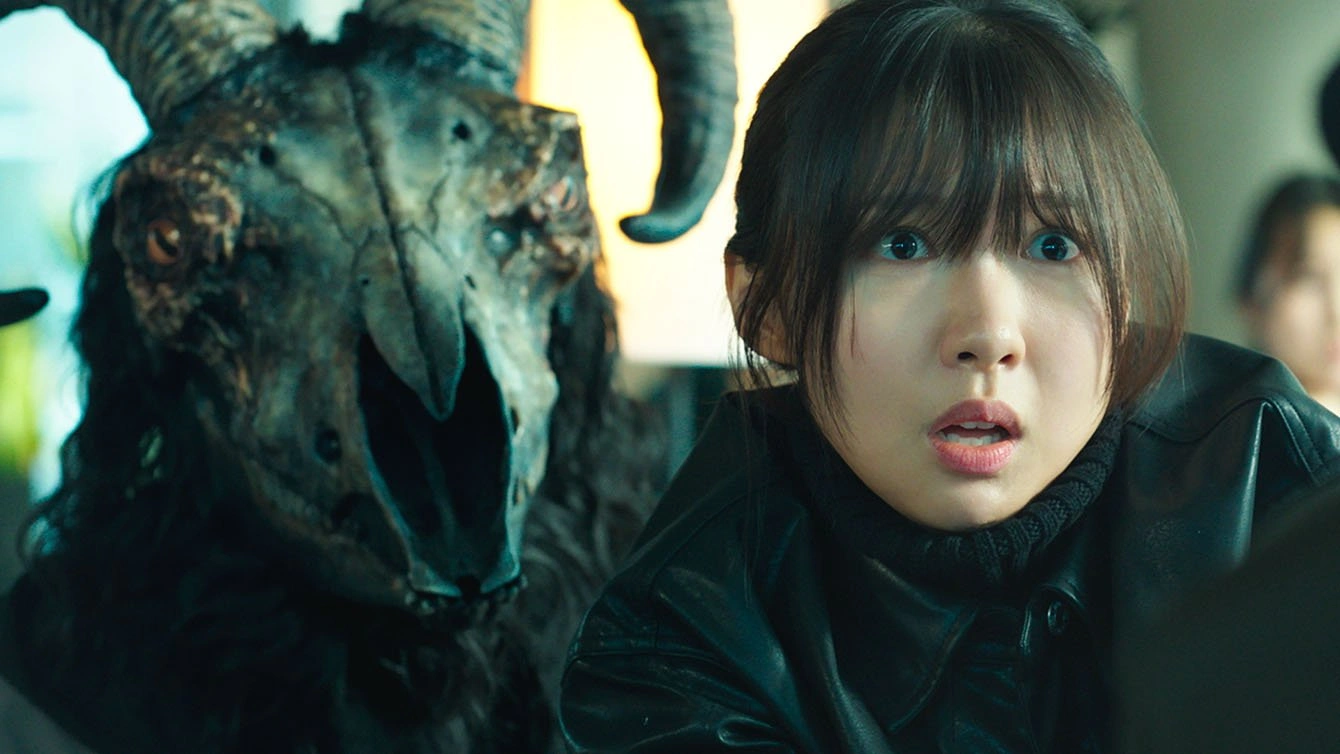
The lighting recalls classical noir chiaroscuro, where the built environment seems to confess the instability of the people moving through it. Practical effects dominate digital artifice, giving the horror a tactile and bruising texture. The entities contort with a physicality that feels perversely anatomical.
Bodies twist past skeletal reason. The sound design sharpens this pressure through the metallic screech of tracks and the wet thud of impact, cues that train the audience to anticipate damage before it arrives. Jo Ba-reun’s script maintains structural tightness through small details, including a background figure in one tale becoming a protagonist in another.
Shared destiny gathers in the margins. This pattern turns the station from backdrop into accomplice. The camera often stays low, trailing characters with the insinuation of a presence just outside the frame. It is a technical exercise in controlled dread. The film trusts visual cues to carry what exposition would flatten.
The Terminal of Vanity and Secular Cults
The final act requires the digital and the occult to collide. Da-kyeong’s rivalry with the beauty influencer Hye-jin grows into a grotesque physical expression of professional enmity. Jealousy opens the door for supernatural interference inside their workspace. The discovery of a forgotten chapel beneath the tracks gives the station’s malevolence a historical anchor.
This cultic backstory explains the spiritual vacuum that attracts the desperate and the vain. Da-kyeong’s transformation is grimly methodical. Her observer role collapses as she becomes a key figure in the station’s lore. Empathy drains away, replaced by cold calculation for the next viral hit. That loss of humanity makes her an ideal candidate for the ghost train’s arrival.
The titular vessel functions as the terminal point for every preceding story, a physical form for the attention economy’s destructive appetite. The characters fall victim to their own cravings for status and wealth. Their arcs are shaped by a refusal to look away from mirror or screen. The horror lands in the recognition that they have become the ghosts they planned to exploit. The supernatural supplies the mechanism for their self-destruction.
Ghost Train premiered in South Korean theaters on July 9, 2025, marking a significant entry in the year’s summer horror lineup. Following its domestic success, the film was released to North American audiences on February 17, 2026, via major digital and VOD platforms. As of May 6, 2026, the film is widely available for streaming and purchase on services such as Apple TV, Vudu, and Amazon through its distributor, Well Go USA Entertainment. The narrative’s focus on the modern attention economy has made it a particularly relevant title for digital-native audiences.
Where to Watch Ghost Train (2024)










Full Credits
Title: Ghost Train (괴기열차)
Distributor: Next Entertainment World, Well Go USA Entertainment, Shaw Organisation, GSC Movies
Release date: July 9, 2025 (South Korea theatrical), February 17, 2026 (North America digital/VOD)
Rating: NC16, 16, Not Rated
Running time: 94 minutes
Director: Tak Se-woong
Writers: Jo Ba-reun
Producers and Executive Producers: Kim Young-min, Pyeon Kyung-woo
Cast: Joo Hyun-young, Jeon Bae-soo, Choi Bo-min, Kim Ji-in, Kim Woo-kyum, Kim Na-yeon, Jin Sung-chan, Lee A-yul
Director of Photography (Cinematographer): Kwon Yeong-il
Editors: Kim U-il
Composer: Jo Seongjin
The Review
Ghost Train
Ghost Train functions as a cynical mirror of our digital era. It trades in the currency of moral decay and urban alienation. Tak Se-woong manages to anchor supernatural tropes in a tactile, claustrophobic reality. While the narrative occasionally stumbles into familiar genre rhythms, the technical precision and practical effects maintain a chilling grip. It represents a sharp critique of the attention economy. The film suggests that our modern vanity is a ritual far older and highly dangerous compared to what we realize. It is a grim, stylish descent into the tunnels of the collective psyche.
PROS
- Expert use of chiaroscuro lighting to define subterranean spaces.
- Practical effects provide a visceral, tactile weight to the horror.
- The script creates meaningful overlaps between disparate character arcs.
- Effective translation of social anxieties into supernatural threats.
CONS
- Certain narrative resolutions feel tethered to predictable tropes.
- Secondary character development remains relatively thin.
- The pacing fluctuates during the introduction of the occult history.