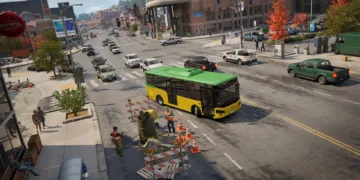



























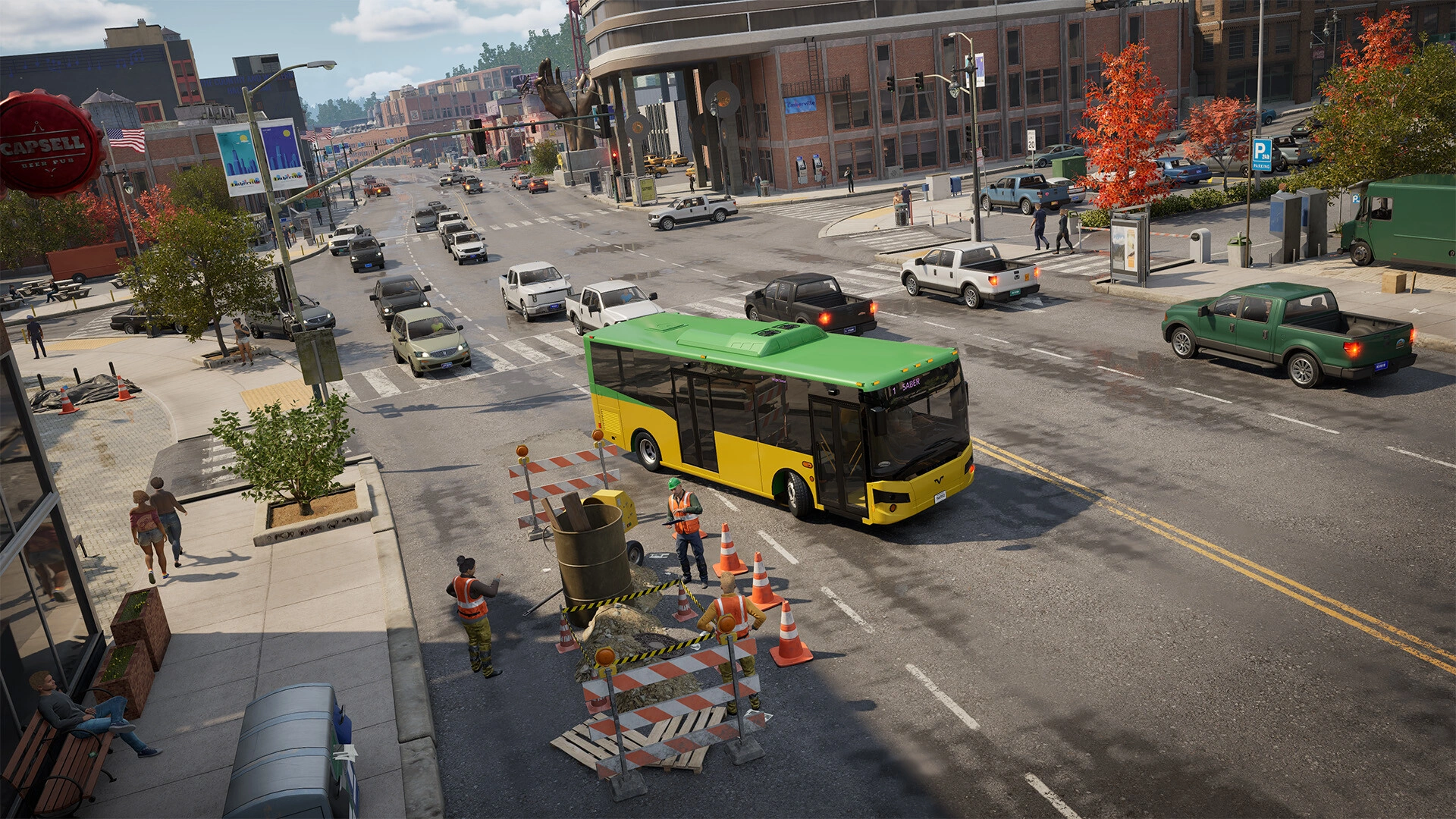

Bus Bound arrives from Stillalive Studios as a calm study of the urban commute. Its interest lies in civic duty and the quiet texture of public service, with the grueling minutiae of corporate logistics kept at a distance. The setting is Emberville, a fictional American metropolis shaped as a civic stage for connecting scattered neighborhoods.
Earlier entries in the genre demanded punishing technical precision. This title gives priority to the tactile pleasure of movement, asking the player to feel the rhythm of the route before worrying over mechanical complexity.
You play as a driver whose work reaches past passenger delivery. Each successful route contributes to the revitalization of the city itself. Mastering routes and expanding the transit network creates a clear link between reliable public service and urban renewal.
The game’s relaxed atmosphere favors the steady rhythm of the road over the high stakes associated with management sims. Its cultural imagination is rooted in a very American idea of the city: fragmented districts, civic repair, and public infrastructure as a form of shared responsibility. The bus becomes a vessel for community connection, turning driving into a peaceful relationship with Emberville’s living environment.
The Social Currency of the Commute
Progress in Bus Bound depends on social validation, with passenger satisfaction serving as the main engine of growth. The likes system converts driving quality into a practical resource. Smooth braking and punctual stops generate the funding needed to revive entire districts.
As those digital accolades accumulate, the city visibly changes, with decay giving way to public art and cleaner streets. The mechanic echoes real-world urbanist thinking about accessible transit and its power to reshape a city’s daily life.
The game includes seventeen licensed vehicles, each with a distinct physical presence. A massive accordion bus requires a different sense of space from a standard model, yet the simplified control scheme keeps the experience approachable.
Streamlined button prompts replace complex cockpit interactions, keeping attention on traffic flow and route discipline. That choice gives the game a global accessibility that pairs neatly with its local American setting: the systems are easy to read, yet the civic fantasy remains tied to Emberville’s North American design language.
The four-player cooperative modes strengthen the communal identity of the work. Players can work together to raise a neighborhood’s standing, turning a solitary job into a shared municipal project. The structure gives mechanical form to the game’s main narrative idea: public transit matters because many small acts of reliability can alter a city’s condition.
Urban Motion and Built Space
Emberville reflects a careful approach to digital architecture, mixing dense downtown cores, sprawling industrial zones, and quiet residential suburbs. The city feels populated by a reactive public, with AI drivers often yielding to your signals in a rare display of digital courtesy. That small gesture gives the commute a social texture, suggesting a city willing to cooperate with the player’s role as a public servant.
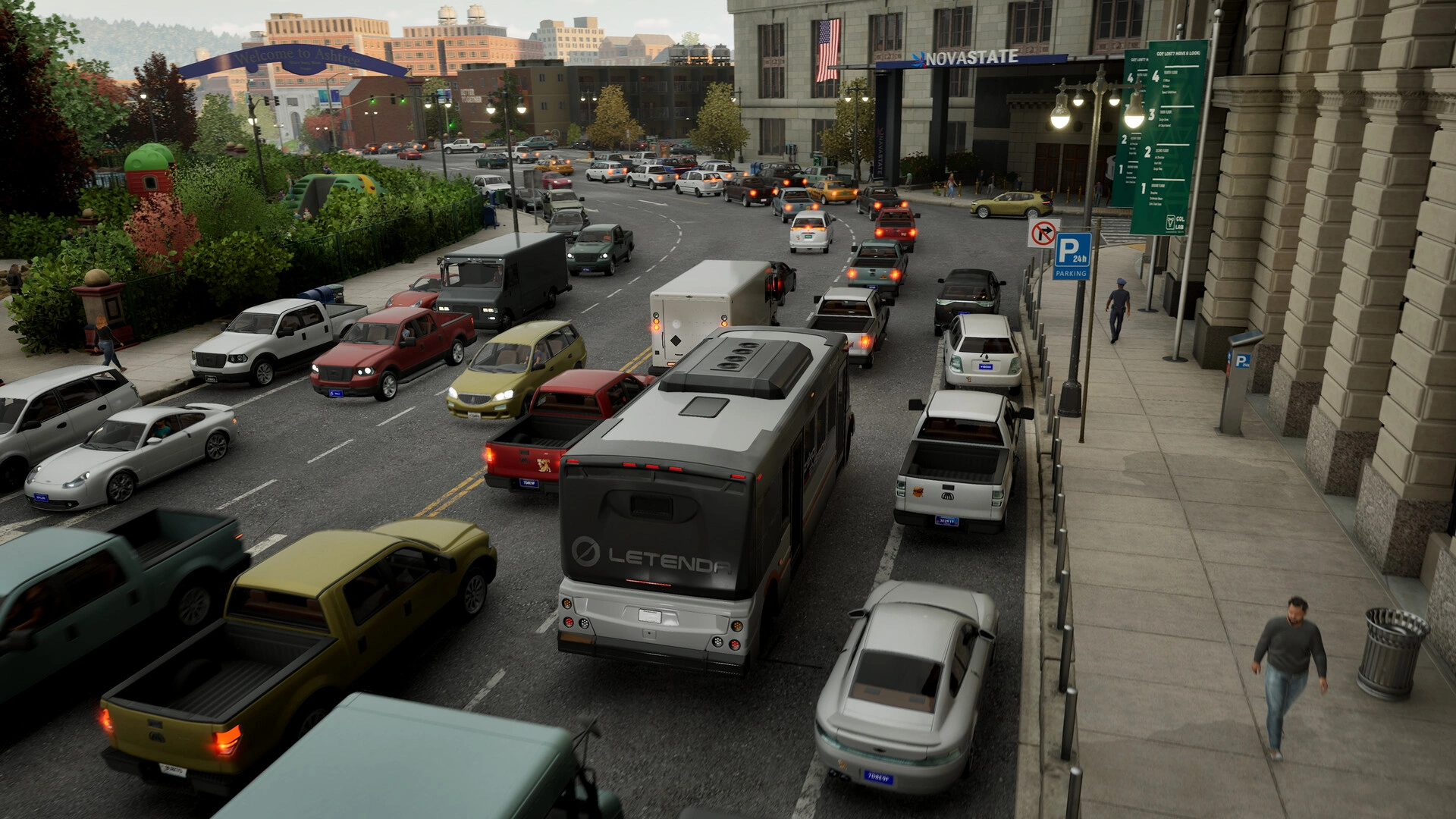
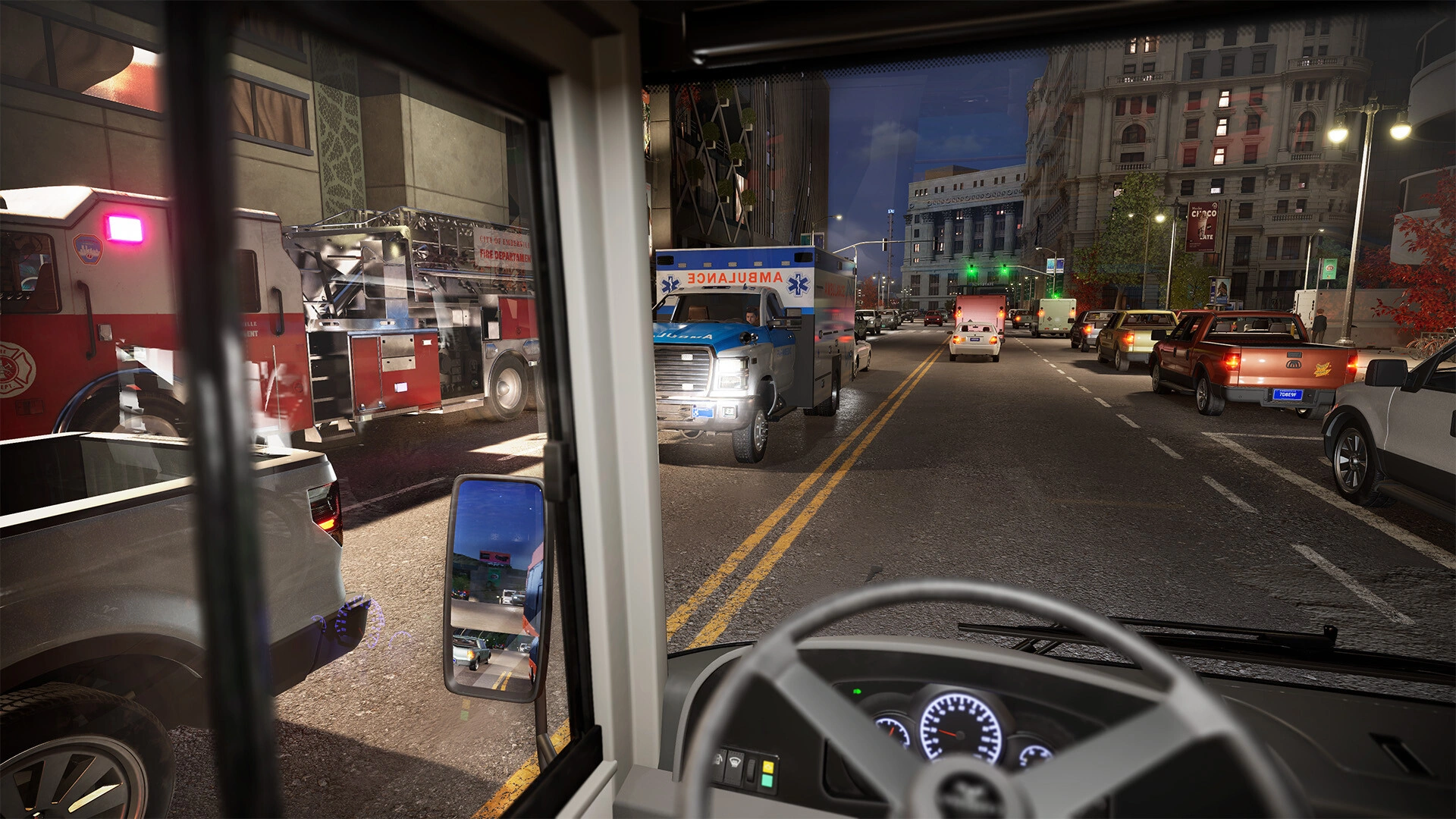
A dynamic weather system deepens that sense of place. Rain and snow require a changed approach to the road, since visibility drops and tires lose grip against the asphalt. The player can experience this world through a rigorous first-person cockpit view or a wider external camera that helps with tight corners. The game’s visual fidelity is strong, especially in the way light moves across surfaces during the full day-and-night cycle.
Technical hiccups sometimes interfere. Stuttering mirror reflections can break immersion, yet the environmental detail remains strong enough to preserve the city’s identity. A local radio station supplies music and driving advice, though its limited playlist begins to repeat during longer shifts.
These pieces create a grounded setting shaped by the aesthetics of North American urban design, with wide roads, district variety, and a civic tone that feels culturally specific without becoming inaccessible to players elsewhere.
Balancing Weight and Forgiveness
The vehicle handling finds a careful balance between heavy realism and arcade fluidity. Each bus has a clear sense of mass that affects how you approach turns, and the steering stays sharp enough to feel responsive. Speed limiters and traffic rules anchor the experience in reality. Stop signs and red lights must be respected to avoid penalties, giving the commute a structure of civic order.
The simulation remains forgiving. It values steady route performance over harsh punishment for minor mistakes, which keeps the relaxed tone intact. Passenger AI can behave strangely, complaining loudly about small bumps and staying quiet during rougher maneuvers. That inconsistency creates a small rupture between the social systems and the driving model, since passenger reactions do not always match what happens on the road.
The game adds cultural specificity through regional traffic laws, including the American allowance for right turns on red lights. That detail gives the mechanics a local flavor and reminds the player that driving rules are cultural habits as much as technical systems. Short shifts support quick sessions with the city, and free roam mode offers unconstrained map exploration. The result is a driving game where the weight of the bus supports the pleasure of movement without turning the commute into a burden.
The Review
Bus Bound
Bus Bound succeeds as a tranquil exploration of civic life, trading stressful management for the steady satisfaction of the open road. While the AI behavior and technical polish lack total consistency, the focus on community growth through transit provides a rewarding sense of purpose. It is an ideal pick for those seeking a meditative experience within a beautifully realized urban environment.
PROS
- Relaxing and accessible gameplay
- Detailed, evolving city map
- Meaningful progression through district upgrades
- Fun cooperative play
CONS
- Repetitive radio tracks
- Inconsistent passenger feedback
- Minor technical glitches with mirrors