




























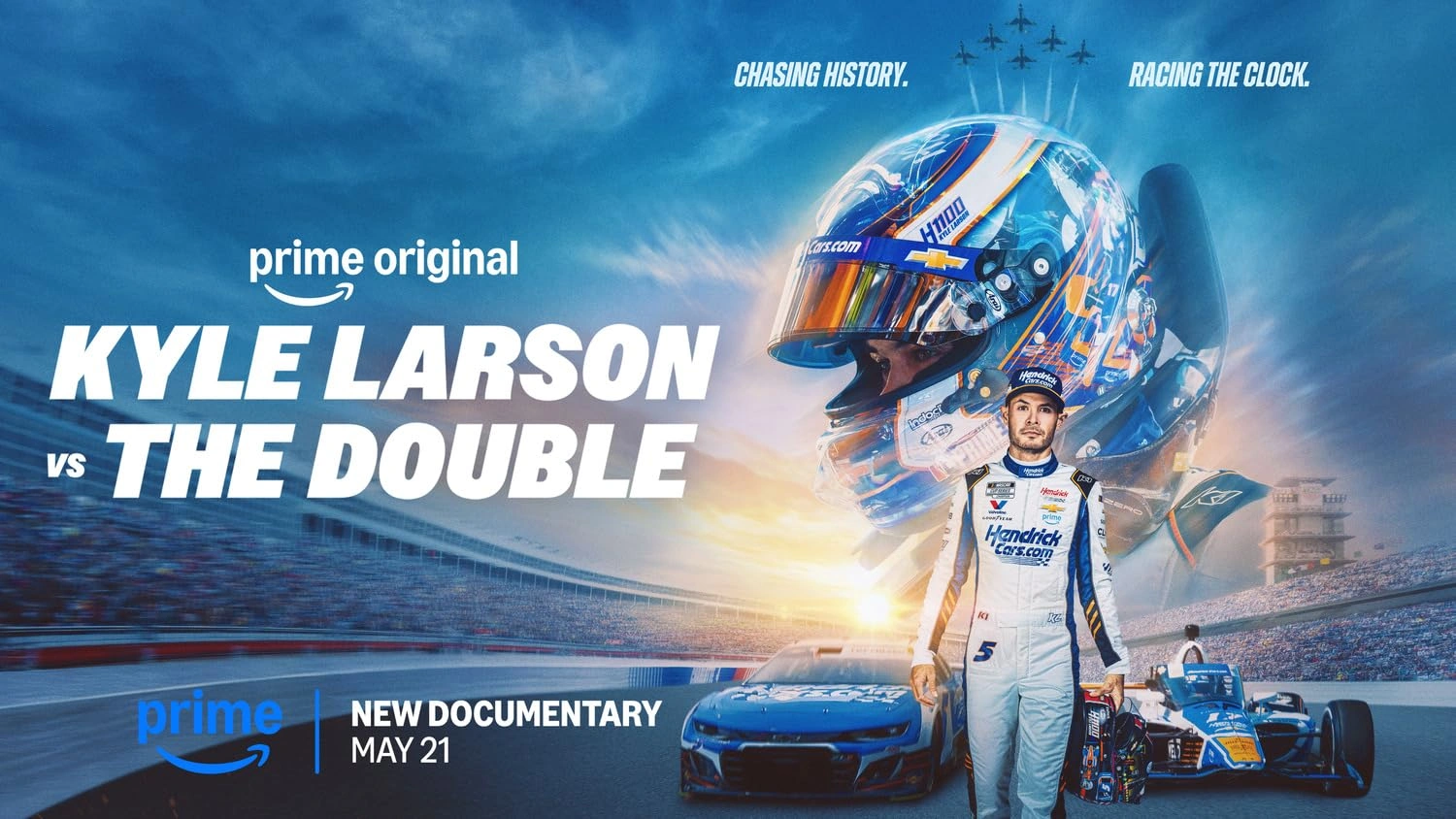

The ticking clock and the roar of a combustion engine set the coordinates for Kyle Larson vs. The Double, Cynthia Hill’s documentary that arrived on Prime Video in May 2026. Hill builds the film from the meeting point of extreme athletic endurance and the frightening precision of modern corporate transit.
Her subject is two time NASCAR Cup Series champion Kyle Larson, followed across his highly publicized 2024 and 2025 attempts to master one of motorsports’ harshest logistical tests. The challenge asks a driver to cover 1,100 miles under race conditions in a single day, split between the open wheel Indianapolis 500 in Indiana and the stock car Coca Cola 600 in Charlotte, North Carolina.
Hill moves past the familiar rush of the triumphalist sports broadcast. The film finds its rhythm in tight flight windows, geographic fatigue, and sudden weather systems that reshaped both attempts. Its structure has the suspense of a split-location thriller, with clocks, aircraft, pit crews, and radar screens carrying as much narrative weight as the car itself.
I kept thinking of the best racing coverage, where the drama sits in the seconds before the green flag. Here, the story becomes an operational puzzle in which willpower, atmosphere, and air traffic control keep rewriting the script.
High Speed Imagery and Sonic Dissonance
Hill shows a sharp grasp of space while filming the vast acreage of the Indianapolis Motor Speedway and the high banks of Charlotte Motor Speedway. The visual strategy avoids the hyperactive, rapid fire cutting that dominates many modern sports highlight packages.
The cinematography favors sustained, wide perspective compositions, giving viewers room to feel the terrifying speed of the cars against concrete barriers. Those longer shots let tension build through the track’s natural geometry. The massive crowds and the frantic choreography of pit road create real, suffocating suspense during the countdowns to the green flags, with pressure gathering around the pit boxes before the engines fire.
That visual discipline makes the sound choices feel especially disruptive. The documentary has a serious technical flaw in its audio design, using inaccurate, clearly dubbed vehicle sounds that break the realism of the racing sequences. Motorsports purists will hear the problem at once during major track passages. Low slung, high revving open wheel IndyCars are paired with the deep, throaty pushrod V8 rumble of a NASCAR stock car.
Other passages lean on generic sports car audio tracks, or stranger acoustic profiles that resemble vintage 1990s stock cars accelerating at Daytona. The mismatch weakens the formal authenticity created by the camera crews. Viewers who know the acoustic difference between a Dallara chassis and a Next Gen stock car will feel the illusion crack. The audio track fights the images, turning a potentially immersive sensory experience into an irritating sign of editorial carelessness. For the racing community most ready to appreciate the film, that choice lands with a thud.
The Elite Machinery Behind the Impossible
The production team gained extraordinary access to restricted sporting and corporate spaces, placing cameras inside specialized race shops, private aviation hangars, and intimate driver preparation rooms. That closeness captures the physical cost of the dual campaign. Larson appears visibly drained by gravity and lack of sleep.
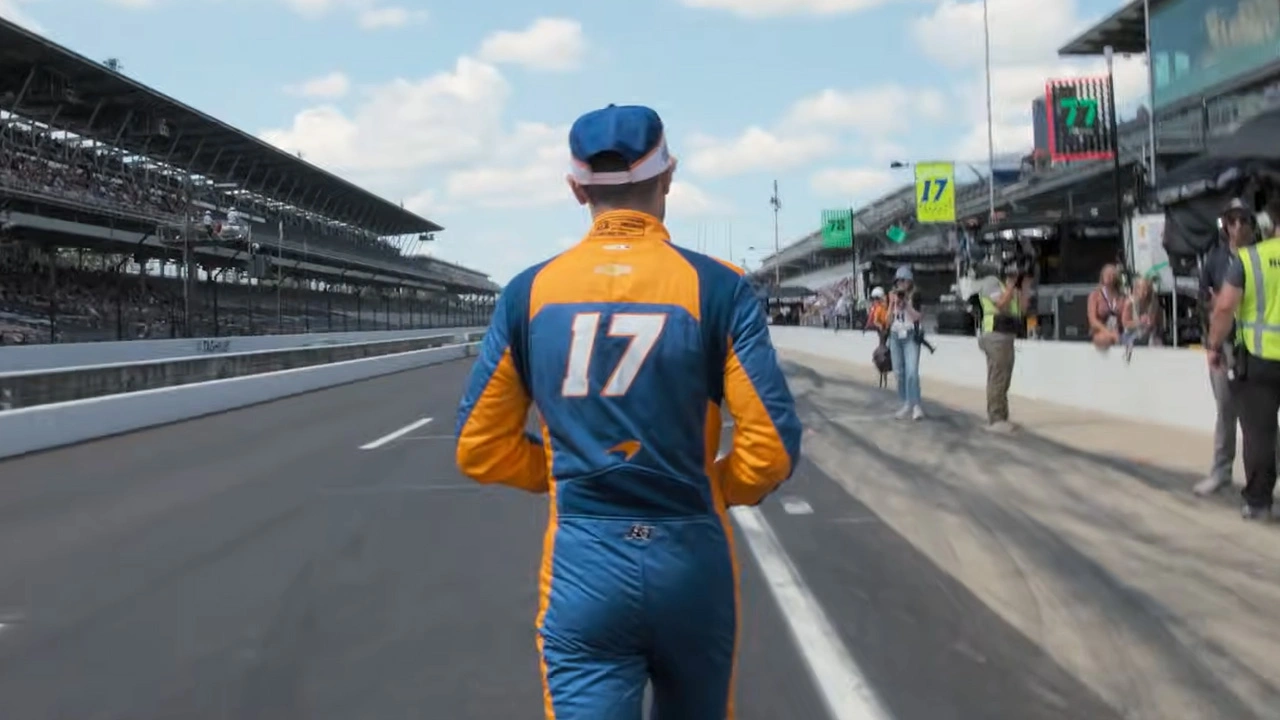
The film also stumbles by valuing access above sustained critical evaluation. The screen becomes a steady display of wealth and elite infrastructure: private luxury jets, charter helicopters, minute by minute corporate itineraries, and corporate handlers guiding every movement across state lines.
This imagery creates a deep thematic irony, and the film leaves it underexplored. The voiceover and interviews keep shaping the 1,100 mile project as an almost impossible athletic mountain, with Larson framed as a solitary warrior facing the limits of human capability. The visuals tell a story of elite, multi million dollar corporate machinery engineered to shield the driver from ordinary human friction. That resource contradiction complicates the classic underdog myth.
The helicopter waiting on the tarmac, the police escorts, and the customized physical therapy tables change the nature of the struggle. The film presents an exhibition of corporate efficiency dressed in the language of individual survival. Larson appears as an exceptionally disciplined, emotionally compartmentalized competitor, and that focus makes him seem strangely distant from his own story.
The cameras capture yawning and physical stiffness, yet the editorial perspective never gets through his polished, media trained exterior. The result is a portrait of a highly calibrated corporate asset moving through an elaborate corporate matrix, with limited access to the multi dimensional athlete inside the event.
Corporate Branding and the Realities of Recovery
The final section addresses Larson’s 2020 suspension from professional racing after he used a racial slur during a publicly broadcast virtual racing event. Hill includes historical footage of the corporate fallout, along with Larson’s direct, sober apology on camera.
The pacing speeds up sharply here, giving a highly sensitive cultural event a thin treatment. The film reshapes the controversy into a standard narrative obstacle, using a major public mistake as an inspirational hurdle inside a prepackaged comeback story built to validate his current triumphs.
That quick thematic turn skims over the mechanics of institutional power and professional restoration. Larson’s swift return to a championship winning seat at Hendrick Motorsports came through elite corporate partnerships, major automotive sponsorships, and a deep network of institutional protection that chose to preserve its investment. The film keeps favoring polished public relations branding over substantive analysis of structural privilege.
By shaping the recovery story around individual perseverance and grit, the narrative ignores the uneven playing field of professional sports. A driver lacking elite corporate value and institutional backing would face permanent, career ending exile for the same public actions.
The film treats this difficult situation as a clean account of personal growth and professional resilience, then settles into a safe, corporate approved redemption arc. Kyle Larson vs. The Double leaves its hardest questions about systemic accountability, corporate interests, and the nature of modern sports public relations sitting on the garage floor.
The feature length documentary Kyle Larson vs. The Double premiered globally on Prime Video on May 21, 2026. The sports film chronicles the intense real world preparation and operational choreography behind the elite driver’s highly anticipated attempts to finish both the Indianapolis 500 and the Coca-Cola 600 in a single calendar day. Audiences looking to watch the high speed feature can stream it directly via an active Prime Video subscription across compatible digital platforms.
Where to Watch Kyle Larson vs. The Double (2026) Online


Full Credits
Title: Kyle Larson vs. The Double
Distributor: Prime Video, Amazon MGM Studios
Release date: May 21, 2026
Rating: TV-14
Running time: 1 hour 42 minutes
Director: Cynthia Hill
Writers: Cynthia Hill
Producers and Executive Producers: Cynthia Hill, Sandra Davidson, Tom Vickers
Cast: Kyle Larson, Jeff Gordon, Rick Hendrick, Kyle Busch
Director of Photography (Cinematographer): Jereme Aubertin
Editors: Gill Holland
The Review
Kyle Larson vs. The Double
Kyle Larson vs. The Double delivers a spectacular visual exhibition of modern athletic endurance, capturing the punishing physical realities of high speed racing with pristine clarity. Unfortunately, the narrative engine operates entirely on safe public relations fuel. By substituting superficial comeback tracking for rigorous analysis of corporate privilege and historical controversies, director Cynthia Hill protects the polished branding of its subject rather than confronting his human complexities. For motorsports enthusiasts, it provides thrilling trackside footage slightly marred by careless audio dubbing. For general audiences, it remains an impressive but emotionally hollow profile that refuses to ask the hard questions.
PROS
- Composed, wide perspective shots that capture the true physical scale of both iconic speedways without relying on disorienting edits.
- Authentic translation of race day tension, structural mechanics, and the psychological impact of impending weather delays.
- Behind the scenes entry into private aviation, elite workshops, and intimate driver staging environments.
CONS
- Blatantly flawed audio production that overlays stock car sound profiles onto open wheel vehicle footage, breaking immersion for racing purists.
- A rapid, public relations focused treatment of the driver's serious 2020 controversy that prioritizes clean branding over accountability.
- Fails to explore the massive contradiction between the "impossible challenge" narrative and the elite multi million dollar infrastructure facilitating it.