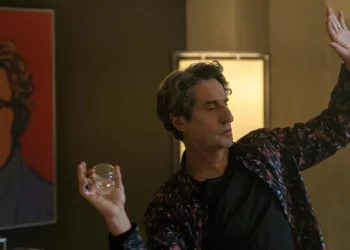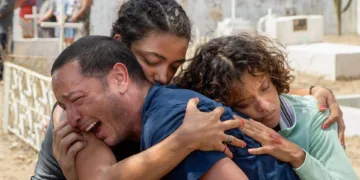
























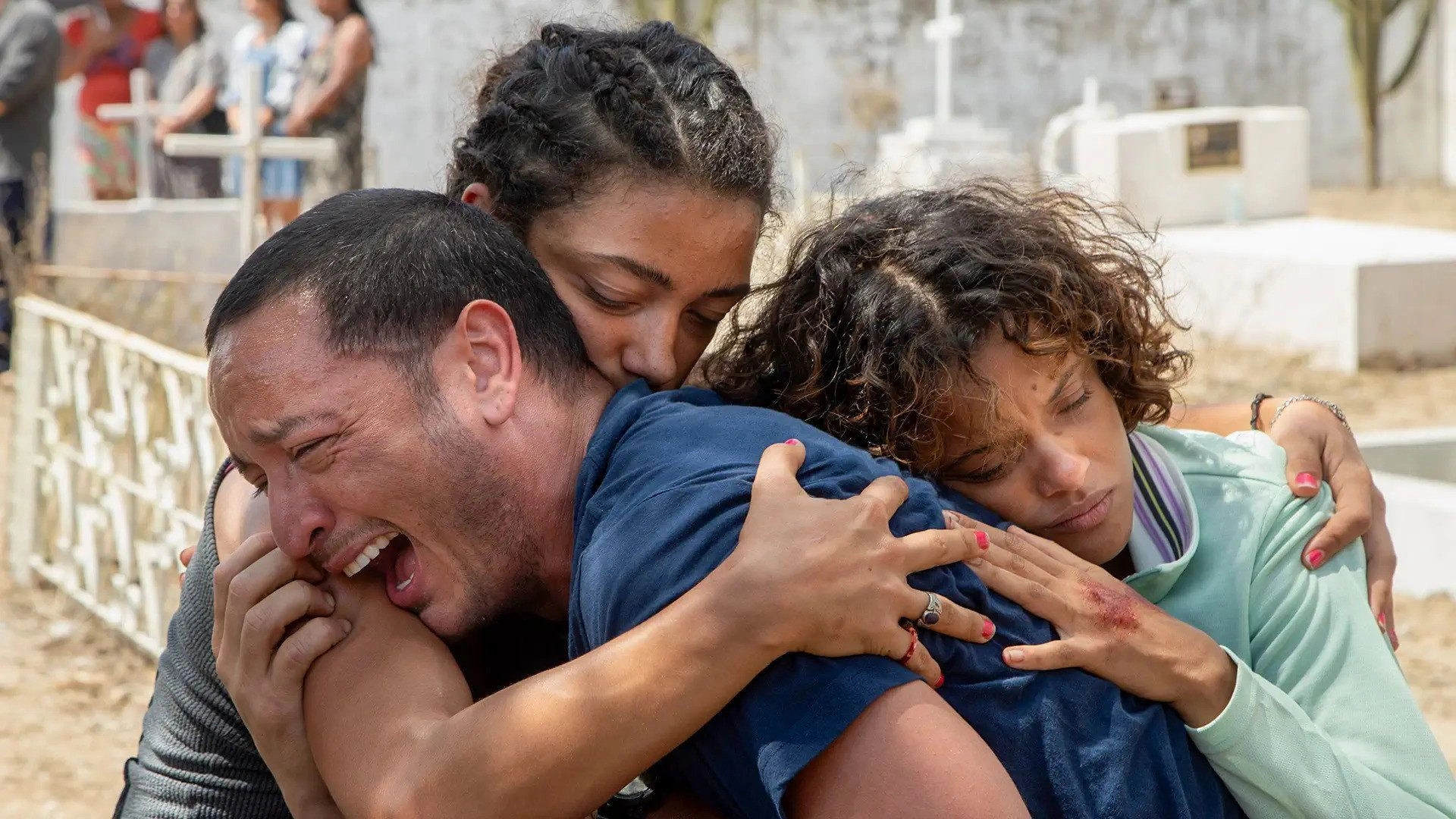

The second season of New Bandits begins with the force of a dry wind tearing through what remains of Ubaldo Vaqueiro’s old identity. The São Paulo banker who once approached Cratará with confusion and reluctant curiosity has been all but burned away. The destruction of the settlement church and Ernesto’s death do not simply move the plot forward. They erase the last fragile bridge between Ubaldo’s adopted past and the violent inheritance waiting for him in the Northeast.
That shift gives the season a harder, more fatalistic shape. The first season carried the energy of discovery, with Ubaldo pulled into a lineage he barely understood. Season 2 replaces discovery with endurance. Cratará is no longer a place he is trying to understand from the outside. It is the ground beneath his feet, the dust in his lungs, the trap closing around his family.
The series understands that violence in this world is rarely random. It is fed by land, hunger, political neglect, family mythology, and institutions that treat legality as a luxury reserved for those already in power. The Maleiros do not simply threaten the Vaqueiros through guns and intimidation. They represent a system where law can be bent into a private weapon, where the poor are expected to accept scarcity as destiny, and where survival itself becomes criminal once the state has abandoned you.
Ubaldo’s transformation carries the season’s darkest charge. He becomes a leader through trauma, guilt, and rage. That leadership is necessary, yet deeply unstable. The show refuses to romanticize his descent. His retaliation may feel satisfying in the moment, especially against enemies drawn with such brutality, yet every act leaves residue. He is becoming the man his bloodline prepared him to be, and the season keeps asking what that inheritance costs.
The Fracture of Family and the Weight of Leadership
The Vaqueiro family remains the strongest dramatic engine of the series because its bonds are never clean. Loyalty here is intimate, bruised, and transactional by necessity. These people love one another, resent one another, save one another, and damage one another with alarming ease. Family is treated less as a sentimental refuge than as a pressure chamber.
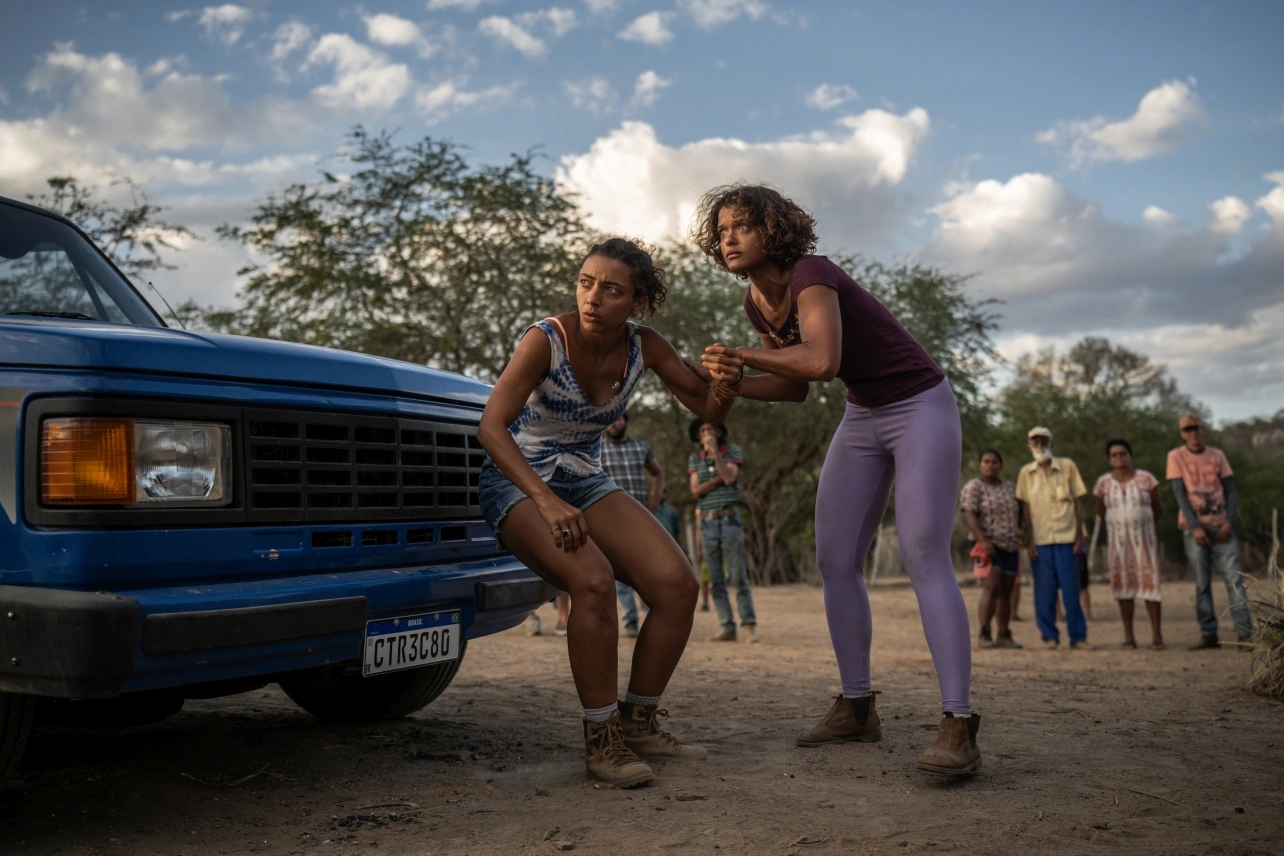
Ubaldo stands at the center of that chamber, though the series is wise enough to let others test his authority. His rage has become volcanic, and the season often shows how poor a weapon rage can be when strategy is required. He can intimidate, retaliate, and inspire fear. Containment is another matter. His confrontations with authority expose a man who has lost the habits of civilian restraint without fully mastering the discipline of bandit leadership.
That instability makes Dinorah essential. She is the season’s tactical spine, the person most capable of reading danger before it becomes catastrophe. Her role could easily have been reduced to fierce enforcer, a familiar trap for women in crime dramas that confuse strength with permanent hardness.
Instead, the writing gives her calculation, unpredictability, and emotional density. She understands the terrain, the enemies, and the family’s weak points. She is violent because the world has trained her toward violence, yet the performance gives her intelligence beyond survival instinct.
Dilvânia and Zeza bring a different kind of force. Their presence gives the season a moral and spiritual architecture, which matters in a narrative otherwise dominated by revenge. Dilvânia’s arc is especially delicate. She does not function as a passive symbol of goodness.
Her empathy has weight because it exists inside a brutal environment. She sees pain without using it as an excuse for surrender. In a story where retaliation pulls every character toward the same abyss, her capacity for healing feels quietly radical.
Zeza grounds the family in memory and tradition. She carries the kind of stabilizing presence that can be mistaken for stillness, though the series treats that steadiness as labor. In households shaped by fear, someone must hold the line between grief and collapse. Zeza does that work without demanding the camera’s constant worship.
The arrival of figures such as Lino expands the Vaqueiro unit without disrupting its chemistry. The group feels lived-in, marked by jokes, suspicion, tenderness, and friction. This is where the casting becomes part of the show’s cultural argument.
These performances do not feel assembled from external ideas about the Northeast. They feel rooted in place, speech, gesture, and rhythm. In an industry that has too often flattened regional identities into accent work and scenic poverty, that matters.
Water, Power, and the New Landlord Class
Season 2 gains force by widening its conflict beyond robbery and family revenge. The political axis sharpens the show’s social critique, giving the Maleiro threat institutional reach. Crime and official power are not treated as opposing forces. They are partners wearing different fabrics.
The rise of Paulino Leite as a mayoral candidate gives the Vaqueiros a dangerous opening. Their support for him creates a fragile alliance, one that exposes how easily resistance can be absorbed by the machinery it hopes to defeat. His victory has the taste of progress, then the aftertaste of a hollow bargain. The show has a sharp sense of political theater, especially the way campaign language recycles promises of change while protecting the same old arrangements.
Leinneane’s growing importance adds another charge to this landscape. She brings ambition, calculation, and a clear instinct for power. Her presence complicates the gender politics of the season in useful ways. She is not framed as an exception who has entered a male world and magically purified it.
She understands the game, then plays it with alarming precision. Through her, New Bandits suggests that domination survives because it adapts. Sometimes it arrives with guns. Sometimes it arrives through speeches, paperwork, campaign images, and a smile polished for public consumption.
The water crisis gives the season its most pointed social dimension. Scarcity is shown as political, not natural destiny. The suffering of Cratará’s poorest residents is tied to policy failure, resource control, and the hoarding instincts of those who treat land and water as private inheritance. The series looks at drought without reducing the Northeast to misery. It frames water as life, leverage, and battlefield.
That choice connects the show to wider debates around environmental injustice and class power. The crisis is local, specific, and grounded in Brazilian reality, yet the pattern is familiar across regions where landowners, politicians, and business interests treat public resources as tools of control. The show’s irony is bitter and effective: the new landlords have traded old symbols of command for suits, campaign flyers, and the rhetoric of modernization. The costume changed. The appetite stayed.
Gastão Maleiro remains the most direct face of cruelty. His lack of moral shading does soften some of the ambiguity that gave the first season its sharper unease. The viewer is pulled toward the Vaqueiros because the alternative is so openly monstrous.
Still, the season keeps some discomfort alive by showing that righteous violence can become habit. The Vaqueiros may fight for the abandoned, yet they are also building power through fear. The show’s best political insight lies there: oppression can produce resistance, and resistance can start resembling the systems it fights.
Arid Realism and the Aesthetic of the Interior
The visual language of New Bandits remains one of its strongest claims to identity. The handheld camera gives the season an unsettled immediacy, placing the viewer near bodies under threat. Action scenes hit with blunt impact. They are not polished into balletic spectacle. They feel dusty, loud, and physically exhausting, which suits a story where glamour would be a lie.
The landscape is photographed as a force. Cratará is never a neutral backdrop. The parched earth, harsh light, emptied roads, and worn domestic spaces shape the emotional climate of the season. The image often seems to be waiting for danger to emerge from the blankness.
That emptiness becomes suspense. A road, a doorway, a stretch of open land can feel loaded because the show teaches us that violence rarely announces itself politely. Television executives may still enjoy pretending audiences need constant verbal explanation, but New Bandits trusts silence, distance, and texture.
The monochromatic flashbacks add a mythic register without breaking the season’s realism. They connect the present to inherited violence, revealing how family history becomes a script that characters either repeat, resist, or revise. These sequences are stylized, yet they never feel decorative. They deepen the sense that the Vaqueiro name carries both power and contamination.
Production design plays an equally important role. Houses, surfaces, clothing, objects, and fabrics become social markers. The world feels built from use rather than arranged for display. That attention to texture enters the politics of representation. The Northeast is presented with beauty, harshness, humor, spirituality, and contradiction. The show avoids turning poverty into an aesthetic souvenir for viewers who prefer suffering with good lighting.
The score also resists easy cliché. It draws from local feeling without flattening culture into tourist shorthand. Paired with the casting of Northeastern actors, the sound and performance choices create a stronger sense of rootedness. Accents do not feel constructed from the outside. Bodies move through this world as if they know its heat, codes, and dangers.
The season’s pacing has greater confidence than before. It alternates between tension and pause, allowing character dynamics to breathe. The action remains high caliber, yet the quieter stretches often carry the deeper threat. Characters sit with what they have done. They measure one another. They wait for betrayal, punishment, or grief to enter the room.
Streaming Specificity and the Global Crime Drama
One of the most valuable things about New Bandits is its refusal to sand down its regional identity for global legibility. Streaming has created a strange paradox in television: platforms want local stories that can travel, then often pressure those stories into familiar genre shapes. Season 2 works because it uses the crime saga, the revenge drama, and the Western-inflected visual grammar while keeping its social questions rooted in place.
Ubaldo’s arc fits a familiar streaming trend: the respectable man pulled into criminal power, reshaped by blood, guilt, and necessity. What distinguishes the season is the environment around that transformation. This is not a prestige antihero drama floating in abstraction. His descent is tied to land ownership, drought, political capture, family inheritance, and regional neglect. The result is a crime drama where identity is inseparable from geography.
That specificity gives the series cultural weight. Brazilian television and streaming drama have increasingly shown how local histories can carry global resonance without losing their accents. New Bandits belongs to that movement. Its world is particular, yet its concerns speak across borders: resource theft, state absence, private violence, charismatic politics, and the uneasy moral status of those who fight back after every legal avenue has failed.
The second season broadens the scale without losing the bruised intimacy of the Vaqueiro family. It is sharper when it trusts character over chaos, strongest when it lets the arid landscape and the political machinery press against the same wound. It turns revenge into a study of inheritance, water into a map of power, and family into a battlefield where love and damage keep sharing the same room.
New Bandits returned for its second season on April 24, 2026. This Brazilian production is available for viewing on Prime Video. The episodes follow the Vaqueiro family as they fight for their land and survival. Ubaldo leads the group through a period of extreme violence and personal change.
Where to Watch New Bandits Season 2 Online


Full Credits
Title: New Bandits (Cangaço Novo)
Distributor: Prime Video
Release date: April 24, 2026
Rating: TV-MA
Running time: 43–63 minutes
Director: Fábio Mendonça, Aly Muritiba
Writers: Mariana Bardan, Eduardo Melo, Fernando Garrido, Erez Milgrom
Producers and Executive Producers: Eduardo Melo, Andrea Barata Ribeiro, Bel Berlinck
Cast: Allan Souza Lima, Alice Carvalho, Thainá Duarte, Hermila Guedes, Marcélia Cartaxo, Luiz Carlos Vasconcelos, Pedro Lamin, Xamã, Bruno Bellarmino, Joálisson Cunha, Ênio Cavalcante
Director of Photography (Cinematographer): Azul Serra
Editors: Lucas Gonzaga, Paulo Ruggeri
Composer: Beto Villares
The Review
New Bandits Season 2
This installment succeeds by grounding its violent spectacle in the tangible desperation of the Brazilian interior. The series remains a sharp critique of power and systemic neglect. It avoids the polished tropes of the genre. Instead, it offers a visceral look at survival. The transformation of Ubaldo provides a gritty anchor for the narrative. The technical execution and authentic casting establish it as a premier example of regional storytelling. The result is a production that demands attention through its raw honesty and refusal to offer easy answers.
PROS
- The casting of Northeastern actors and the meticulous production design create a believable, lived-in universe.
- Gunfights and pursuits are unpolished and blunt, emphasizing the real danger faced by the characters.
- The plot effectively links crime to political corruption and the mismanagement of essential resources like water.
- The script provides significant depth to Dinorah and Dilvânia, making them much more than supporting figures.
CONS
- Certain narrative threads involving Dilvânia’s faith feel slightly disconnected from the series' established realism.
- The clear-cut villainy of the opposing camp occasionally simplifies the complex ethical landscape of the first season.