


















The Salt Lake City bubble has burst, and the women of MomTok now stand under the neon glare of national attention. Season four of this Hulu staple pushes the cast past the cramped misdemeanors of friendship drama and into the hungrier machinery of mainstream entertainment.
Taylor Frankie Paul and her circle have become products with schedules, brands, and reputations sharp enough to draw blood. Across ten episodes, the series tracks their move from digital niche to televised dominance, with fame taxing their religious identity at every turn. Some women gain traction in professional life.
Others stay caught in the wreckage of earlier decisions. The production resists the lacquered sheen common to its reality-TV cousins, favoring raw glimpses of health struggles, domestic friction, and emotional fatigue. This season watches a group of women trying to rename themselves while their community stares with judgment and fascination.
The influencer economy collides with old social structures, and the camera becomes a theological problem with better lighting. Each cast member faces the pull of the ward and the lure of the algorithm. Can this sisterhood survive Hollywood’s cold light?
Professional Ambition and the Friction of Fame
The move to Los Angeles triggers a near-total collapse in group loyalty. Whitney Leavitt and Jen Affleck step into the high-pressure world of Dancing with the Stars, and the new setting strips the sisterhood language down to its business terms. Their relationship shifts from cordial history to chilly rivalry.
Whitney comes across as a disciplined competitor, shedding the villain edit that followed her in earlier seasons. Jen has a harder time with the distance from her family, and that strain cuts through her scenes with a bitterness the show wisely lets breathe.
The editing keeps stressing the physical separation between Utah and the ballroom, turning geography into emotional punctuation. Every rehearsal feels farther from home than the last. Taylor Frankie Paul, meanwhile, prepares to lead The Bachelorette, a job that demands focus she struggles to sustain.
Her personal life remains chaotic, and her professional duties keep losing the fight against the pull of home. Reality television loves a crossover moment. Here, the crossover looks like someone trying to answer a casting call while her life is still yelling from the driveway.
Mayci Neeley takes a different route by publishing her memoir, which gives her a story outside the digital feed and a claim to authorship beyond group conflict. The cast’s power map starts to change. Demi leaves early to pursue music, a choice that lands oddly against the season’s main narrative.
The women chase individual legitimacy while trying to stay visible in a market built on constant reinvention. The season gains tension from the gap between those who reach national platforms and those who feel stranded near the Utah mountains, watching the attention drift away. Fame breeds resentment here with impressive efficiency. Those outside the spotlight start questioning the sincerity of those standing in it.
The Frail State of the Mormon Union
The domestic material gives the season its most painful force. Taylor and Dakota remain stuck in a volatile loop that threatens her professional future. She nearly misses her flight for The Bachelorette because she cannot pull herself free from their cycle of conflict.
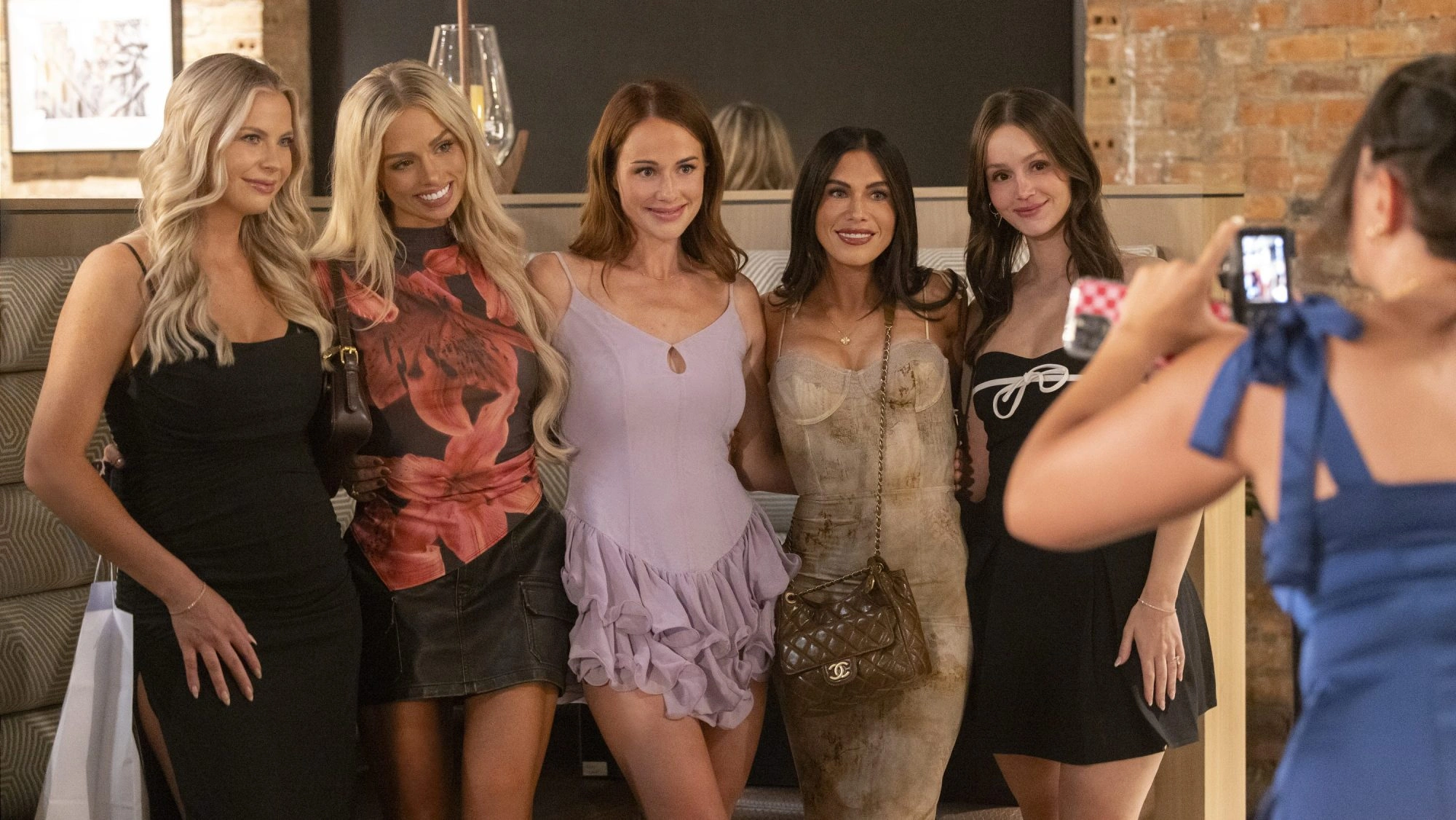
The camera holds on the silence inside Taylor’s car, and that quiet says what another argument could never sharpen. Exhaustion becomes the scene partner. The season ends with a cliffhanger about a possible pregnancy, a development that could alter everything.
That chaos sits beside the unexpected steadiness of Whitney and Connor. Connor offers a rare model of spousal support within the season’s marriage stories. He left a venture capital career to become a full-time parent, managing the household so Whitney can focus on her work.
He also finds comfort in close-up magic, which sounds like a punchline until the show treats it with genuine tenderness. In a season full of men grabbing for attention, Connor’s vanishing coins feel modestly heroic. Imagine that: a reality husband who helps by making himself useful.
Other marriages carry heavier damage. Mikayla deals with major health issues and intimacy problems with Jace, and her vulnerability gives the season some of its most grounded scenes. She speaks openly about how these struggles affect her sense of self. Layla offers a candid account of her eating disorder and explains how the digital world complicates her recovery. She also pursues a new relationship with Mason, giving her storyline a fragile sense of forward motion.
Zac Affleck brings the most unsettling behavior. He resents Jen’s success and turns his stay-at-home father role into a weapon. His guilt-tripping around her ambition exposes one of the season’s sharpest cultural nerves: a man unable to accept his wife as the primary earner.
The series captures these fractures with honesty that feels both uncomfortable and necessary. Its reality-TV mechanics recall the long history of domestic performance on screen, from marital confessionals to kitchen-table breakdowns, yet the influencer age gives every private wound a monetized echo. Each episode reveals the brutal cost of maintaining a perfect image while the image keeps billing interest.
Construction of the Mojo Dojo Casa House
The husbands refuse to stay in the background of their wives’ success. Jordan leads the charge for male visibility through DadTok, treating the project with the gravity of a campaign briefing. He buys branded hats and custom suits for the men, convinced that viewers are starving for his perspective. He deploys a truth box to spark conflict and seize narrative control. The device feels like a children’s party game redesigned by a man who has watched too many reunion specials.
This ego campaign leads to a planned visit to Vanderpump Villa. Jordan frames the trip as a Mormon spin on Casa Amor, with the men testing their loyalty. The move reads as a naked bid to reclaim the spotlight while masking a failing marriage. Jordan keeps dismissing Jessi’s feelings, bragging about therapy while dodging the work that therapy requires. The disconnect has a sour comic rhythm: self-improvement as branding exercise, healing as merch drop.
The sound design gets in on the joke, pushing the husbands’ abrasive voices forward until they drown out the women in their own show. That technical choice serves the season’s larger argument. The men are not background noise anymore.
They are trying to become the channel. The women recognize the performance immediately. Layla states her hatred for Jordan’s tactics with refreshing bluntness. Chase and Mason maneuver for screen time too, using their ties to Taylor and Layla to stay woven into the cast’s orbit.
The series has become a fight over visibility, and the husband takeover shifts the production’s rhythm. Reality TV has always flirted with spin-off gravity, letting side characters sense the camera and puff themselves into main-event status. Season four turns that impulse into a domestic turf war.
The original focus on the women strains under the weight of male egos demanding billing, wardrobe, and a microphone. The battle for the remote has rarely felt this literal. The sharper question is whether the women can wrestle their story back from men who mistook proximity to fame for authorship.
The fourth season of The Secret Lives of Mormon Wives premiered on March 12, 2026, delivering all ten episodes simultaneously for audiences to binge on Hulu. In this installment, the “MomTok” sisterhood is tested like never before as their individual fame expands beyond the borders of Utah. The season highlights significant career shifts, including Taylor Frankie Paul’s journey toward leading The Bachelorette and Jen Affleck’s and Whitney Leavitt’s competitive turn on Dancing with the Stars. As of today, May 3, 2026, the series remains a dominant force in reality television, continuing to explore the friction between modern influencer culture and traditional religious values. Viewers in the United States can stream the entire season on Hulu, while international audiences can find it on Disney+.
Where to Watch The Secret Lives of Mormon Wives Season 4 Online

Full Credits
Title: The Secret Lives of Mormon Wives Season 4
Distributor: Hulu, Disney+
Release date: March 12, 2026
Rating: TV-MA
Running time: 39–59 minutes
Director: Lyndsay Magid Aviner, Ninja Williams
Writers: Jeff Jenkins, Andrea Metz, Russell Jay-Staglik
Producers and Executive Producers: Jeff Jenkins, Russell Jay-Staglik, Andrea Metz, Brandon Beck, Eric Monsky, Ross Weintraub, Reinout Oerlemans, Lisa Filipelli, Danielle Pistotnik, Georgia Berger, Elise Chung, Taylor Frankie Paul, Jen Affleck, Jessi Draper Ngatikaura, Miranda Hope, Whitney Leavitt, Mikayla Matthews, Mayci Neeley, Layla Taylor
Cast: Taylor Frankie Paul, Jen Affleck, Whitney Leavitt, Mayci Neeley, Mikayla Matthews, Jessi Draper Ngatikaura, Layla Taylor, Miranda Hope, Demi Engemann
Director of Photography (Cinematographer): Aditya Ahmad, Ninja Williams
Editors: Ashley Kennedy, David Michael Maurer, Julie Anne Wight
Composer: ITG Studios, Jacob Aviner, Spencer Novich, Steve Toulmin
The Review
The Secret Lives of Mormon Wives Season 4
Season four moves the cast from local disputes to a national stage. This transition exposes the fragile nature of fame and faith. The production captures a raw look at domestic friction and the search for individual identity. While the husbands try to hijack the narrative through their DadTok movement, the women remain the primary draw. The season remains a messy, fascinating look at the influencer economy inside a traditional community. It delivers enough chaos for anyone who enjoys watching social structures break under the weight of the spotlight.
PROS
- Honest portrayal of personal health struggles and eating disorders.
- Effective shift to high stakes national competitions and television projects.
- Strong character development for Whitney as she finds professional focus.
- Realistic depiction of the tension between religious culture and public visibility.
CONS
- Excessive screen time for the husbands and the DadTok movement.
- Repetitive and volatile relationship patterns that feel circular.
- The loss of focus on the original group sisterhood.
- Transactional nature of friendships that becomes exhausting for the viewer.