























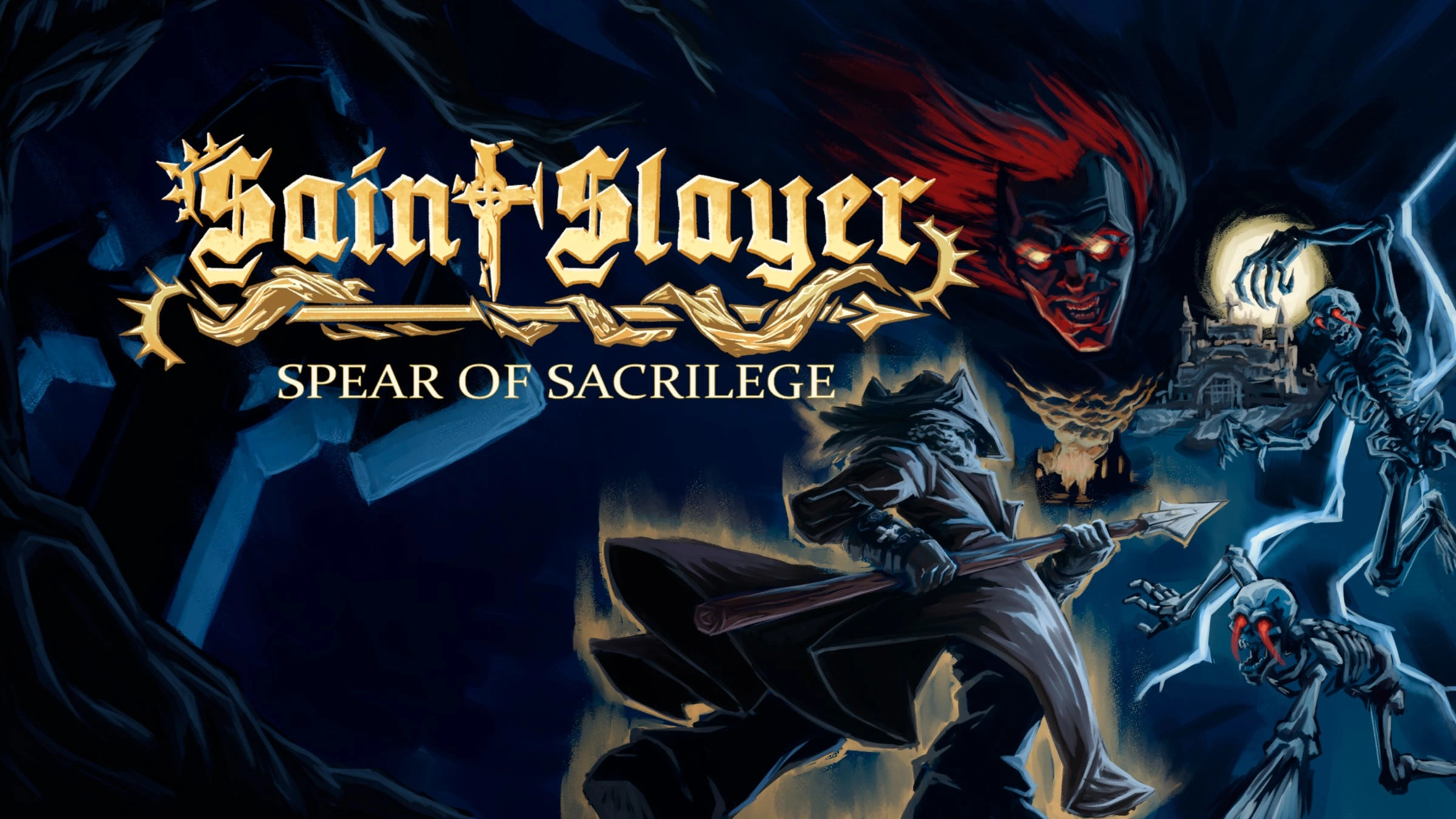

The year 1698 opens on a Holy Roman Empire held together by damaged peace. Rudiger carries the memory of the War of the Grand Alliance, yet he has left soldiering behind and taken up the life of a farmer. That quiet existence breaks when Father Pacer, a priest driven by hunger for forbidden relics, disrupts the countryside.
Pacer wants the Spear of Longinus to feed a demonic uprising, and Rudiger is pulled back toward the violence he once knew. The premise sets a grim tone close to the shadowy dark fantasy of the earliest Castlevania games, with a rescue mission spread across 21 stages.
The storytelling remains lean, built from short dialogue exchanges and details placed inside the environments. Crucifixes, bone piles, spirits, and cult activity give each level a clear sense of religious dread turned poisonous. The land feels trapped between faith and horror, with mercy pushed far out of reach.
Rudiger’s task stays simple and forceful: stop the corrupt priest before the spear’s power helps the countryside fall further into ruin. The narrow focus works in the game’s favor, since every stage keeps attention on Father Pacer’s madness, the threat of the spear, and the damage spreading through the land.
Physics and the Precision of the Spear
The action follows the strict rules of 8-bit platformers. Rudiger starts with a short dirk, and its limited reach forces him into unsafe range whenever an enemy closes in. The Spear of Sacrilege changes the rhythm of combat once he acquires it.
Longer stabs give him safer spacing, and the downward thrust opens up a pogo-style attack similar to Zelda II: The Adventure of Link. Rudiger can bounce on monster heads to avoid danger and reposition himself, turning the spear into both a weapon and a movement tool.
Movement asks for exact inputs. Jumps require commitment from the moment Rudiger leaves the ground, since his direction cannot be adjusted in midair. That single rule makes platforming feel tense in a very specific way. Every leap has to be judged before the button is pressed. Damage creates another risk, since knockback can fling Rudiger into a pit and force a full stage restart. The result is a game built around pattern reading, patience, and clean execution.
The Rosary Bead system gives combat and exploration a resource-management layer. Rudiger can throw the spear at distant targets, with each throw costing one bead. Beads are scarce, so ranged attacks carry real weight. A thrown spear can lodge in a wall and serve as a temporary ledge, which helps Rudiger reach high treasures or avoid difficult enemy placements. Later abilities expand his tool kit with a slide for narrow gaps and a ground-slam attack that can punish groups with heavy damage.
The difficulty settings change the experience in meaningful ways. Easy mode gives Rudiger 10 HP and removes damage knockback, making platforming far safer. Normal and Hard keep the standard challenge with fewer lives. Classic mode delivers the harshest version of the game, giving the player 6 HP and taking away revives completely. These options let the same stage layouts serve different skill levels while preserving the core design.
Orb Management and the Password Secret
Progression uses old-school persistence in place of modern save files. Green Orbs drop from fallen enemies and broken torches, then function as currency for Lavinia, the merchant. She appears in a tent during non-boss stages and sells items that can decide if a run survives. Her stock includes extra lives, health restores, potions that refill Rosary Beads, and hints pointing toward hidden treasures.
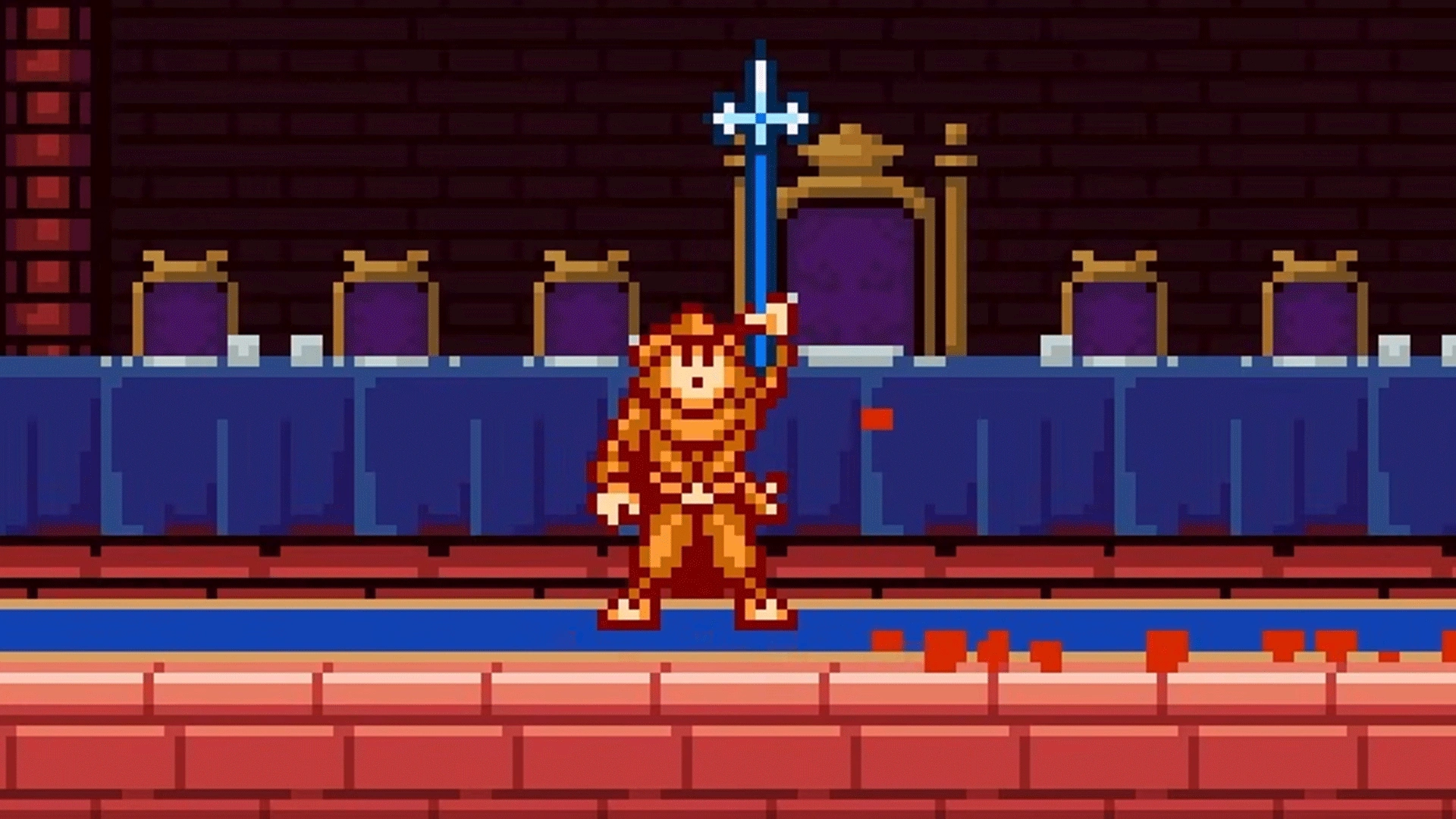
The economy softens the game’s harsher edges and keeps its bite. Orbs remain with the player after a game over, so farming them can lead to permanent health upgrades. That structure gives failed attempts a purpose, since repeated runs can still move Rudiger forward. Local co-op adds another way to approach the action, letting a second player join the fight. With two attackers, boss fights become easier to manage. Friendly fire adds a demand for discipline during crowded fights.
The password system carries the rest of the progression. Each new stage or found treasure gives the player a code, which can be entered from the main menu to resume the campaign. Several passwords unlock secret modes that alter the rules. The GREED password, for example, links Rudiger’s life force to his coin count, creating a tense challenge that recalls the ring system in Sonic the Hedgehog. These secrets reward close attention to loading screen tips and concealed areas.
Replay value comes from four different endings and hidden content. Choices about which NPCs to help and which treasures to collect shape the final result. The stages are short, yet the unlockable material gives the campaign extra density. Different difficulty settings, secret passwords, hidden treasures, and ending requirements create several reasons to return after the first clear.
Aesthetic Fidelity and Stage Design
The presentation aims straight for the feel of a late-1980s console release. Josh Gossage’s pixel art uses a restrained color palette that keeps sprites readable against detailed backdrops. The animation has a lively, characterful quality, visible in moments like NPCs running for cover when demons appear in the early village levels. CRT filter support is missing, yet the clean pixel work stays sharp on modern screens.
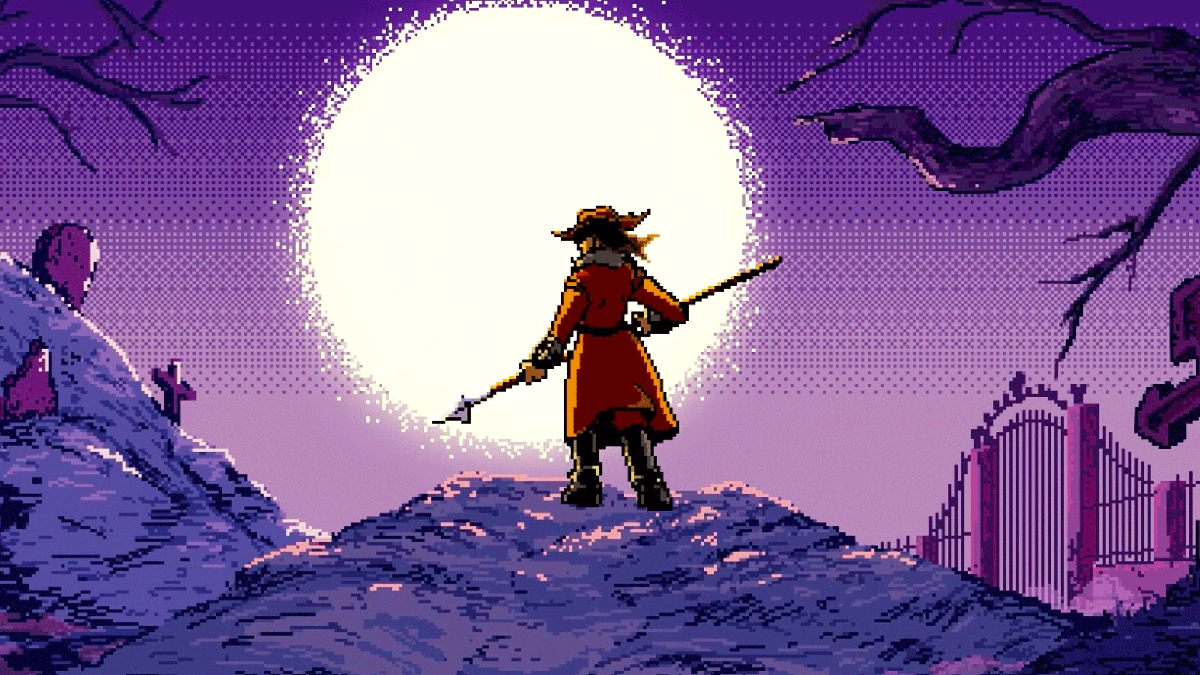
Josh Davis’s soundtrack gives the violence a bright chiptune pulse. The melodies are catchy and fit the gothic mood, with boss themes shifting the energy to match each fight’s pressure. Stages have their own identities and gimmicks, so the campaign avoids feeling like a flat sequence of similar rooms. Each area asks the player to adjust spacing, timing, and resource use.
One level places Rudiger on a moving gondola that must be propelled by striking a gear as enemies attack from both sides. Another sends him through a haunted library where ghosts turn books into weapons. Hazards in these spaces often pose a greater threat than the monsters, which fits the game’s demand for precise movement. Stage design keeps pushing the player to learn safe positions, enemy timing, and trap patterns.
Bosses close out each major area and guard the stones needed to enter the final castle. The fights leave strong impressions through clear mechanics and strange imagery, including a librarian shielded by revolving books and a chef who attacks with rotten meat. The final encounter unfolds across two phases and tests the full range of spear techniques the game has taught.
A single run can take about three hours, though trophy hunting and secret passwords extend the experience. Victory feels earned because the level design rewards players who study every pattern, commit to each jump, and treat every bead like it matters.
The Review
Saint Slayer: Spear of Sacrilege
Saint Slayer: Spear of Sacrilege delivers a faithful recreation of the 8-bit era. The rigid physics and punishing death system mimic the specific difficulty found in the late eighties. While the lack of modern checkpoints might alienate some, the mechanical depth of the spear and the clever password system provide a rewarding loop for retro enthusiasts. It succeeds as a focused homage to the gothic action genre.
PROS
- Mechanical precision in 2D platforming
- High-quality chiptune audio
- Creative password-based secrets
- Engaging local co-op play
CONS
- Punishing lack of mid-level checkpoints
- Limited variety in sub-weapon upgrades
- Brief total runtime for a single run