


























Pegah Ahangarani’s debut feature documentary, Rehearsals For A Revolution, unfolds as a ninety-three-minute excavation of historical grief. The film traces nearly fifty years of Iranian life after 1979, moving toward the violent internal crackdowns and rising geopolitical frictions of early 2026.
Ahangarani brings a perspective shaped by proximity and inheritance. She is an established professional actress raised inside the creative refuge of prominent filmmakers Jamshid Ahangarani and Manijeh Hekmat, and that lineage gives her gaze a wounded intimacy.
The film presents a bleak historical condition in which state power repeatedly writes over individual life. It observes decades of ideological promise collapsing into state violence with the rhythm of a recurring nightmare. Ahangarani places her lens where private memory meets public ruin, treating national history as an affliction carried in the body.
Chronologies of Disillusionment
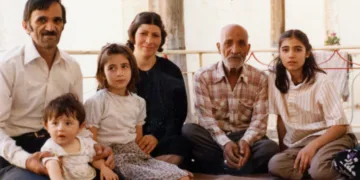
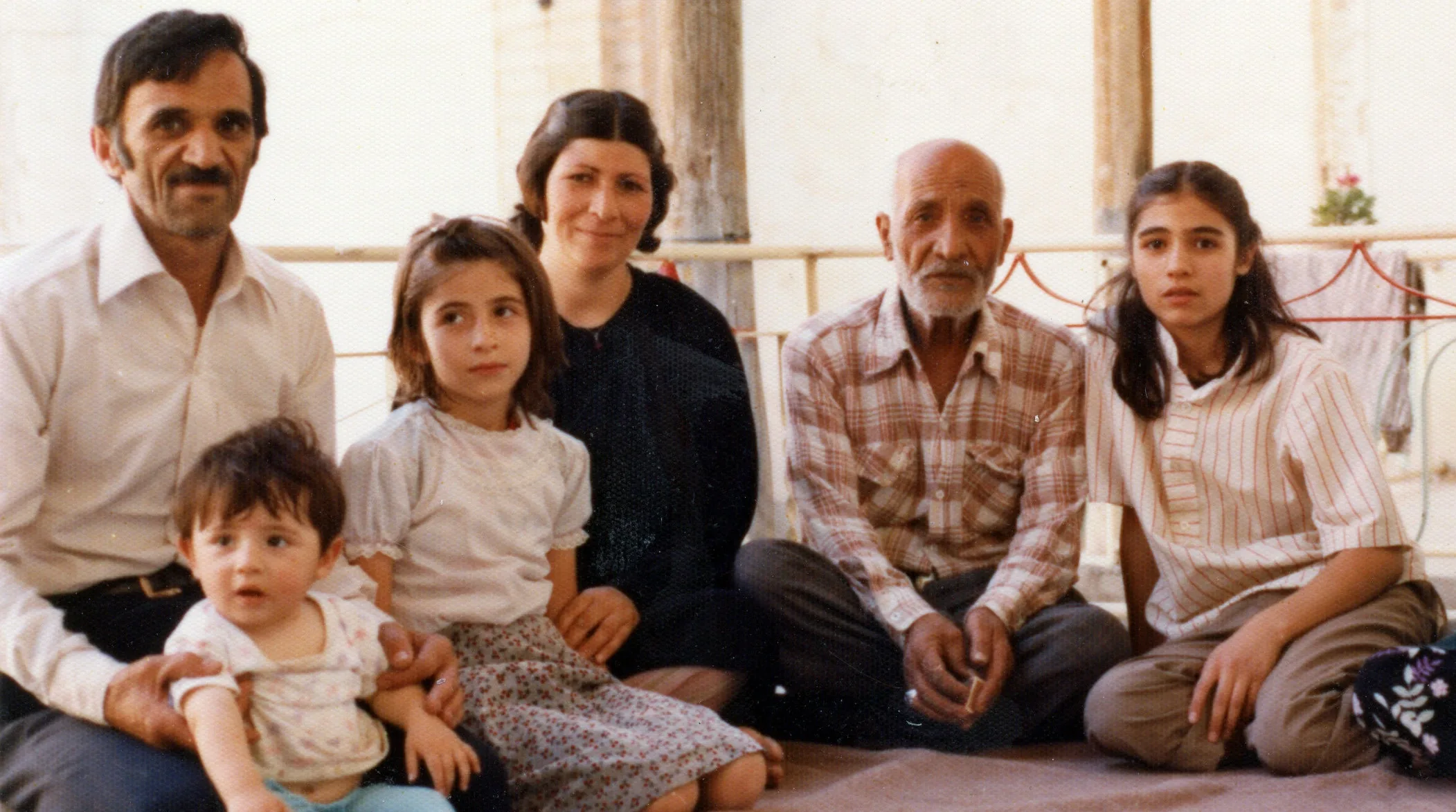
The film’s structure rests on five biographical chapters. Each one connects a person close to Ahangarani with a specific political rupture. The first chapter follows her father, Jamshid. His life moves from anti-Shah filmmaking into fervent support for the 1979 revolution, then to service on the front lines of the Iran-Iraq War. His disillusionment arrives in absolute form after the state execution of his close actor friend, Davood Noori.
Ahangarani locates that spiritual break inside a devastating household image. On the family Nowrooz table, a photograph of Ayatollah Khomeini is quietly replaced with a portrait of Noori. The gesture carries the ache of apostasy. A secret letter written by her father deepens the wound, revealing that half his comrades died in battle while the state executed the rest.
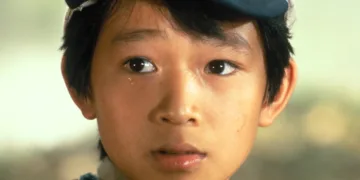
The second chapter introduces Shermin Sarraf, a literature teacher who inspired Ahangarani. Sarraf’s defiance of state mandates, including a private party held without the mandatory hijab, forces her into exile. Ahangarani releases her childhood guilt around this event, recalling how a school principal manipulated her during an interrogation. The trauma leads her to abandon formal schooling entirely, turning that rupture into her breakout role in The Girl With Sneakers.
The third chapter follows her young uncle, Rashid, a student journalist who supports President Mohammad Khatami during a brief opening for reform. His life ends during the state raids on Tehran University dormitories in July 1999.
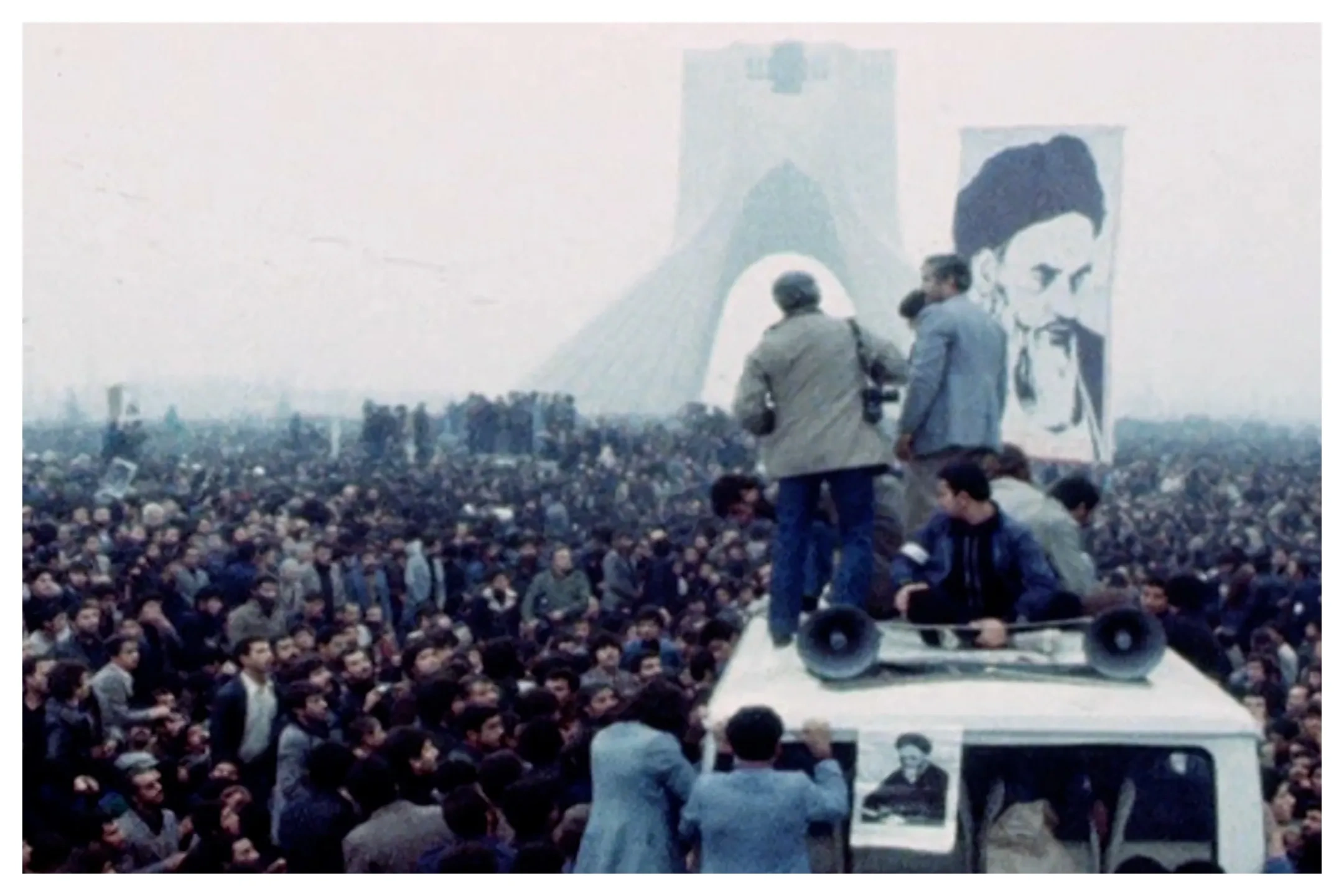
The fourth chapter records the 2009 Green Movement protests against Mahmoud Ahmadinejad. Ahangarani uses her own raw video footage from Revolution Square, including a continuous take of terrified citizens seeking safety inside a private home while security forces storm the building.
The final chapter moves into her exile in the United Kingdom. She reflects on the catastrophic state crackdowns of January 2026, finding a fragile, forward-facing hope in the gaze of her baby daughter, Lily.
Archaeology of Fragmented Media
The film’s form becomes a material history of media and memory. Ahangarani builds her narrative from changing technological remains. The images move from the grainy warmth of 1970s Super-8 home movies and faded family photographs into the hard surfaces of 1990s television broadcasts. Later, the film shifts into unstable cell phone videos captured by anonymous citizens, ending with the clean lines of a modern digital desktop editing interface in exile.
Ahangarani anchors these visual textures with factual text cards at the end of each chapter. Their language is cold and exact, recording 200,000 war dead and 15,000 political prisoner executions. This documentary realism collides with the surreal force of the second chapter, where grotesque, expressive animation turns school administrators into demonic inquisitors during the childhood interrogation scene.
The sound design deepens the film’s haunted atmosphere. A recurring sonic motif uses the physical sound of spinning cassette reels playing historical audio recordings, giving lost voices a mechanical afterlife. A sparse, intermittent score built from piano and bass supplies a somber emotional current. The music weighs upon the images with quiet pressure, reaching a mournful pitch through the use of the 1960s folk song “Greenfields” by The Brothers Four.
The Phantom Imprint of Yad
The film’s philosophical ground rests on the Farsi concept of yād. Ahangarani defines it as a form of memory in which the past returns, presses itself onto the present, and refuses disappearance. The project takes the shape of a deeply subjective, confessional video essay, closer to a private diary than a conventional historical lecture. Its movement follows recollection, inheritance, and the heavy burden of generational trauma.
Through this intimate frame, Ahangarani reconsiders political action. The film suggests that resistance lives in quiet daily choices, in the preservation of personal identity, and in the act of existing under oppressive systems. Defiance survives beyond mass demonstrations. Survival becomes a political stance when history seeks erasure. The film ends in unresolved darkness, leaving the audience with the final on-screen text card: “The future remains uncertain.”
Rehearsals for a Revolution premiered just two days ago on Saturday, May 16, 2026, as a Special Screening at the 79th Cannes Film Festival. Directed by Pegah Ahangarani, the film operates as a deeply personal historical essay. At this exact moment, the documentary is seeking wider global distribution following its festival debut. Audiences hoping to view the film will need to wait for a theatrical acquisition or an announcement regarding a streaming release later this year. The project was produced by Media Nest and Fasten Films, with international sales managed by The Party Film Sales. It offers a vital, subjective window into decades of political resistance.
Full Credits
Title: Rehearsals for a Revolution
Distributor: Medianest, Fasten Films, The Party Film Sales
Release date: May 16, 2026
Running time: 93 minutes
Director: Pegah Ahangarani
Writers: Amir Ahmadi Arian, Pegah Ahangarani, Ehsan Abdipur
Producers and Executive Producers: Kaveh Farnam, Adrià Monés
Cast: Pegah Ahangarani, Jamshid Ahangarani, Manijeh Hekmat, Shermin Sarraf, Davood Noori, Amir
Editors: Arash Najafi Ashtiani
Composer: Anna Andreu, Dmitry Evgrafov, Thomas Beck, Sten Erland Hermundstad
The Review
Rehearsals For A Revolution
Rehearsals For A Revolution stands as a haunting cinematic document that transforms generational trauma into an act of quiet defiance. By anchoring five decades of political grief within the fragile architecture of family memory, Pegah Ahangarani strips away historical abstraction to expose the raw human cost of tyranny. The film balances devastating archival realism with poetic introspection, offering a stark meditation on survival in an unforgiving world. It remains an essential, sorrowful piece of historical witness.
PROS
- Exquisite assembly of diverse historical media, tracking a distinct material evolution from Super-8 to digital imagery.
- The use of personal, domestic details, such as the holiday table photograph, provides a profound grounding for massive political shifts.
- The acoustic design utilizes historical cassette recordings and a somber score to construct an immersive atmosphere of mourning.
CONS
- The brief ninety-three-minute runtime forces a highly compressed view of complex historical intervals.
- The reliance on highly subjective, diary-like recollections might frustrate viewers seeking a standard historical chronology.