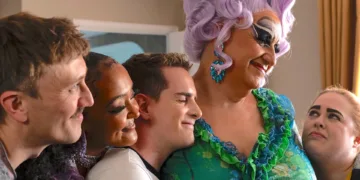





















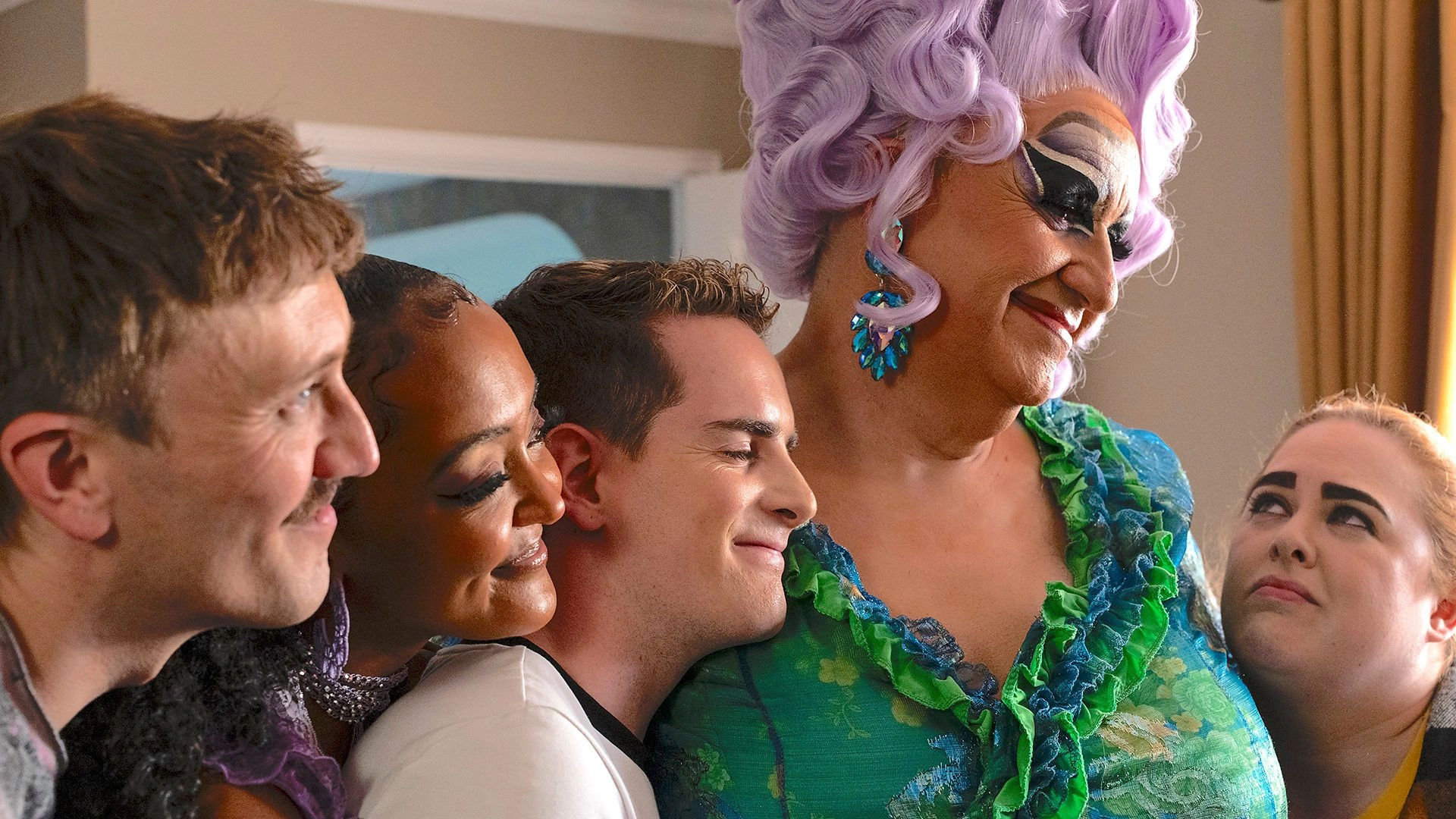

The BBC sitcom Smoggie Queens Season 2 returns to the industrial landscape of Middlesbrough with another sharp round of regional queer comedy. Created and written by Phil Dunning, the six-episode season follows the chaotic lives of a tightly bonded LGBTQ+ chosen family.
Its cultural force comes from its refusal to treat queer life as a permanent archive of pain. The series places everyday working-class eccentricity in full view, giving ordinary routines the scale of farce, fantasy, and social commentary. These episodes widen the lives of the main characters through surreal adventures rooted in Northern identity.
Community events, strange workplace rivalries, personal delusions, financial pressure, and fierce friendships collide inside a comic world built from precise regional banter. The show gains strength from that specificity. In a television climate still fond of sanding down local detail for easy export, Smoggie Queens keeps its accent, its oddities, and its social texture intact.
Domestic Friction and Subverted Milestones
The second season depends on ensemble energy, with personal stagnation driving much of the plot. Phil Dunning shapes that movement through Dickie, a protagonist suspended between professional immobility and romantic desperation. Dickie processes singlehood through self-absorption, turning casual encounters into intense imaginary rivalries.
His delusions give the season a comic engine, while Mam, played by Mark Benton, supplies domestic gravity. Mam holds the group together as a protective presence inside a chaotic daily routine. The writing expands her role through unexpected figures from her past, pressing against the guarded home space she has built around herself and the people she protects.
The series also challenges familiar queer storytelling patterns through its resistance to clean sentimental payoff. That approach becomes clear during a major personal milestone for Stewart, played by Elijah Young. A conventional streaming drama might have shaped the moment as a polished emotional set piece. Dunning sends it toward absurdity.
The tender rite of passage becomes a frantic physical hunt through a commercial carpet warehouse. The joke lands because the pacing trusts working-class farce as a serious storytelling language. Prestige television often treats sincerity as a soft piano cue and a tasteful close-up. Smoggie Queens finds feeling in panic, clutter, and a warehouse full of carpet.
The supporting characters receive distinct comic paths that expand the show’s social range. Lucinda faces romantic hurdles that expose her particular social anxieties. Sal becomes entangled with an incredibly difficult partner. The script keeps these parallel stories moving cleanly, creating a portrait of community life where private neuroses continually interfere with collective harmony. The result is a chosen family that feels loving, needy, exasperating, and recognizably human.
Corporate Satire and the Working-Class Farce
Tom Marshall’s direction keeps the tone locked on hyper-local British satire, placing the series inside the abstract comic tradition of modern BBC Three. The humor runs on rapid non-sequiturs, bizarre premises, and regional punchlines that show little interest in smoothing themselves for mainstream approval. That formal stubbornness gives the workplace pride episode its bite.
The production turns contemporary corporate diversity initiatives into a pointed comic target, then sharpens the joke through the arrival of an aggressive straight pride group that co-opts the gathering. Marshall maps the cultural clash through clashing musical styles, allowing sound to expose the emptiness of corporate inclusion. The entertainment industry loves a pride logo in June; this episode understands the invoice often arrives without the ethics attached.
The season’s structure draws its rhythm from the friction between farce and social observation. Marshall keeps the pace brisk, letting real-world discrimination appear without freezing the comic momentum. Severe personal problems and social friction are regularly punctured by ridiculous complications. Reflections on working-class hardship give way to physical comedy with a speed that feels both evasive and revealing. The show recognizes how often people under pressure turn survival into performance because the alternative would make the day unbearable.
Its cultural impact grows from hyper-specific Northern consumer references. Mundane regional settings, local retail brands, and familiar neighborhood spots become the base material for high-camp scenarios. Middlesbrough life supplies the comic architecture: ordinary shops, venues, and public rituals gain theatrical force through the characters’ outsized responses. In doing so, the series joins a visible television trend that moves queer narratives away from metropolitan hubs and into places often treated as cultural footnotes.
Industrial Backdrops and Auditory Antagonists
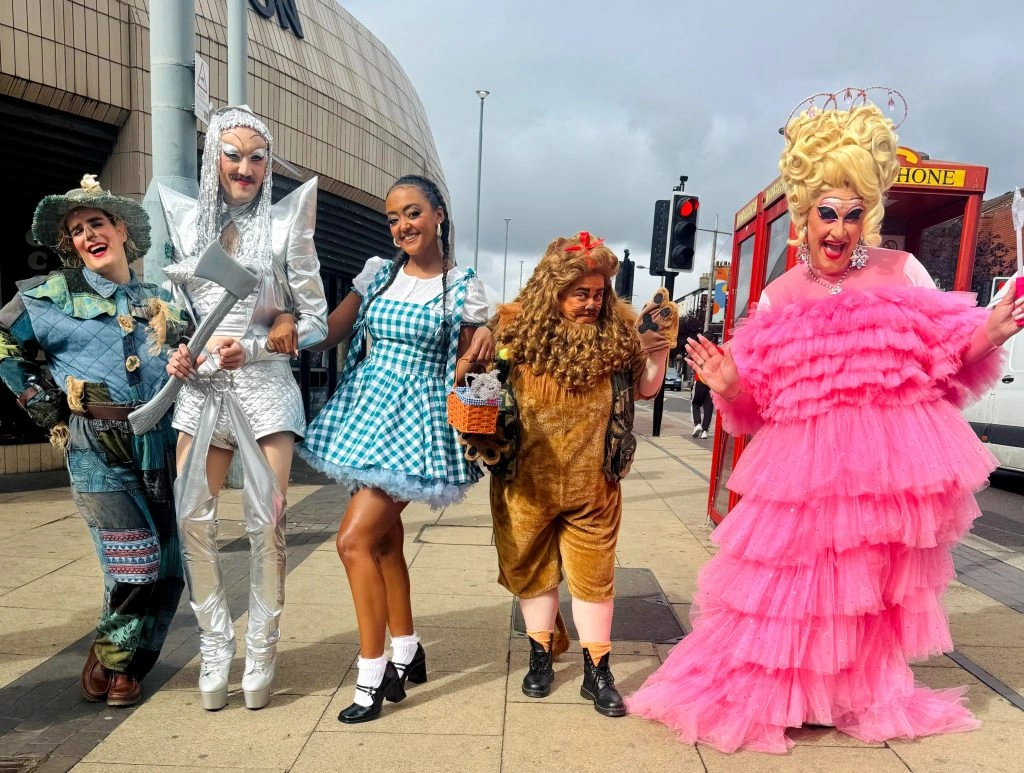
The visual identity of the season plays with the aesthetic tensions of Middlesbrough. The camera captures the stark industrial backdrop, placing grey urban space around the bright clothing choices of the main characters. This choice carries thematic weight. It speaks to the visibility of queer culture inside working-class spaces, where self-presentation can become a public act of joy, insistence, and social defiance. The clothes cut through the environment with deliberate theatricality, turning style into survival.
The visual language grows theatrical during heightened aesthetic sequences. Surreal dream imagery breaks the sitcom’s usual reality. A low-budget performance at a local care home echoes amateur dramatics, using limited means as part of the comic effect. These shifts deepen the sense of community isolation, showing a group that creates its own entertainment because the surrounding world offers little space tailored to them. The rough edges matter. They give the production a handmade quality that aligns with its social vision.
The sound design adds a layer of audio irony to that isolation. The production uses tracks associated with ordinary mainstream pop culture as auditory antagonists, letting them intrude on the characters’ carefully shaped spaces. The music signals pressure from a surrounding culture that cannot understand them, even while trying to drown them out with familiar noise.
Local venues, including an unassuming Italian restaurant and a cramped community hall, intensify the feeling of small-town claustrophobia. The camera turns tight spaces into social pressure cookers, trapping the characters together while also locating their freedom inside that confinement.
Regional Icons and Large-Scale Eccentricity
The second season gains fresh energy from new acting talent. Monica Dolan joins the ensemble as Paula, bringing a tonal charge that unsettles the established rhythm of the group. Dolan matches the existing theatricality and adds an unpredictable edge to the domestic scenes. Her presence forces the returning characters to adjust their dynamics, keeping the ensemble formula from going stale.
The use of Teesside and regional broadcasting legends playing fictionalized versions of themselves has a clear narrative function. These cameos strengthen community authenticity without feeling like empty industry decoration. The figures carry real cultural currency in the North East, and their presence honors the audience whose references shape the show’s comic language. It also signals a meaningful correction to casting habits built around international legibility. Smoggie Queens trusts regional recognition, a quiet act of representational confidence in a market that often treats locality as a problem to solve.
The season’s collective eccentricity peaks in elaborate ensemble set pieces. A charity football match featuring bizarre lookalikes shows the production’s control over large groups of comic performers. A chaotic regional beauty pageant achieves a similar effect. These gatherings keep individual character details visible inside crowd disorder, which gives the scenes their scale and texture.
They prove that localized working-class stories can carry the ambition usually assigned to mainstream network comedies. The future-facing lesson is plain enough for television executives, should they care to notice: specificity can travel when the work knows exactly where it lives.
The second season of the acclaimed British sitcom Smoggie Queens premiered on May 15, 2026, welcoming audiences back to the sharp-witted, fiercely proud LGBTQ+ community of Middlesbrough. This six-episode installment tracks the escalating antics, romantic misadventures, and financial struggles of its tight-knit central chosen family. Viewers can stream the entire second season on BBC iPlayer or watch the broadcast episodes on BBC Three.
Full Credits
Title: Smoggie Queens Season 2
Distributor: BBC Three, BBC iPlayer
Release date: May 15, 2026
Rating: TV-MA
Running time: 30 minutes per episode
Director: Tom Marshall
Writers: Phil Dunning
Producers and Executive Producers: Chris Jones, Jimmy Mulville, Jessica Sharkey, Jon Petrie, Gregor Sharp
Cast: Phil Dunning, Mark Benton, Alexandra Mardell, Patsy Lowe, Elijah Young, Monica Dolan, Amalia Vitale, Freya Parker, Neil Grainger, Charlotte Riley, Peter McPherson, Lauryn Redding, Michael Mather, Bill Fellows, Michael Hodgson, Steph McGovern, Michelle Visage
Director of Photography (Cinematographer): Ryan Eddleston
Editors: Steve Ackroyd
Composer: Matthew Wilcock
The Review
Smoggie Queens Season 2
Smoggie Queens Season 2 provides a defiant exploration of working-class queer culture by replacing conventional trauma narratives with pure, chaotic farce. The installment secures its brilliance through an uncompromising commitment to its Middlesbrough setting and an eccentric ensemble cast. While the hyper-localized humor and surreal narrative departures might alienate mainstream viewers seeking conventional structures, the series succeeds as a joyful slice of regional representation. It stands as a vital addition to the modern landscape of British television.
PROS
- Boldly rejects predictable trauma tropes, choosing to frame the LGBTQ+ experience through working-class eccentricity and joy.
- The addition of fresh talent like Monica Dolan introduces a brilliant comedic friction that elevates the established cast chemistry.
- Uses a mainstream corporate playlist to create highly effective, humorous tension during the corporate diversity conflict.
- The inclusion of genuine local legends strengthens the community identity, creating a rich sense of regional authenticity.
CONS
- Highly surreal sequences, such as the warehouse rabbit hunt, risk alienating audiences who prefer grounded sitcom formats.
- The heavy reliance on hyper-specific Northern consumer culture and regional references can limit appeal for international markets.